
Quando sua equipe de engenharia especifica usinagem CNC de delrin para um componente crítico, você está fazendo uma escolha que preenche a lacuna entre o desempenho semelhante ao do metal e a liberdade de design dos polímeros. No entanto, muitos projetos falham não por causa de um design ruim, mas porque o parceiro de fabricação carece da disciplina térmica e da profundidade técnica necessárias para usinar este material notável corretamente. Este guia explora como delrin cnc os serviços podem resolver seus desafios de peças de precisão — desde o gerenciamento da expansão térmica até a obtenção de tolerâncias abaixo de 0,02 mm — e por que escolher o parceiro certo de usinagem cnc de acetal faz a diferença entre o sucesso da produção e o retrabalho dispendioso.
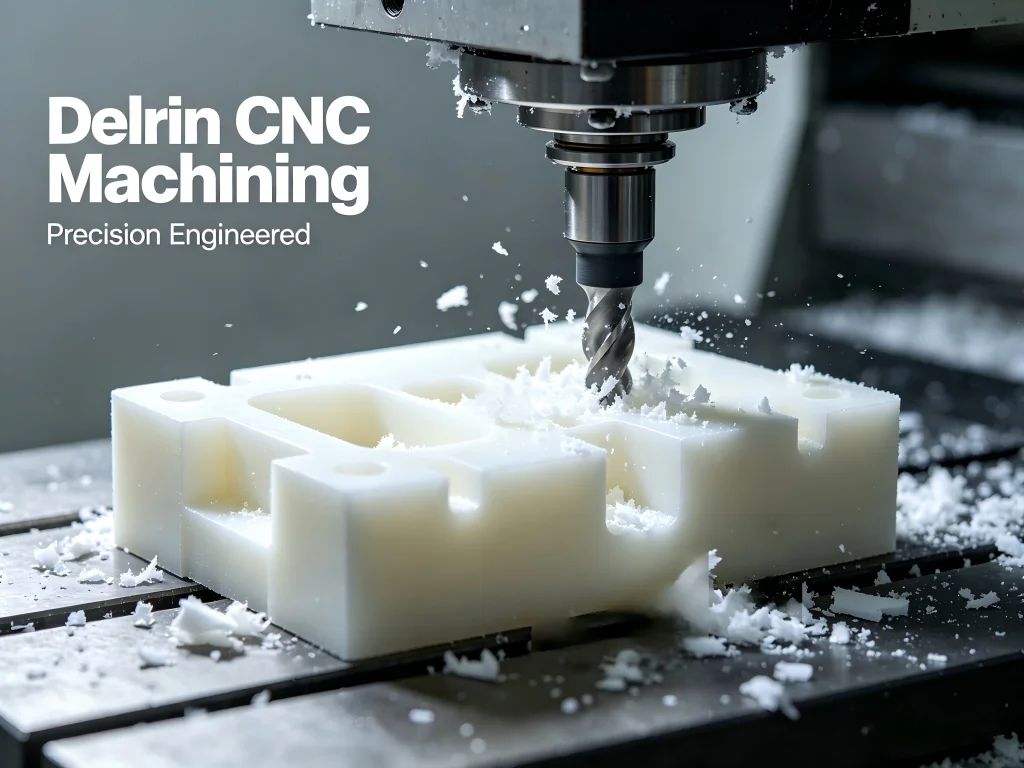
O Paradoxo do Plástico de Precisão: Por Que a Usinagem CNC de Delrin Exige Maturidade Técnica
O Delrin — nome comercial da DuPont para o homopolímero de acetal (POM-H) — oferece aos engenheiros uma combinação excepcional de alta rigidez, lubricidade natural e estabilidade dimensional. No entanto, essas mesmas propriedades que o tornam atraente também criam desafios de fabricação que pegam muitas oficinas de surpresa. Uma oficina de usinagem de uso geral pode considerar +/- 0,1 mm aceitável para uma peça plástica. Na Jucheng Precision, rotineiramente alcançamos usinagem CNC de delrin tolerâncias tão apertadas quanto +/- 0,02 mm em componentes de pequeno a médio porte.
A questão central? O Delrin tem um coeficiente de expansão térmica cerca de cinco vezes maior do que os aços comuns. Durante usinagem cnc de acetal, o calor do corte pode fazer o material expandir e depois contrair à medida que esfria — um fenômeno que destrói a precisão se não for gerenciado ativamente. Os maquinistas em fóruns como a Comunidade Carbide 3D frequentemente relatam que “o Delrin derrete facilmente e produz longas fitas em vez de cavacos”. Essa formação de cavacos fibrosos, combinada com a sensibilidade do material ao calor acima de 121°C (250°F), exige ferramentas especializadas e estratégias de resfriamento que muitas oficinas de usinagem simplesmente não possuem.
O que é a Usinagem CNC de Delrin? Entendendo o Material e o Processo
Definindo Delrin e Acetal: O Termoplástico de Engenharia
O Delrin (homopolímero de polioximetileno) é um termoplástico de engenharia semicristalino que faz a ponte entre os metais e os plásticos comuns. Frequentemente chamado de “o metal dos plásticos”, oferece alta resistência e rigidez, mantendo lubricidade natural e resistência à umidade. O material vem em duas estruturas químicas principais:
- Copolímero de Acetal (POM-C): O padrão da indústria que oferece melhor resistência química e estabilidade térmica. As classes incluem Ultraform®, Celcon® e Tecaform®.
- Homopolímero de Acetal (POM-H / Delrin®): Oferece maior resistência à tração, rigidez e dureza do que o copolímero, com melhor resistência à fadiga. No entanto, seções espessas podem conter porosidade na linha central.
- POM com PTFE (Delrin® AF): Misturado com fibras de Teflon para reduzir drasticamente o atrito e eliminar o comportamento de “stick-slip”.
- POM com Fibra de Vidro: Rigidez aprimorada e fluência reduzida para aplicações em temperaturas elevadas.
O Delrin é preferido pelos maquinistas porque é facilmente usinado em centros de 3 e 5 eixos, semelhante a peças metálicas. No entanto, como observou um usuário do VEX Forum, “o Delrin era basicamente o mesmo que o Policarb, mas quebrava mais facilmente” — um lembrete de que a seleção do material deve estar alinhada com os requisitos da aplicação.
Como Funciona a Usinagem CNC de Delrin
O usinagem CNC de delrin O processo envolve a remoção de material controlada por computador usando ferramentas de corte rotativas. Ao contrário dos plásticos amorfos que podem manchar ou rasgar, a estrutura cristalina do Delrin permite um cisalhamento limpo quando parâmetros adequados são aplicados. Os elementos-chave do processo incluem:
- Seleção de Ferramentas: Arestas de corte afiadas e polidas reduzem o atrito e a geração de calor. Arestas desgastadas destroem as tolerâncias ao causar deformação elástica no material.
- Cooling Strategy: High-pressure air-cooling or specialized flood coolants carry heat away from the shear zone.
- Feed Rates: Delrin requires high feed rates to prevent melting—often comparable to aluminum machining parameters.
- Fixação da Peça: Minimal clamping force with soft jaws or vacuum tables prevents distortion.
The Problem: Common Delrin CNC Machining Challenges
Engineers and procurement professionals frequently encounter frustrating issues when sourcing delrin cnc parts. These problems, widely discussed in manufacturing communities, often stem from inadequate process control rather than material limitations.
Thermal Expansion and Dimensional Instability
The single greatest enemy of precision in plastic is heat. During usinagem cnc de acetal, if the process generates excessive heat, the material expands. When it cools, it contracts—potentially shifting dimensions by several hundredths of a millimeter. One engineering team documented that “during thermal vacuum testing, the Delrin component distorted significantly resulting in failure of the drive mechanism”. The solution? Stress relieving the material prior to machining according to manufacturer recommendations.
Poor Surface Finish and Burring
Delrin creates stringy chips on lathes, and too high a feedrate can cause chipping on surfaces. Users report that “Delrin, like most thermoplastics, requires extremely high feeds and speeds to get a good finish”. Common surface finish issues include tool marks, burrs, and a dull appearance that degrades part function. As one Xometry user noted, “bead blasting on this plastic material… will give a dull/grayer finish, which will be very noticeable if the material is black”.
Workholding and Fixturing Difficulties
Delrin’s low coefficient of friction makes it prone to shifting during machining. A Centroid CNC Forum user shared concern about machining Delrin forks “only held in place by four M6 screws… if I machine too aggressively, the forks could move out of registration”. Proper fixturing requires careful consideration of clamping forces and tool paths.
Bent or Warped Raw Stock
One of the most infuriating challenges is receiving bent stock Delrin sheets. As one manufacturing team discovered, “our full assembly would only be as good as our raw parts; and unfortunately, the effect of the bend carried through the entire design”. This highlights the importance of material quality verification before machining begins.
The Solution: Expert Delrin CNC Machining Services
Addressing these challenges requires a manufacturing partner with technical depth, process discipline, and specialized equipment. Jucheng Precision operates from an IATF 16949 and ISO 9001 certified facility, utilizing advanced 5-axis CNC milling and turning centers to produce complex POM parts that require tight tolerances and superior surface finishes.
Thermal Management Protocols
At Jucheng Precision, we view tolerances not as suggestions but as mandatory contracts. Success in usinagem CNC de delrin requires mastery of environmental variables that most shops simply ignore. Our approach includes:
- High-speed spindles that maintain constant chip load, ensuring material is sheared cleanly and preventing elastic deformation
- Optimized cooling strategies using high-pressure air or specialized coolants to carry heat away from the shear zone
- Thermal stabilization of the machining environment to minimize temperature-related dimensional shifts
Precision Metrology and Quality Assurance
Every high-precision order of pom delrin acetal cnc machining at Jucheng comes with a comprehensive inspection report, providing a digital audit trail of every critical feature. Using Coordinate Measuring Machines (CMM) and advanced metrology, we verify that each part meets specification before shipment.
Internal Stress Management Through Annealing
Delrin contains internal stresses from the manufacturing process that can cause distortion during machining. Jucheng implements stress-relief annealing protocols to stabilize the material before cutting, preventing the “spring-back” phenomenon where a feature physically moves after the tool retracts.
Core Applications: Where Delrin CNC Machining Excels
Delrin cnc machining serves diverse industries where precision, durability, and low friction are essential. The material’s unique properties make it the engineering plastic of choice for critical components across multiple sectors.
Automotive Applications
The automotive industry demands components that are lightweight yet structurally sound. O Delrin parts are common in fuel system components, door mechanisms, and interior assemblies. At Jucheng Precision, we serve global Tier 1 and Tier 2 suppliers, understanding that automotive engineers are under constant pressure to reduce weight without sacrificing structural stiffness. Typical automotive usinagem cnc de acetal applications include:
- Fuel system components resistant to solvents and fuels
- Bushings and bearings for suspension systems
- Gears for power windows and seat adjustment mechanisms
- Sensor housings requiring dimensional stability
Fabricação de Dispositivos Médicos
The medical devices industry relies on Delrin for components requiring biocompatibility, sterilization resistance, and precision machining. Delrin cnc machining produces surgical instruments, orthopedic implants, drug delivery systems, and medical device housings where hygiene, reliability, and dimensional accuracy are critical.
Robotics and Automation
Precision motion control often relies on the efficiency of plastic power transmission. While metals are standard for high-torque applications, modern automation increasingly demands lightweight, self-lubricating, and corrosion-resistant components. Machining Delrin gears provides engineers with a material that possesses a high modulus of elasticity and exceptional fatigue resistance. A Delrin gear can cycle millions of times without teeth permanently “creeping” or losing their shape.
Consumer Electronics and Appliances
From high-end office equipment to household appliances, delrin cnc components provide the precision and durability required for modern consumer products. The material’s natural lubricity allows for “dry” operation—critical in food processing equipment or electronics where oils and greases are unacceptable.
How to Choose a Delrin CNC Machining Partner: The Buyer’s Guide
Selecting the right usinagem CNC de delrin service provider directly impacts part quality, project timelines, and overall costs. Here are the critical factors to evaluate:
Capacidades Técnicas e Equipamento
Not all CNC shops can machine Delrin to tight tolerances. Look for partners with:
- 5-axis CNC capabilities for complex geometries
- High-speed spindles for clean material shearing
- Temperature-controlled environments for dimensional stability
- CMM inspection equipment for quality verification
Quality Certifications
Industry certifications demonstrate a commitment to quality management:
- ISO 9001 for general quality management
- IATF 16949 for automotive industry compliance
Material Expertise and Grade Selection
An experienced usinagem cnc de acetal partner can guide you through grade selection based on your application requirements:
| Grau | Key Properties | Aplicações Ideais |
|---|---|---|
| POM-C (Copolymer) | Chemical resistance, thermal stability, porosity-free | Food contact, plumbing, chemical pump housings |
| POM-H (Homopolymer/Delrin®) | Higher tensile strength, stiffness, fatigue resistance | High-load gears, thin-walled parts, snap-fits |
| POM com PTFE | Ultra-low friction, eliminates stick-slip | High-speed bearings, guide rails, valve seats |
| Glass-Filled POM | Very high stiffness, low warpage, low creep | Elevated temperature structural components |
Thermal Management Protocols
Ask potential partners about their approach to heat management during delrin cnc operations. The ability to maintain sharp cutting edges and apply appropriate cooling directly impacts dimensional accuracy.
Inspection and Documentation
Comprehensive inspection reports provide traceability and confidence. Jucheng Precision provides a digital audit trail of every critical feature.
Lead Times and Communication
Inconsistent quality, missed deadlines, and poor communication are common frustrations when sourcing custom CNC parts. Choose a partner with transparent communication and proven on-time delivery.
Why Jucheng Precision for Delrin CNC Machining
Jucheng Precision brings decades of manufacturing expertise to every usinagem CNC de delrin project. Our facility in the Shenzhen precision manufacturing hub operates as a high-fidelity subtractive sanctuary, providing the 5-axis CNC depth needed to deliver components with the structural integrity required for demanding industrial applications.
Technical Excellence
We routinely achieve usinagem CNC de delrin tolerances as tight as +/- 0.02mm. Our advanced 4-axis and 5-axis centers produce tooth profiles that remain accurate under constant cyclic loading. We utilize high-speed spindles and maintain constant chip load to ensure clean material shearing.
Garantia de Qualidade
Operating under ISO 9001 and IATF 16949 quality standards, we maintain a zero-defect culture. Every high-precision order comes with a comprehensive inspection report.
Material Selection Guidance
We stock and machine a comprehensive range of POM grades—from standard copolymer to high-strength homopolymer—serving automotive, medical, and consumer electronics sectors. Our team helps you navigate the matrix of material properties to select the optimal grade for your application.
Process Stability
Success in the manufacturing supply chain requires more than just machines; it requires deep investment in process stability. Jucheng Precision ensures your designs are delivered with the precision needed for millions of miles of service.
Frequently Asked Questions About Delrin CNC Machining
1. What is the difference between Delrin and acetal?
O Delrin is DuPont’s trade name for acetal homopolymer (POM-H). Acetal is the broader category that includes both homopolymer (Delrin) and copolymer (POM-C). Delrin offers slightly higher tensile strength and stiffness than copolymer but is more prone to centerline porosity in thick sections.
2. What tolerances can be achieved with Delrin CNC machining?
With proper thermal management and specialized tooling, usinagem CNC de delrin can achieve tolerances as tight as +/- 0.02mm on small-to-medium components. However, this requires a manufacturer with technical maturity—general-purpose shops often consider +/- 0.1mm acceptable.
3. Why does Delrin require special machining considerations?
Delrin has a coefficient of thermal expansion roughly five times higher than steel. It is sensitive to heat above 121°C (250°F) and requires high feed rates to prevent melting. Sharp tooling and effective cooling are essential for achieving precision results.
4. What are the most common applications for machined Delrin parts?
Delrin cnc components are widely used in automotive fuel systems and door mechanisms, medical devices and surgical instruments, robotics gears and bearings, consumer electronics housings, and industrial sliding mechanisms and guide rails.
5. How does Delrin compare to other engineering plastics for CNC machining?
Delrin is considered the most machinable plastic, creating short, broken chips rather than long stringy ones. It offers superior dimensional stability compared to nylon (0.2% moisture absorption vs. nylon’s higher rate) and better fatigue resistance than many alternatives.
6. What surface finishes are available for Delrin CNC machined parts?
The “as-machined” finish is the most common and cost-effective option. Other options include bead blasting for a matte texture, polishing for a glossier look, and painting after special surface preparation. However, bead blasting can create a dull appearance on black material.
7. How much does Delrin CNC machining cost?
Costs depend on material grade, tool choice, feed rate, machining complexity, and tolerance requirements. Medium precision functional parts typically range from $10-$60 per piece, while high-precision transmission or structural parts range from $60-$300+ per piece. Material costs for POM rods and sheets average $4-$12/kg depending on grade.
8. What certifications should a Delrin CNC machining partner have?
Look for ISO 9001 certification for general quality management and IATF 16949 for automotive industry compliance. These certifications demonstrate a commitment to quality systems and continuous improvement.
9. Can Delrin be machined on standard CNC equipment?
While Delrin can be machined on standard 3-axis equipment, achieving tight tolerances and complex geometries requires advanced 4-axis and 5-axis centers. The material’s sensitivity to heat also demands specialized cooling and tooling strategies that many basic shops lack.
10. How does Jucheng Precision ensure quality in Delrin CNC machining?
Jucheng Precision operates under ISO 9001 and IATF 16949 quality standards. Every high-precision order comes with a comprehensive inspection report providing a digital audit trail of every critical feature. We utilize CMM inspection and advanced metrology to verify each part meets specification.
Ready to discuss your usinagem CNC de delrin project? Contact Jucheng Precision today to speak with our engineering team about your specific requirements. Whether you need prototyping, low-volume production, or high-volume manufacturing, our technical expertise and advanced 5-axis capabilities ensure your parts are delivered with the precision and quality your application demands. Visit our website to request a quote or learn more about our comprehensive CNC machining services.