
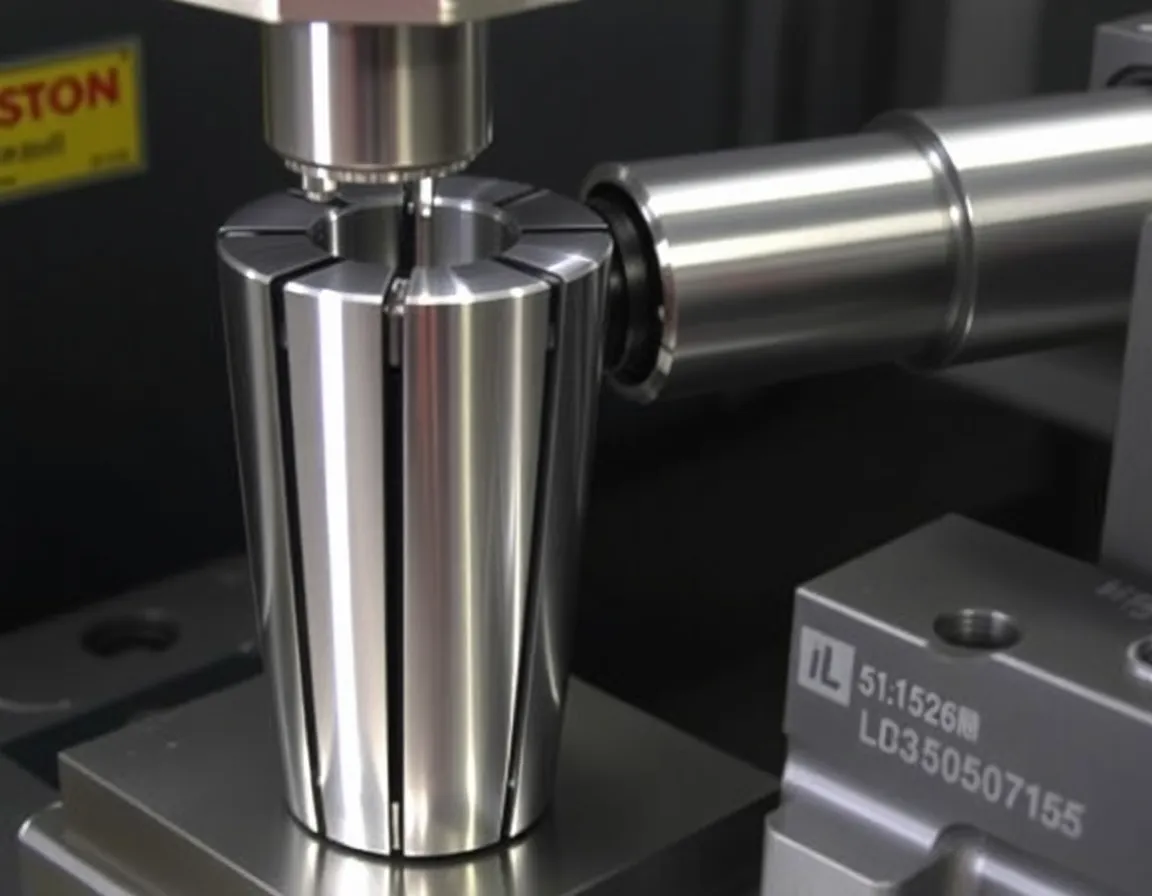
In the world of precision manufacturing, the humble collet often goes unnoticed—yet it plays a starring role in determining whether a machining operation succeeds or fails. When standard, off-the-shelf collets can't meet the demands of a particular job, custom collet machining becomes the answer. This guide walks buyers through everything they need to know: what custom collets are, how they work, why they matter, where they're used, and how to source them wisely.
What Is Custom Collet Machining?
A collet is a slotted, sleeve-like device that grips a cutting tool, workpiece, or component with high concentricity and repeatability. Standard collets follow established dimensional standards—such as ER, TG, or R8 tapers—and are mass-produced in common size ranges. Custom collet machining is the process of designing and manufacturing collets to non-standard specifications: unusual bore diameters, special tapers, unique grip lengths, exotic materials, or application-specific features that no catalog product can provide.
Custom collet machining typically involves precision turning, grinding, slotting, and heat treatment of materials such as spring steel, tool steel, stainless steel, brass, or specialized alloys. The result is a bespoke workholding solution engineered around a specific part, tool, or machine interface.
Standard vs. Custom Collets
Understanding the distinction helps buyers decide when custom work is justified:
- Standard collets: Lower cost, fast availability, limited to catalog dimensions and tolerances, ideal for common tooling and general-purpose work.
- Custom collets: Higher upfront cost and longer lead times, but unlimited dimensional freedom, tailored grip geometry, application-specific materials, and often superior performance in demanding or unusual setups.
How Custom Collets Work and How They're Made
Like their standard counterparts, custom collets rely on elastic deformation. When the collet nut or drawbar is tightened, the collet's tapered body is compressed, and its slotted segments close uniformly around the tool or workpiece. This creates a friction-based grip with excellent concentricity—often measured in microns.
The Manufacturing Process
Producing a custom collet is a multi-step precision engineering exercise:
- Application review and design: Engineers analyze the tool or part to be gripped, the machine interface, required runout, clamping force, and cycle conditions. CAD models and tolerance stacks are developed.
- Selezione del materiale: Spring steel and tool steel are common for their fatigue resistance and hardness; stainless grades suit corrosive environments; brass or specialty alloys may be chosen for non-marring grip or electrical applications.
- Turning and boring: The blank is machined to establish the body profile, taper, and bore.
- Grinding: Precision grinding achieves the critical taper angle, bore diameter, and face geometry—the features that govern runout and grip accuracy.
- Scanalatura: Relief slots are cut (typically by wire EDM or precision sawing) to allow elastic compression. Slot count, depth, and pattern are engineered for the required clamping force and flexibility.
- Heat treatment: Hardening and tempering deliver the right balance of hardness and springiness so the collet flexes repeatedly without cracking or losing grip.
- Ispezione: Final parts are checked for concentricity, taper accuracy, surface finish, and dimensional compliance—often with CMM or optical measurement systems.
Benefits of Custom Collet Machining
Why do manufacturers invest in custom workholding? The advantages are concrete and measurable:
Precision and Repeatability
Custom collets are machined to the exact bore and geometry of the application, eliminating the compromises of adapting a standard size. This translates to lower runout, tighter tolerances, and more consistent part quality across production runs.
Improved Grip and Surface Protection
Custom grip profiles—whether full-round, stepped, or shaped to match a non-cylindrical part—distribute clamping force evenly. This reduces the risk of slippage and prevents marring or distortion of delicate workpieces.
Extended Tool and Machine Life
Better concentricity means less vibration and reduced wear on cutting tools, spindles, and bearings. Over time, the investment in a custom collet often pays for itself through longer tool life and fewer scrapped parts.
Design Freedom
Custom machining removes catalog constraints. Buyers can specify non-standard shank sizes, extended noses for reach into tight spaces, coolant-through features, or hybrid interfaces that bridge two machine standards.
Problem-Solving Capability
When a legacy machine, an obsolete tooling system, or a unique workpiece defies off-the-shelf solutions, custom collets keep production running instead of forcing expensive retooling.
Applicazioni in diversi settori
Custom collet machining serves a wide range of sectors where precision is non-negotiable:
- CNC machining and milling: Holding specialty cutters, micro-tools, and non-standard shanks with minimal runout.
- Swiss-type turning: Precision guide bushings and collets sized to exact bar stock diameters.
- Medical device manufacturing: Gripping small, delicate components such as cannulae, implants, and surgical instruments without damage.
- Aerospaziale: Workholding for exotic alloys and tight-tolerance components where reliability is critical.
- Watchmaking and jewelry: Micro-collets for tiny drills, burs, and precision parts.
- Optical and electronics: Holding lenses, ferrules, and connectors with damage-free, high-accuracy grip.
- Tool grinding and sharpening: Custom collets for irregular tool shanks and resharpening operations.
Best Practices for Buying Custom Collets
Sourcing custom collets is a partnership between buyer and manufacturer. Following best practices protects both quality and budget:
Define the Application Thoroughly
Provide the supplier with complete information: the tool or part drawing, machine interface (spindle taper, nut type, drawbar thread), required runout, clamping force expectations, coolant exposure, and cycle frequency. The more context you share, the better the engineered result.
Specifica le tolleranze in modo realistico
Tighter tolerances cost more. Specify only what the application truly requires—over-tolerancing drives up price and lead time without adding value.
Discuss Material and Heat Treatment
Confirm that the material and hardening process match your environment. Corrosive coolant, high cycle counts, or elevated temperatures may call for specific grades or coatings.
Request Inspection Documentation
Reputable suppliers provide dimensional reports and concentricity data. For regulated industries, ask about material certifications and traceability.
Evaluate Lead Time and Support
Custom collets typically require several weeks from design to delivery. Confirm lead times upfront, and choose a supplier that offers engineering consultation, prototyping, and responsive after-sales support.
Consider Total Cost of Ownership
Compare the custom collet's price against the cost of scrap, downtime, tool breakage, and poor finishes caused by inadequate workholding. The cheapest collet is rarely the least expensive solution.
Key Takeaways for Buyers
Custom collet machining is a precision workholding investment that delivers accuracy, repeatability, and design freedom when standard products fall short. Success depends on clear communication of application requirements, realistic tolerance specification, and selecting a manufacturing partner with proven engineering and inspection capabilities. Buyers who approach custom collets as an engineered solution—rather than a commodity purchase—gain tighter processes, longer tool life, and fewer production headaches. In precision manufacturing, the smallest components often make the biggest difference—and a well-specified custom collet is a prime example.