
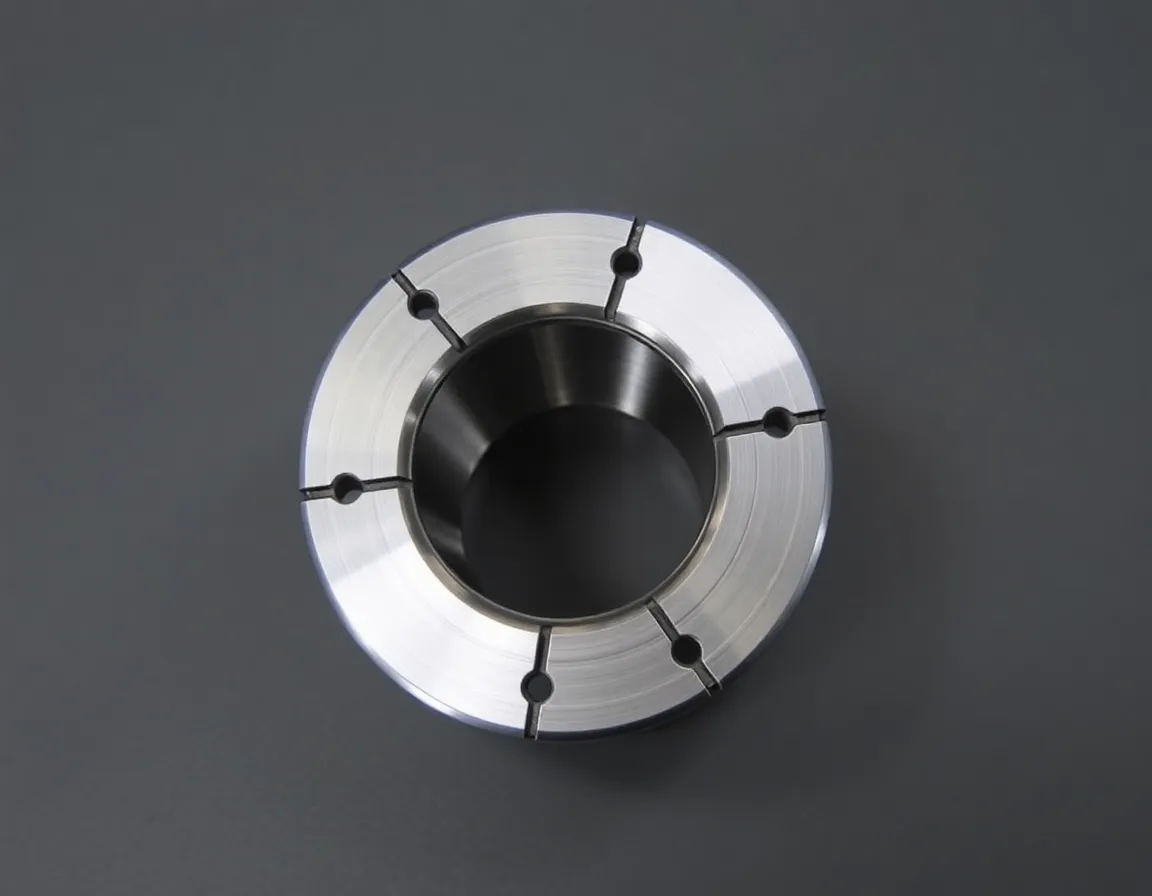
Understanding Special Collet Manufacturing
In the world of high-precision machining, the difference between a good part and a great part often comes down to microns. While cutting tools and machine tools grab the headlines, the humble collet—the component responsible for gripping and holding the tool—quietly determines whether your operation achieves repeatable precision or struggles with runout, chatter, and inconsistent finishes. Special collet manufacturing refers to the design and production of custom collets engineered for specific tools, workpieces, or machining conditions that standard off-the-shelf collets cannot adequately handle.
Unlike standard collets, which are mass-produced to common dimensional standards such as DIN 6499 or ISO 15488, special collets are built to order. They may feature non-standard tapers, custom bore geometries, specialized gripping surfaces, or unique material compositions. The result is a holding solution tailored precisely to the application—whether that means gripping a delicate medical component, holding an exotic tool shank, or maintaining sub-micron concentricity at high spindle speeds.
This article explores five secrets that separate exceptional special collet manufacturing from merely adequate production. Each principle reflects the realities of modern precision engineering, where tolerance stack-ups, thermal behavior, and material science all converge on the shop floor.
Secret 1: Precision Starts With the Bore and Taper Geometry
The single most important characteristic of any collet is its geometry—specifically the relationship between the internal bore, the external taper, and the collet's clamping slots. In special collet manufacturing, this geometry must be engineered from the ground up rather than adapted from a catalog drawing.
Bore Tolerance and Concentricity
The internal bore determines how the tool or workpiece is seated. For special collets, bore tolerances are typically held to ±2 to ±5 microns, and in extreme cases even tighter. Concentricity between the bore and the external taper is equally critical; any eccentricity translates directly into tool runout, which degrades surface finish, shortens tool life, and introduces vibration.
Manufacturers achieve this through precision grinding on dedicated collet grinders, often using in-process gauging to verify concentricity at multiple points along the bore. The taper itself must be ground to match the spindle nose within a very tight angular tolerance—typically measured in arc-seconds rather than degrees.
Slot Design and Flexibility
The slots cut into a collet provide the elastic compliance that allows it to close around the tool. In special collet manufacturing, slot count, width, depth, and termination geometry are all engineered for the specific clamping range and required gripping force. Too few slots, and the collet cannot conform to the tool shank; too many, and the collet loses rigidity and gripping strength.
- Slot count: Typically 3 to 8, depending on diameter and clamping range
- Slot termination: Radiused ends prevent stress cracking and extend fatigue life
- Clamping range: Special collets are often designed for a narrow, application-specific range to maximize gripping accuracy
Secret 2: Material Selection Drives Performance and Longevity
Standard collets are commonly made from spring steel or alloy steel, but special collet manufacturing frequently demands more exotic materials to meet application requirements. The choice of material affects elasticity, wear resistance, corrosion resistance, and thermal stability—all of which influence precision over the collet's service life.
Common Materials for Special Collets
- Hardened alloy steel: The workhorse material for general-purpose special collets, offering a good balance of elasticity and wear resistance
- Stainless steel: Specified for medical, food processing, and cleanroom applications where corrosion resistance is essential
- Tool steel and powder metallurgy steels: Used when high wear resistance is required, such as in high-volume production with abrasive workpieces
- Beryllium copper and specialty alloys: Selected for non-magnetic or high-conductivity requirements
- Carbide-lined or coated collets: Applied when gripping hard materials or when extended wear life justifies the added cost
Heat Treatment and Stress Relieving
Material selection is only half the story. The heat treatment process determines whether the collet achieves the right combination of hardness and toughness. Special collet manufacturers typically harden collets to HRC 55–62 in the gripping areas while maintaining enough core toughness to resist cracking under repeated clamping cycles. Stress relieving after machining and after hardening is essential to dimensional stability—without it, collets can distort over time, losing the precision they were built to deliver.
Secret 3: Custom Gripping Features Solve Application-Specific Problems
What truly distinguishes special collet manufacturing from standard production is the ability to incorporate custom gripping features. These features address problems that off-the-shelf collets simply cannot solve.
Special Bore Profiles
Many special collets feature non-round bores—hexagonal, square, splined, or profiled to match a specific workpiece geometry. This eliminates the need for separate fixtures and allows direct gripping of the part or tool. Manufacturing such bores requires specialized EDM or grinding operations, and the collet's slot pattern must be designed so that clamping pressure is distributed evenly around the profile.
Surface Treatments and Coatings
Gripping surfaces can be enhanced with coatings such as carbono tipo diamante (DLC), titanium nitride (TiN), or tungsten carbide to increase friction and reduce wear. Conversely, some applications require reduced marking on delicate workpieces, in which case polished or polymer-lined bores are specified. Special collet manufacturers work closely with coating suppliers to ensure that coating thickness does not compromise bore tolerance.
Integrated Features
Special collets can incorporate features that would be impossible in standard designs: internal coolant passages, chip-breaker geometries, locating shoulders for axial positioning, or even embedded sensors for clamping force monitoring. Each added feature introduces manufacturing complexity, but the payoff is a holding solution that performs a function no catalog part can match.
Secret 4: Quality Control and Verification Are Non-Negotiable
In special collet manufacturing, inspection is not a final step—it is woven into every stage of production. Because special collets are typically produced in small batches for critical applications, the cost of a defective collet reaching the customer is far higher than the cost of thorough verification.
Inspección dimensional
Every special collet should be inspected for bore diameter, taper angle, concentricity, slot geometry, and overall length. Modern manufacturers use máquinas de medición por coordenadas (CMM), optical comparators, and air gauging to verify these characteristics. For high-precision collets, inspection may be performed at controlled temperature (20°C ± 1°C) to eliminate thermal measurement error.
Pruebas funcionales
Dimensional compliance alone does not guarantee performance. Leading manufacturers perform functional tests that simulate actual clamping conditions:
- Runout testing: Measuring tool deflection at the collet face under clamping load
- Clamping force verification: Confirming that the collet generates the specified gripping force across its intended range
- Fatigue cycling: Repeated clamp/unclamp cycles to verify that precision is maintained over the collet's service life
- Balance testing: Critical for high-speed applications, where imbalance causes vibration and premature bearing wear
Trazabilidad y documentación
Special collets for aerospace, medical, and semiconductor applications require full material traceability and inspection documentation. Manufacturers must maintain records linking each collet to its material lot, heat treatment batch, and inspection results. This documentation is not bureaucratic overhead—it is the evidence that precision was achieved and can be repeated.
Secret 5: Collaboration Between Manufacturer and Application Engineer
The final secret to perfect precision manufacturing with special collets is perhaps the most overlooked: close collaboration between the collet manufacturer and the application engineer. A special collet is not a commodity item to be ordered from a website; it is an engineered solution that must be developed with a clear understanding of the application.
Information That Drives Success
Effective special collet manufacturing begins with detailed application data. Manufacturers need to know:
- The exact tool or workpiece geometry, including tolerances and surface finish
- Spindle interface details, including taper specification and drawbar force
- Operating parameters: spindle speed, feed rate, coolant conditions, and duty cycle
- Environmental factors: temperature variation, contamination, and vibration
- Expected service life and maintenance intervals
When this information is shared openly, the manufacturer can optimize material selection, slot design, and tolerancing for the specific application. When it is withheld—or when the customer simply asks for "a collet like the last one"—the result is often a compromise that underperforms.
Prototyping and Iteration
For demanding applications, the best special collet manufacturers offer prototyping services. A first-article collet is produced, tested in the actual application, and refined based on real-world performance data. This iterative approach costs more upfront but dramatically reduces the risk of production downtime caused by an underperforming holding solution.
Long-Term Partnership
Precision manufacturing is a moving target. As tools evolve, workpiece materials change, and spindle speeds increase, the collet that worked yesterday may not be optimal tomorrow. Manufacturers who maintain an ongoing dialogue with their collet supplier benefit from proactive design updates, replenishment planning, and continuous improvement—turning a component purchase into a strategic partnership.
Conclusión
Special collet manufacturing sits at the intersection of precision grinding, materials science, and application engineering. The five secrets outlined here—mastering bore and taper geometry, selecting the right materials and heat treatment, engineering custom gripping features, enforcing rigorous quality control, and collaborating closely with application engineers—are what separate collets that merely hold a tool from collets that elevate an entire machining process.
For manufacturers pursuing perfect precision, the message is clear: do not treat collets as an afterthought. Invest in special collet manufacturing expertise, share application data openly, and demand verifiable quality. The rewards—longer tool life, better surface finishes, tighter tolerances, and fewer production interruptions—compound with every part you make.