
+86-188-7042-1176
project@jcproto.com
Lun-Vie: 8am-6pm (GMT+8)
ES
Certificado ISO 9001:2015
Roscas métricas
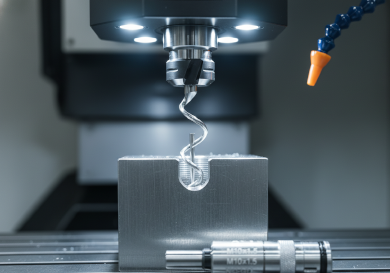
Las roscas métricas (perfil M) son el estándar aceptado globalmente para la fijación, definido por ISO 261 e ISO 965. Se caracterizan por un ángulo de flanco de 60 grados y se miden por diámetro exterior y paso (en milímetros).
En Jucheng Precision, producimos millones de agujeros y ejes roscados métricos anualmente. Nuestra instalación está equipada con centros de roscado Brother de alta velocidad para la producción rápida de roscas pequeñas (M1.6 – M12) y máquinas de 5 ejes para el fresado de roscas complejo de roscas de gran diámetro o de metal duro. Verificamos la calidad de la rosca utilizando calibres Go/No-Go calibrados para garantizar que cada pieza cumpla con la clase de tolerancia especificada (típicamente 6H para roscas internas y 6g para externas).
Especificaciones clave
| Especificación | Rango técnico | Nota |
|---|---|---|
| Thread Range | M1.0 to M150 | Coarse & Fine pitches |
| Standard Profile | ISO 68-1 (60° V-Thread) | Global standard |
| Tolerance Class (Internal) | 6H (Standard), 4H (Precision) | Checked with Plug Gauge |
| Tolerance Class (External) | 6g (Standard), 4g (Precision) | Checked with Ring Gauge |
| Methods | Cut, Rolled, Ground, Milled | Depende del material |
| Materiales compatibles | All Metals & Plastics | Specific taps for specific metals |
Threading Methods
| Método | Descripción | Beneficios clave y aplicaciones |
|---|---|---|
| Rigid Tapping | Synchronizing the machine spindle rotation with the feed rate to cut threads using a tap. | Beneficio: Highest speed and accuracy for standard holes (M2-M20). Aplicación: Electronic enclosures, automotive brackets. |
| Fresado de roscas | Using a rotating multi-tooth cutter to interpolate the thread path. Can cut ID and OD threads. | Beneficio: Can thread hard metals (50+ HRC), precise size control, one tool for multiple sizes. Aplicación: Large diameter aerospace parts, blind holes. |
| Single Point Turning | Using a lathe insert to cut the thread in multiple passes. | Beneficio: Can generate any custom pitch or diameter. Aplicación: Precision shafts, lead screws. |
| Thread Rolling | Cold forming the thread using dies instead of cutting. Displaces material to form the shape. | Beneficio: Strongest threads (unbroken grain flow), no chips. Aplicación: High-strength aerospace fasteners. |
Design Guidelines for Metric Threads
Thread Depth:
Avoid threading deeper than necessary. A depth of 1.5x to 2x Diameter is sufficient for full strength in steel. Going deeper increases the risk of tap breakage without adding strength.
Blind Hole Relief:
A tap cannot cut threads all the way to the bottom of a blind hole (due to the tap chamfer). Consejo: Design the drill depth to be at least 1 pitch length deeper than the required full thread depth.
Countersink / Chamfer:
Always include a 45° chamfer at the start of the hole. This guides the mating bolt and prevents the first thread from bulging out (mushrooming) during machining.
Fine vs. Coarse Pitch:
Coarse (e.g., M10x1.5): Standard, less likely to cross-thread, faster assembly.
Fine (e.g., M10x1.0): Stronger, better for vibration resistance, but easier to strip in soft materials.
Aplicaciones industriales
Global Manufacturing
Metric is the standard for virtually all industries outside the USA, including Automotive (German/Japanese specs) and Consumer Electronics.
Robótica
Precision fine-pitch metric threads are used on sensor mounts and optical adjustments for fine tuning.
Dispositivos médicos
Micro-metric threads (M1.0, M1.2) are standard in surgical implants and hearing aids.