
The global shift toward sustainable transportation has accelerated the demand for high-performance electric vehicle components. At the heart of every power distribution system, machined ev connectors serve as the critical link that ensures energy flows safely and efficiently from the battery to the drivetrain. Unlike standard electrical components, these parts must withstand extreme thermal cycles, high-voltage loads, and mechanical vibrations. Precision CNC machining has emerged as the gold standard for producing these components, offering a level of accuracy that traditional casting or stamping simply cannot match. This guide explores the intricate world of connector manufacturing, focusing on how jucheng leverages advanced technology to meet the rigorous standards of the modern EV industry.
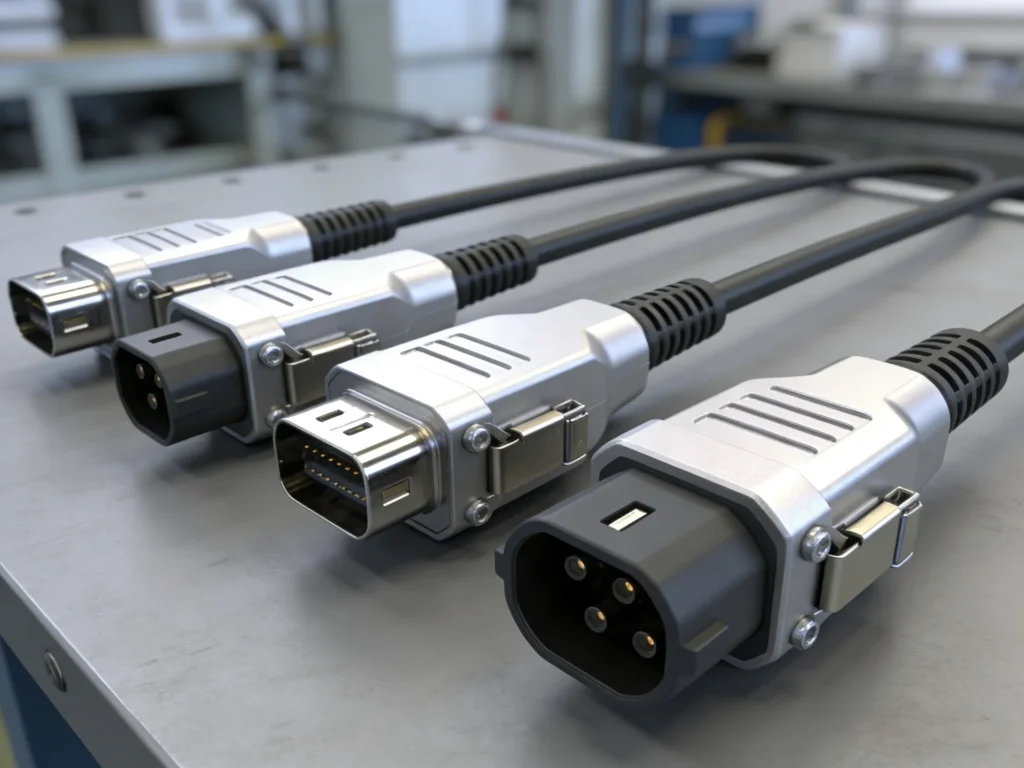 Section 1: Understanding the Principles of Machined EV Connectors
To appreciate the complexity of these components, one might first look at the machined ev connectors wiki definition, which describes them as precision-engineered interfaces used to join electrical circuits in electric drivetrains. In a practical sense, machined ev connectors are far more than just metal plugs. They are the result of sophisticated machined ev connectors design processes that prioritize low contact resistance and high electrical conductivity. When an electric vehicle accelerates, thousands of amperes may flow through these pins; any imperfection in the surface finish or dimensional accuracy could lead to overheating or catastrophic system failure.
The core principle of a machined connector lies in its geometric integrity. By using CNC turning and milling, manufacturers can achieve tolerances as tight as +/- 0.005mm. This level of precision ensures that the machined ev connectors pins maintain a perfect “interference fit” or high-pressure contact within the housing. The machining process allows for complex features such as internal threads, cooling grooves, and specialized knurling that are difficult to achieve through other methods. This structural rigidity is essential for maintaining a stable connection over the vehicle’s lifespan, which might span over fifteen years of daily use in diverse climates.
The Role of Material Science in Machining
In the realm of machined ev connectors, material selection is as important as the machining process itself. Most high-performance connectors are crafted from tellurium copper or oxygen-free high-conductivity (OFHC) copper. These materials offer the best balance of electrical performance and machinability. While copper is notoriously “sticky” and difficult to machine at high speeds, jucheng utilizes specialized carbide tooling and high-pressure coolant systems to ensure the surface remains burr-free. A smooth surface finish is not just aesthetic; it reduces the skin effect in high-frequency applications and prevents the formation of electric arcs that could degrade the terminal over time.
Section 2: Core Application Scenarios in the EV Ecosystem
The application of machined ev connectors extends far beyond the engine bay of a passenger car. As the industry matures, the diversity of these components has expanded to satisfy various niche requirements. From the high-voltage battery pack to the sensitive sensors in ADAS (Advanced Driver Assistance Systems), precision-machined parts are everywhere.
- Battery Management Systems (BMS): Within the battery pack, machined ev connectors facilitate the monitoring of individual cell voltages. These connectors must be compact yet capable of handling significant data and power throughput without generating heat.
- Fast Charging Infrastructure: The pins found in DC fast-charging stations are often the largest and most robust machined ev connectors. They must endure thousands of insertion cycles and environmental exposure. Reliability here is key to consumer confidence in EV technology.
- Inverters and Converters: Power electronics require connectors that can handle rapid switching frequencies. Machined pins provide the necessary surface area to dissipate heat while maintaining a solid electrical path.
- Commercial and Heavy-Duty EVs: In the trucking and bus industry, the mechanical stress on connectors is amplified. machined ev connectors manufacturers often provide reinforced designs for these sectors to prevent disconnection due to road vibration.
As the demand for localized supply chains grows, many companies are seeking machined ev connectors in malaysia and other Southeast Asian hubs to diversify their manufacturing footprint. This regional expansion highlights the global nature of the EV supply chain and the need for standardized quality across different production sites. Whether produced in China or elsewhere, the technical specifications must remain consistent to ensure vehicle safety.
Section 3: Key Factors for Selecting Machined EV Connectors
Choosing the right supplier for machined ev connectors involves evaluating several technical and logistical variables. A buyer cannot simply look at a machined ev connectors catalogue and pick a part based on price alone. The stakes are too high. For a procurement manager or an engineer, the following factors are non-negotiable.
1. Dimensional Precision and Tolerances
The performance of machined ev connectors pins depends entirely on their fit. If a pin is too loose, it creates resistance and heat. If it is too tight, the assembly process becomes difficult, and the plating may be damaged during insertion. Professional machined ev connectors manufacturers like jucheng use automated optical inspection (AOI) to verify that every single part meets the micron-level specifications defined in the machined ev connectors design phase.
2. Surface Finishing and Plating
Because copper oxidizes quickly, machined ev connectors are almost always plated with silver, gold, or nickel. Silver is preferred for high-power applications due to its superior conductivity, while gold is used for signal-level connectors where corrosion resistance is paramount. The quality of the plating process is just as critical as the machining itself. Issues like “whisker” growth or uneven thickness can lead to long-term reliability problems. A comprehensive machined ev connectors catalogue pdf should detail the plating thicknesses and salt-spray test results for each product line.
3. Material Certification and Traceability
In the automotive industry, traceability is mandatory. Every batch of machined ev connectors should be accompanied by material certifications (MTRs) that prove the chemical composition of the alloy used. This is particularly important for machined ev connectors china sourced products, where international buyers require strict adherence to RoHS and REACH standards. jucheng maintains a robust quality management system that tracks parts from the raw metal bar to the final packaged component.
4. Thermal Management Properties
High-voltage connectors must be able to shed heat. The design of the connector often includes heat-sinking fins or specific mass-to-surface-area ratios. During the selection process, engineers often request thermal simulation data to see how the connector performs under 120% of its rated current. A well-designed machined ev connectors assembly will operate at a temperature rise of no more than 30°C above ambient conditions.
| Feature | Machined Connectors | Stamped/Cast Connectors | Impact on Performance |
|---|---|---|---|
| Precision | High (+/- 0.005mm) | Moderate (+/- 0.05mm) | Lower contact resistance and better fit. |
| Material Density | High (Solid Bar Stock) | Lower (Porosity in Casting) | Superior electrical and thermal conductivity. |
| Customization | Excellent (No tooling cost) | Poor (High mold/die costs) | Allows for rapid prototyping and iteration. |
| Surface Finish | Ra 0.4 – 0.8 | Ra 1.6 – 3.2 | Reduces friction and extends plating life. |
Section 4: Installation and Maintenance Guidelines
Even the best machined ev connectors can fail if they are improperly installed or neglected. Automotive environments are harsh, involving salt, moisture, and extreme temperature fluctuations. To ensure the longevity of machined ev connectors pins, a rigorous installation protocol must be followed.
During installation, it is vital to use the correct torque settings for any bolted connections. Over-tightening can deform the machined threads, while under-tightening leads to high resistance and “hot spots.” Technicians should also ensure that the connectors are clean and free of grease or debris before mating. Many machined ev connectors manufacturers recommend using a dielectric grease in specific environments to prevent moisture ingress, although this must be applied carefully to avoid interfering with the electrical contact.
Maintenance of machined ev connectors typically involves periodic visual inspections. In fleet operations, such as electric buses, using infrared thermography during charging can quickly identify a failing connector. If a connector shows signs of discoloration (blueing or browning), it usually indicates an overheating issue and should be replaced immediately. Because these parts are often part of a modular system, referring to a machined ev connectors catalogue allows maintenance teams to quickly source exact replacements with the same machined ev connectors design specifications.
Section 5: Why Partner with Jucheng for EV Machining?
When it comes to machined ev connectors china, jucheng stands out as a leader in precision and reliability. Our facility is not just a machine shop; it is a center of excellence for automotive power electronics. We understand that in the EV world, a single micron can be the difference between a high-performing vehicle and a safety recall. Our commitment to quality is backed by advanced equipment and a deep understanding of the machined ev connectors market.
Our expertise in machined ev connectors design allows us to assist clients in the early stages of product development. We can suggest design-for-manufacturability (DFM) improvements that reduce waste and lower costs without compromising performance. Furthermore, jucheng offers a comprehensive machined ev connectors catalogue pdf that serves as a reference for engineers worldwide, providing them with the technical data needed to make informed decisions. Whether you are looking for standard machined ev connectors pins or complex multi-component assemblies, our production lines are optimized for both high-volume runs and specialized low-volume prototypes.
In addition to our technical capabilities, jucheng prioritizes international standards. We are fully aware of the logistical needs of our clients, whether they are looking for machined ev connectors in malaysia, Europe, or North America. Our global shipping network and robust quality control protocols ensure that every part arrives on time and in perfect condition. By choosing jucheng, you are not just buying a component; you are securing a partnership with a manufacturer that is as invested in the future of electric mobility as you are.
Section 6: Frequently Asked Questions (FAQ)
Q1: What makes machined ev connectors superior to stamped ones?
Machined ev connectors are produced from solid metal stock, which provides better structural integrity and higher electrical conductivity compared to stamped parts. Machining allows for complex geometries and tighter tolerances, which are essential for high-voltage applications where contact stability is critical.
code
Code
Q2: Can Jucheng provide a machined ev connectors catalogue for standard parts?
Yes, we offer a detailed machined ev connectors catalogue that includes a wide range of standard pins, sockets, and housings. For more specific technical data, customers can download our machined ev connectors catalogue pdf which contains dimensional drawings and material specifications.
Q3: What materials are commonly used for machined ev connectors pins?
The most common materials are copper alloys, particularly C14500 (Tellurium Copper) and C11000 (EHD Copper). These materials offer excellent conductivity. For specialized applications requiring higher strength, beryllium copper or brass may be used, though they have slightly lower conductivity.
Q4: How does Jucheng ensure the quality of its machined ev connectors china production?
We implement a multi-stage quality control process, including raw material verification, in-process CNC monitoring, and final 100% inspection using automated measurement systems. We are ISO 9001 certified and follow IATF 16949 guidelines for automotive components.
Q5: Is it possible to get custom machined ev connectors design support?
Absolutely. Our engineering team works closely with clients to develop custom machined ev connectors design solutions. We can handle everything from initial 3D modeling and prototyping to full-scale production, ensuring the final product meets your specific voltage and current requirements.
Q6: Are there regional suppliers for machined ev connectors in malaysia?
While jucheng is headquartered in China, we supply many clients in the Southeast Asian market, including those looking for machined ev connectors in malaysia. We offer competitive shipping and localized support for the growing EV manufacturing hubs in that region.
Q7: What is the typical lead time for custom machined ev connectors?
Prototyping usually takes 7-10 days, while mass production lead times depend on the complexity and volume. Generally, a standard order can be fulfilled within 3-4 weeks. We pride ourselves on our ability to react quickly to the fast-paced needs of the EV industry.
Conclusion: The Future of EV Interconnect Technologies
As battery voltages increase from 400V to 800V and beyond, the role of machined ev connectors will only become more vital. The industry is moving toward higher power densities, requiring connectors that can handle more current in smaller footprints. This trend places an even greater emphasis on precision machining and advanced material science. By staying at the forefront of CNC technology and maintaining a rigorous focus on quality, jucheng is prepared to support the next generation of electric vehicles.
Whether you are an engineer designing a new charging system or a procurement specialist searching for a reliable manufacturer, understanding the nuances of machined ev connectors is the first step toward a successful project. We invite you to explore our capabilities and see how our expertise can drive your innovation forward. For more technical information, please visit our website at jccncmachining.com or consult our machined ev connectors wiki resources for deep-dives into specific machining techniques.
Ready to Power Your Next EV Project?
Get the precision and reliability your high-voltage systems demand with Jucheng’s expert CNC machining services.
Contact us today for a custom quote or to request our latest machined ev connectors catalogue pdf!