
In the rapidly evolving landscape of unmanned aerial vehicles, the demand for high-performance components has never been more critical. Pilots and engineers alike recognize that the backbone of a reliable racing or cinematic quadcopter lies in the quality of its structural components. fpv drone parts machining represents the intersection of aerospace engineering and agile manufacturing, providing the necessary precision that off-the-shelf plastic components simply cannot match. Whether you are building a sub-250g toothpick or a heavy-lift cinema rig, understanding the nuances of how these parts are fabricated could be the deciding factor between a podium finish and a mid-air failure.
 Understanding FPV Drone Parts Machining: Definitions and Core Principles
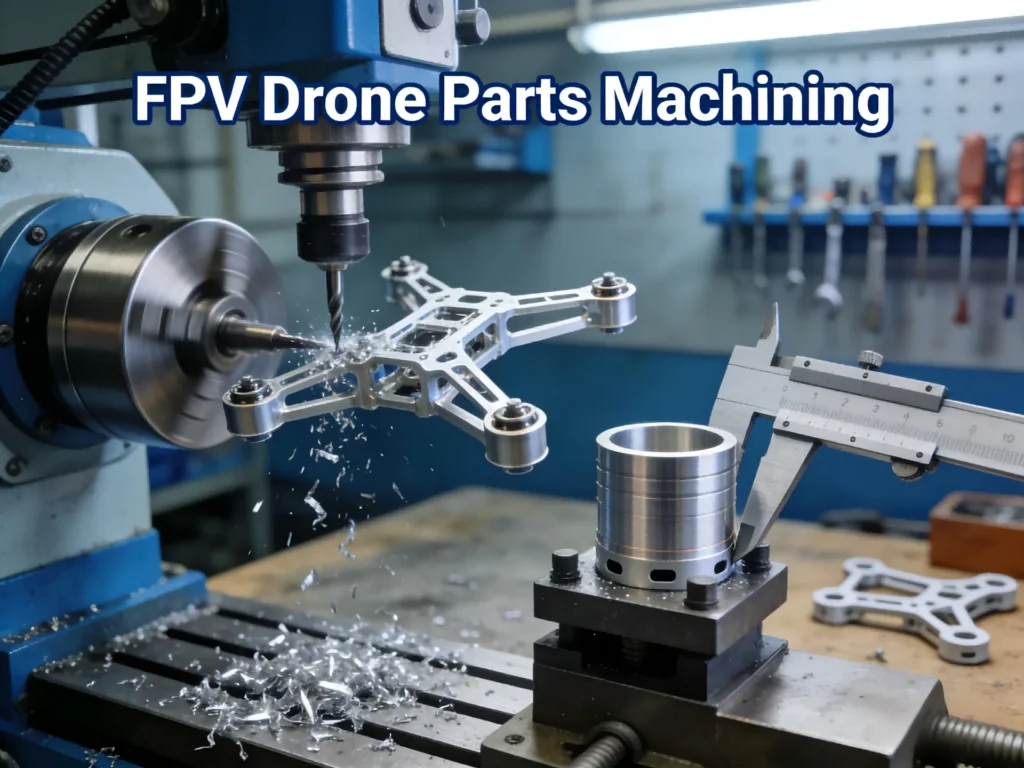
At its core, fpv drone parts machining involves the use of computer numerical control (CNC) technology to subtractively manufacture components from solid blocks of material. Unlike traditional molding, CNC machining allows for incredibly tight tolerances, often within microns, which is essential for components like motor mounts and camera gimbals where vibration isolation is paramount. The process begins with a digital CAD (Computer-Aided Design) model, which is translated into G-code. This code directs specialized cutting tools to move along multiple axes to carve out complex geometries that define modern drone aesthetics and functionality.
The principles of this manufacturing method rely heavily on material integrity. In the FPV community, weight is the ultimate enemy. Therefore, the machining process focuses on maximizing the strength-to-weight ratio. This is achieved through pocketing techniques, where non-structural material is removed from the interior of a part while maintaining a rigid outer skeleton. Advanced 5-axis fpv drone parts machining may be employed for intricate designs, such as aerodynamic motor bells or integrated frame braces, ensuring that the final product is as light as possible without compromising the structural safety of the aircraft.
Furthermore, the precision of fpv drone parts machining ensures that every bolt hole and press-fit bearing seat is perfectly aligned. For pilots who push their gear to the absolute limit in high-speed maneuvers, the thermal stability provided by machined metals—particularly in heat-intensive areas like motor bases—may offer a significant performance advantage over composite or plastic alternatives. This thermal management is a key principle in modern drone design, allowing electronics to operate at peak efficiency for longer durations.
Core Application Scenarios for Machined Drone Components
The versatility of fpv drone parts machining allows it to serve a wide array of specialized industries beyond hobbyist racing. While the roots of FPV are in competitive flight, the professional applications have expanded exponentially in recent years. Each scenario requires a different approach to machining and material selection to meet specific operational goals.
- Competitive Drone Racing: In this high-stakes environment, weight and aerodynamics are the primary concerns. Machined aluminum motor mounts and ultra-slim carbon fiber arms are standard. The ability to produce identical, high-tolerance parts allows racing teams to maintain a fleet of drones with consistent flight characteristics.
- Cinematography and Aerial Photography: Professional filmmakers require stable platforms for expensive camera gear. fpv drone parts machining is used to create custom gimbals, dampening plates, and quick-release systems that must remain rigid under the high G-forces of aggressive cinematic flight.
- Industrial Inspection and Search and Rescue (SAR): Drones used for inspecting power lines or searching rugged terrain require extreme durability. Machined parts in these drones often feature weather-sealing grooves and reinforced mounting points for sensors, thermal cameras, and GPS modules.
- Agricultural Monitoring: Large-scale agricultural drones utilize machined components for high-torque motor housings and foldable arm mechanisms. These parts must withstand corrosive environments and repetitive mechanical stress during long operational hours.
- Defense and Tactical Operations: For specialized mission profiles, custom fpv drone parts machining allows for the integration of encrypted communication modules and specialized payload release mechanisms that require high-precision interlocking parts.
These applications highlight that fpv drone parts machining is not just about aesthetics; it is about enabling functionality that standard manufacturing cannot provide. By choosing CNC machining, developers could create modular systems where parts are easily swapped in the field, a critical requirement for both racing teams and industrial operators.
Key Selection Factors for Professional FPV Machining Services
When sourcing a partner for fpv drone parts machining, several critical factors must be evaluated to ensure the final components meet the rigorous demands of flight. The difference between a high-quality machined part and a budget alternative often comes down to the manufacturer’s attention to detail and technical capability.
1. Dimensional Accuracy and Tolerances
In the world of FPV, a fraction of a millimeter can be the difference between a motor spinning freely and one that binds. A reputable provider of fpv drone parts machining should offer tolerances as tight as +/- 0.01mm. This is especially vital for motor bell housings and bearing seats, where any eccentricity can lead to excessive vibration and premature component failure.
2. Material Selection and Certification
The choice of material is fundamental. Most high-end FPV components utilize 7075-T6 aluminum or high-modulus carbon fiber. When evaluating a supplier, you should confirm they use certified materials. For instance, 7075 aluminum offers superior tensile strength compared to the more common 6061, making it ideal for high-impact areas like arm braces and frame standoffs. A professional shop will provide material data sheets upon request to verify these properties.
3. Surface Finish and Post-Processing
Beyond the raw cut, the surface treatment plays a dual role in protection and performance. Anodizing is a popular choice in fpv drone parts machining because it increases surface hardness and corrosion resistance while allowing for custom branding and color-coding. Additionally, smooth surface finishes reduce air resistance and prevent stress fractures from forming at micro-scratches on the surface of the metal.
4. Prototyping Speed and Scalability
The FPV industry moves fast. A manufacturer like jucheng that can pivot from a small prototyping run to full-scale production is invaluable. Look for shops that offer rapid turnaround times without sacrificing the quality of the fpv drone parts machining. This allows designers to iterate on designs quickly based on flight test data, which is common in the collaborative environments found on Reddit and specialized drone forums.
Material Performance Comparison Table
| Material Type | Tensile Strength | Weight Density | Best Use Case | Machining Difficulty |
|---|---|---|---|---|
| Aluminum 6061-T6 | Moderate (310 MPa) | Low (2.7 g/cm³) | General frame parts, standoffs | Easy |
| Aluminum 7075-T6 | High (570 MPa) | Low (2.8 g/cm³) | Motor mounts, high-stress braces | Moderate |
| Titanium Grade 5 | Very High (950 MPa) | Moderate (4.4 g/cm³) | Axles, ultra-durable fasteners | High |
| Carbon Fiber (3K/12K) | Extremely High (Ratio) | Very Low (1.6 g/cm³) | Main frame plates, arms | Moderate (Tool wear) |
Installation and Maintenance Tips for Machined FPV Components
Once you have received your precision components from fpv drone parts machining, proper installation and ongoing maintenance are essential to preserving their performance. Machined parts, while durable, require specific care to avoid stripping threads or compromising their structural integrity.
During the assembly phase, it is highly recommended to use a mild thread-locking compound (such as blue Loctite) on all metal-to-metal connections. The high-frequency vibrations generated by FPV motors can easily loosen screws over time. However, be cautious not to over-tighten; machined aluminum threads could be damaged if excessive torque is applied. Using a calibrated torque driver is a best practice among professional builders who prioritize consistency.
Maintenance of components produced via fpv drone parts machining should include regular inspections for stress cracks, especially after crashes. While 7075 aluminum is incredibly strong, it can be more brittle than 6061, meaning it may crack rather than bend under extreme impact. Cleaning is also vital. Dust and debris can act as abrasives in moving parts or gimbals. Using compressed air and isopropyl alcohol will keep your machined surfaces looking new and functioning smoothly. For carbon fiber parts, checking for delamination at the edges of the fpv drone parts machining cuts is crucial; if any fraying is spotted, sealing the edges with a thin layer of cyanoacrylate (CA) glue can prevent further damage.
Frequently Asked Questions (FAQ)
1. Why is CNC machining preferred over 3D printing for FPV parts?
While 3D printing is excellent for rapid prototyping and non-structural accessories, fpv drone parts machining offers significantly higher strength and precision. CNC parts are isotropic, meaning they have uniform strength in all directions, whereas 3D prints have weak points between layers. For critical components like motor mounts, the heat resistance and structural rigidity of machined metal are unmatched.
2. Can I get custom designs machined for a single drone build?
Yes, many specialized shops like jucheng cater to both individual custom orders and large-scale production. Small-batch fpv drone parts machining is a common request from professional pilots who have developed their own unique frame geometries or mounting solutions.
3. How does machining affect the weight of my FPV drone?
In many cases, fpv drone parts machining actually helps reduce weight. Because CNC machines can remove material with extreme precision, designers can create “skeletonized” parts that only keep material where it is structurally necessary. This often results in a part that is both lighter and stronger than a molded or cast equivalent.
4. What are the most common materials used in drone machining?
The industry standard for fpv drone parts machining includes 6061 and 7075 aluminum for structural components, titanium for hardware and shafts, and high-quality carbon fiber for frames. Some specialized builds may also use engineering plastics like Delrin for spacers or insulators due to its excellent machinability and low friction.
5. Does the surface finish of a machined part impact flight performance?
While the impact on aerodynamics is minimal at typical FPV scales, a smooth finish from high-quality fpv drone parts machining reduces the likelihood of stress concentrations. Furthermore, anodized finishes provide a hard protective layer that prevents oxidation, which could otherwise degrade the material over time, especially in humid or coastal environments.
6. What is the typical lead time for custom machined drone parts?
Lead times vary based on complexity and quantity. However, for standard fpv drone parts machining, the process usually takes between 5 to 10 business days. Rapid prototyping services may offer faster turnarounds for pilots who need to get back in the air quickly after a design change.
Why Jucheng is the Premier Choice for FPV Drone Parts Machining
When it comes to the specialized field of fpv drone parts machining, jucheng stands out as a leader in both technical expertise and industry experience. The unique challenges of drone manufacturing—extreme weight constraints, high-vibration environments, and the need for absolute reliability—require a manufacturer that understands the “pilot’s perspective.”
At jucheng, we utilize state-of-the-art multi-axis CNC centers that are specifically calibrated for the tight tolerances required by the aerospace sector. Our engineering team doesn’t just execute a drawing; we provide “Design for Manufacturing” (DFM) feedback to help optimize your fpv drone parts machining for the best possible strength-to-weight ratio. This collaborative approach has made us a favorite among the innovative designers seen on platforms like Facebook drone groups and Reddit’s r/Multicopter.
Quality assurance is at the heart of our operation. Every component produced through our fpv drone parts machining process undergoes rigorous inspection, including coordinate measuring machine (CMM) checks and material verification. We understand that in a racing heat or a cinematic shoot, there is no room for part failure. By choosing jucheng, you are not just buying a part; you are investing in the peace of mind that comes from professional-grade engineering and a commitment to the FPV community’s growth. Our versatility in handling materials from advanced thermoplastics to aerospace-grade alloys ensures that whatever your vision for the next generation of flight, we have the tools and talent to bring it to life.
For those looking to push the boundaries of what is possible in the air, jucheng offers the precision and reliability that only a top-tier fpv drone parts machining specialist can provide. We invite you to experience the difference that expert manufacturing makes in your flight performance.
Elevate Your Flight with Precision Engineering
Are you ready to take your FPV builds to the next level? Whether you need a single custom prototype or a high-volume production run, our team of experts is here to help. At jucheng, we specialize in high-tolerance fpv drone parts machining that meets the needs of the most demanding pilots and industrial applications.
Contact us today for a free quote and technical consultation! Let’s build the future of FPV together.