
In the rapidly evolving landscape of sustainable energy, the demand for high-performance electric vehicles (EVs) has placed a spotlight on the critical components that ensure safety and efficiency. At the heart of this revolution lies the process of battery housing machining. Whether you are developing a prototype for a startup or scaling production for an established automotive brand, understanding the intricacies of creating a robust ev battery casing is essential. This guide serves as an encyclopedia for engineers, procurement specialists, and enthusiasts looking to navigate the complex world of precision manufacturing in the battery sector.
The transition to electric mobility has necessitated a shift in how we approach structural integrity. A battery house is no longer just a container; it is a sophisticated thermal management system and a protective shield against external impacts. As the industry grows, searches for battery house usa and batteryhouse solutions have surged, highlighting a global need for localized, high-quality manufacturing. In this comprehensive guide, we will explore everything from material selection to the nuances of battery housing machining price structures, ensuring you have the knowledge to make informed decisions for your next project.
 Understanding the Fundamentals of battery housing machining
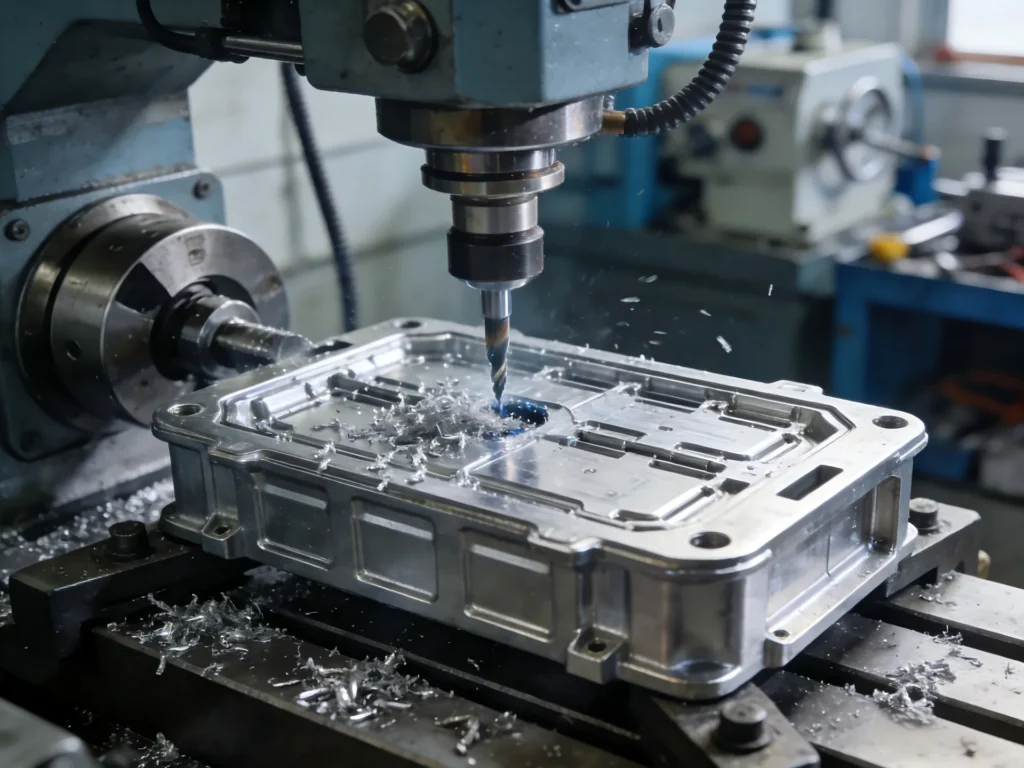
To appreciate the complexity of this field, one must first define what the process entails. battery housing machining is the subtractive manufacturing process—primarily using CNC (Computer Numerical Control) milling and turning—to create the enclosures that hold battery cells or modules. These housings must meet incredibly tight tolerances to ensure that cells remain stable under vibration and that thermal interfaces remain consistent.
The principle of operation involves taking a raw block of material, typically aluminum or a high-strength alloy, and using precision cutting tools to carve out cooling channels, mounting points, and sealing surfaces. The precision required is often within microns. This is because any deviation in the flatness of the housing could lead to poor contact with thermal pads, resulting in overheating or “thermal runaway.” Many discussions on platforms like Reddit and specialized engineering forums emphasize that the “housing” is as important as the “cell” itself when it comes to the longevity of the battery pack.
Core Materials and Their Role
While various materials could be used, the industry standard has gravitated towards aluminum 6061 and 7075. These materials offer an excellent strength-to-weight ratio, which is vital for maintaining vehicle range. When engineers look for a batteryhouse solution, they are often looking for a facility that can handle the unique challenges of machining thin-walled aluminum structures without warping. The thermal conductivity of aluminum also aids in dissipating the heat generated during rapid charging and discharging cycles.
Strategic Application Scenarios in Modern Industry
The applications for precision-machined battery housings extend far beyond the standard passenger car. As we move toward a more electrified world, different sectors require tailored solutions for energy storage.
- Automotive Industry: This is the most prominent sector. CNC machined ev battery casing units are used in high-performance sports cars and heavy-duty electric trucks where structural rigidity is paramount. Unlike cast housings, machined versions offer superior strength and can be customized for specific modular layouts.
- Aerospace and Aviation: Weight is the enemy of flight. Machining allows for “pocketing” and weight reduction techniques that are impossible with other manufacturing methods. For electric vertical take-off and landing (eVTOL) aircraft, the battery housing must be ultra-light yet capable of withstanding extreme pressure changes.
- Renewable Energy Storage: For “battery house” applications in residential or industrial settings, the housing must protect against environmental factors. In the battery house usa market, there is a growing trend toward robust, CNC-machined enclosures for outdoor energy storage systems (ESS) that can survive harsh climates.
- Marine Applications: Electric boats require housings that are not only precise but also highly resistant to corrosion. Machining specialized alloys like marine-grade aluminum ensures that the battery remains sealed against saltwater ingress.
In each of these scenarios, the common thread is the need for a solution that combines protection with functionality. The machining process allows for the integration of complex cooling paths directly into the housing walls, a feature that is increasingly sought after by thermal engineers.
Critical Factors in Choosing a battery housing machining Partner
Selecting a manufacturer is a strategic decision that affects the entire lifecycle of your product. Here are the essential factors to consider:
1. Precision and Tolerance Capabilities
The internal geometry of an ev battery casing must be flawless. You should look for a partner like jucheng that utilizes multi-axis CNC machines. This allows for the machining of complex shapes in a single setup, reducing the cumulative error that occurs when moving a part between machines. High-precision CMM (Coordinate Measuring Machine) reports should be a standard part of the delivery.
2. Thermal Management Expertise
A housing is not just a box; it is a heat exchanger. The machining provider must understand how surface finish affects thermal contact resistance. A smoother finish on the cooling plate areas ensures better heat transfer between the battery modules and the liquid cooling system.
3. battery housing machining price and Value Engineering
Cost is always a factor. The battery housing machining price is influenced by material waste, cycle time, and tool wear. An expert manufacturer will suggest “design for manufacturability” (DFM) improvements. For instance, increasing a corner radius might allow for larger, faster-cutting tools, significantly reducing the cost without compromising the structural integrity of the batteryhouse.
4. Certification and Quality Assurance
In the automotive and aerospace worlds, ISO 9001 and IATF 16949 certifications are non-negotiable. These ensure that every part produced is traceable and meets the rigorous safety standards required for high-voltage systems. When searching for battery house usa suppliers, verifying these credentials is the first step in risk mitigation.
Material Comparison for Battery Enclosures
Choosing the right material is a balance of weight, cost, and thermal performance. The following table provides a comparison of common materials used in battery housing machining.
| Material Type | Strength-to-Weight | Thermal Conductivity | Corrosion Resistance | Machining Difficulty |
|---|---|---|---|---|
| Aluminum 6061-T6 | High | Very High | Good | Low (Highly Machinable) |
| Aluminum 7075 | Very High | High | Average | Moderate |
| Stainless Steel 304 | Average | Low | Excellent | High |
| Magnesium Alloys | Excellent (Lightest) | Moderate | Poor (Needs Coating) | High (Flammability Risk) |
As indicated by the table, Aluminum 6061 remains the “gold standard” for most ev battery casing applications due to its balanced properties and relative ease of machining, which helps keep the battery housing machining price competitive.
Installation and Maintenance Best Practices
Even the most perfectly machined housing can fail if not installed or maintained correctly. The integration of a batteryhouse into a larger system requires attention to detail.
Installation Tips
- Sealing Integrity: Use high-quality gaskets or RTV sealants on the machined surfaces. Ensure that the surfaces are free of oil or debris before assembly to prevent leaks that could lead to short circuits.
- Torque Sequencing: When bolting the lid to the ev battery casing, follow a star-pattern torque sequence. This prevents warping the machined flange and ensures even pressure on the seal.
- Thermal Interface Material (TIM): Apply the TIM evenly. The precision of the battery housing machining ensures that the gap is minimal, but the TIM is necessary to fill microscopic air pockets.
Routine Maintenance
In industrial settings or heavy-duty EVs, the housing should be inspected for signs of stress corrosion cracking or impact damage. While the CNC-machined exterior is durable, checking the integrity of the cooling ports and connections is vital for long-term reliability. If you are using a battery house usa solution for grid storage, annual thermal imaging can help detect if the internal modules are losing contact with the machined cooling plate.
FAQ: Common Questions About battery housing machining
Q1: Why is CNC machining preferred over die-casting for EV battery housings?
CNC machining is often preferred during the prototyping and low-to-medium volume production phases. It offers higher precision, better material density (no porosity issues found in casting), and the ability to make design changes without expensive mold modifications. For high-performance vehicles, the strength of a machined block is superior to a cast part.
Q2: How does the battery housing machining price vary with volume?
In CNC machining, the initial cost is higher due to setup and programming. However, as volume increases, the price per unit drops as the setup time is amortized over more parts. For extremely high volumes, hybrid approaches (machining a cast blank) are often used to balance cost and precision.
Q3: What are the main challenges in machining thin-walled housings?
The primary challenge is vibration and distortion. As material is removed, the remaining thin walls can “chatter” or warp due to internal stresses. Expert shops use specialized work-holding fixtures and optimized tool paths to maintain the integrity of the ev battery casing.
Q4: Can a batteryhouse be repaired if it is damaged?
Small surface scratches can often be buffed out or treated with anti-corrosion coatings. However, if the structural integrity or the sealing surface is compromised, it is usually safer to replace the unit, as the safety of the lithium-ion cells inside is paramount.
Q5: Is there a difference between a “battery house” and a “battery casing”?
In industry terminology, “casing” usually refers to the immediate enclosure of a module or pack in a vehicle. A “battery house” or batteryhouse often refers to larger, stationary energy storage enclosures used in residential or commercial “battery house usa” projects. Both require precision machining for cooling and protection.
Q6: What surface treatments are recommended for machined housings?
Anodizing is the most common treatment. It provides excellent corrosion resistance and can also serve as an electrical insulator. For marine or high-salt environments, hard-coat anodizing or specialized powder coatings are recommended.
Why Choose jucheng for Your battery housing machining Needs?
In a market where precision can mean the difference between a successful product launch and a costly recall, jucheng stands out as a leader in the CNC machining industry. Our commitment to excellence is not just a slogan; it is backed by years of research and a deep understanding of the automotive and energy sectors.
At jucheng, we specialize in the complex geometries required for modern ev battery casing designs. Our facility is equipped with high-speed 5-axis CNC centers that allow us to achieve the tight tolerances and superior surface finishes that thermal management systems demand. We understand that our clients in the battery house usa market and beyond require not just a part, but a partner who can assist in the engineering process.
Our advantages include:
- Technical Expertise: Our engineers have a background in both CNC machining and battery technology, allowing us to provide valuable DFM feedback that can lower your battery housing machining price.
- Quality Assurance: We employ a multi-layered quality control process, including automated CMM inspections and pressure testing, to ensure that every batteryhouse we ship is leak-proof and dimensionally perfect.
- Material Traceability: We work with certified material suppliers to ensure that the aluminum or alloys used in your project meet all international standards for strength and purity.
- Global Reach: While we maintain the precision of a boutique shop, our scale allows us to serve clients worldwide, providing the reliability of a major manufacturer with the personalized service of a dedicated team.
When you choose jucheng, you are investing in a future where energy is stored safely and efficiently. We invite you to explore our capabilities and see how our expertise in battery housing machining can elevate your next project.
Ready to Optimize Your Battery Housing Production?
Whether you need a high-precision prototype or a full-scale production run for your ev battery casing, the experts at jucheng are here to help. Our team can provide a detailed quote and DFM analysis to ensure your project is a success.
Contact us today to discuss your requirements and discover why jucheng is the preferred choice for battery housing machining globally.
Visit our website: https://www.jccncmachining.com/