
In the high-stakes world of aerospace and power generation, the margin for error is virtually non-existent. Engineers and procurement specialists often find themselves caught between the need for extreme aerodynamic efficiency and the physical limitations of traditional manufacturing. When a single micro-fissure or a slight deviation in a blade profile can lead to catastrophic engine failure, the choice of machined turbine blades becomes the most critical decision in the supply chain. This guide explores how advanced CNC technology addresses the inherent difficulties of creating these complex components and why precision is the only currency that matters in this industry.
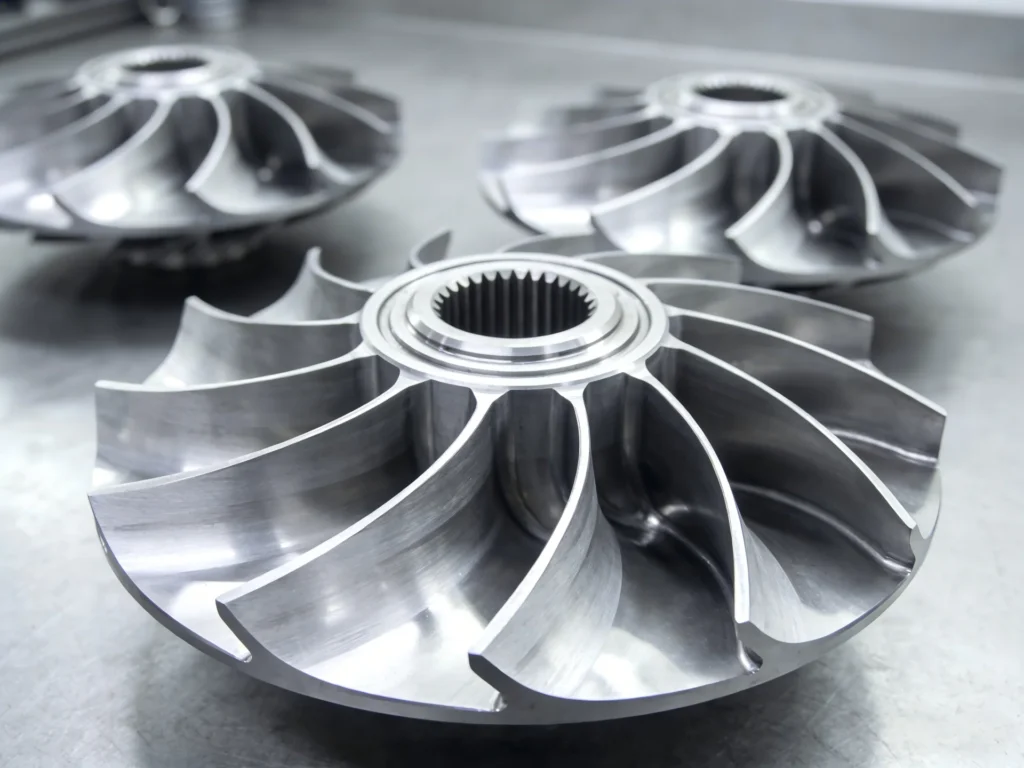 The Critical Role of Machined Turbine Blades in Modern Industry
A turbine blade is a specialized component designed to extract energy from a high-pressure, high-temperature fluid or gas stream. Whether it is situated within the hot section of a propulsion system or the cold environment of a machine wind turbine, the blade must maintain its structural integrity while spinning at thousands of revolutions per minute. The aerodynamic profile, often referred to as the airfoil, is what allows the transfer of kinetic energy into mechanical work.
The manufacturing process for a turbine blade for a jet engine is significantly more demanding than standard industrial parts. These components are subjected to centrifugal forces equivalent to the weight of a double-decker bus hanging from each blade, all while operating in temperatures that exceed the melting point of the metal itself. To survive these conditions, machining turbine blades requires a marriage of metallurgy and ultra-high-precision 5-axis CNC machining. Through cnc machining turbine blades, manufacturers can achieve the complex “fir-tree” root geometries and internal cooling passages that are impossible to reach through casting alone.
The Problem: Why Traditional Manufacturing Often Fails
Many procurement officers face the recurring nightmare of “out-of-tolerance” parts or material warping during the finishing stages. On platforms like Reddit and industry-specific forums, a common complaint regarding turbine blades manufacturing companies is the inability to maintain consistency across large batches. High-performance alloys, such as Inconel or Titanium, are notoriously difficult to work with; they work-harden rapidly and generate immense heat during the cutting process, which may lead to tool deflection and surface inaccuracies.
When dealing with a turbine blade disc assembly, even a discrepancy of a few microns can cause rotational imbalance. This imbalance leads to vibration, which eventually causes premature bearing wear or, in the worst-case scenario, blade liberation. This is where jucheng steps in, utilizing state-of-the-art turbine blade cnc centers to mitigate these risks through adaptive machining and real-time monitoring.
Advanced Solutions: How CNC Machining Solves Modern Engineering Pain Points
The solution to these manufacturing bottlenecks lies in the transition from traditional forging or casting to high-precision cnc machining turbine blades. By using multi-axis synchronized movement, a turbine blade can be sculpted from a solid billet or a near-net-shape casting with unparalleled accuracy. This method allows for thinner trailing edges and more complex cooling hole patterns, which directly translate to better fuel efficiency in aerospace applications.
Solving the Material Hardness Issue
One might wonder what turbine blades made of? Generally, they consist of nickel-based superalloys or specialized titanium grades. These materials are chosen for their creep resistance but are a nightmare for standard CNC shops. Expert turbine blades manufacturing companies like jucheng use high-pressure coolant systems and ceramic cutting tools to manage the thermal loads. This ensures that the machined turbine blades do not suffer from metallurgical changes during the cutting process, preserving the material’s intended life span.
Comparison of Manufacturing Methods for Turbine Components
To help you decide on the best approach for your project, the following table compares the primary methods used in the industry today:
| Feature | Traditional Casting | Precision CNC Machining | Additive Manufacturing (3D Print) |
|---|---|---|---|
| Dimensional Accuracy | Moderate (requires finishing) | Extreme (Micron level) | Low to Moderate |
| Surface Finish | Rough (needs polishing) | Superior (Ra 0.4 or better) | Granular (needs heavy CNC) |
| Material Integrity | Risk of internal voids | High (Solid grain structure) | Risk of porosity |
| Geometric Complexity | High | Very High (5-axis) | Highest |
| Lead Time | Long (Tooling required) | Short to Medium | Short |
Core Application Scenarios for Machined Turbine Components
The versatility of machined turbine blades extends across several high-tech sectors. Each environment presents unique challenges that jucheng is equipped to handle.
- Aerospace and Aviation: The turbine blade for a jet engine is perhaps the most famous application. These blades must withstand extreme thermal cycling. CNC machining ensures the cooling channels are precisely placed to prevent the metal from melting during takeoff.
- Renewable Energy: As we machine wind turbine components, the focus shifts to scale and weight. Large-scale blades or the internal hubs require high-strength materials that are machined to reduce drag and maximize energy capture from the wind.
- Industrial Power Generation: Steam and gas turbines used in power plants utilize a turbine blade disc configuration. These massive assemblies require perfect balance to ensure the grid remains stable and the turbines run for years without unscheduled maintenance.
- Marine Propulsion: High-speed naval vessels often use gas turbines. The machined turbine blades in these engines must be resistant to salt-air corrosion while maintaining high power-to-weight ratios.
Critical Factors When Selecting a Manufacturing Partner
Choosing between different turbine blades manufacturing companies is a decision that affects the safety and performance of your final product. When evaluating a partner like jucheng, consider the following technical benchmarks:
1. Multi-Axis Capability
Standard 3-axis milling is insufficient for the complex curvatures of an airfoil. You should look for providers with 5-axis simultaneous turbine blade cnc capabilities. This allows the tool to maintain a constant contact angle with the workpiece, resulting in a smoother surface finish and more accurate geometry.
2. Quality Certification and Traceability
In the aerospace world, “good enough” does not exist. A reputable manufacturer must provide full material traceability and adhere to standards such as ISO 9001 or AS9100. Every machined turbine blades batch should come with inspection reports detailing coordinate measuring machine (CMM) results.
3. Expertise in Exotic Materials
Ask your provider about their experience with what turbine blades made of. If a shop primarily handles aluminum, they may lack the rigid machinery and specialized tooling required for Inconel 718 or Monel. jucheng specializes in these difficult-to-machine alloys, ensuring tool pressure doesn’t compromise the part’s integrity.
Installation and Maintenance: Ensuring Longevity
Even the most perfectly machined turbine blades will fail if not handled correctly during the post-manufacturing phase. Installation into the turbine blade disc requires precise torque and alignment. Most failures reported in professional circles stem from “fretting” at the root of the blade, where it connects to the rotor.
Maintenance schedules should include regular non-destructive testing (NDT), such as dye penetrant or ultrasonic inspections. Because jucheng produces blades with superior surface finishes, early detection of surface cracks becomes much easier, potentially saving millions in repair costs. For a machine wind turbine, maintenance might also include checking the leading edge for erosion caused by environmental particulates.
Why Jucheng is the Strategic Choice for Turbine Machining
When you partner with jucheng, you are not just hiring a machine shop; you are engaging a team of specialists dedicated to the art of machining turbine blades. Our facility at jccncmachining.com is equipped with the latest turbine blade cnc technology designed to tackle the most complex geometries in the industry.
Our competitive advantage lies in our holistic approach. We understand that a turbine blade for a jet engine requires a different vibrational profile than a blade for a hydroelectric plant. By integrating advanced simulation software with our CNC hardware, jucheng can predict tool wear and thermal expansion before the first cut is even made. This results in faster delivery times and a significant reduction in waste, passing the cost savings onto you while maintaining the highest quality standards.
Frequently Asked Questions
What are the most common materials used for machined turbine blades?
Most high-performance turbine blades made of nickel-base superalloys like Inconel or Cobalt-chrome due to their ability to withstand extreme temperatures. For lower-temperature applications, such as a machine wind turbine or certain compressor stages, titanium or high-strength stainless steel might be used.
How does CNC machining compare to EDM for turbine blades?
While Electrical Discharge Machining (EDM) is excellent for very fine details, cnc machining turbine blades is generally faster for bulk material removal and provides a better surface finish for the airfoil itself. CNC machining also avoids the “heat affected zone” (HAZ) that EDM can sometimes leave on the surface of the metal.
What tolerances can jucheng achieve for turbine components?
Using our precision turbine blade cnc equipment, we can regularly achieve tolerances within +/- 0.005mm. This level of precision is vital for the turbine blade disc fitment, ensuring that centrifugal forces are distributed evenly across the assembly.
Can you assist with the prototyping of a new turbine blade for a jet engine?
Absolutely. jucheng offers rapid prototyping services. We can take your CAD models and produce functional machined turbine blades in a fraction of the time it would take to create casting molds, allowing for faster aerodynamic testing and iteration.
Why is surface finish so important for a turbine blade?
Surface finish affects both the aerodynamic efficiency and the fatigue life of the turbine blade. A rough surface creates turbulence, which reduces energy extraction. Furthermore, surface imperfections can act as “stress risers” where cracks can start. Our machining turbine blades process ensures a mirror-like finish to maximize performance.
Do you provide services for large-scale wind turbine components?
Yes, while many focus on small aero-engine parts, we also have the capacity to machine wind turbine internal components and hubs that require large-format CNC machining and high structural integrity.
Conclusion: Elevate Your Engineering Standards
The journey from a raw block of superalloy to a high-performance turbine blade is fraught with technical challenges. However, by understanding the intricacies of cnc machining turbine blades and selecting a partner with the right expertise, these challenges become opportunities for innovation. jucheng remains at the forefront of this field, providing the precision, reliability, and technical support needed to keep the world moving.
Whether you are designing a next-generation turbine blade for a jet engine or optimizing a machine wind turbine, the quality of your machined turbine blades will determine your success. Don’t settle for “standard” when your project demands “exceptional.”
Ready to solve your most complex machining challenges? Contact Jucheng today for a technical consultation on your next turbine project. Visit our website at www.jccncmachining.com and see how our precision turbine blade cnc services can bring your designs to life.