
In the high-stakes world of aerospace and energy production, the efficiency of a jet engine or a power plant often hinges on components that many never see. Among these, machined turbine blades represent the pinnacle of modern manufacturing. These complex airfoils must withstand extreme centrifugal forces, corrosive environments, and temperatures that would melt ordinary steel. For engineers and procurement specialists looking for precision and reliability, understanding the lifecycle of these components is essential. Whether you are investigating machined turbine blades in China or seeking a deeper technical understanding of 5-axis CNC capabilities, this guide explores the intricacies of production, material science, and strategic sourcing.
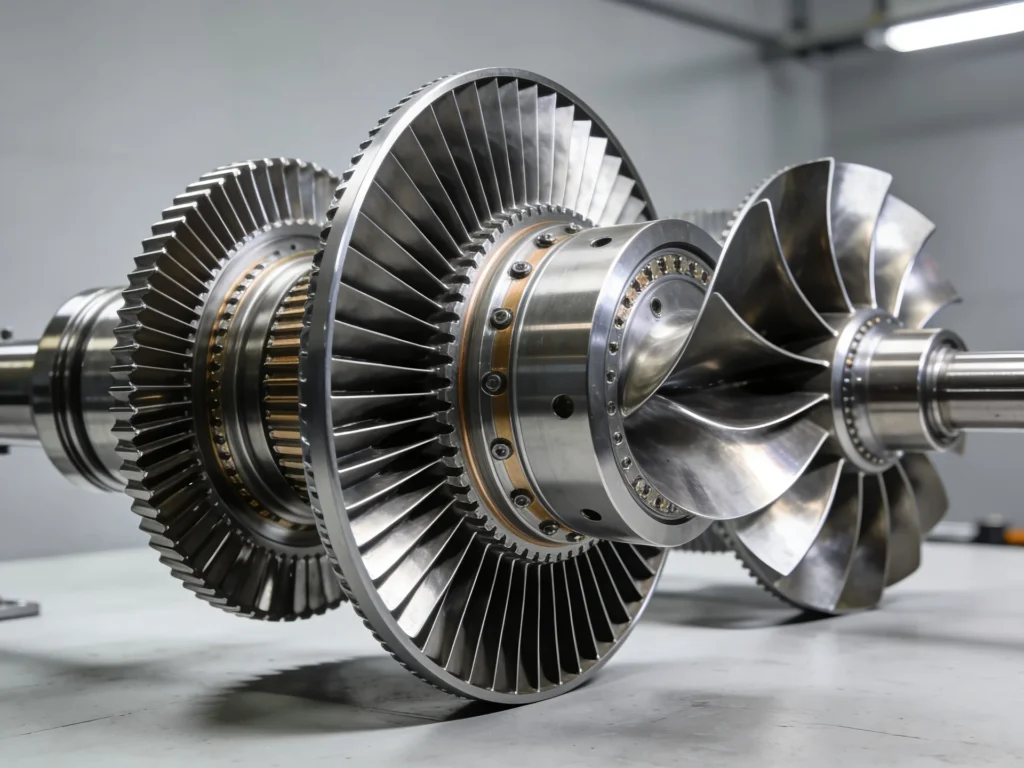 Section 1: Understanding Machined Turbine Blades – Definition and Principles
At its core, a turbine blade is a specialized component designed to extract energy from a high-pressure, high-temperature fluid stream—be it air, steam, or combustion gases. While casting was historically the primary method for creating these parts, machined turbine blades have become the gold standard for high-performance applications where dimensional accuracy and material integrity cannot be compromised.
The Physics of the Airfoil
The principle of a turbine blade is rooted in fluid dynamics. The blade is shaped like a sophisticated wing (an airfoil). As high-velocity gas passes over the blade, it creates a pressure differential. This differential generates lift, which translates into rotational torque. In a jet engine, hundreds of these blades work in tandem to drive the compressor or provide thrust. To achieve maximum efficiency, the surface profile of the blade must match the theoretical aerodynamic model within microns. This is where machined turbine blades offer a significant advantage over cast versions; the CNC machining process allows for much tighter tolerances and superior surface finishes that reduce aerodynamic drag.
Why Machining Over Traditional Casting?
One might wonder why the industry is shifting toward full machining or “hybrid” manufacturing. Traditional investment casting can lead to internal defects like porosity or grain boundary inconsistencies. By starting with a solid forged block of superalloy and utilizing 5-axis CNC milling, manufacturers ensure that the grain structure is uniform and the part is free from the hidden defects that could lead to catastrophic failure at 15,000 RPM. Furthermore, machined turbine blades allow for the integration of complex internal cooling channels and film cooling holes that are often difficult to achieve with the same level of precision in a casting mold.
The Role of Multi-Axis CNC Technology
The geometry of a turbine blade is “non-linear.” There are no flat surfaces or simple radii. To produce these, advanced 5-axis CNC machines are required. These machines move the cutting tool and the workpiece simultaneously across five different axes, allowing the tool to remain perpendicular to the complex curves of the blade. This process ensures that the scalloping effect (small ridges left by the tool) is minimized, leading to a smoother finish that requires less manual polishing.
Section 2: Core Application Scenarios Across Global Industries
The demand for high-quality machined turbine blades is not limited to a single sector. As global energy needs evolve and air travel becomes more efficient, several key industries have emerged as primary consumers of these precision parts.
1. Aerospace and Aviation
This is perhaps the most demanding application. In commercial turbofans and military jet engines, turbine blades operate in the “hot section.” They are subjected to temperatures exceeding 1,200°C. Machined turbine blades in this sector are typically made from nickel-based superalloys like Inconel 718 or Rene 80. The precision afforded by CNC machining ensures that each blade in a disk is perfectly balanced, preventing vibrations that could tear an engine apart during flight. Professional discussions on platforms like Reddit’s r/AerospaceEngineering often highlight how even a 0.01mm deviation in blade thickness can significantly alter the thermal expansion properties of the engine core.
2. Power Generation and Industrial Gas Turbines (IGT)
Large-scale power plants use massive gas and steam turbines to generate electricity. Unlike aircraft engines which prioritize weight, industrial turbines prioritize longevity and fuel efficiency. Machined turbine blades for IGT applications are often much larger, sometimes reaching lengths of over one meter. These blades must run continuously for tens of thousands of hours. Using CNC machining allows manufacturers to create optimized shapes that extract the maximum possible energy from the fuel, directly impacting the plant’s heat rate and carbon footprint.
3. Marine Propulsion
Modern naval vessels and large cruise ships utilize gas turbines for their high power-to-weight ratio. The marine environment is particularly harsh due to salt air, which accelerates hot corrosion. Machined turbine blades used in marine settings are often treated with specialized coatings, but the base geometry must be flawless to ensure the coating adheres properly and provides the necessary protection against the elements.
4. Turbochargers for Automotive and Heavy Equipment
While smaller than their aerospace counterparts, the turbine wheels in high-performance turbochargers operate at incredibly high speeds (up to 200,000 RPM). Many premium automotive brands now prefer machined turbine blades for their turbocharger impellers because the process allows for thinner, more aggressive blade designs that reduce “turbo lag” and improve engine responsiveness.
Section 3: Key Factors for Selecting Machined Turbine Blades
When sourcing machined turbine blades, especially when looking at machined turbine blades in China, procurement teams must look beyond the price tag. The “total cost of ownership” is heavily influenced by quality, material traceability, and technical capability.
1. Material Integrity and Traceability
A turbine blade is only as good as the metal it is carved from. High-performance blades require superalloys that can maintain their strength at “creep” temperatures (the point where metal begins to permanently deform under stress). When evaluating a supplier like jucheng, it is vital to verify their material sourcing. Does the supplier provide Mill Test Reports (MTR)? Can they guarantee the chemical composition of the alloy? In the aerospace world, traceability is non-negotiable.
2. Dimensional Precision and GD&T
Geometric Dimensioning and Tolerancing (GD&T) is the language of machined turbine blades. Buyers should look for manufacturers who utilize CMM (Coordinate Measuring Machines) and optical scanning to verify the airfoil profile. The “root” of the blade, often featuring a “fir-tree” or “dovetail” shape, must fit into the turbine disk with zero play. Even a microscopic gap can lead to fretting and eventual failure.
3. Surface Integrity and Roughness
The aerodynamic efficiency of a blade is tied to its surface finish. A rough surface creates turbulence and increases heat transfer to the blade, which can lead to overheating. Top-tier machined turbine blades often require an Ra (Roughness Average) of 0.4 to 0.8 microns. Achieving this directly from the CNC machine requires specialized tooling and high-speed machining strategies.
4. Sourcing Location: Why China?
Many global OEMs are increasingly looking for machined turbine blades in China. The reason is the rapid advancement of the Chinese high-end manufacturing ecosystem. Companies like jucheng have invested heavily in 5-axis centers from Germany and Japan, combining western technology with efficient local logistics and engineering talent. This allows for a competitive edge in both lead times and cost without sacrificing the “Tier-1” quality required by international standards.
| Feature | Standard Machining | High-Precision Turbine Machining (Jucheng) |
|---|---|---|
| Tolerance Range | ±0.05mm to ±0.1mm | ±0.005mm to ±0.01mm |
| Surface Finish (Ra) | 1.6 – 3.2 μm | 0.4 – 0.8 μm |
| Material Difficulty | Aluminum/Steel | Inconel, Titanium, Cobalt-Chrome |
| Axis Configuration | 3-Axis / 4-Axis | Simultaneous 5-Axis |
| Inspection Method | Manual Calipers/Micrometers | CMM, Blue Light Scanning, NDT (FPI/X-ray) |
Section 4: Installation and Maintenance Guidelines
The reliability of machined turbine blades does not end at the factory gate. Proper installation and rigorous maintenance schedules are what prevent catastrophic engine failures.
The Installation Process: Balancing and Fitting
Installing machined turbine blades into a rotor is a delicate process. Each blade must be weighed and “moment-weighted” to ensure the entire assembly is balanced. Even though the blades are machined to high precision, minute variations in mass distribution exist. Technicians must follow a specific sequence, often dictated by software, to place blades in an order that cancels out centrifugal imbalances. The “fir-tree” root must be lubricated with specialized anti-seize compounds that can withstand high temperatures to prevent the blade from locking into the disk permanently.
Routine Inspection and Non-Destructive Testing (NDT)
Because machined turbine blades are subject to cyclic loading, they are prone to fatigue. Maintenance teams use several NDT methods to check for micro-cracks:
- Fluorescent Penetrant Inspection (FPI): A glowing dye is applied to the blade. It seeps into tiny cracks that are invisible to the naked eye, which then glow under UV light.
- Eddy Current Testing: Used to detect surface and near-surface flaws by measuring changes in electrical conductivity.
- Borescope Inspections: For industrial and aircraft engines, technicians use fiber-optic cameras to inspect machined turbine blades while they are still inside the engine housing.
Managing “Creep” and Thermal Distortion
Over thousands of hours, the metal of a turbine blade may slowly “stretch” due to high heat and centrifugal force. This is known as creep. Maintenance manuals specify the maximum allowable length increase. If a blade exceeds this limit, it could strike the outer shroud of the turbine, leading to a “blade out” event. High-quality machined turbine blades are designed with specific metallurgical properties to resist creep, but regular measurement remains the best defense.
Section 5: FAQ – Answering Critical Questions About Machined Turbine Blades
Based on industry forums like Facebook’s “Machinist Group” and procurement queries on LinkedIn, here are the most frequently asked questions regarding these components.
Q1: What is the most difficult part of producing machined turbine blades?
The primary challenge is managing “tool deflection” and “chatter.” Because turbine blades are often thin and made from very hard superalloys, the force of the cutting tool can cause the blade to vibrate or bend during machining. This requires advanced work-holding solutions, such as “point-clamping” or potting the blade in a low-melting-point alloy to provide stability during the milling of the airfoil.
Q2: Why should I choose machined turbine blades in China over local Western suppliers?
The decision often comes down to capacity and speed. Chinese manufacturers, particularly those like jucheng, have built massive infrastructures dedicated to high-precision export. You may find that a machined turbine blades in China project has a lead time 30-50% shorter than European or American shops, which are often backlogged with multi-year defense contracts.
Q3: How do you ensure the cooling holes in machined turbine blades are accurate?
Cooling holes are typically produced using EDM (Electrical Discharge Machining) or laser drilling after the main milling process. These holes are essential for “film cooling,” where a layer of cool air protects the blade surface from hot gases. At jucheng, we integrate these processes to ensure the holes are positioned correctly relative to the machined airfoil profile.
Q4: What materials are best for machined turbine blades?
For most high-heat applications, Nickel-based superalloys (Inconel 718, 625, or Waspaloy) are standard. For lower-temperature compressor blades, Titanium alloys (like Ti-6Al-4V) are preferred due to their high strength-to-weight ratio. The choice depends entirely on the operating environment of the turbine stage.
Q5: Can old machined turbine blades be repaired?
Yes, many blades can be refurbished using “tip-welding” (adding metal back to the worn tip of the blade) followed by re-machining. However, for critical-path aerospace components, there is a strict limit on how many times a blade can be repaired before it must be scrapped for safety reasons.
Q6: Does Jucheng provide 5-axis certificates for their parts?
Yes, as a professional CNC partner, jucheng provides comprehensive inspection reports, including 5-axis CMM data, ensuring that every curve of your machined turbine blades meets the design specifications.
Section 6: Why Choose Jucheng for Your Machined Turbine Blades?
When it comes to high-stakes manufacturing, jucheng stands out as a leader in the precision CNC field. We understand that a turbine blade is not just a piece of metal; it is a critical safety component. Here is why global partners trust us with their machined turbine blades in China requirements.
1. Advanced 5-Axis Infrastructure
At jucheng, we have equipped our facility with state-of-the-art 5-axis machining centers specifically designed for the complex geometries of airfoils and impellers. Our machines offer the thermal stability and spindle speeds necessary to work with difficult-to-cut materials like Inconel and Titanium. This investment allows us to produce machined turbine blades with incredible consistency across large production runs.
2. Expertise in Superalloys
Machining “exotic” metals is an art form. Our engineers have spent years perfecting tool paths and selecting the right carbide coatings to handle the high heat and abrasiveness of nickel-based alloys. We manage tool wear proactively, ensuring that the first blade in a batch is identical to the thousandth. This expertise is a cornerstone of our success in the machined turbine blades in China market.
3. Rigorous Quality Control and Certification
We believe that quality must be “baked in” to the process, not just inspected at the end. jucheng adheres to ISO 9001 and AS9100 standards, providing full material traceability and non-destructive testing options. Whether you need ultrasonic testing, X-ray, or dye penetrant inspection, we ensure your machined turbine blades are free from internal and surface defects.
4. Collaborative Engineering Support
We don’t just take an order and disappear. The team at jucheng works closely with your designers to optimize the “Manufacturability” (DFM) of your parts. Sometimes, a small change in a radius or a fillet can significantly reduce machining time and cost without affecting performance. This collaborative approach has made us a preferred partner for engineers seeking machined turbine blades in China.
5. Speed and Scalability
In the modern economy, time to market is everything. Our efficient internal workflows and strategic location allow us to provide rapid prototyping and move quickly into full-scale production. If you are facing a supply chain bottleneck, jucheng can provide the agility you need to keep your projects on track.
Conclusion: The Future of Turbine Technology
As we look toward a future of greener energy and more efficient propulsion, the role of machined turbine blades will only grow. The shift toward hydrogen-ready turbines and higher-pressure ratios in jet engines will demand even greater precision and more advanced materials. Sourcing your machined turbine blades in China from a proven expert like jucheng ensures that you stay ahead of the curve, benefiting from the latest CNC innovations and a commitment to engineering excellence.
Ready to elevate your turbine performance? Contact jucheng today to discuss your technical specifications. Our team of experts is standing by to turn your most complex airfoil designs into reality with the precision that only world-class machined turbine blades can provide.
Get a Quote for Your Next Project
Looking for high-precision machined turbine blades in China? jucheng offers the technology, quality, and reliability you need. Visit our website at www.jccncmachining.com to learn more about our 5-axis capabilities and request a custom quote.