
In the high-stakes world of aerospace engineering, a single microsecond of signal interference or a slight thermal spike could lead to catastrophic system failure. Imagine a modern flight deck during a critical landing phase. The pilot relies on dozens of interconnected electronic systems, all housed within specialized metal shells. If these shells fail to provide adequate electromagnetic shielding or if they warp under the extreme pressure changes of rapid descent, the internal electronics may malfunction. This is the primary challenge facing engineers today: how to protect sensitive flight data units and communication modules from the harsh environments of the upper atmosphere. The answer lies in the specialized discipline of avionics enclosure machining, a process that blends advanced metallurgy with extreme CNC precision to create a protective sanctuary for critical electronics.
For many procurement managers and aerospace designers, the pain point is clear. You may have a brilliant avionics enclosure design on paper, but translating that into a physical component that meets MIL-SPEC requirements while remaining lightweight is a different story. Many machine shops struggle with the thin-wall requirements and complex geometries necessary for modern flight hardware. When a casing is too heavy, it reduces fuel efficiency; when it is too thin, it may vibrate excessively or fail to dissipate heat. This delicate balance is why choosing the right manufacturing partner is not just a logistical decision, but a safety-critical one.
 Understanding the Foundation: What is Avionics Enclosure Machining?
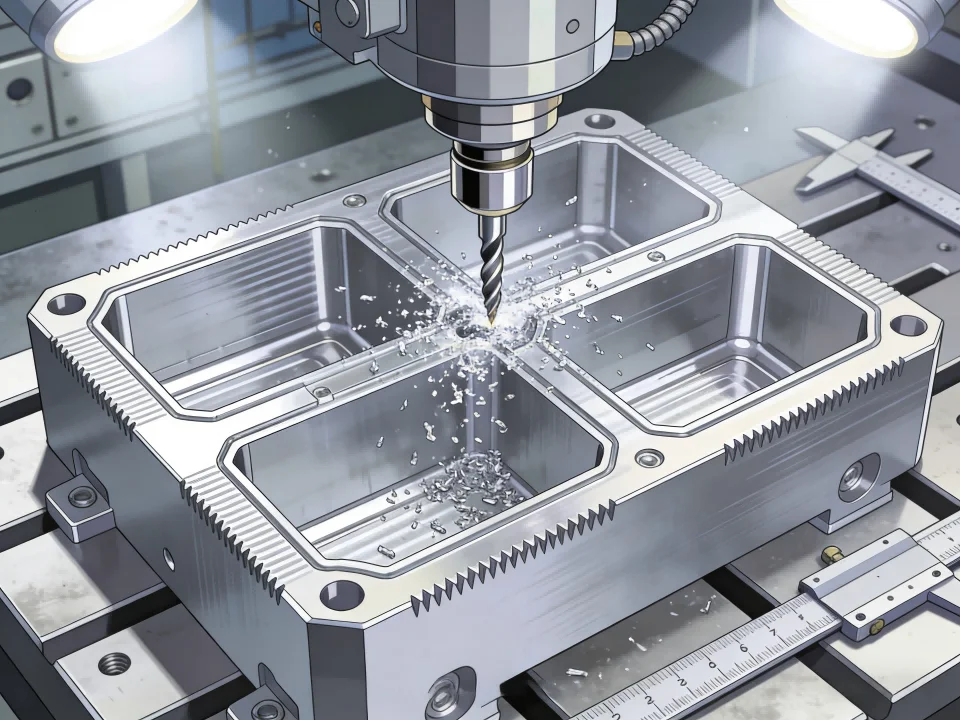
At its core, avionics enclosure machining is the subtractive manufacturing process used to create the protective housings for electronic systems used in aircraft, satellites, and spacecraft. Unlike standard industrial boxes, these enclosures must act as multi-functional units. They are not merely containers; they are sophisticated heat sinks, Faraday cages, and structural components all rolled into one. The process typically involves high-speed CNC milling, where a solid block of aerospace-grade material—usually aluminum, magnesium, or specialized alloys—is sculpted into a complex shell with integrated mounting points, cooling fins, and EMI gaskets.
The principle behind this machining process revolves around dimensional stability and surface integrity. During the flight, an aircraft moves through diverse pressure zones and temperature gradients ranging from -50 degrees Celsius to well over 50 degrees on the tarmac. A poorly machined enclosure might develop micro-fractures or “creep” over time, leading to a loss of hermetic sealing. Therefore, the machining process must account for internal stresses within the metal. Expert machinists often utilize stress-relieving cycles between roughing and finishing passes to ensure that the final avionics enclosures maintain their shape within tolerances as tight as 0.01mm.
Furthermore, the integration of aerospace cnc part production into these enclosures means that every hole, pocket, and thread must be perfectly aligned. In a modern avionics suite, connectors from different suppliers must interface seamlessly with the machined housing. If a mounting flange is off by a fraction of a millimeter, the resulting gap could allow electromagnetic interference (EMI) to leak in, disrupting navigation or communication signals. This is why the industry has moved toward 5-axis machining centers that can complete complex enclosures in a single setup, reducing the cumulative error that comes from moving the part between different machines.
Navigating the Common Pitfalls in Enclosure Design and Production
One of the most frequent discussions on professional forums like Reddit and LinkedIn involves the struggle with “thin-wall stability.” Aerospace designers often push the limits, requesting wall thicknesses of 0.5mm or less to save weight. However, machining such thin sections is notoriously difficult. The material could vibrate (chatter) during the cutting process, leading to a poor surface finish or even structural failure. To solve this, advanced avionics enclosure machining techniques utilize specialized vacuum fixtures and custom-ground tooling to support the workpiece throughout the operation.
Another significant issue is thermal management. As electronic components become more powerful, they generate more heat. Traditional cooling fans are often avoided in pressurized or high-altitude environments due to reliability concerns. Consequently, the enclosure itself must serve as the primary thermal conductor. This requires the machining of intricate fin arrays and the maintenance of high surface area-to-volume ratios. If the machining process leaves a rough surface on the thermal interface, the heat transfer efficiency drops, potentially leading to the “blue screen” of a flight computer mid-flight.
Core Application Scenarios for High-Precision Enclosures
Where do we see these sophisticated machined components in action? The applications are as varied as the aircraft themselves, each presenting unique challenges that avionics enclosure machining must address:
- Flight Control Systems: These are the brains of the aircraft. The enclosures must be rugged enough to withstand the high-G forces of takeoff and combat maneuvers while shielding the processors from lightning strikes and solar radiation.
- Communication and Navigation Pods: Located on the exterior or in the nose of the plane, these units face extreme aerodynamic heating and potential bird strikes. The machining must ensure a perfect seal to prevent moisture ingress at high altitudes.
- UAV and Drone Electronics: For unmanned aerial vehicles, weight is the absolute priority. Here, avionics enclosure design focuses on ultra-lightweight alloys and “skeletonized” machining that removes every unnecessary gram of metal without compromising structural integrity.
- Satellite and Space Hardware: In the vacuum of space, heat can only be dissipated through radiation and conduction. These enclosures are often gold-plated or specially treated after machining to manage thermal loads in the harsh sun/shade cycles of orbit.
Critical Buying Factors: How to Choose a Machining Partner
Selecting a vendor for avionics enclosure machining requires a deeper dive than just comparing price quotes. The complexity of these parts means that a low-cost provider might end up costing more in the long run due to rejected parts or, worse, field failures. When evaluating a potential partner like jucheng, consider the following factors:
| Factor | Requirement | Impact on Performance |
|---|---|---|
| Dimensional Tolerance | +/- 0.01mm or better | Ensures proper fit of connectors and maintains EMI shielding integrity. |
| Material Certifications | AS9100 / ISO 9001 | Guarantees that the alloys used are genuine and free from internal defects. |
| Surface Finish | Ra 0.8 or lower | Crucial for thermal conductivity and the effectiveness of chemical coatings. |
| EMI/RFI Shielding | Conductive Platings | Prevents signal interference between sensitive electronic modules. |
| Lead Time & Prototyping | Rapid Iteration | Allows designers to test avionics enclosure design before mass production. |
Moreover, you should inquire about their quality control processes. Do they use Coordinate Measuring Machines (CMM) to verify the geometry? Do they offer non-destructive testing (NDT) to check for cracks? In avionics maintenance, the traceability of a part is paramount. If a part fails three years from now, the manufacturer should be able to provide the original material mill report and the machining logs associated with that specific serial number.
Installation and Long-term Avionics Maintenance
Once the avionics enclosure machining is complete and the part is delivered, the work is not over. Proper installation is critical. Technicians could use calibrated torque wrenches to ensure that mounting bolts are tightened evenly, preventing the housing from warping or losing its hermetic seal. Furthermore, the interface between the enclosure and the aircraft chassis must be treated with conductive gaskets or chemical films to maintain a continuous ground path for lightning protection.
In the realm of avionics maintenance, these enclosures are inspected periodically for signs of galvanic corrosion or fatigue. If an enclosure shows signs of pitting, it may need to be stripped and re-plated. This highlights why the initial machining quality is so important; a surface that is too porous or has “micro-tears” from dull cutting tools will be much more susceptible to corrosion in salty, humid environments near coastal airports. High-quality machining from jucheng ensures that the base metal is perfectly prepared for protective coatings like Alodine or hard-coat anodizing.
Why Jucheng is the Strategic Choice for Avionics Machining
When searching for a partner that understands the nuances of avionics enclosure machining, jucheng stands out as a leader in the CNC field. The company has invested heavily in state-of-the-art multi-axis machining centers specifically configured for aerospace tolerances. But hardware is only half the story. The engineering team at jucheng acts as a collaborative partner, often reviewing a client’s avionics enclosure design to suggest improvements that reduce weight or improve machinability without sacrificing strength.
jucheng understands that in the aerospace industry, “close enough” is never enough. Their quality management system is designed to meet the rigorous demands of global aerospace tier-1 suppliers. Whether it is a small batch of prototype avionics enclosures for a new eVTOL project or a large-scale production run for a commercial airliner, jucheng provides the same level of meticulous attention to detail. Their expertise in handling specialized materials like Aluminum-Lithium or Magnesium alloys gives them an edge in the quest for “light-weighting” modern aircraft.
Furthermore, jucheng offers a comprehensive suite of post-machining services. This includes precision grinding, heat treatment coordination, and advanced surface finishing. By managing the entire lifecycle of the aerospace cnc part, they reduce the risk of logistical errors and ensure that the final product arrives ready for the assembly line. This “one-stop” approach is highly valued by engineers who are tired of managing multiple vendors for a single complex part.
Frequently Asked Questions Regarding Avionics Machining
1. What are the most common materials used in avionics enclosure machining?
Most avionics enclosures are crafted from Aluminum 6061 or 7075 due to their excellent strength-to-weight ratio and thermal conductivity. For weight-sensitive applications like satellites, Magnesium or specialized composites might be used, although they require more complex machining safety protocols.
2. How do you ensure EMI shielding in a machined enclosure?
EMI shielding is achieved through a combination of precise mechanical fit and conductive surface treatments. The avionics enclosure machining must produce perfectly flat mating surfaces. These are often treated with a conductive chromate conversion coating (like Alodine) and fitted with conductive gaskets to create a continuous electrical shield.
3. Can you machine enclosures with integrated liquid cooling channels?
Yes, advanced CNC techniques allow for the creation of internal fluid paths or “cold plates” within the walls of the enclosure. This is increasingly common in high-power radar systems and AI-driven flight computers where air cooling is insufficient.
4. What is the typical lead time for a custom aerospace cnc part?
Lead times vary based on complexity, but typically range from 3 to 6 weeks for prototypes. jucheng often utilizes rapid tooling strategies to shorten this window for urgent avionics maintenance or R&D requirements.
5. Why is 5-axis machining preferred over 3-axis for these parts?
5-axis machining allows the tool to reach complex undercuts and angled holes in a single setup. This significantly improves the accuracy of the avionics enclosure design implementation by eliminating the errors that occur when a part is re-clamped in multiple positions.
6. How does vibration affect the machining of avionics enclosures?
Vibration during machining can cause “chatter,” which ruins surface finish and can even lead to structural micro-cracks. Professional shops use harmonic analysis and specialized dampening tools to ensure that the thin walls of avionics enclosures remain stable throughout the cutting process.
7. What certifications should I look for in a machining partner?
At a minimum, ISO 9001 is required, but for true aerospace work, AS9100 is the gold standard. This certification ensures that every step of the avionics enclosure machining process is documented and traceable, which is essential for FAA or EASA compliance.
Conclusion: The Path to Reliable Aerospace Electronics
The challenges of modern flight demand more than just standard manufacturing; they require a partnership rooted in precision and technical expertise. As we have seen, avionics enclosure machining is a complex dance of material science, thermal engineering, and mechanical precision. By addressing the core problems of heat, interference, and weight through superior avionics enclosure design and execution, manufacturers can ensure the safety and reliability of the next generation of aircraft.
If you are currently facing challenges with wall thinning, thermal dissipation, or finding a supplier that truly understands the rigors of avionics maintenance and aerospace standards, it is time to consult with experts. The right aerospace cnc part can be the difference between a system that thrives in the clouds and one that fails when it matters most.
Ready to elevate your aerospace project with industry-leading precision? Visit jucheng at https://www.jccncmachining.com/ to explore our advanced avionics enclosure machining capabilities. Our team of experts is ready to transform your most complex designs into flight-ready reality. Contact us today for a technical consultation and quote!