
Introduction: The Precision Revolution in Prosthetics
For centuries, the creation of prosthetic limbs was a craft dominated by manual labor, artisan skill, and materials like wood and leather. While these methods provided basic function, they often fell short in terms of precise fit, dynamic performance, and user comfort. Today, we stand at the forefront of a transformative shift, where the art of prosthetics converges with the science of high-precision engineering. This revolution is powered by advanced manufacturing technologies that prioritize accuracy, customization, and integration of complex systems. At the heart of this change is robotic limb machining, a paradigm that leverages computer-controlled automation to produce prosthetic components with tolerances and complexities previously unimaginable. This evolution is not merely about building a limb; it’s about engineering a seamless, functional extension of the human body, tailored to the unique biomechanics and lifestyle of each individual, thereby restoring not just mobility but also a profound sense of autonomy and capability.
What is Robotic Limb Machining? Defining the Technology
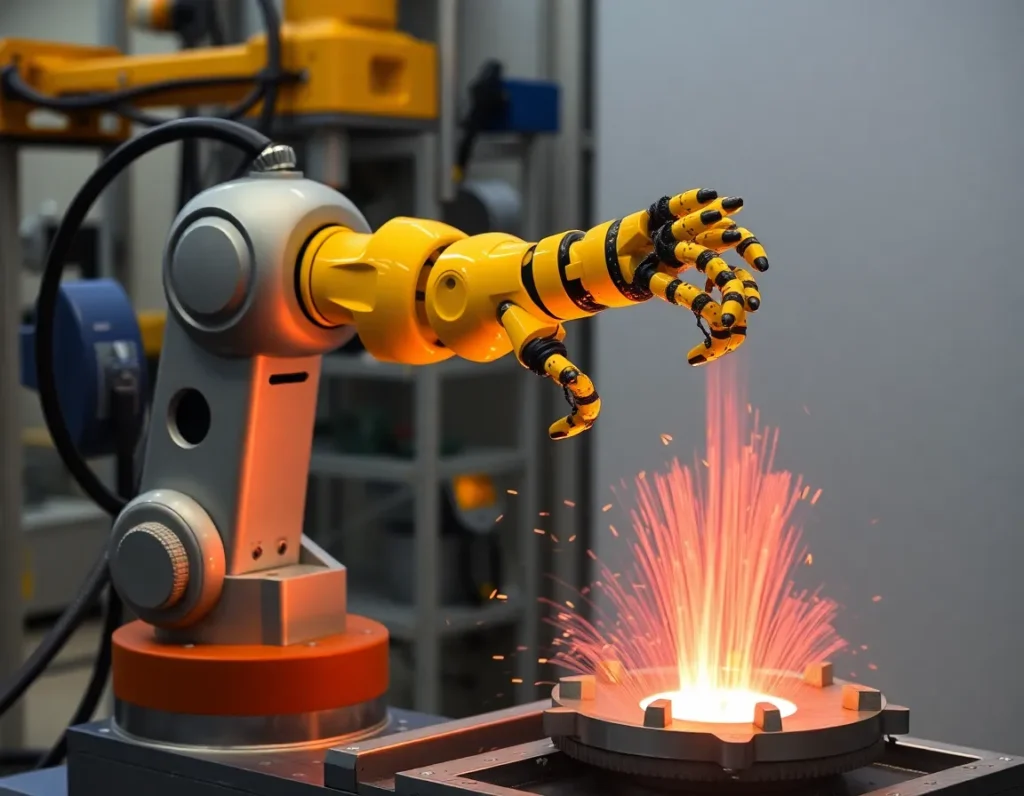
Robotic limb machining is a sophisticated manufacturing discipline that employs computer-numerical-controlled (CNC) machinery, multi-axis robotic arms, and advanced software to fabricate the structural and functional components of prosthetic limbs. It moves far beyond simple shaping or carving. At its core, this technology is a digital-to-physical pipeline. It begins with a precise 3D digital model of the patient’s residual limb and the designed prosthesis, and culminates in the physical creation of parts through subtractive (machining) and increasingly, additive (3D printing) processes. The “robotic” aspect refers to the programmable, automated nature of the equipment—whether a CNC milling machine sculpting a carbon fiber socket or a robotic arm polishing a titanium pylon—which executes complex toolpaths with superhuman consistency and precision.
This approach stands in stark contrast to traditional hand-sculpting and plaster molding. It integrates directly with digital scanning and Computer-Aided Design (CAD), ensuring the final product is a literal manifestation of the digital blueprint. The goal is to achieve an exacting fit that distributes pressure evenly, aligns perfectly with skeletal and muscular structures, and accommodates the attachment of motors, sensors, and cosmetic covers. In essence, robotic limb machining is the enabling technology that turns advanced prosthetic designs—from dynamic response feet to dexterous bionic hands—from conceptual marvels into reliable, everyday reality for amputees.
The Core Components: From CAD Models to Physical Limbs
The journey of creating a prosthesis via robotic machining is a seamless digital workflow, each component critical to the outcome.
Digital Scanning and Modeling
It all starts with capturing the patient’s anatomy. 3D optical or laser scanners create a precise digital point cloud of the residual limb, capturing every contour, bone prominence, and soft tissue area. This data is far more accurate than a plaster cast, as it is digital and devoid of the distortion that can occur with traditional methods. This scan forms the foundational geometry for the prosthetic socket, the most critical interface between the patient and the device.
Computer-Aided Design (CAD) and Engineering (CAE)
The digital scan is imported into specialized CAD software. Here, prosthetists and biomedical engineers design the socket and other components. They can digitally modify the model to add reliefs for sensitive areas, build up pressure-tolerant regions, and integrate design features for ventilation and harness attachment. Finite Element Analysis (FEA), a type of CAE, is often used to simulate stresses, strains, and thermal properties on the virtual model, predicting performance and durability before any material is cut. This stage is where the functional and aesthetic design of the entire limb is finalized in a virtual environment.
Computer-Aided Manufacturing (CAM) Programming
The approved CAD model is then translated into manufacturing instructions through CAM software. This is where the magic of robotic limb machining is programmed. The software generates the precise toolpaths—the routes that cutting tools or print heads will follow. It calculates spindle speeds, feed rates, depth of cuts, and tool changes for machining, or layer heights and infill patterns for 3D printing. This digital instruction set, often called G-code, is what directs the robotic manufacturing equipment.
The Robotic Manufacturing Cell
This is the physical execution layer. It typically involves CNC machines (mills, lathes, routers) for subtractive manufacturing and/or robotic arms equipped with machining spindles, polishing tools, or additive manufacturing extruders. For a carbon fiber socket, a CNC router might machine a positive mold (a “mandrel”) from a lightweight foam block. This mandrel is then used to lay up and cure the carbon composite. Alternatively, advanced systems may directly machine the final socket from a solid block of a specialized plastic composite. Robotic arms provide unparalleled flexibility, able to perform a sequence of operations—rough machining, fine detailing, and surface finishing—on a single platform by simply changing tools automatically.
Key Manufacturing Processes in Robotic Limb Fabrication
Robotic limb fabrication utilizes a hybrid approach, selecting the optimal process for each component based on material, strength, weight, and complexity requirements.
Subtractive Manufacturing (CNC Machining)
This remains a cornerstone for high-strength, precision components. It involves starting with a solid block of material (billet) and removing material to achieve the desired shape.
- Milling: Used for complex 3D shapes like socket molds, custom connector components, and structural pylons. Multi-axis CNC mills can create intricate geometries from metals (titanium, aluminum) and engineering plastics.
- Turning: Primarily for cylindrical parts such as certain types of adapters, bolts, and cylindrical pylon sections, performed on CNC lathes.
- Routing and Engraving: For trimming composite laminates, creating textural grips on handles, or adding patient identification details.
The primary advantage is exceptional material integrity and precision, producing parts with excellent fatigue resistance and dimensional accuracy.
Additive Manufacturing (3D Printing)
While covered in more depth in the next section, its role in the machining ecosystem is crucial. It excels at producing highly complex, lightweight, and customized geometries that are difficult or impossible to machine subtractively, such as lattice structures for cushioning or integrated cable pathways within a forearm shell.
Composite Fabrication and Lay-up
For sockets and other primary structural elements, carbon fiber and fiberglass composites are favored for their high strength-to-weight ratio. The process often involves robotic machining of a precise mold. Layers of pre-impregnated (pre-preg) carbon fiber or dry fabric are then laid over the mold, often using automated tape-laying or fiber placement robots for consistency, before being cured in an autoclave or oven. This combines robotic precision in mold-making with advanced material science.
Finishing and Post-Processing
Robotics also automate finishing. Robotic arms equipped with sanding pads, polishing wheels, or spray guns can consistently apply surface finishes, prepare parts for painting or coating, and polish components to a medical-grade smoothness, eliminating variability and labor intensity from manual finishing.
Materials Science: Engineering Comfort, Durability, and Function
The capabilities of robotic machining are fully realized only when paired with advanced materials engineered for the unique demands of prosthetics. The choice of material is a triage between comfort, durability, weight, and function.
Structural and Interface Materials
- Carbon Fiber Composites: The gold standard for sockets and structural frames. Their anisotropic nature (strength along the fiber direction) allows engineers to design sockets that are rigid where needed for support and flexible in other areas for comfort. They are incredibly strong, lightweight, and fatigue-resistant.
- Titanium and Aerospace Aluminum Alloys: Used for pylons, connectors, and joint components. Titanium offers an exceptional strength-to-weight ratio and is biocompatible and highly corrosion-resistant. CNC machining is ideal for creating the complex, load-bearing geometries required from these metals.
- Advanced Thermoplastics: Materials like polyethylene, polypropylene, and newer composites like carbon-filled nylon are used for sockets, check sockets (diagnostic sockets), and cosmetic covers. They can be machined or 3D printed, offering a good balance of durability, flexibility, and lower cost.
Comfort and Interface Liners
The direct skin interface is critical. Silicones and thermoplastic elastomers (TPE) are used to create custom liners that cushion the limb, manage moisture, and provide suspension. While often molded, robotic machining can create the precise molds for these liners or even directly machine custom cushioning components from soft polymer blocks.
Functional and Cosmetic Materials
This includes the foam and plastics used in cosmetic fairings, which can be shaped by CNC routers to match the contralateral limb. It also encompasses the specialized elastomers used in prosthetic foot covers and heel wedges, designed to absorb shock and provide durability. The integration of sensors and myoelectric control systems also demands materials that can house and protect delicate electronics while shielding them from sweat and impact.
The synergy between material science and robotic machining is what allows for true personalization. A socket can now be a multi-material assembly: a rigid carbon frame for structure, a machined thermoplastic interface for specific load redistribution, and a soft silicone liner for comfort—all fabricated to micron-level precision from digital data, ensuring they fit together and perform as a single, optimized system.
The Integration of Robotics and Additive Manufacturing (3D Printing)
While robotic machining excels at precision subtraction, its synergy with additive manufacturing (3D printing) is creating a hybrid fabrication paradigm that is particularly transformative for prosthetics. This integration is not about one technology replacing the other, but about combining their strengths to overcome individual limitations and unlock new possibilities in patient-specific design. Robotic systems are increasingly becoming the platform that orchestrates both processes, moving seamlessly between additive and subtractive operations within a single work cell.
The workflow often begins with additive manufacturing. 3D printing allows for the rapid creation of highly complex, lightweight internal structures—such as lattice geometries for socket interfaces or custom conduit paths for cables—that would be impossible to machine from a solid block. It is ideal for producing the initial form of a socket, a cosmetic fairing, or even preliminary prototypes for patient fitting. However, 3D-printed parts often have a layered surface texture and may lack the final dimensional accuracy or smooth finish required for a comfortable, durable prosthetic.
This is where robotic limb machining takes over. A robotic arm, equipped with a milling or polishing end-effector, can then finish the 3D-printed part. It can precisely machine critical mating surfaces, smooth contours for a cosmetically pleasing finish, and achieve the exact tolerances needed for bearing surfaces or electronic component housings. This hybrid approach means a socket can have a 3D-printed, patient-specific lattice for weight distribution and ventilation, with a robotically machined perfect rim and attachment interface. The robot essentially adds the high-precision “final touch” that elevates a 3D-printed prototype into a clinical-grade device.
Looking forward, the integration is moving towards true multi-process fabrication. Advanced robotic cells are being developed that can switch tools on the fly: depositing material (additive), then milling it to precision (subtractive), then laser-scanning for in-process quality control, and even embedding sensors or electronics during the build. This closed-loop, digital-to-physical pipeline minimizes human intervention, reduces total production time from scan to finished limb, and enables designs of unprecedented complexity that are both lightweight and structurally sound.
Benefits and Advantages Over Traditional Prosthetic Fabrication
The shift from manual, artisan-based fabrication to digital, robotic production offers a cascade of benefits that improve outcomes for clinicians, prosthetic technicians, and, most importantly, the end-users. These advantages span accuracy, customization, efficiency, and the very nature of prosthetic care.
First and foremost is the leap in precision and repeatability. Traditional methods relying on plaster casts, manual rectification, and hand-lamination are inherently variable. Robotic machining translates a digital model directly into a physical part with sub-millimeter accuracy, ensuring the final product is a perfect match to the virtual design. This eliminates guesswork and technician-dependent variation, leading to consistently better-fitting sockets—the single most critical factor in prosthetic comfort and function. Furthermore, the digital file can be archived and reproduced identically at any time, whether for a replacement part or for creating a contralateral limb.
This precision enables a new level of personalized biomechanical optimization. Software can analyze gait data and residual limb pressure maps to algorithmically modify the socket design in specific areas—adding relief here, increasing pressure there—to improve gait mechanics and comfort. A robot can then execute these subtle, complex modifications perfectly every time, something incredibly difficult to achieve by hand. The result is a device that is not just a generic replacement, but a truly personalized biomechanical interface.
The efficiency gains are substantial. The digital workflow drastically reduces the time spent on manual molding, sculpting, and trial-and-error fitting. A socket can be designed in software and machined overnight, accelerating the delivery timeline from weeks to days. This allows clinicians to iterate on designs more quickly during the fitting process and reduces the number of clinical visits required for adjustments. For the laboratory, it streamlines production, reduces material waste through optimized nesting of parts, and allows technicians to focus on higher-level design and patient interaction rather than repetitive manual tasks.
Finally, this technology democratizes access to high-quality prosthetic care. Digital files can be transmitted electronically, enabling centralized, high-tech fabrication facilities to serve remote or underserved areas. A clinician in a rural clinic can take a 3D scan, send the data to a central lab with robotic machining capabilities, and receive a perfectly fabricated socket by mail, bringing specialist-level fabrication to a much broader population.
Challenges and Future Directions in the Field
Despite its transformative potential, the widespread adoption of robotic limb machining faces significant hurdles. The most prominent barrier is cost. The initial capital investment for a robotic machining cell, coupled with the required software suites and skilled operators, is substantial. This can be prohibitive for smaller prosthetic clinics and laboratories, potentially widening the gap between large, well-funded institutions and independent practitioners. The cost of the end device for patients and insurers also remains a critical concern that must be addressed through process optimization and economies of scale.
Workflow integration presents another challenge. Successfully implementing this technology requires more than just buying a robot. It demands a fully integrated digital ecosystem: from 3D scanning hardware and biomechanical assessment software to CAD/CAM platforms and post-processing equipment. Creating seamless data pipelines between these different systems and training the entire clinical team—from prosthetist to technician—in this new digital paradigm is a complex, ongoing process.
Material limitations also persist. While machining and 3D printing offer great freedom, the range of biocompatible, durable, and cosmetically acceptable materials suitable for full-time prosthetic wear is still evolving. The development of new composites and smart materials that can be effectively processed by these digital tools is a key area of research.
Looking to the future, several exciting directions are emerging. The convergence of robotics with artificial intelligence (AI) is poised to be a game-changer. AI algorithms could analyze thousands of past patient scans and outcomes to automatically suggest optimal socket designs for new patients, learning and improving over time. This could move from computer-aided design to AI-driven design.
Another frontier is the real-time integration of biosensing. Future systems may incorporate real-time data from implanted or surface EMG sensors, tissue oxygenation monitors, or pressure arrays within the socket itself. This biofeedback loop could allow a robotic system to dynamically adjust the machining parameters or even the design to optimize for tissue health and comfort in ways previously unimaginable. Finally, the push for greater accessibility will drive the development of more affordable, streamlined, and user-friendly robotic systems designed specifically for the clinical environment, moving the technology from the research lab directly to the point of care.
Summary of Key Points
The advent of robotic limb machining marks a fundamental shift from craft-based to digitally-driven prosthetic fabrication. This technology utilizes robotic systems, guided by precise digital models from 3D scans, to manufacture prosthetic components with unparalleled accuracy. Its core strength lies in creating perfectly customized sockets and structural elements that match an individual’s unique anatomy, leading to superior comfort, fit, and functional outcomes.
This revolution is powered by a synergistic integration of technologies. Robotic machining does not operate in isolation; it is increasingly combined with additive manufacturing (3D printing). 3D printing builds complex, lightweight forms, while robotic machining provides the critical finishing, smoothing, and high-tolerance detailing required for a medical-grade device. This hybrid approach maximizes the benefits of both additive and subtractive processes.
The advantages over traditional hand-lamination methods are profound. They include unmatched precision and repeatability, the ability to implement sophisticated biomechanical optimizations directly into the design, significantly reduced production times, and the potential to improve access to care through digital file distribution. The choice of advanced materials—from carbon composites for strength to engineered polymers for cushioning—is fully leveraged by the precision of robotic fabrication.
However, challenges remain, primarily centered on high initial costs, the complexity of full digital workflow integration, and the need for continued material science innovation. The future of the field is bright, pointing towards intelligent systems augmented by AI for automated design, closed-loop systems incorporating real-time biological feedback, and more accessible platforms that can bring this high-precision care to a global patient population.
Frequently Asked Questions (FAQ)
How does robotic machining actually make a prosthetic socket more comfortable?
Comfort in a socket is primarily about even pressure distribution and avoiding painful points of high pressure (hot spots). Robotic machining creates a socket that is a mathematically precise inverse of the residual limb’s 3D scan. Software can then algorithmically modify this model based on clinical knowledge—adding subtle reliefs over bony prominences and firmer support in pressure-tolerant areas. The robot executes these micro-adjustments with perfect consistency, creating an interface that supports the limb more naturally than is possible through manual shaping, leading to less pain, better circulation, and longer wearing times.
Is a robot-made prosthetic limb stronger or more durable than a traditional one?
It can be, but the primary advantage is precision and consistency in achieving the designed strength. Traditional lamination relies heavily on technician skill to ensure proper resin saturation and layer alignment. Robotic machining of components like carbon fiber pre-pregs ensures perfect fiber orientation and consolidation, maximizing the material’s inherent strength-to-weight ratio. Furthermore, the perfect fit itself contributes to durability, as a well-fitted socket transmits forces more efficiently, reducing stress concentrations that can lead to premature material fatigue or failure.
Can robotic systems create the entire prosthetic limb, including the mechanical joints and cosmesis?
While the current focus and most significant impact are on custom interface components like sockets, the technology is expanding. Robotic machining is already used to fabricate custom adapters, pylons, and even some structural elements of prosthetic feet and knees from advanced materials. For cosmesis, robotic CNC routers and mills are excellent at shaping foam blanks for cosmetic covers or directly machining detailed, lifelike covers from softer polymers. The integration with 3D printing is particularly powerful for creating highly customized, aesthetic fairings that match the contralateral limb.
Does this technology make prosthetic care faster and cheaper?
It significantly speeds up the fabrication process once the digital design is finalized, reducing production time from days or weeks to hours. This can lead to fewer clinical appointments and faster delivery for the patient. However, “cheaper” is more complex. The upfront capital cost is high, which can affect clinic pricing. The long-term economic benefit comes from reduced labor time per device, less material waste, and fewer remakes due to poor fit. The goal is to make high-quality, personalized care more efficient and scalable, which should, over time, help control costs and improve value.
What does the future hold? Will prosthetists be replaced by robots?
Absolutely not. The role of the prosthetist is evolving from a manual fabricator to a digital designer and clinical expert. The robot is a tool that executes the prosthetist’s design with supreme precision. The critical skills of patient assessment, biomechanical analysis, clinical reasoning, and empathetic care are more important than ever. The future prosthetist will use advanced software to interpret scan data, prescribe and modify digital designs based on their expertise, and utilize robotic fabrication to bring their optimal vision for the patient to life reliably and efficiently. The human touch remains at the center, augmented by powerful technology.