
Introduction: The Precision Behind the Sound
When we listen to music or a movie soundtrack, we experience an emotional and sensory event. Rarely do we consider the intricate mechanical ballet happening inside the speaker cabinet to create that experience. Yet, the clarity of a vocalist, the punch of a kick drum, and the delicate decay of a cymbal are not merely products of electrical signals and magnetism. They are fundamentally shaped by physical objects—components machined to astonishing levels of precision. The pursuit of high-fidelity sound is, in large part, a pursuit of mechanical perfection. Every vibration, every resonance, and every unwanted distortion is influenced by the geometry, mass, and rigidity of the speaker’s parts. This article delves into the critical, often overlooked world of speaker components machining, exploring how the science of precise fabrication directly translates to the art of sound reproduction.
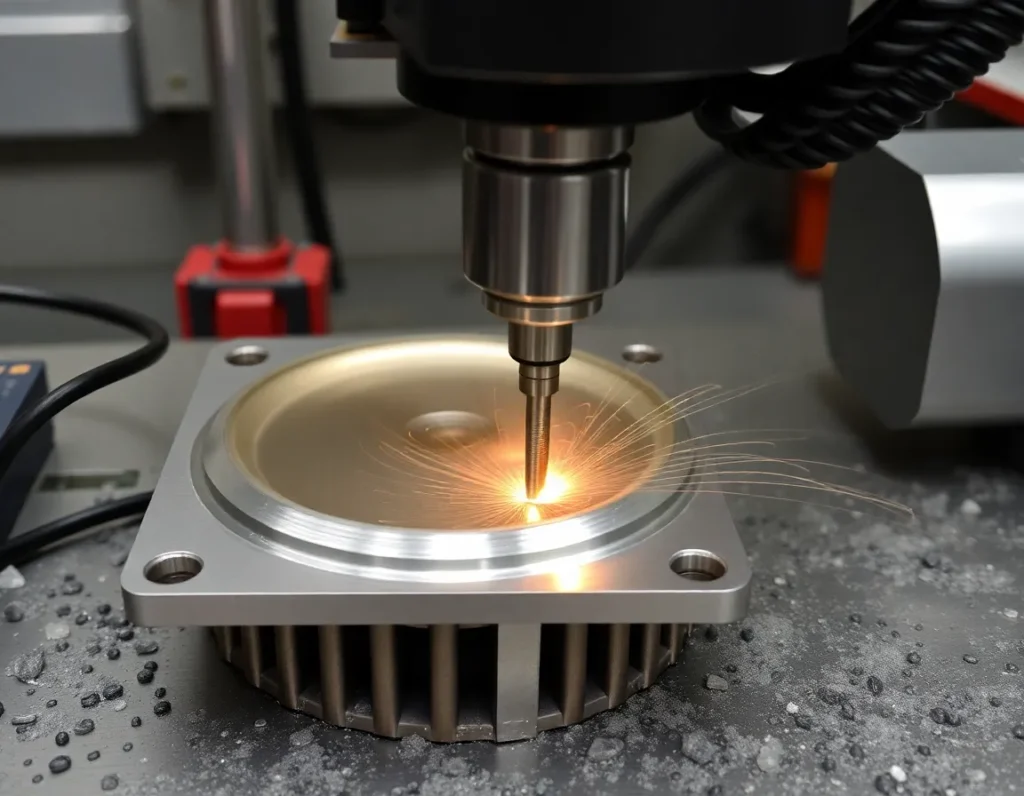
What is Speaker Components Machining? Defining the Core Process
Speaker components machining is the specialized manufacturing process of creating the critical structural and functional parts of a loudspeaker driver and its assembly using controlled material removal techniques. It moves beyond simple stamping or molding to employ advanced, computer-controlled methods that achieve exacting dimensional tolerances, superior surface finishes, and complex geometries unattainable through other means. At its core, this process is about transforming raw materials—blocks of aluminum, billets of steel, or blanks of composite—into acoustically inert and mechanically stable components.
The goal is not just to make a part that fits, but to fabricate one that behaves predictably under the extreme demands of audio reproduction. A speaker driver is a high-speed pneumatic pump, with its diaphragm accelerating and decelerating violently to create sound waves. Any imperfection in its moving parts (like the voice coil or diaphragm) or its stationary structures (like the magnet assembly and basket) introduces distortion, coloration, and energy loss. Machining provides the control necessary to minimize these flaws. It encompasses a range of operations, from cutting and drilling to milling and turning, all guided by digital designs to ensure every speaker component, from the most massive heatsink to the tiniest spacer, contributes to sonic purity rather than detracting from it.
The Anatomy of a Speaker: Key Components Requiring Precision Machining
To understand where machining is essential, we must first dissect the key parts of a dynamic loudspeaker driver. Each plays a distinct role, and each benefits from the precision machining offers.
Basket or Frame
The basket is the skeletal foundation that holds everything in precise alignment. A poorly made basket can flex or resonate, absorbing energy and muddying the sound. Machined baskets, often from aluminum alloys, provide absolute rigidity and perfect dimensional stability for the mounting points of the spider, voice coil, and magnet assembly. This ensures the voice coil remains centered in the magnetic gap throughout its travel, a critical factor for linearity and low distortion.
Pole Piece, Top Plate, and Magnet Assembly
This trio forms the heart of the motor system. The pole piece (center of the gap) and top plate (forms the outer gap) must have exceptionally smooth, parallel surfaces to create a uniform magnetic field. Any irregularity can cause the voice coil to experience varying magnetic force, leading to distortion. Machining these parts from soft iron or steel to tight tolerances ensures a perfectly symmetrical and consistent gap. The magnet itself, while not typically machined by speaker manufacturers, is housed within a machined structure that often acts as a heatsink, drawing thermal energy away from the voice coil.
Voice Coil Former and Bobbin
This is the cylindrical form upon which the voice coil wire is wound. It must be incredibly lightweight yet capable of withstanding high temperatures without deforming. While materials like Kapton are common, high-performance drivers often use machined aluminum or titanium formers. Machining allows for ultra-thin, consistent walls that minimize mass (improving transient response) while providing excellent thermal conductivity to dissipate heat from the coil.
Diaphragms (Cones and Domes)
For high-end tweeters and midrange drivers, the diaphragm itself may be machined. Metal dome tweeters, made from aluminum, titanium, or beryllium, are often shaped using sophisticated machining and forming processes to achieve a perfect, resonance-controlled geometry. Similarly, solid aluminum or composite cones for midrange drivers are machined from a solid blank to create a rigid, pistonic surface that avoids the breakup modes common in molded paper or plastic cones.
Waveguides and Horns
In compression drivers and waveguide-loaded tweeters, the acoustic pathway is critical. The geometry of a horn or waveguide directly controls dispersion, frequency response, and efficiency. These components, with their complex, often exponential curves, require precision machining to ensure their surfaces are perfectly smooth and their shapes match the acoustic design exactly, preventing unwanted reflections and diffraction.
Materials Matter: Metals, Alloys, and Composites in Speaker Manufacturing
The choice of material is inseparable from the machining process, as each substance brings unique acoustic and mechanical properties to the final component.
Aluminum and Its Alloys
The workhorse of machined speaker components, aluminum offers an excellent strength-to-weight ratio, good machinability, and natural damping characteristics. Alloys like 6061-T6 are favored for baskets, pole pieces, and diaphragms. They are stiff enough to resist deformation, light enough not to impede movement, and can be machined to a fine, resonant-damping finish.
Steel and Soft Iron
Used primarily for magnetic circuit parts (pole pieces, top plates, and back plates), low-carbon steel and soft iron are chosen for their high magnetic permeability. They efficiently channel magnetic flux from the magnet into the gap. Machining these materials to a smooth finish is crucial to prevent magnetic field distortions and to ensure a perfect fit within the assembly.
Titanium
Titanium is prized for its exceptional strength, lightness, and high melting point. It is often used for voice coil formers and dome diaphragms in very high-performance drivers. While more challenging and expensive to machine than aluminum, its properties allow for incredibly robust and lightweight moving parts, enhancing power handling and high-frequency extension.
Beryllium
The pinnacle of diaphragm materials for many, beryllium has the highest stiffness-to-weight ratio of any metal. A beryllium dome tweeter can be made extremely thin and light while remaining perfectly pistonic far beyond the audible range, eliminating breakup distortions. Its machining, however, is a highly specialized and hazardous process requiring stringent controls, reflecting its premium status.
Advanced Composites and Polymers
Materials like carbon fiber-reinforced composites, ceramics, and high-temperature polymers are increasingly used. While often molded, high-end applications may involve machining these materials to final shape. A carbon-fiber composite basket, for instance, might be machined after molding to achieve perfect mounting hole alignment and surface flatness, combining the damping of composite with the precision of machining.
Core Machining Techniques: CNC Milling, Turning, and Advanced Fabrication
The precision demanded by high-fidelity audio is achieved through a suite of computer-controlled machining technologies.
CNC Milling
Computer Numerical Control (CNC) milling is the most prevalent technique. A rotating cutting tool moves along multiple axes (3, 4, or 5) to remove material from a solid block. This is ideal for creating complex, non-rotationally symmetric parts like speaker baskets, horn bodies, and intricate motor structures. Multi-axis CNC mills can produce the complex curves of a waveguide in a single, seamless operation, ensuring acoustic continuity. The process allows for the creation of strategic reinforcing ribs in a basket to maximize stiffness while minimizing weight, a design freedom impossible with stamping.
CNC Turning
Used for parts with rotational symmetry, CNC turning holds a workpiece on a spinning chuck while a stationary cutting tool shapes it. This is the primary method for manufacturing voice coil formers, pole pieces, and various spacers and sleeves within the magnet assembly. Precision turning achieves the exact inner and outer diameters required for the voice coil to fit perfectly into the magnetic gap with just the right clearance. Live tooling on advanced CNC lathes can also mill flats or drill holes, allowing a part to be completed in one setup.
Swiss-Style Turning
For extremely small, high-precision components like those found in micro-drivers or high-frequency tweeters, Swiss-style lathes are employed. These machines provide exceptional accuracy and surface finish on tiny diameters, essential for maintaining balance and minimizing moving mass in miniature drivers.
Advanced Fabrication: EDM and Laser Cutting
Electrical Discharge Machining (EDM) is used for creating intricate details or working with extremely hard materials. A wire or electrode erodes the material with electrical sparks, allowing for the production of complex shapes in hardened steel with no tool pressure. This might be used for a particularly intricate top plate design. Laser cutting, meanwhile, offers a high-precision method for cutting thin materials, such as creating precise shims or custom gaskets that ensure perfect sealing and alignment in the final assembly.
The common thread across all these techniques is digital control. The machining process begins with a Computer-Aided Design (CAD) model, which is translated into toolpaths that guide the machine with micron-level accuracy. This digital-to-physical chain ensures that the theoretical acoustic design is realized faithfully in the physical component, setting the stage for the critical relationship between machining tolerances and sound quality.
Tolerances and Acoustics: How Machining Precision Directly Impacts Sound Quality
The journey from a digital design to a physical speaker component is a story of managing microscopic imperfections. In speaker components machining, the relationship between mechanical tolerances and acoustic performance is not just important—it is fundamental. Every thousandth of an inch, or micron, of deviation from the ideal design has a direct and audible consequence. This is because speakers are transducers that convert precise mechanical motion into sound waves; any unintended movement, resonance, or air leak acts as noise, distorting the intended signal.
Consider the voice coil and magnet assembly, the engine of the speaker. The voice coil must sit perfectly centered within the magnetic gap, a space often only a millimeter or two wide. If the machined components of the motor structure—the top plate, pole piece, and back plate—have even slight dimensional inconsistencies, the coil can rub against the sides. This causes distortion, a scratching sound, and ultimately failure. Furthermore, the symmetry of the magnetic field is dictated by the concentricity and surface finish of these parts. Imperfect machining can create an uneven magnetic field, leading to non-linear motor force that manifests as harmonic distortion, muddying the clarity of the music.
For enclosures and baffles, precision is about rigidity and sealing. A poorly machined driver mounting surface, with uneven flatness or imprecise screw holes, prevents a perfect seal between the speaker frame and the cabinet. This allows air to leak, compromising the efficiency and accuracy of the bass response, as the back wave from the driver escapes and cancels out desired frequencies. Similarly, the internal bracing and joints of a high-end wooden or metal enclosure must be machined to tight tolerances to ensure they fit together without gaps. Any looseness becomes a source of resonant vibration, where the cabinet itself starts to “sing” along with the driver, adding its own colored, boomy, or ringing sound to the output. The goal of precision machining here is to create an acoustically inert platform, so the only sound heard is from the driver’s intentional movement.
Even components like the speaker frame (basket) play a critical role. A frame machined from a single billet of aluminum must be perfectly rigid to hold the motor structure and diaphragm in stable alignment. If it flexes under the powerful forces of the driver, the geometry changes dynamically with the music, introducing intermodulation distortion. The tolerances on the mounting land, where the diaphragm attaches, directly affect the consistency of the crucial surround and spider compliance, altering the speaker’s damping and frequency response.
Ultimately, the pursuit of high-fidelity sound is a pursuit of eliminating these unintended mechanical artifacts. The precision achieved through advanced machining techniques translates directly into lower distortion, tighter bass, clearer midrange, and more detailed highs. It is the difference between hearing the recording and hearing the speaker.
The Role of Computer-Aided Design (CAD) and Simulation in Modern Speaker Machining
Before a single piece of metal is cut, the modern speaker component exists in a virtual world of exacting detail and predictive analysis. Computer-Aided Design (CAD) and sophisticated simulation software form the indispensable digital foundation for all precision speaker components machining. This digital front-end transforms acoustic theory into manufacturable reality and de-risks the entire production process.
CAD software is the starting point, where engineers create fully defined 3D models of every component. This goes far beyond simple shapes. A driver’s motor structure model will include not just dimensions but also material properties, specifying the grade of aluminum or the type of steel alloy. The model defines every fillet, every draft angle for molding, and every critical tolerance zone. This digital master becomes the single source of truth, from which all machining toolpaths are derived. Crucially, CAD allows for the design of components that would be impossible to draft or machine manually, such as complex curved waveguides for tweeters or optimized, skeletal aluminum baskets that maximize strength while minimizing mass and resonance.
The true power of this digital workflow is unlocked through simulation. Finite Element Analysis (FEA) is used extensively to simulate mechanical performance. Engineers can apply virtual forces to a basket design to see where it might flex, or analyze the thermal characteristics of a motor structure to predict voice coil temperature under high power. This allows for iterative optimization—strengthening a weak point or removing unnecessary material—long before a costly prototype is made.
Equally important is acoustic simulation. Tools based on Boundary Element Method (BEM) or other computational models can predict how a driver’s magnetic field will behave, how the diaphragm will break up at certain frequencies, or how a horn’s geometry will direct sound waves. By simulating the interaction between the driver and a virtual enclosure, engineers can predict bass response, port tuning, and internal standing waves. This virtual prototyping saves immense time and cost, enabling the exploration of dozens of design variations to find the optimal acoustic performance.
The seamless link between CAD and Computer-Aided Manufacturing (CAM) is the final step. The approved 3D model is imported into CAM software, where toolpaths are programmed. The software automatically calculates the most efficient cutting routes, tool selection, spindle speeds, and feed rates for the chosen material. It can simulate the entire machining process to detect potential collisions or errors. This digital thread ensures that the precision conceived in the design phase is faithfully and efficiently executed on the CNC machine floor, closing the loop from virtual ideal to physical perfection.
Quality Control and Testing: Ensuring Acoustic and Mechanical Performance
Precision machining and sophisticated design mean little without rigorous verification. A comprehensive quality control (QC) and testing regimen is the final, critical gatekeeper in speaker manufacturing, ensuring that every component not only looks perfect but also performs to its exact acoustic and mechanical specifications. This process bridges the gap between machining completion and final assembly.
QC begins with dimensional inspection. While CNC machines are highly accurate, they are not infallible. Critical components are sampled, and often 100% inspected, using high-precision metrology tools. Coordinate Measuring Machines (CMMs) use a sensitive probe to measure the physical geometry of a part and compare it directly to the original CAD model, verifying tolerances to within microns. For simpler but equally critical checks, laser micrometers and optical comparators are used to confirm diameters, thicknesses, and concentricity. A voice coil former’s diameter, for example, is checked at multiple points to ensure it will glide freely in the magnetic gap.
Material and structural integrity are also tested. Hardness testers verify that heat-treated steel parts have achieved the desired strength. X-ray or ultrasonic inspection might be used on critical cast or welded components to check for internal voids or cracks that could lead to failure. For enclosure panels, tap tests and resonance analysis can identify areas of unwanted vibration before the box is fully assembled.
The ultimate test, however, is acoustic. Driver units undergo rigorous electro-acoustic testing in anechoic or specially designed test chambers. They are mounted on standardized fixtures, and a suite of measurements is taken using precision microphones and analyzers. Key performance indicators include:
- Thiele-Small Parameters: Fundamental electrical and mechanical properties like resonant frequency (Fs), total Q (Qts), and equivalent compliance volume (Vas). These must match the design spec to ensure the driver will perform as predicted in the intended enclosure.
- Frequency Response: Measuring the output level across the audible spectrum to verify flatness, bandwidth, and the absence of sharp peaks or dips caused by machining or assembly flaws.
- Distortion Analysis: Using specialized equipment to measure Total Harmonic Distortion (THD) and Intermodulation Distortion (IMD) at various power levels. Excess distortion can directly point to issues like magnetic field asymmetry, voice coil rub, or diaphragm breakup.
- Impulse Response and Waterfall Plots: Assessing how quickly a driver starts and stops moving. A clean, fast decay indicates good damping and a lack of lingering resonances in the cone, surround, or basket.
This data is not just for pass/fail grading. It is fed back to the design and machining teams, creating a continuous improvement loop. A consistent deviation in a measured parameter might lead to a tweak in the CAD model or an adjustment of a machining tolerance. In this way, quality control is the guardian of the brand’s sonic signature, ensuring that every unit that leaves the factory delivers the precise auditory experience the engineers intended.
Summary of Key Points
The creation of high-performance loudspeakers is a profound synthesis of art and precision engineering, where the quality of sound is inextricably linked to the quality of manufacturing. This deep dive into the processes behind speaker components reveals several critical takeaways.
First, speaker components machining is far more than simple metalworking; it is a discipline dedicated to achieving micron-level accuracy in parts like motor structures, frames, and enclosures. This precision is non-negotiable, as even minute deviations directly cause audible distortion, resonance, and loss of fidelity.
Second, the choice of materials—from aluminum and steel alloys to advanced composites—is made with specific acoustic and mechanical goals in mind, such as rigidity, damping, and magnetic efficiency. The machining process must then be tailored to work with these materials effectively.
Third, modern manufacturing relies on a suite of advanced techniques, primarily CNC milling, turning, and specialized processes like EDM. These are all governed by digital instructions, ensuring repeatability and complexity that manual methods cannot match.
Fourth, the entire endeavor is built upon a digital foundation. CAD allows for the creation of perfect 3D models, while FEA and acoustic simulation enable virtual testing and optimization, saving vast resources and pushing the boundaries of design.
Finally, this precision is meaningless without verification. A robust regime of dimensional inspection, material testing, and, most importantly, comprehensive electro-acoustic measurement ensures that every component performs to its theoretical potential. From the magnetic gap to the listening room, every step in the machining and testing process is a deliberate effort to eliminate unwanted mechanical noise, allowing the purity of the musical signal to shine through.
Frequently Asked Questions (FAQ)
Why can’t speaker parts be made with simple casting or stamping? Why is precision machining necessary?
While casting and stamping are cost-effective for mass-market speakers, they lack the precision and material integrity needed for high-fidelity sound. Cast parts often have porous surfaces and less consistent dimensions, while stamped metal can flex and resonate. Precision machining from solid billets or high-quality blanks guarantees exact tolerances, superior rigidity, and excellent surface finishes. This control over the final shape and properties is essential for minimizing distortion and ensuring the driver’s motor and suspension systems behave exactly as designed.
How do tighter tolerances in machining actually improve sound quality?
Tighter tolerances improve sound quality by reducing nonlinearities—the enemy of accurate sound reproduction. For example, a perfectly concentric motor structure creates a uniform magnetic field, so the force on the voice coil is consistent throughout its travel, reducing harmonic distortion. A perfectly flat driver mounting surface ensures an airtight seal with the cabinet, preventing bass cancellation. A precisely machined diaphragm assembly moves with perfect piston-like motion, avoiding breakup that colors the sound. In essence, tighter tolerances remove unintended mechanical “noise” from the system.
What is the most challenging speaker component to machine, and why?
The motor structure assembly—particularly the top plate, pole piece, and back plate—is often considered the most challenging. These components must be machined to extreme tolerances for concentricity, flatness, and inner diameter to create the precise, symmetrical magnetic gap for the voice coil. They are often made from hardened magnetic steels that are difficult to machine without specialized tools. Any error here directly causes voice coil rub, a major source of distortion and driver failure.
Can you hear the difference between a machined speaker component and a cast one?
In a critical listening environment with high-quality amplification and source material, yes, an attentive listener can often hear a difference. Speakers with machined components typically exhibit lower distortion, especially at higher volumes, resulting in cleaner bass, clearer vocal reproduction, and more detailed high frequencies. The sound may be described as more “controlled,” “transparent,” or “effortless.” The difference is often in the subtle details and the lack of harshness or blurring during complex musical passages.
How has computer simulation changed speaker design and machining?
Simulation has revolutionized the field by moving much of the trial-and-error process from the physical workshop to the computer. Engineers can now:
- Virtually test dozens of basket geometries for rigidity and resonance before making one.
- Predict magnetic field strength and flux distribution to optimize motor design.
- Model diaphragm behavior to prevent breakup modes.
- Simulate entire speaker system responses in virtual enclosures.
This not only accelerates development and reduces prototype costs but also enables the design of more optimized, high-performance components that would be impossible to develop through physical experimentation alone. The resulting optimized designs are then executed with precision through CNC machining.
What quality control check is most telling of a well-machined speaker driver?
While all checks are important, a comprehensive distortion analysis (THD/IMD measurement) across the driver’s frequency range and at multiple power levels is perhaps the most revealing. Consistently low distortion figures, particularly at higher output levels, are a strong indicator of excellent machining quality. They suggest a perfectly symmetrical motor, a centered voice coil with no rub, a rigid and well-damped diaphragm, and a stable suspension—all direct results of precise component manufacturing and assembly.