
Introduction: The Critical Role of Precision in Sensor Mount Machining
In the world of advanced measurement and control, the sensor is only as good as its foundation. A sensor, whether it measures vibration, temperature, position, or magnetic fields, is a sophisticated instrument designed to detect minute changes in its environment. However, its ability to deliver accurate, reliable data is fundamentally compromised if it is attached to a poorly made mount. The process of creating these critical interfaces—sensor mount machining—is a discipline where engineering meets artistry. It is the unsung hero of data integrity, transforming raw materials into stable, precise platforms that ensure a sensor performs exactly as intended. Without this foundational precision, the most expensive and advanced sensor can produce misleading noise instead of meaningful signal, leading to flawed decisions in everything from aircraft safety to scientific discovery. This article delves into the meticulous world of machining sensor mounts, exploring why precision is not just a goal but an absolute requirement.
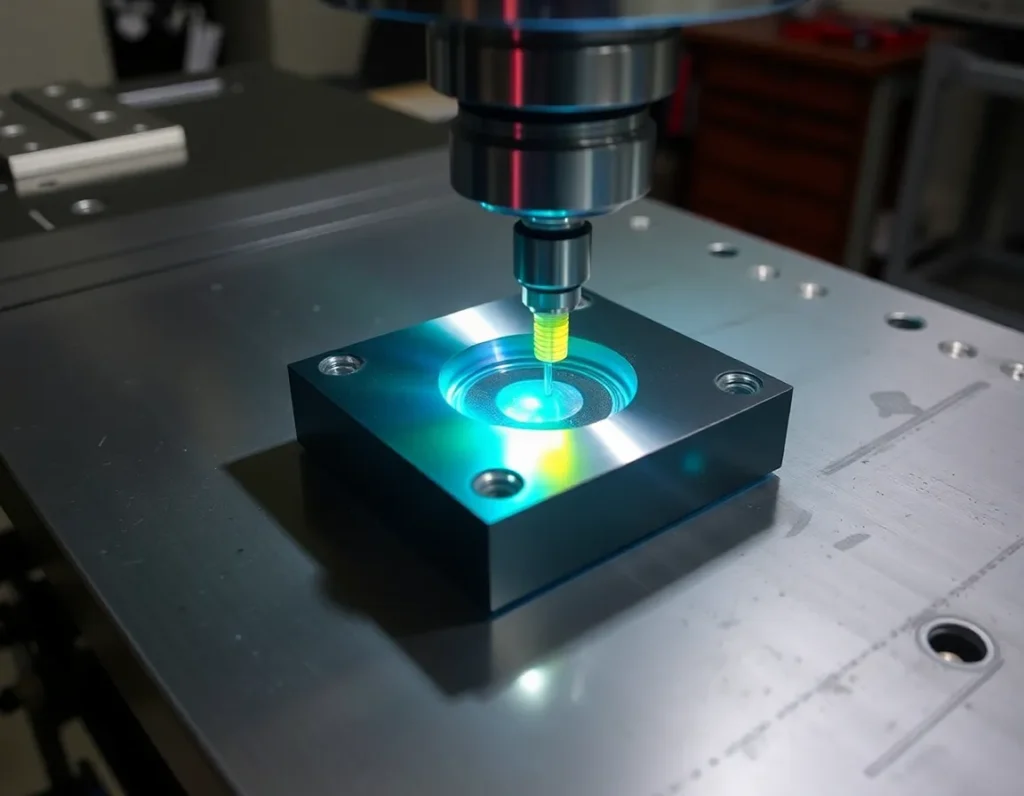
What is Sensor Mount Machining? Defining the Process and Its Components
Sensor mount machining is the specialized manufacturing process of fabricating the physical components that hold, position, and interface a sensor with the system or structure it is monitoring. It is far more than simply creating a bracket. A sensor mount is a engineered component designed to satisfy a strict set of mechanical, thermal, and sometimes electromagnetic criteria.
The process typically begins with a detailed design that accounts for the sensor’s specific requirements and the operational environment. Machinists then use precision machine tools to remove material from a solid block or billet, shaping it into the final mount. Key components of a sensor mount system often include:
- The Base Plate or Interface: The surface that attaches directly to the machine, vehicle, or test structure. Its flatness and mounting hole accuracy are crucial for proper alignment and load transfer.
- The Sensor Platform: The precisely machined area where the sensor itself is mounted. This surface must have the correct finish, flatness, and threaded or doweled features to secure the sensor without inducing strain.
- The Structural Web: The material that connects the base to the platform. Its geometry is optimized for maximum stiffness with minimal mass, often featuring ribs or complex curvatures to resist bending and torsional forces.
- Alignment Features: These include precision dowel pin holes, machined datum edges, or optical flats that ensure the sensor is oriented correctly relative to the measurement axis.
- Conduits and Passages: Small channels or holes machined to route sensor cables, coolant lines, or other utilities without interfering with the mount’s structural integrity.
Ultimately, sensor mount machining is an integrative process that bridges the gap between a sensor’s theoretical capability and its real-world performance, creating a passive yet vital component that actively enables accurate measurement.
The Importance of Precision: Why Tolerances and Stability are Non-Negotiable
The demand for extreme precision in sensor mounts stems from a simple principle: the mount must not distort, dampen, or alter the signal the sensor is trying to capture. Any imperfection in the mount becomes part of the measurement, introducing error. Two concepts are paramount here: dimensional tolerances and dynamic stability.
Tolerances—the permissible limits of variation in a physical dimension—are often specified in thousandths of an inch (mils) or even microns for critical features. For instance, if a laser displacement sensor requires its mounting feet to be co-planar within 0.0005 inches to avoid optical misalignment, the machining process must reliably achieve that. A deviation beyond this tolerance can cause the laser to point slightly off-axis, leading to cosine error where the measured distance is longer than the actual displacement. Similarly, the true position of mounting holes must be held tightly to prevent “bolt-bound” conditions that can warp the mount or the sensor casing during assembly, inducing pre-load stress that affects readings.
Stability, however, goes beyond static dimensions. It refers to the mount’s ability to maintain its geometry and properties under operational conditions. The primary enemies of stability are vibration, thermal change, and load. A mount must be rigid enough to have a high natural frequency, pushing its resonant vibrations well above the frequency range the sensor is measuring. If the mount’s resonance falls within the measurement band, it will amplify those frequencies, drowning out the actual data with structural noise. Thermally, the mount must either resist expansion with low-coefficient materials or be designed to expand uniformly without distorting the sensor platform. A lack of thermal stability can cause drift in measurements as ambient temperature changes. In essence, a precision-machined mount acts as a silent, unchanging reference frame, allowing the sensor to do its job without interference from the very environment it’s trying to quantify.
Common Materials for Sensor Mounts: From Aluminum to Invar and Composites
The choice of material is a foundational decision in sensor mount design, directly impacting performance in terms of stiffness, weight, thermal response, and cost. Machinists select materials based on a careful balance of these properties to suit the application.
Aluminum Alloys (e.g., 6061-T6, 7075-T6)
Aluminum is the workhorse material for a vast range of sensor mounts. Alloys like 6061-T6 offer an excellent strength-to-weight ratio, good machinability, and moderate cost. It is suitable for most general-purpose applications in stable thermal environments. 7075-T6 provides higher strength, approaching some steels, and is used where higher stiffness or fatigue resistance is needed. Aluminum’s relatively high thermal expansion coefficient (around 23 µm/m·°C) can be a limitation in precision applications with wide temperature swings.
Stainless Steel (e.g., 304, 316, 17-4 PH)
Stainless steel is chosen for its superior strength, corrosion resistance, and durability. Grades like 304 and 316 are common in harsh environments (marine, chemical). Precipitation-hardening grades like 17-4 PH can be heat-treated after machining to achieve very high strength and good dimensional stability. Steel is denser and heavier than aluminum, and its lower machinability increases manufacturing time and tool wear. Its thermal expansion coefficient is roughly half that of aluminum (around 17 µm/m·°C), offering better thermal stability.
Invar (Fe-Ni36%)
For the most thermally critical applications, Invar is the gold standard. This nickel-iron alloy has an exceptionally low coefficient of thermal expansion (as low as 1.2 µm/m·°C), meaning it barely expands or contracts with temperature changes. This makes it indispensable for aerospace optical systems, satellite components, and scientific instruments where alignment must be maintained across extreme temperature gradients. However, Invar is expensive, dense, and can be challenging to machine, requiring specialized tools and techniques.
Titanium Alloys (e.g., Ti-6Al-4V)
Titanium offers a compelling combination of very high strength, low density, and excellent corrosion resistance. Its strength-to-weight ratio is superior to both aluminum and steel. While its thermal expansion is similar to stainless steel, its light weight and stiffness make it ideal for dynamic, weight-sensitive applications in aerospace and high-performance robotics. Like Invar, it is costly and presents machining challenges due to its low thermal conductivity and tendency to work-harden.
Engineered Composites and Ceramics
Advanced composites like carbon fiber reinforced polymer (CFRP) are used in ultra-high-performance applications. They can be engineered for near-zero thermal expansion in specific directions and offer an exceptional stiffness-to-weight ratio. Ceramics like silicon carbide provide extreme stiffness, low thermal expansion, and high thermal conductivity, making them ideal for stabilizing high-power laser systems. These materials often require non-traditional machining processes like waterjet cutting or diamond grinding.
Key Machining Processes and Technologies: CNC Milling, Turning, and Advanced Methods
The translation of a precise design into a physical reality relies on a suite of advanced machining technologies. Modern sensor mount machining is dominated by computer numerical control (CNC), which provides the repeatability, complexity, and accuracy required.
CNC Milling
CNC milling is the most prevalent process for creating sensor mounts. A rotating cutting tool removes material from a stationary workpiece. Multi-axis CNC milling centers (3-axis, 4-axis, or full 5-axis) are essential for producing the complex geometries typical of optimized mounts. 5-axis machining, in particular, allows the tool to approach the workpiece from any direction in a single setup. This is critical for machining intricate ribbed structures, angled surfaces, and deep pockets without requiring multiple re-fixturing steps, each of which can introduce tiny alignment errors. The ability to machine a complete mount in one setup (“done-in-one”) is a key strategy for maximizing overall accuracy.
CNC Turning
CNC turning is used for producing cylindrical or rotationally symmetric components of a sensor mount system, such as adapter sleeves, spindle-mounted brackets, or kinematic coupling components. The workpiece rotates while a stationary cutting tool shapes it. Precision turning is capable of achieving extremely fine surface finishes and tight diametric tolerances. For mounts requiring both milled and turned features, CNC mill-turn centers combine both capabilities in one machine, allowing the complete machining of complex parts like a sensor housing with a cylindrical interface and a milled flat platform.
Advanced and Supporting Technologies
- Precision Grinding: Used as a finishing process to achieve surface finishes and flatness tolerances beyond the capability of even fine milling. Surface grinding and jig grinding are used to create optical-grade flat surfaces on the sensor platform and base interface.
- Electrical Discharge Machining (EDM): Particularly wire EDM, is invaluable for machining hard materials like Invar or hardened steel, or for creating sharp internal corners and complex profiles that would be impossible with a rotating cutter. It uses electrical sparks to erode material, leaving no mechanical stress.
- Coordinate Measuring Machine (CMM) Inspection: Integral to the process, not an afterthought. High-precision CMMs with touch probes or laser scanners are used to verify the geometry of the machined mount against the original CAD model. This ensures that all critical tolerances for flatness, parallelism, hole position, and size have been met.
- Stress-Relief Processes: To ensure long-term stability, machined components often undergo thermal or vibratory stress relief. This removes internal stresses trapped in the material from the machining process, which could otherwise cause the part to warp minutely over time or under temperature change, ruining its precision.
The synergy of these processes, guided by expert programming and metrology, enables the creation of sensor mounts that are not just metal shapes, but precision instruments in their own right.
Design Principles for Optimal Sensor Mounts: Rigidity, Thermal Management, and Alignment
The transition from raw material to a functional precision component is governed by foundational design principles. A successful sensor mount is not merely a bracket; it is a carefully engineered interface that must preserve the sensor’s intrinsic accuracy. Three pillars—structural rigidity, thermal management, and precise alignment—form the core of this design philosophy.
Rigidity, or stiffness, is paramount. Any flexure, vibration, or resonance in the mount translates directly into erroneous sensor readings. Designers combat this by optimizing geometry. This involves strategic use of ribbing, closed-box sections, and tapered forms to maximize the moment of inertia without adding excessive mass. The choice of material’s modulus of elasticity is critical here; a stiffer material like steel or Invar will resist deflection more effectively than a softer one, all else being equal. The goal is to push the mount’s natural resonant frequencies far above the operational vibration spectrum of the environment, ensuring the sensor sees only the motion it is intended to measure.
Thermal management is a silent but critical challenge. All materials expand and contract with temperature changes, a phenomenon quantified by the Coefficient of Thermal Expansion (CTE). An unmanaged CTE mismatch between the mount, the sensor, and the base structure can induce significant thermal stresses and cause dimensional drift, misaligning the sensor. Solutions are multi-faceted. First, material selection: using low-CTE alloys like Invar or matching the CTE of the mount to the sensor and underlying structure. Second, design: incorporating symmetric, thermally stable shapes and isolating heat sources with thermal breaks. In extreme precision applications, active thermal control through embedded cooling channels or heaters may be integrated directly into the mount’s design.
Alignment encompasses the absolute precision with which the sensor is positioned and oriented. This is defined by tolerances for flatness, perpendicularity, parallelism, and true position of mounting surfaces and fastener holes. Kinematic design principles are often employed for repeatable, stress-free location. This involves using precisely located spheres, grooves, and planes to deterministically constrain the six degrees of freedom of the sensor, eliminating over-constraint that can cause distortion. The design must also facilitate verification; it should include accessible datum features and clear reference surfaces that allow a Coordinate Measuring Machine (CMM) to unambiguously confirm all alignment specifications have been achieved during sensor mount machining and assembly.
Applications Across Industries: Aerospace, Automotive, Robotics, and Scientific Research
The demand for precise sensor data transcends industry boundaries, making high-quality sensor mounts a ubiquitous, if often unseen, enabling technology. The specific requirements vary dramatically, showcasing the adaptability of advanced machining and design.
Aerospace and Defense
In aerospace, sensor mounts operate in the harshest conceivable environments: extreme vibration during launch, radical thermal cycling from sunlight to shadow in space, and high G-forces during maneuvers. Mounts for inertial measurement units (IMUs), star trackers, and radar apertures must be exceptionally rigid and thermally stable to maintain navigation and targeting accuracy. Materials like titanium and beryllium-aluminum alloys are common for their high strength-to-weight ratio and stability. Every gram saved is crucial, leading to complex, lightweighted designs that are a testament to advanced 5-axis CNC milling and topology optimization software.
Automotive and Autonomous Vehicles
The rise of advanced driver-assistance systems (ADAS) and autonomous driving has turned modern vehicles into sensor platforms. Lidar, radar, and camera modules require mounts that maintain precise alignment through years of potholes, temperature swings, and vibration. Here, precision ensures system reliability and safety. Mounts are often designed for high-volume production, requiring machined prototypes for validation followed by investment cast or stamped production versions. The focus is on robust, cost-effective designs that guarantee the sensor’s field of view remains unobstructed and its calibration intact over the vehicle’s lifespan.
Robotics and Industrial Automation
Robotic systems rely on force/torque sensors, vision systems, and laser scanners to interact intelligently with their environment. A force sensor mount on a robotic wrist must be stiff to accurately transmit loads without hysteresis, while a mount for a vision camera on a fast-moving gantry must be both light and vibration-damped. In collaborative robotics, where humans work alongside machines, the absolute reliability of sensor data—hinging on a perfectly machined mount—is a direct safety imperative.
Scientific Research and Metrology
This domain pushes the limits of precision. In gravitational wave detectors like LIGO, mirror and sensor mounts are engineered to isolate components from vibrations at a sub-atomic scale. In synchrotrons and electron microscopes, mounts for X-ray detectors or sample holders require nanometer-level stability and repeatability. Materials like Invar, fused silica, and specialized composites are machined in ultra-clean, temperature-controlled environments. The design principles here are uncompromising, often incorporating monolithic (“flexure”) designs machined from a single block of material to eliminate sliding parts and the associated backlash or friction.
Challenges and Solutions in Sensor Mount Machining
Transforming a perfect design into a physical part is fraught with challenges. Recognizing and mitigating these issues is what separates competent machining from precision engineering.
Challenge 1: Maintaining Micro-Level Tolerances. Holding tolerances within a few microns over a large part or complex geometry is immensely difficult. Thermal effects from the cutting process, tool wear, and even the machine tool’s own thermal growth can cause drift.
Solution: Employing climate-controlled machining spaces, using coolant temperature management, and implementing in-process probing and tool wear compensation. Multi-step machining with intermediate stress relief and meticulous measurement ensures final dimensions are locked in.
Challenge 2: Machining Difficult Materials. Materials chosen for stability, like Invar or composites, can be notoriously difficult to cut. Invar work-hardens, composites are abrasive and cause delamination, and ceramics are brittle.
Solution: Specialized tooling is key. Polycrystalline diamond (PCD) tools for composites, sharp, positive-rake tools for Invar, and slow, careful machining strategies with high-pressure coolant. For the hardest materials, non-traditional processes like EDM become the primary rather than secondary operation.
Challenge 3: Avoiding and Managing Internal Stress. The machining process itself implants stress into the material. This latent stress can release over time or when the part is unclamped, causing distortion that ruins flatness and alignment.
Solution: A holistic approach. Starting with stress-relieved stock material, using symmetrical machining sequences to balance induced stresses, and employing gentle, consistent clamping forces. Crucially, performing intermediate and final thermal stress relief cycles to “season” the part and ensure long-term dimensional stability.
Challenge 4: Ensuring Repeatability in Production. For applications beyond one-off prototypes, producing dozens or hundreds of identical, precision mounts is its own challenge.
Solution: This is where process engineering shines. Creating detailed, validated machining protocols (including specific tools, speeds, feeds, and sequences), using qualified fixtures, and implementing rigorous statistical process control (SPC) with first-article and in-process inspections guarantee every part meets the exacting standard.
Summary of Key Points
Sensor mount machining is the critical bridge between a sensor’s theoretical capability and its real-world performance. It is a specialized discipline that blends advanced manufacturing with precision engineering. The process demands an intimate understanding of materials, from common aluminum to exotic low-CTE alloys, and mastery of technologies like 5-axis CNC milling and EDM to create complex, stable geometries. The core design imperatives are unyielding rigidity, proactive thermal management, and fail-safe alignment, often realized through kinematic principles.
This expertise finds application across the technological spectrum, from ensuring the safety of autonomous vehicles and the accuracy of aerospace navigation to enabling the groundbreaking sensitivity of scientific instruments and the dexterity of advanced robotics. The field is defined by its challenges—holding micron tolerances, taming difficult materials, eliminating stress, and ensuring repeatability—each met with sophisticated solutions rooted in process control, metrology, and deep technical knowledge. Ultimately, a precision sensor mount is a testament to the fact that the fidelity of data is only as good as the physical foundation upon which it is gathered.
Frequently Asked Questions (FAQ)
What is the most important property to consider when choosing a material for a sensor mount?
There is no single “most important” property; it’s a balance based on application. However, the two primary contenders are specific stiffness (the ratio of Young’s modulus to density) for dynamic and weight-sensitive applications, and the Coefficient of Thermal Expansion (CTE) for applications subject to temperature variation. Often, a low CTE is the dominant requirement for ultimate precision, leading to the selection of materials like Invar despite their higher cost and weight.
Why can’t I just use a standard off-the-shelf bracket for my precision sensor?
Standard brackets are designed for general-purpose structural support, not for precision instrumentation. They typically lack the necessary rigidity, leading to vibration and deflection, and are not made from dimensionally stable materials. Their machining tolerances (flatness, hole position) are too loose, which can misalign the sensor and induce mounting stresses that affect its output. For any sensor where data accuracy is critical, a custom-designed and precision-machined mount is essential.
How are extremely flat mounting surfaces achieved during machining?
Achieving optical-level flatness involves multiple steps. First, a precision milling or fly-cutting operation creates the initial surface. This is often followed by grinding or lapping, which are abrasive processes that can achieve sub-micron flatness. Critically, the part must be stress-relieved before the final finishing pass to prevent future warping. The process is verified using optical flats, laser interferometers, or high-precision surface profilometers.
What is a kinematic mount, and when should it be used?
A kinematic mount uses a minimum set of contact points (typically balls, grooves, and planes) to constrain an object’s six degrees of freedom without over-constraint. This design guarantees repeatable, precise positioning and eliminates distortion caused by forcing parts together. It is ideal for applications requiring the sensor to be removed and reattached with absolute repeatability, such as in calibration fixtures, modular scientific instruments, or any interface where thermal expansion must occur without generating stress.
How much does a custom precision sensor mount typically cost?
Cost varies enormously based on complexity, material, tolerances, and quantity. A simple aluminum mount with moderate tolerances might cost a few hundred dollars for a prototype. A complex, large Invar mount for a scientific instrument, requiring extensive machining, stress relief, and CMM validation, can easily reach tens of thousands of dollars. The investment is justified by the value of the accurate, reliable data it enables the sensor to collect.