
Introduction: The Precision Engineering Behind Humanoid Robots
The vision of a humanoid robot moving with fluid grace, interacting with our world, and assisting in complex tasks is no longer confined to science fiction. It is a rapidly advancing engineering reality. This remarkable capability hinges not on magic, but on an extraordinary foundation of precision engineering. Every subtle gesture, every balanced step, and every precise manipulation is made possible by an intricate symphony of mechanical components working in perfect harmony. The bridge between digital design and physical dexterity is built through the exacting discipline of humanoid robot parts machining. This process transforms raw materials into the skeletal, joint, and actuator systems that must replicate—and in some cases exceed—the nuanced functionality of human anatomy. The pursuit of this biomechanical mimicry demands tolerances measured in microns, surface finishes smoother than a mirror, and structural integrity that can withstand millions of dynamic cycles. It is a field where the legacy of high-precision aerospace and medical manufacturing converges with the frontier of artificial intelligence, creating machines that are as much a marvel of mechanical craftsmanship as they are of software and sensors.
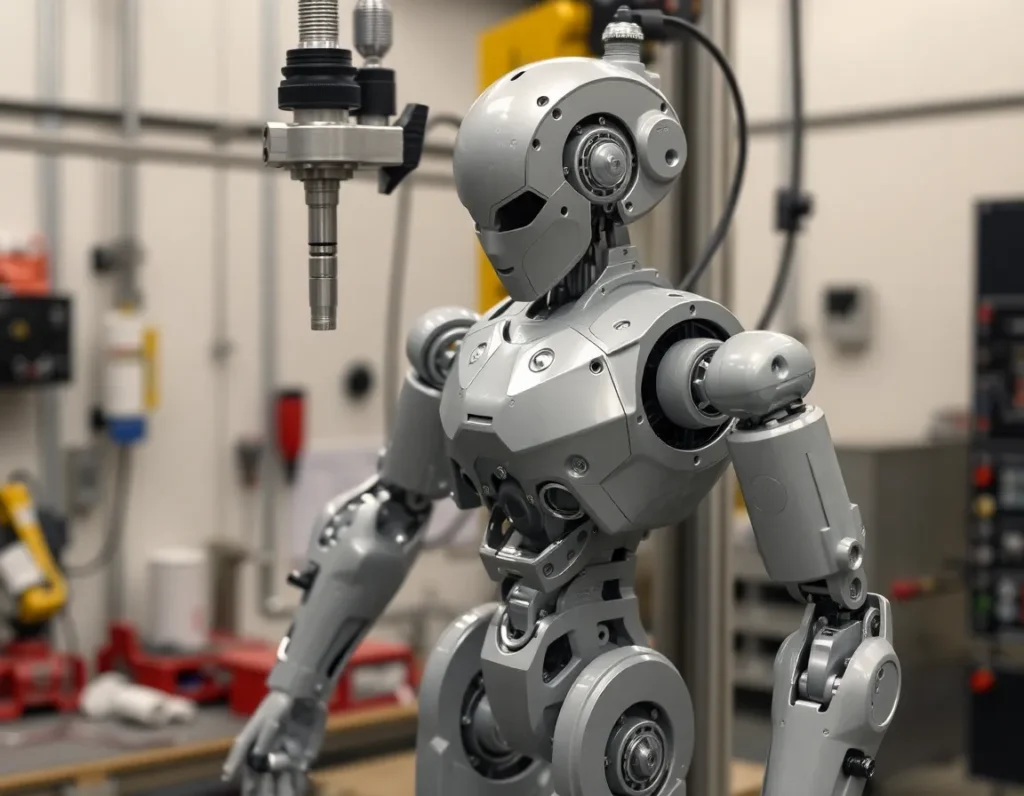
What is Humanoid Robot Parts Machining? Defining the Core Process
Humanoid robot parts machining is the specialized manufacturing discipline focused on fabricating the physical structural and mechanical components of a humanoid robot through controlled material removal. At its core, it is a subtractive process where computer-controlled machine tools, such as CNC (Computer Numerical Control) mills, lathes, and grinders, precisely cut, drill, and shape solid blocks of metal, plastic, or composite materials into finished parts. Unlike mass-produced consumer goods, these components are typically low-volume, high-complexity, and require exceptional accuracy.
The process begins with a detailed 3D computer model of the part, which is translated into machine instructions (G-code). A cutting tool then sculpts the workpiece, layer by layer, to achieve the desired geometry. What distinguishes this field from general machining is the unique set of requirements driven by robotic functionality. Parts must be incredibly lightweight yet strong to maximize efficiency and battery life, often featuring complex internal channels for wiring or hydraulics, thin-walled sections for weight reduction, and intricate bearing surfaces for joints. The machining process must also accommodate the integration of sensors, cables, and other electronics directly into the mechanical structure. Ultimately, humanoid robot parts machining is not just about making a shape; it’s about creating a optimized, functional element of a dynamic system where mechanical precision directly translates to robotic performance, reliability, and the quality of movement.
Key Materials for Machined Humanoid Robot Components
The selection of materials is a fundamental engineering decision that balances strength, weight, durability, machinability, and cost. The wrong material can lead to premature failure, excessive energy consumption, or inaccurate movement.
Aluminum Alloys
Aluminum, particularly alloys like 6061-T6 and 7075, is the workhorse material for humanoid robot frames and structural members. It offers an excellent strength-to-weight ratio, is highly machinable, corrosion-resistant, and relatively inexpensive. 7075 aluminum, known for its use in aerospace applications, provides superior strength where needed, such as in critical load-bearing joints or dynamic leg components.
Titanium Alloys
For the most demanding applications, such as high-stress joints (hips, knees, ankles) or components subject to repetitive impact, titanium alloys like Ti-6Al-4V are chosen. Titanium boasts a strength-to-weight ratio superior to most steels, exceptional fatigue resistance, and biocompatibility. However, it is more expensive and challenging to machine, requiring specialized tools and slower cutting speeds.
Stainless Steels
Stainless steel, such as grade 304 or 17-4 PH, is used for components requiring high wear resistance, hardness, or corrosion resistance. Applications include precision shafts, fasteners, gear components, and end-effectors (hands) that may interact with varied environments. Its higher density means it is used sparingly, often only where its specific properties are non-negotiable.
Engineering Plastics and Composites
Materials like PEEK (Polyether Ether Ketone), Delrin (acetal), and UHMWPE (Ultra-High-Molecular-Weight Polyethylene) are invaluable for specific roles. PEEK offers high strength, thermal stability, and is self-lubricating, making it ideal for bushings, bearings, and insulating components. Delrin is used for low-friction gears and housings. Carbon fiber reinforced polymers (CFRP) are increasingly machined for ultra-light, stiff panels and covers, though they often require specialized tooling and techniques to prevent delamination.
Critical Humanoid Robot Parts and Their Machining Requirements
The functionality of a humanoid robot depends on a suite of precisely machined components, each with its own unique set of manufacturing challenges.
Joint Housings and Actuator Casings
These are the “bones” that house the motors, gears, and sensors of each joint. They must be rigid to prevent flex under load, which would cause positional errors. Machining them often involves creating complex internal cavities with tight dimensional control to precisely locate bearings and gears. Excellent surface finish on internal bores is critical for proper bearing seating and alignment. They frequently incorporate mounting features for sensors and external covers, requiring multi-axis machining to complete in a single setup for accuracy.
Precision Gears and Drive Trains
Harmonic drives, cycloidal drives, and precision spur/helical gears are essential for converting high-speed motor rotation into the high-torque, low-speed motion required for joints. These components demand the highest levels of machining accuracy. Gear tooth profiles must be flawless to ensure smooth, efficient, and quiet power transmission with minimal backlash. This often requires specialized gear hobbing or grinding processes after initial machining, with tolerances in the single-digit micron range.
Structural Links (Thigh, Shank, Forearm)
Links like the thigh or forearm bones must be extremely lightweight and stiff. This leads to designs with complex organic shapes, often with deep pockets, thin ribs, and internal lattice structures to remove every gram of unnecessary material. Machining these from a solid billet is a challenge, requiring long, slender tools that can deflect, making process control and tool path optimization paramount to maintain wall thickness uniformity and prevent vibration.
End-Effectors (Robotic Hands)
The hand is one of the most complex assemblies. Machined parts include finger phalanges, palm structures, and joint mechanisms. These parts are typically very small, with intricate features for tendon routing (in tendon-driven hands) or direct actuator mounting. They require micro-machining capabilities, exceptional surface finish for smooth articulation, and often are made from aluminum or titanium to withstand pinching and grasping forces.
Sensor Mounting Brackets and Adapters
Force-Torque (F/T) sensors in the ankles and wrists, IMUs (Inertial Measurement Units), and camera brackets must be mounted with absolute precision. A misalignment of a few thousandths of an inch in a sensor bracket can lead to significant errors in the robot’s understanding of its own posture and external forces. These parts are machined to exacting tolerances with precisely located and perpendicular mounting surfaces.
Advanced Machining Technologies for Humanoid Robotics
Conventional 3-axis CNC machining reaches its limits with the complex geometries of modern humanoids. Advanced technologies are now standard in this field.
5-Axis CNC Machining
This is arguably the most critical technology. A 5-axis machine can move the cutting tool or the workpiece along five different axes simultaneously. This allows for the complete machining of complex, organic shapes in a single setup. It enables the creation of the deep pockets and contoured surfaces of structural links, the angled features on joint housings, and smooth, continuous 3D curves without the need to reposition the part, which introduces error. It drastically reduces cycle time and improves overall accuracy.
Micro-Machining and Swiss-Type Lathes
For the tiny, high-precision components found in hands, wrists, and sensor systems, micro-machining centers and Swiss-type lathes are essential. These machines can produce parts with diameters under 1mm, holding tolerances of ±0.005mm or better. Swiss lathes are particularly adept at producing long, slender shafts and screw-machined components for miniature actuators with exceptional concentricity and surface finish.
Electrical Discharge Machining (EDM)
EDM, particularly wire EDM and sinker EDM, is used to machine features that are impossible with a cutting tool. It uses electrical sparks to erode material, allowing for the creation of sharp internal corners, extremely hard materials (like hardened tool steel for molds or wear parts), and intricate 2D profiles with no tool force. It is often used for making custom gears, injection molds for plastic robot covers, and delicate structural features.
High-Speed Machining (HSM)
HSM strategies use specialized tool paths, high spindle speeds, and fast feed rates to take light, fast cuts. This is ideal for machining the thin walls and fine features of lightweight robot structures, as it minimizes cutting forces that could cause distortion or chatter. It also produces a superior surface finish directly from the machine, reducing or eliminating the need for secondary finishing operations.
Tolerances, Surface Finishes, and Quality Control in Robot Part Production
In humanoid robotics, the concept of “close enough” does not exist. The cumulative effect of tiny errors across dozens of joints can render a robot clumsy or unstable.
Geometric Tolerances
Dimensional tolerances for critical features like bearing bores, gear shafts, and mating surfaces are typically specified in the range of ±0.0125mm to ±0.025mm (±0.0005″ to ±0.001″). For ultra-precision gear interfaces or sensor mounts, tolerances can be sub-micron. Geometric tolerances—such as flatness, perpendicularity, concentricity, and true position—are equally, if not more, important. A bearing seat must not only be the right size, but its axis must be perfectly perpendicular to the mounting face to prevent binding and premature wear.
Surface Finish Requirements
Surface finish, measured in micro-inches (µin) or microns Ra, directly impacts performance. A rough bearing surface will cause friction, heat, and rapid wear. Sealing surfaces must be smooth to prevent leaks. Gears require a specific finish for optimal lubrication and quiet operation. Typical requirements range from 32 µin Ra (a good machined finish) for non-critical surfaces down to 8 µin Ra or better (a near-mirror finish) for bearing journals and sealing faces. This is achieved through precise machining parameters, tool selection, and often a secondary process like honing or polishing.
Comprehensive Quality Control
Quality control is integrated throughout the machining workflow. First-article inspection using Coordinate Measuring Machines (CMM) is mandatory. A CMM uses a touch probe to digitally map the part’s geometry and compare it directly to the original CAD model, verifying every dimension and tolerance. For high-volume critical features, in-process probing on the CNC machine itself allows for real-time adjustments. Surface finish is verified with profilometers. Furthermore, functional testing, such as checking the rolling torque of an assembled joint or the backlash in a gear train, is the final validation that the machined parts will perform as an integrated system.
The Role of CAD/CAM and Simulation in Machining Workflow
The journey from a conceptual robot design to a physical, machined component is a digital one, orchestrated entirely by CAD (Computer-Aided Design) and CAM (Computer-Aided Manufacturing) software. This digital thread is the backbone of modern humanoid robot parts machining, ensuring that the extreme complexities of these parts are not only designed but are also manufacturable with precision.
It begins with the CAD model, a perfect digital twin of the intended part. For humanoid robots, this model is more than just shapes; it contains the full product manufacturing information (PMI)—the exact dimensions, geometric tolerances, surface finish specifications, and material callouts. This model becomes the single source of truth. The CAM software then takes this model and translates it into machine-readable G-code. The programmer defines toolpaths, selecting cutting tools, spindle speeds, feed rates, and depth of cuts. For a complex robotic forearm housing with internal channels for wiring and fluidics, this involves sophisticated 3D and 5-axis toolpaths that would be impossible to program manually. The software simulates the entire machining process in a virtual environment, checking for collisions between the tool, holder, and the workpiece or machine table, and verifying that the toolpath correctly produces the intended geometry.
Beyond basic simulation, advanced finite element analysis (FEA) is often integrated into this workflow. Engineers can simulate the forces a leg actuator housing will endure during a dynamic walk cycle before a single piece of metal is cut. This allows for design optimization—adding material where stress concentrates or removing it where it’s not needed—directly within the CAD phase. The result is a component that is not only lighter and stronger but also potentially easier to machine. This seamless loop between design (CAD), engineering analysis (FEA), and manufacturing planning (CAM) drastically reduces prototyping cycles, minimizes material waste from design errors, and guarantees that the final machined part will perform as simulated in the real world.
Challenges and Solutions in Machining Complex Robotic Structures
Machining parts for a humanoid robot presents a unique set of obstacles that push conventional manufacturing to its limits. The primary challenge is the inherent conflict between achieving high structural integrity with low mass and accommodating incredibly dense, complex internal geometries.
Challenge 1: Complex Internal Geometries and Thin Walls
Robotic components are rarely solid blocks. A hip joint assembly, for instance, must house bearings, motor mounts, torque sensors, and pass-throughs for electrical and pneumatic lines, all within a minimal envelope. This results in designs with deep, narrow internal pockets, intricate lattices for weight reduction, and extremely thin walls to separate functional cavities. Machining these features is perilous; cutting forces can cause thin walls to vibrate (chatter), leading to poor surface finish, dimensional inaccuracy, or outright failure of the part during machining.
Solution: This demands strategic machining sequences and advanced tooling. Machinists use a “trochoidal” or “adaptive” milling strategy, where the tool engages the material with a constant, light radial depth of cut while moving along a smooth, looping path. This dramatically reduces cutting forces and heat generation, preserving thin walls. Specialized long-reach, variable-helix end mills with vibration-dampening coatings are essential. Often, the part must be machined in stages, leaving supportive material (sacrificial tabs or walls) that are only removed in the final, delicate operations.
Challenge 2: Multi-Axis Accessibility and Single-Setup Machining
Many robotic parts have compound curves and critical features on multiple faces that must be held in perfect angular alignment. A shoulder bracket with mounting faces for actuators at precise, non-orthogonal angles is a classic example. Machining this on a standard 3-axis mill would require multiple re-fixturings, each introducing potential alignment errors (stack-up tolerances) and increasing cycle time.
Solution: The industry standard solution is 5-axis simultaneous CNC machining. A 5-axis machine can rotate the workpiece on two additional axes, presenting virtually any surface of the part to the cutting tool. This allows the entire complex geometry to be machined in a single setup. The benefits are profound: eliminated fixture errors, improved accuracy between features, the ability to use shorter, more rigid tools for better finishes, and faster overall production. Programming and verifying these 5-axis toolpaths, however, requires high-end CAM software and significant expertise.
Challenge 3: Material-Related Difficulties
While advanced alloys like titanium and high-strength aluminum are chosen for their strength-to-weight ratio, they are notoriously difficult to machine. Titanium has low thermal conductivity, causing heat to concentrate on the cutting tool edge, leading to rapid tool wear and potential work hardening of the part. Certain aluminum alloys can be gummy, leading to material adhesion on the tool (built-up edge) which degrades finish.
Solution: Conquering these materials is a matter of precise process control. For titanium, this means using sharp, carbide tools with specialized coatings, lower cutting speeds, high-pressure coolant directed exactly at the cutting interface to evacuate heat, and rigid machine tools to suppress vibration. For gummy aluminum, polished tool flutes, specific rake angles, and optimized coolant formulas are key. In all cases, the solution lies in treating the machining parameters not as general guidelines but as critical, part-specific recipes developed through experience and testing.
Future Trends: Additive Manufacturing and Hybrid Processes
The future of manufacturing humanoid robot parts is not a choice between subtractive (machining) and additive (3D printing) processes, but a strategic integration of both. This hybrid approach leverages the unique strengths of each technology to create components that were previously impossible or prohibitively expensive to produce.
Additive Manufacturing (AM), particularly metal 3D printing techniques like Direct Metal Laser Sintering (DMLS), excels at creating organic, topology-optimized structures. Imagine a spinal column for a humanoid torso that mimics the lightweight, load-bearing efficiency of bone. AM can produce this complex lattice internally within a part, achieving weight reductions of 50% or more while maintaining stiffness. However, as-printed metal parts typically have rough surface finishes and may not hold the tight dimensional tolerances required for bearing seats or precision sealing faces.
This is where hybrid manufacturing shines. In a hybrid workflow, a near-net-shape part is first 3D printed. This part incorporates all the complex internal geometry and lightweight structures. It is then placed onto a CNC machining center—sometimes even a hybrid machine that combines both printing and machining heads—where critical interfaces are precision machined. The robot’s shoulder socket, for example, can be printed as part of a complex, hollow structural cage, and then its spherical bearing surface is finish-machined to a mirror-like 8 µin Ra with perfect sphericity. This “best of both worlds” approach marries the design freedom and weight savings of AM with the unparalleled accuracy and finish of CNC machining.
Looking further ahead, we see the rise of intelligent, closed-loop machining systems. These systems use in-process sensors to monitor cutting forces, vibration, and tool wear in real-time. The machine’s controller uses this data to adapt its parameters on the fly, compensating for tool wear or material inconsistencies to maintain consistent quality. Combined with AI-driven CAM software that can automatically generate optimal toolpaths, the future of humanoid robot parts machining is one of autonomous precision, where highly complex, reliable components are produced with minimal human intervention and maximum efficiency.
Summary of Key Points
The creation of functional, reliable humanoid robots is fundamentally dependent on precision machining. This process transforms advanced materials into the sophisticated skeletons and organs of a robot.
- Core Process & Materials: Humanoid robot parts machining is a subtractive manufacturing process using CNC mills, lathes, and grinders. It primarily works with high-strength aluminum alloys, titanium, and engineering plastics, selected for their optimal strength-to-weight ratios and durability.
- Critical Components: Key machined parts include structural frames (chassis, limbs), actuator housings, and complex joint assemblies like hips, knees, and shoulders. These components demand extreme precision to ensure smooth motion, power transmission, and structural integrity.
- Precision Requirements: Success is measured in microns. Dimensional tolerances often fall within ±0.025mm or tighter, while surface finishes for bearing surfaces must be as smooth as 8 µin Ra (a near-mirror finish) to minimize friction and wear.
- Enabling Technologies: 5-axis CNC machining is essential for creating complex geometries in a single setup. The entire workflow is digitally driven by integrated CAD/CAM software and validated through simulation and FEA analysis before any metal is cut.
- Quality Assurance: Rigorous quality control, using tools like Coordinate Measuring Machines (CMM) and surface profilometers, is non-negotiable to verify that every part meets the exacting digital blueprint.
- Overcoming Challenges: Machining thin walls, complex internals, and tough materials requires specialized strategies like adaptive milling, strategic tooling, and precise control of cutting parameters to manage heat and force.
- The Hybrid Future: The frontier of production lies in combining additive manufacturing (3D printing) for lightweight, complex structures with precision CNC machining for critical tolerances and finishes. This hybrid approach, along with trends toward smarter, adaptive machining systems, will enable the next generation of even more advanced and capable humanoid robots.
Frequently Asked Questions (FAQ)
What is the most common material used in machining humanoid robot parts?
High-strength aluminum alloys, particularly the 7000-series (like 7075-T6), are the most prevalent. They offer an excellent balance of strength, lightweight properties, and relatively good machinability, making them ideal for large structural frames and limb segments where weight is a critical factor.
Why can’t humanoid robot parts just be made with standard 3D printing?
While 3D printing (additive manufacturing) is fantastic for prototypes and complex, lightweight geometries, it often cannot achieve the dimensional accuracy, surface finish, and material density required for high-load, high-precision mechanical components. Critical bearing surfaces, gear teeth, and sealing faces need the superior finish and strength of machined metal. The future is hybrid, using 3D printing for structure and machining for precision interfaces.
What does “5-axis machining” mean, and why is it so important for robotics?
A 5-axis CNC machine can move a cutting tool or a workpiece along five different axes simultaneously. This allows the machine to approach a part from any angle in a single setup. For a complex robotic joint, this means all its angled holes, curved surfaces, and mounting faces can be machined perfectly in relation to each other without being unclamped and re-positioned, which eliminates alignment errors and saves significant time.
How tight are the tolerances really, and how are they measured?
Tolerances are exceptionally tight, often on the order of ±0.025 millimeters (or ±0.001 inches) or less for critical features. For reference, a human hair is about 0.075 mm thick. These are verified using metrology equipment like Coordinate Measuring Machines (CMMs), which use a sensitive probe to digitally map a part’s geometry and compare it point-by-point to the original CAD model with micron-level accuracy.
What is the biggest challenge in machining a part like a humanoid robot knee joint?
One of the biggest integrated challenges is machining the housing to be both extremely light and strong enough to handle dynamic impact loads, while also incorporating precise, parallel bearing bores for the joint axle. The bores must be perfectly aligned (with tight concentricity and parallelism tolerances) to prevent binding and wear, and their interior surface finish must be ultra-smooth. Achieving this on a part with thin walls and complex internal cavities requires expert CAM programming, strategic machining sequences, and rigid, high-precision machine tools.