
Introduction: The Critical Role of Optical Module Housing in Modern Networks
In the invisible arteries of our digital world—the vast fiber optic networks that carry our data, video streams, and cloud services—countless components must work in flawless harmony. At the heart of this connectivity, plugging into routers, switches, and servers, are optical transceiver modules. These modules are the essential translators, converting electrical signals to light and back again. But this sophisticated internal technology would be fragile, unreliable, and incompatible without its first line of defense and its primary interface: the optical module housing. This outer shell is far more than a simple cover; it is a critical engineered component that defines the module’s physical identity, ensures its thermal and electrical stability, and guarantees it can seamlessly slot into equipment from any major vendor worldwide. The relentless drive for higher data rates, from 100G to 800G and beyond, places unprecedented demands on these housings. Their role in maintaining signal integrity, managing intense heat loads, and enabling the dense packing of ports in modern data centers is absolutely fundamental to network performance and uptime. Understanding the optical module housing is, therefore, key to understanding the physical layer of our connected infrastructure.
What is an Optical Module Housing? Defining the Foundation
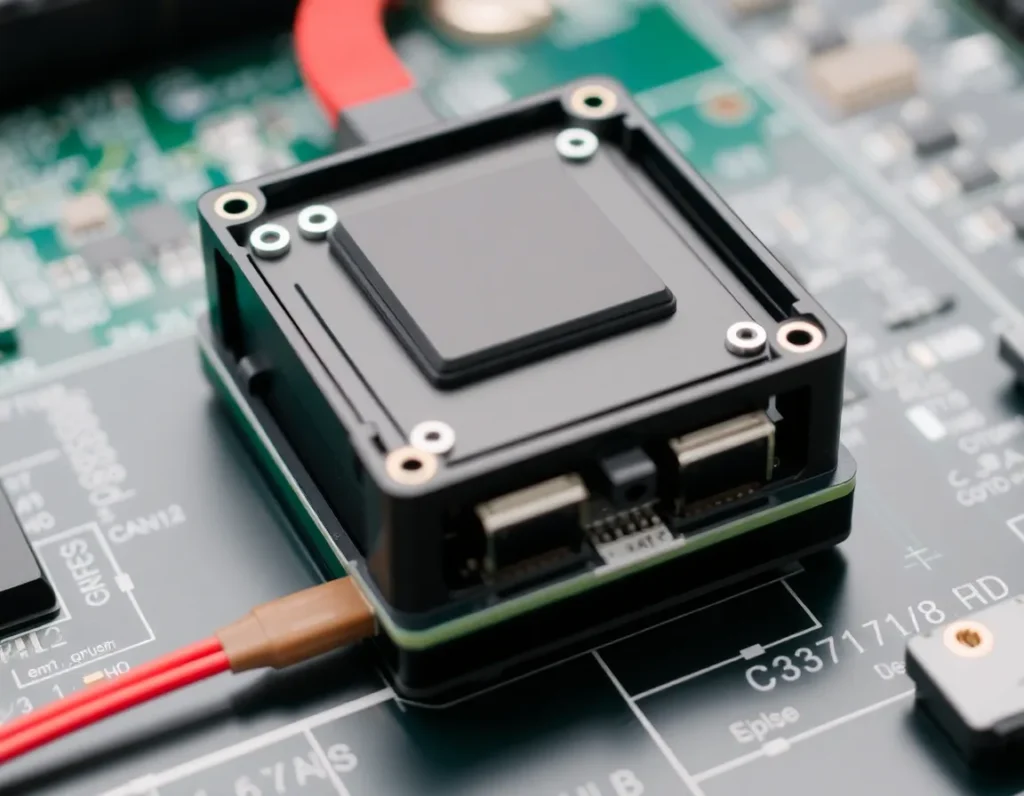
An optical module housing is the standardized metal or metal-and-plastic enclosure that contains and protects the core components of an optical transceiver. Think of it as the chassis or skeleton of the module. Inside, delicate elements like the laser transmitter, photodiode receiver, driver ICs, and control circuitry are mounted on a printed circuit board (PCB). The housing provides the rigid structure that holds these components in precise alignment, particularly for the optical sub-assemblies that must interface perfectly with the fiber optic connector. Crucially, the housing is not a custom design for each module; it adheres to strict multi-source agreements (MSAs) that define its every external dimension, connector latch mechanism, and electrical pin layout. This standardization is what allows a network engineer to purchase a QSFP28 module from one manufacturer and confidently plug it into a switch from another, knowing it will fit and function. The housing also integrates the duplex LC or MPO fiber port at the front and the electrical edge connector (the “golden fingers”) at the rear. In essence, the housing is the physical and mechanical bridge between the fragile world of optoelectronics and the rugged, standardized world of network hardware.
Core Functions and Design Principles of Optical Module Housings
The design of an optical module housing is a complex balancing act driven by several non-negotiable functions. Each principle directly impacts the module’s reliability and interoperability.
Mechanical Interface and Interoperability
The primary function is to provide a flawless mechanical interface with the host device’s cage and connector. The housing’s dimensions, the location and design of its latch, and the placement of its mounting holes must be exact. Even a minor deviation can prevent insertion, cause poor electrical contact, or damage the host’s sensitive connector pins. The design prioritizes a smooth, positive insertion and extraction feel while ensuring a secure, vibration-resistant connection.
Component Protection and Structural Integrity
The housing acts as a robust shield against physical damage, dust, and contaminants. It protects the internal PCB and components from everyday handling stresses, accidental impacts, and the mechanical forces involved in mating and unmating fiber cables. The structure must be rigid enough to prevent flexing, which could misalign optical components or crack solder joints, yet designed for efficient assembly during manufacturing.
Thermal Conduction Path
Perhaps one of its most critical roles is to serve as the primary heat sink. High-power lasers and processors generate significant heat. The housing is designed to pull this heat away from the internal components, typically through direct contact with the PCB and key chips, and transfer it to the larger metal cage of the host system, which has its own cooling solution. The entire bottom surface of the housing often acts as a thermal transfer plate.
Electromagnetic Interference (EMI) Containment
The high-speed electrical signals inside a module can radiate electromagnetic noise, which can interfere with neighboring electronics. Conversely, the module needs protection from external EMI. The metal body of the housing forms a Faraday cage, containing internal emissions and shielding sensitive circuitry from external interference. Gaps and seams are meticulously designed to minimize RF leakage.
Key Materials and Manufacturing Processes for Durability and Performance
The choice of materials and how they are formed is central to achieving the design principles outlined above. Performance, cost, and manufacturability are all key considerations.
Primary Materials
- Metals (for the main body): Zinc die-cast alloy is the traditional and most common material. It offers excellent EMI shielding, good thermal conductivity, and high strength for intricate shapes at a relatively low cost. For higher-performance modules, especially those generating more heat, copper alloys or aluminum are sometimes used for their superior thermal conductivity, though they can be more expensive and harder to die-cast with fine detail. Stainless steel is often used for the latch spring and other critical mechanical parts for its durability and spring properties.
- Plastics (for bezels and components): High-temperature, high-strength engineering plastics like LCP (Liquid Crystal Polymer) or PPS (Polyphenylene Sulfide) are used for the front bezel that holds the fiber ports. These materials can withstand the heat of soldering during assembly, provide electrical insulation, and offer precise molding for the delicate fiber adapter interfaces.
Manufacturing Processes
- Die Casting: This is the standard process for metal housings. Molten zinc or aluminum is injected under high pressure into a precision steel mold (die). This allows for the mass production of complex, net-shaped parts with good dimensional accuracy, essential for interoperability. Post-casting, parts are trimmed, deburred, and often plated (e.g., with nickel) for corrosion resistance and better surface contact for EMI and thermal performance.
- Precision Machining: Used for prototype runs, very low-volume production, or for creating specific high-tolerance features on a die-cast part. It’s more expensive and slower than die-casting.
- Injection Molding: Used for the plastic bezel and internal components. This process allows for high-volume, cost-effective production of parts with excellent detail, such as the snap-fits and guides for the fiber connector.
- Assembly and Welding: The final housing is often an assembly of several pieces. The metal top and bottom halves are typically laser-welded or fixed with screws. Laser welding creates a hermetic, continuous seam that maximizes EMI shielding and structural integrity without introducing additional materials like adhesives that could outgas or degrade.
Types and Form Factors: From SFP to QSFP-DD and Beyond
The evolution of data rates and port density has driven the development of a family of standardized form factors, each with its own distinct housing design. The form factor name essentially defines the housing’s size, shape, and electrical interface.
- SFP (Small Form-factor Pluggable): The workhorse of the industry for 1G/10G applications. Its compact, narrow housing is designed for high port density. Variations include SFP+ (enhanced for 10G/16G/25G) and SFP28 (for 25G). The housing is relatively simple but must still manage heat and EMI effectively.
- SFP-DD (Double Density): An evolution of SFP that doubles the port density by using two electrical lanes in the same width as a standard SFP. The housing is slightly deeper to accommodate the more complex internal layout and additional electrical contacts.
- QSFP (Quad Small Form-factor Pluggable): Significantly wider than SFP, designed to carry four lanes of data. This housing must manage substantially more heat and more complex internal routing. Its variants define generations: QSFP+ (40G), QSFP28 (100G), and QSFP56 (200G).
- QSFP-DD (Double Density): The leading high-density form factor for 400G and 800G. It builds on the QSFP width but adds a second row of electrical contacts (making it “double density”) to support eight high-speed electrical lanes. The housing design is a marvel of miniaturization and thermal engineering, as it packs immense processing power into a space not much larger than a QSFP28.
- OSFP (Octal Small Form-factor Pluggable): A slightly wider and deeper alternative to QSFP-DD for 800G applications. Its housing is designed from the outset for higher power dissipation, often incorporating a more robust thermal solution, such as an integrated heat sink for direct airflow.
- CFP (C Form-factor Pluggable): A much larger form factor used for early 100G and now for very high-power, long-reach applications like 400ZR coherent optics. Its large housing is necessary to accommodate complex electronics, larger lasers, and more sophisticated cooling solutions.
Each step in this progression represents a housing engineering challenge: packing more functionality into a constrained space while managing increased power and heat.
Thermal Management: How Housings Dissipate Heat for Reliability
As data rates skyrocket, the power consumption of optical modules has followed suit. A modern 800G module can easily dissipate 12-15 watts or more. If this heat is not effectively removed, component temperatures soar, leading to accelerated aging, increased bit error rates, wavelength drift in lasers, and ultimately, catastrophic failure. The optical module housing is the central player in the thermal management system.
The thermal path begins inside the module. The hottest components, like the laser driver and DSP chip, are designed to transfer heat into the module’s PCB through thermal vias and pads. The PCB itself then conducts this heat to the metal baseplate of the housing, which is in direct mechanical contact with it. This baseplate is the workhorse of the thermal system. It spreads the heat across its entire surface area.
The next critical interface is between the housing’s baseplate and the host system’s cage. When the module is fully inserted, this metal-to-metal contact is the primary conduit for transferring heat out of the module. To optimize this, the housing baseplate is often machined flat and may even be lightly coated with a thermal interface material (TIM) like grease or a phase-change pad to fill microscopic air gaps that act as insulators.
The host cage is typically attached to a large thermal mass or heat sink on the system board, and often sits in the path of forced airflow from system fans. In some advanced designs, like the OSFP form factor, the housing itself may extend upward to present fins or a raised surface directly into the airflow, acting as an integrated heat sink. For the highest-power coherent modules, the housing may even be designed to interface with a cold plate for liquid cooling. Every aspect of the housing’s material, geometry, and surface finish is scrutinized for its impact on thermal impedance, making it a defining factor in the module’s performance envelope and reliability.
Mechanical and EMI Shielding: Protecting Sensitive Internal Components
Beyond managing heat, the optical module housing serves as the first and most critical line of defense against physical and electromagnetic threats. The sensitive integrated circuits, lasers, and photodiodes inside a module are fragile and operate at high frequencies, making them vulnerable to damage from shock, vibration, and external interference. The housing’s mechanical integrity is therefore paramount. It is engineered to withstand the rigors of insertion and extraction, often thousands of cycles over its lifetime, without deforming. The latching mechanism, typically a bail or button-style design, is integrated into the housing and must provide secure retention in the host cage while allowing for smooth, tool-less removal. The housing also protects against dust and other contaminants, with tight tolerances and sometimes gasketing to prevent particulate ingress that could cloud optical interfaces or cause electrical shorts.
Perhaps an even more sophisticated role is electromagnetic interference (EMI) shielding. High-speed electrical signals inside the module can radiate energy, potentially disrupting nearby electronics. Conversely, external EMI from other system components can couple into the module and corrupt its high-speed data streams. The housing acts as a Faraday cage, enclosing the internal components in a continuous conductive shell. This is why materials like zinc die-cast alloy or steel with conductive plating are favored—they are not just structurally sound but also excellent conductors. The design ensures that when the module is fully inserted, the housing makes a 360-degree electrical contact with the metal host cage, creating an unbroken shielded enclosure. Critical openings, such as the port for the optical connector, are designed with careful attention to the gap size relative to the wavelength of the interference to prevent leakage. This comprehensive shielding is non-negotiable for meeting stringent regulatory emissions standards and ensuring the module functions reliably in the dense, noisy environment of a network switch or router.
Standards and Compliance: Ensuring Interoperability in Global Networks
The true power of optical modules lies in their universality. A module from one manufacturer must seamlessly plug and play in equipment from another, anywhere in the world. This interoperability is not accidental; it is enforced by a complex ecosystem of international standards that dictate nearly every aspect of the optical module housing. Form factor definitions, managed by multi-source agreements (MSAs), are the most visible of these standards. Groups like the Small Form Factor Committee (SFF Committee) and ad-hoc MSA groups for QSFP, OSFP, and others publish detailed mechanical specifications. These documents precisely define the housing’s external dimensions, the position and shape of the latch, the connector port location, and even the labeling area. A deviation of a fraction of a millimeter could prevent a module from fitting into a host cage, so manufacturers adhere to these blueprints with extreme precision.
Compliance extends far beyond physical shape. The housing is central to meeting safety and environmental regulations. For instance, the housing material must often meet flammability ratings like UL 94 V-0. It must also ensure user safety by preventing accidental exposure to laser light, which is managed through the design of the port shutters and internal baffles. Electromagnetic compatibility (EMC) standards, such as those from the FCC (U.S.) and CE (EU), mandate the level of EMI shielding the completed module must achieve, directly validating the housing’s design and material conductivity. Furthermore, standards like Telcordia GR-468-CORE or IEC 62005 outline rigorous reliability testing for mechanical robustness, thermal cycling, and corrosion resistance—tests the housing must survive to prove the module’s worth for carrier-grade networks. This global framework of standards, while complex, is what allows data centers and telecom providers to build heterogeneous, scalable, and reliable networks with confidence.
The Future of Optical Module Housings: Trends and Innovations
As network demands push towards higher speeds, greater density, and lower power, the humble module housing is evolving to meet radical new challenges. The trend toward co-packaged optics (CPO) represents a potential paradigm shift. In CPO architectures, the optical engine is moved much closer to or even onto the same package as the switch ASIC, drastically reducing electrical path lengths. This could eventually lead to the disappearance of the traditional, pluggable module as we know it, replaced by onboard optical assemblies with specialized, integrated housings that focus on thermal and optical coupling rather than hot-swappability. However, pluggables will dominate for the foreseeable future, and their housings are adapting. For the next generation of 1.6T and 3.2T modules, power dissipation will exceed 30 watts, pushing air cooling to its limits. Future housings will increasingly be designed with liquid cooling in mind, featuring integrated microchannels or cold-plate interfaces as a standard option.
Material science is also driving innovation. To reduce weight and improve thermal conductivity, advanced composites and metal matrix composites (MMCs), like aluminum with embedded carbon fibers or diamond particles, are being explored. These materials can offer thermal performance superior to traditional aluminum alloys while being lighter. There is also a push for greater sustainability, leading to research into recyclable polymers and greener plating processes. On the design front, intelligent housings with embedded sensors are on the horizon. Tiny sensors for temperature, humidity, and even physical shock could be integrated into the housing structure, providing real-time telemetry for predictive health monitoring of the module and the broader system. Finally, as form factors like QSFP-DD and OSFP reach their electrical I/O limits, new housing designs will emerge to support even higher lane counts and novel internal architectures, all while maintaining backward compatibility or defining new standards for the next era of connectivity.
Summary of Key Points
The optical module housing is a deceptively complex component that is fundamental to the function and reliability of modern high-speed networks. It is far more than a simple metal shell. Its primary roles are multifaceted: it provides the critical mechanical structure and latching mechanism for secure, hot-swappable operation; it acts as the essential thermal path, conducting waste heat from internal components to the host system; and it serves as a comprehensive shield, protecting sensitive electronics from physical damage and electromagnetic interference. The choice of materials—typically zinc, aluminum, or advanced composites—is driven by the need for strength, thermal conductivity, and EMI suppression.
The housing’s design is almost entirely dictated by industry standards and multi-source agreements (MSAs), which ensure interoperability across vendors and form factors, from SFP to QSFP-DD and OSFP. Compliance with these mechanical, safety, and EMC standards is non-negotiable for global market acceptance. Looking ahead, the housing will continue to evolve to address the challenges of higher power densities, likely incorporating advanced liquid cooling interfaces, smarter materials, and even integrated sensor technology. As optical technology advances toward co-packaged optics and beyond, the housing’s role may transform, but its core mission of enabling reliable, high-performance connectivity will remain central to the architecture of our digital world.
Frequently Asked Questions (FAQ)
What is the main purpose of an optical module housing?
The housing serves three equally vital purposes. First, it provides the mechanical structure, including the latching mechanism, that allows the module to be securely inserted, retained, and hot-swapped in network equipment. Second, it acts as the primary heat sink, drawing thermal energy away from the high-power lasers and electronics inside and transferring it to the host system. Third, it forms a conductive Faraday cage that shields the module’s internal components from electromagnetic interference (EMI) and prevents the module itself from emitting disruptive signals.
Why are most optical module housings made of metal?
Metal, specifically die-cast zinc or aluminum alloys, is the material of choice because it uniquely combines several necessary properties. It is mechanically strong to withstand insertion cycles and physical stress, an excellent conductor of heat for thermal management, and an effective electrical conductor for EMI shielding. The manufacturing processes for metal, like die-casting and CNC machining, also allow for the creation of complex, high-precision shapes with the tight tolerances required by industry standards.
Can a housing be replaced if it gets damaged?
Generally, no. The optical module housing is not a field-replaceable part. It is hermetically sealed or precision-assembled in a cleanroom environment at the factory. The internal components are delicately aligned and bonded to the housing structure. Attempting to open or replace the housing would almost certainly destroy the module’s optical alignment and void any warranties. A damaged housing typically means the entire module must be replaced.
How do standards affect the design of a housing?
Standards and Multi-Source Agreements (MSAs) dictate virtually every external dimension of the housing. They specify the exact length, width, height, shape of the latch, position of the connector port, and even the electrical pin layout on the edge connector. This extreme standardization is what guarantees that a module from any vendor will fit and function correctly in a switch or router from any other vendor, enabling a competitive, interoperable market.
What is the difference between a housing and a cage?
The housing is the metal shell of the optical module itself. The cage (or “host cage”) is the receptacle soldered onto the system’s printed circuit board (PCB) that the module plugs into. The cage provides the electrical connector, guides the module into place, and features spring fingers that make electrical contact with the housing for EMI shielding. It also often includes features to aid in heat transfer from the housing to the board’s heat sink.
How will housings change for 800G and 1.6T modules?
Higher-speed modules consume more power, generating more heat. Housings for 800G, 1.6T, and beyond will place an even greater emphasis on thermal management. We will see more widespread adoption of designs with integrated heat-spreading fins (like OSFP), more sophisticated thermal interface materials, and direct integration with liquid cooling plates. The mechanical and EMI shielding requirements will also become more stringent due to the higher frequency electrical signals involved.