
Introduction: The Critical Role of Copper Machining in AI Cooling
The relentless march of artificial intelligence is fundamentally a story of managing heat. As AI models grow exponentially in size and complexity, the hardware that powers them—from dense server GPUs to specialized AI accelerators—generates thermal loads that can throttle performance and shorten lifespans. At the heart of the solution to this thermal challenge lies a centuries-old material: copper. However, it is not the raw metal, but the precision with which it is shaped, that unlocks its true potential. The field of copper machining for AI cooling has thus become a critical, enabling discipline in modern computing. It transforms a material with excellent intrinsic properties into intricate, high-performance components like vapor chambers, complex fin stacks, and micro-channel cold plates. Without advanced machining techniques, copper’s theoretical advantages remain just that—theoretical. This segment explores why copper is indispensable, how it is precisely worked, and the design and finishing nuances that make it the cornerstone of thermal management in the AI era.
Why Copper? The Material Science Behind Superior Thermal Management
Copper’s dominance in high-performance cooling isn’t an accident; it’s a direct consequence of its unique physical properties. The primary metric for a cooling material is thermal conductivity, measured in watts per meter-kelvin (W/m·K). Pure copper boasts a conductivity of approximately 400 W/m·K, which is second only to silver among common engineering metals and nearly double that of aluminum. This means heat moves through copper with exceptional speed, rapidly pulling energy away from a hot AI processor die.
But conductivity is only part of the story. Effective heat spreading—the ability to move thermal energy from a small, scorching hotspot to a larger area for dissipation—is equally vital. Copper excels here due to its high volumetric heat capacity. It can absorb more thermal energy per unit volume before its temperature rises significantly, acting as a buffer against transient power spikes common in AI workloads. Furthermore, copper’s malleability and strength allow it to be formed into robust, reliable interfaces. When a heat sink is mounted under pressure, copper’s yield strength helps maintain flatness and intimate contact with the chip, minimizing the thermal resistance at this most critical junction. While aluminum is lighter and cheaper, its lower conductivity and softer nature make it less suitable for the intense, localized heat fluxes generated by today’s AI silicon, where every degree Celsius of temperature reduction translates directly into higher sustained clock speeds and computational throughput.
Key Copper Machining Processes for AI Cooling Components
Transforming copper billet into a sophisticated cooling device requires a suite of precise machining operations, each selected for its ability to balance geometric complexity, surface integrity, and production efficiency.
CNC Milling
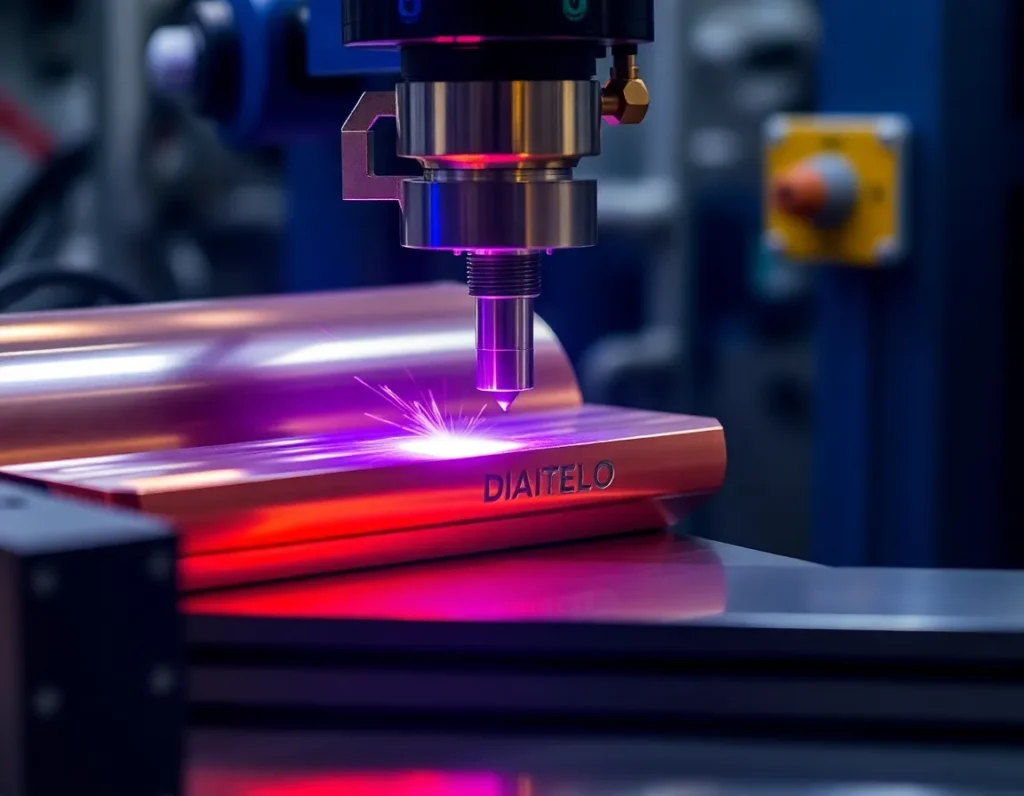
Computer Numerical Control (CNC) milling is the workhorse process for creating the core structures of AI heat sinks and cold plates. Multi-axis CNC machines carve intricate fin arrays, mounting pedestals, and fluid channels directly from solid copper blocks. The key advantage is design freedom. Engineers can create tapered fins, which improve airflow and reduce weight, or complex pin-fin structures that maximize surface area within a confined volume. For direct-die cooling applications, CNC milling achieves the exceptional flatness and precise step heights required to mate perfectly with a GPU’s varied components. The process demands specialized tooling and strategies to manage copper’s gummy nature, which can lead to built-up edge on cutting tools, but modern tool coatings and high-pressure coolant systems make it highly reliable.
Skiving
Skiving is a specialized, chipless machining process that is uniquely suited for creating high-density, high-aspect-ratio fins from a solid copper base. A sharp, rake-shaped tool is drawn across the surface of a copper block, peeling up a thin layer of metal to form a standing fin. This process is repeated at precise intervals to create an entire array of fins that are integral to the base plate—there is no thermal interface between the fin and base. This monolithic construction eliminates the thermal resistance found in bonded or soldered fin designs, making skived heat sinks exceptionally efficient for AI server applications where space above the CPU or GPU is limited but cooling demand is extreme.
Micro-Drilling and EDM
For the most advanced cold plates used in direct-to-chip liquid cooling, creating networks of micro-channels often requires processes beyond conventional cutting. Micro-drilling, using ultra-precise, high-speed spindles and small-diameter tools, can produce channels with diameters well below 1 millimeter. For even more complex internal geometries or harder copper alloys, Electrical Discharge Machining (EDM) is employed. EDM uses controlled electrical sparks to erode material, allowing for the creation of intricate, non-linear channel paths, tapered inlets, and plenums with zero tool force, thus avoiding mechanical stresses or tool breakage. These processes are essential for maximizing the heat transfer surface area between the cooling liquid and the copper cold plate wall, a critical factor for cooling multi-kilowatt AI accelerator cards.
Design Considerations for AI-Specific Copper Heat Sinks and Cold Plates
Designing a copper cooling component for AI hardware moves beyond general thermal principles to address the specific, punishing demands of AI compute.
First is the management of extreme heat flux density. Modern AI chips pack billions of transistors into a small die, creating power densities that can exceed 100 watts per square centimeter. A copper cold plate design must counteract this with hyper-localized cooling. This often means incorporating a “jet impingement” zone directly under the die, where coolant is forced through an array of micro-nozzles to strike the hot surface at high velocity, breaking up the insulating boundary layer. The surrounding area must then efficiently spread residual heat to secondary finned regions.
Second is the need for structural integrity under thermal cycling. AI workloads are rarely constant; training runs cause cyclical heating and cooling. Copper expands when heated, and the design must account for this thermal expansion to prevent warping, which would degrade contact with the die, or stress that could fracture solder joints in sealed cold plates. Finite Element Analysis (FEA) is used to simulate these forces and guide the inclusion of strategic stiffening ribs or flexible bellows in the design.
Finally, integration with the broader system is paramount. The design must include precisely machined features for reliable mounting—through-holes for spring-loaded screws, standoffs for consistent pressure application, and flatness zones for thermal interface material (TIM) application. For liquid cold plates, port location, sealing groove design, and internal flow path optimization to minimize pressure drop are all critical copper machining for ai cooling considerations that directly impact the performance and reliability of the entire AI server rack.
Surface Finishing and Treatments to Maximize Copper’s Cooling Performance
The journey of a copper cooling component does not end with machining. Its surface condition plays a decisive role in its final performance, necessitating a range of finishing and treatment steps.
Surface Flatness and Roughness
The mating surface that contacts the AI chip must be exceptionally flat—often specified within microns over the die area—to ensure the thin layer of thermal interface material is uniform and minimal. This is achieved through post-machining processes like precision lapping or diamond fly-cutting. Conversely, the exterior surfaces of fins or the internal walls of coolant channels benefit from controlled roughness. Techniques like abrasive flow machining can create micro-textures that turbulate airflow or coolant flow, enhancing heat transfer by disrupting the laminar boundary layer. The goal is to optimize roughness for the specific fluid dynamics, not merely to make the surface shiny.
Anti-Corrosion and Anti-Tarnishing Coatings
Bare copper oxidizes and tarnishes when exposed to air and moisture, forming an insulating layer of copper oxide that drastically reduces thermal efficiency. In liquid cooling systems, copper can also be susceptible to galvanic corrosion if it contacts dissimilar metals like aluminum in the loop. To prevent this, protective coatings are applied. Nickel plating is a common solution, providing a hard, stable, and corrosion-resistant barrier while only slightly reducing overall thermal performance. For applications where every degree counts, ultra-thin layers of gold or specialized organic anti-tarnish coatings are used to protect the copper without significantly impeding heat flow. The choice of coating is a critical trade-off between long-term reliability and peak thermal performance.
Enhancing Surface Area and Wettability
For two-phase cooling systems using vapor chambers or heat pipes, the internal wicking structure’s ability to transport condensed liquid is key. Sintering copper powder onto the interior walls creates a porous, high-surface-area layer that dramatically improves capillary action. In direct liquid cooling, promoting surface wettability—the ability of the coolant to spread out into a thin film—improves boiling efficiency. Specialized chemical treatments or micro-porous coatings can be applied to the copper surface to achieve this, turning a smooth machined wall into a hyper-efficient phase-change interface. These advanced treatments represent the frontier of maximizing copper’s innate cooling potential.
Integration Challenges: Mounting, Corrosion, and Compatibility in AI Systems
Successfully integrating precision-machined copper components into an AI server or accelerator card is a final, critical hurdle. The component’s raw thermal performance is meaningless if it cannot be reliably and durably attached to the heat source or if it causes systemic failure. The primary challenges revolve around mechanical mounting, galvanic corrosion, and material compatibility within a tightly packed, multi-material ecosystem.
Thermal Interface and Mechanical Stress Management
The bond between the copper cold plate and the silicon die is paramount. This interface is bridged by a Thermal Interface Material (TIM)—grease, paste, or phase-change pads—which fills microscopic imperfections. Copper’s high stiffness, while beneficial for flatness, can be a liability. Uneven mounting pressure or thermal expansion mismatch can warp the substrate or crack the delicate silicon die. Advanced mounting solutions use sophisticated spring-loaded or torque-screw mechanisms to apply uniform, calibrated pressure across the entire die area. Furthermore, the extreme heat fluxes in AI processors can cause TIM pump-out or dry-out over time. This has led to the development of liquid metal TIMs and sintered nano-silver pastes, which offer superior longevity and thermal conductivity but require careful application to prevent short-circuiting and must be compatible with any protective coatings on the copper.
The Persistent Threat of Galvanic Corrosion
In liquid-cooled systems, copper rarely exists in isolation. It connects to aluminum manifolds, nickel-plated fittings, or stainless steel pumps via coolant. When two dissimilar metals are electrically connected by an electrolyte (the coolant), galvanic corrosion occurs, preferentially degrading the less noble metal. While copper is more noble than aluminum, it can still corrode if the coolant chemistry breaks down or if contaminants introduce other galvanic pairs. This corrosion forms insulating oxides that drastically reduce heat transfer and can shed particles that clog micro-channels. Mitigation requires a multi-pronged approach: using compatible metals in the loop (e.g., copper and brass), employing high-quality, inhibitor-rich coolants formulated for mixed-metal systems, and ensuring all copper surfaces are properly plated or passivated as discussed in the previous section. The integrity of these protective layers at cut edges and threaded joints is especially critical.
Compatibility with Advanced Packaging and 2.5D/3D Integration
The future of AI hardware lies in advanced packaging like 2.5D interposers and 3D-stacked chips. These architectures present a unique cooling challenge: the heat-generating dies are no longer on a single planar surface but are stacked or placed side-by-side on a silicon interposer. A traditional monolithic copper heat sink is often inadequate. This drives the need for copper machining for AI cooling to produce complex, multi-level cold plates that can make intimate contact with dies of different heights or extract heat from the sides of a stack. Integration also involves thermal through-silicon vias (TSVs) and microfluidic channels etched directly into the interposer, which must interface seamlessly with the macro-scale copper cooling solution. The precision required here bridges the gap between semiconductor fabrication and traditional machining.
The Future of Copper Machining: Innovations for Next-Generation AI Hardware
As AI models grow exponentially, their thermal demands will push copper machining to its physical and technological limits. The response will not be to abandon copper, but to innovate new ways to shape, structure, and integrate it. The future lies in hybrid approaches, additive techniques, and intelligent, topology-optimized designs that leverage copper’s unmatched conductivity in ever more efficient ways.
Additive Manufacturing and Hybrid Structures
While subtractive CNC machining dominates today, additive manufacturing (AM) or 3D printing of copper is rapidly maturing. Techniques like Laser Powder Bed Fusion (LPBF) and binder jetting enable geometries impossible for milling: internal lattice structures for immense surface area, conformal cooling channels that perfectly trace the heat profile of a die, and integrated manifold systems that reduce parts count. The current trade-offs are surface roughness and slightly reduced purity (and thus conductivity) compared to wrought copper. The near future will see hybrid manufacturing, where a near-net shape is 3D printed and then finished with precision CNC machining on critical mating surfaces. This combines design freedom with the flawless surface integrity required for optimal thermal contact.
Topology Optimization and AI-Driven Design
The design process itself is being revolutionized. Topology optimization software, often powered by AI algorithms, can take the thermal load map, flow constraints, and mounting points of a processor and generate an organic, weight-optimized copper heat sink structure that looks more like a bone than a traditional fin array. These structures maximize stiffness-to-weight ratio and heat dissipation with minimal material. Machining such complex shapes was once impractical, but 5-axis CNC and AM are making them feasible. Furthermore, generative AI can now propose and simulate millions of micro-channel patterns or pin-fin arrangements in seconds, identifying optimal configurations for specific flow rates and heat loads that would be impossible for a human engineer to conceive.
Nano-Engineered Surfaces and Embedded Sensing
Surface finishing will move from the microscopic to the nanoscopic. Researchers are developing methods to grow carbon nanotubes or graphene layers on machined copper surfaces. These materials can enhance wettability for boiling, create a super-hydrophilic surface for film cooling, or even provide directional thermal conductance. Another frontier is the integration of micro-sensors. Imagine a copper cold plate with embedded fiber Bragg gratings or microscopic resistance temperature detectors (RTDs) printed directly into its channels during manufacturing. This would provide real-time, spatially resolved temperature and flow data, enabling dynamic, predictive cooling control and providing invaluable feedback for system health and performance optimization.
The Sustainable Copper Lifecycle
With the massive scale-up of AI infrastructure, the environmental impact of material use becomes critical. Future innovation will heavily focus on the sustainable lifecycle of copper in cooling. This includes designing for disassembly and recyclability, developing highly efficient processes to reclaim high-purity copper from end-of-life servers, and exploring the use of copper alloys with recycled content that do not sacrifice thermal performance. The goal is to ensure that the pursuit of computational intelligence does not come at an untenable environmental cost, making circular economy principles a core tenet of next-generation copper machining for AI cooling.
Summary of Key Points
The relentless thermal demands of artificial intelligence have cemented copper’s role as the material of choice for high-performance cooling solutions. Its exceptional thermal conductivity, combined with its machinability, makes it uniquely suited to extract heat from densely packed, high-wattage AI processors. This article has detailed the journey of copper from raw material to integrated thermal solution.
- Material Superiority: Copper’s high thermal conductivity, electrical properties, and ease of bonding are fundamental to its dominance, despite challenges like weight and cost compared to aluminum.
- Precision Processes: Advanced CNC machining, skiving, and forging are critical for creating the complex geometries—micro-channels, intricate fin arrays, and vapor chambers—required for modern AI cooling components.
- AI-Optimized Design: Effective copper components for AI are not just blocks of metal. They require designs tailored to specific heat flux patterns, often featuring jet impingement, staggered pin fins, and topology-optimized structures to maximize efficiency.
- Surface Enhancement: The performance of a machined copper part is heavily dependent on its surface. Plating (nickel, gold), polishing, and specialized treatments for wettability or wicking structure creation are essential to prevent corrosion, improve contact, and enable efficient phase-change cooling.
- Integration is Critical: The best cold plate can fail due to poor mounting pressure, TIM failure, or galvanic corrosion. Successful integration requires careful consideration of mechanical stress, coolant chemistry, and compatibility with other system materials and advanced chip packaging.
- Future Innovations: The field is evolving towards hybrid additive/subtractive manufacturing, AI-generated organic designs, nano-engineered surfaces, and embedded sensing. Sustainability and recyclability will also become driving factors in copper cooling solutions.
In conclusion, copper machining for AI cooling is a sophisticated, multi-disciplinary engineering discipline. It sits at the intersection of metallurgy, mechanical design, fluid dynamics, and surface science. As AI continues its exponential growth, the innovations in how we shape and use copper will be a fundamental enabler, ensuring that the brains of our new digital age do not overheat.
Frequently Asked Questions (FAQ)
Why is copper better than aluminum for cooling AI chips?
Copper has approximately 60% higher thermal conductivity than aluminum (about 400 W/m·K vs. 235 W/m·K). For AI chips with extremely high and concentrated heat fluxes (over 100 W/cm²), this difference is crucial. Copper can “spread” the heat away from the tiny die area much more rapidly, preventing hot spots and allowing the coolant or air to remove it more effectively. While aluminum is lighter and cheaper, copper’s superior performance makes it necessary for the most demanding applications.
Can’t we just use liquid cooling and forget about advanced copper machining?
Liquid cooling actually increases the need for precision copper machining. The liquid doesn’t touch the silicon die directly. Instead, it flows through a machined copper cold plate that is attached to the chip. The design of the micro-channels, jet orifices, and internal manifold within that copper plate determines the efficiency of the liquid cooling. Poor machining leads to uneven flow, pressure drops, and stagnant zones that cripple performance. The liquid is only as good as the copper interface that manages the heat.
What is the biggest manufacturing challenge in making a copper vapor chamber?
The two biggest challenges are achieving a perfect internal vacuum and creating an effective wicking structure. The enclosure must be hermetically sealed after the working fluid is added, which requires precision welding or bonding of the copper halves without contaminants. Internally, sintering a consistent layer of copper powder onto the walls to form the capillary wick is a delicate process. Any inconsistency can create a dry spot, leading to local overheating and failure of the phase-change cycle.
How does galvanic corrosion happen in a cooling loop, and how is it prevented?
Galvanic corrosion occurs when two different metals (e.g., copper and aluminum) are electrically connected and immersed in an electrolyte (coolant). One metal acts as an anode and corrodes. Prevention strategies include: 1) Using a coolant with corrosion inhibitors specifically formulated for mixed-metal systems, 2) Designing the loop with compatible metals (e.g., all copper and brass), and 3) Applying non-conductive protective coatings (like nickel plating) to the copper to break the electrical connection, paying special attention to protect cut edges and threads.
Is 3D printing going to replace traditional CNC machining for copper parts?
In the near term, they are more likely to complement each other in a hybrid approach. 3D printing (additive manufacturing) excels at creating incredibly complex internal geometries and lightweight lattice structures that are impossible to mill. However, the as-printed surface is often rough and may have slightly lower thermal conductivity. Critical mating surfaces that contact the silicon die will still require precision CNC machining or finishing to ensure perfect flatness and thermal contact. The future lies in using 3D printing for the complex body and CNC for the critical interfaces.
What are the emerging alternatives to copper, and could they replace it?
Research is ongoing into alternatives like synthetic diamonds, graphene films, and advanced carbon composites, which have higher thermal conductivity than copper. However, these materials face significant hurdles: extreme cost (diamond), difficulty in manufacturing large, complex shapes (graphene), or challenges with bonding and integration. For the foreseeable future, copper remains the best overall compromise of performance, manufacturability, reliability, and cost. Innovations will focus on enhancing copper through alloys, coatings, and novel structures rather than outright replacement.