
In the evolving landscape of custom mechanical keyboards, the tactile experience and acoustic profile of a board are no longer left to chance. Every enthusiast knows that while switches and keycaps get much of the spotlight, the true backbone of any high-end build is the plate. Specifically, machined keyboard plates serve as the critical interface between the switches and the PCB, dictating the stiffness, vibration dampening, and overall “thock” of the typing experience. At jucheng, we have observed a significant shift in the market toward high-precision CNC components that allow users to fine-tune their builds with mathematical accuracy. Whether you are chasing the flex of a pp plate keyboard or the crisp resonance of an alu plate keyboard, understanding the material science behind these components is essential for any serious hobbyist or commercial designer.
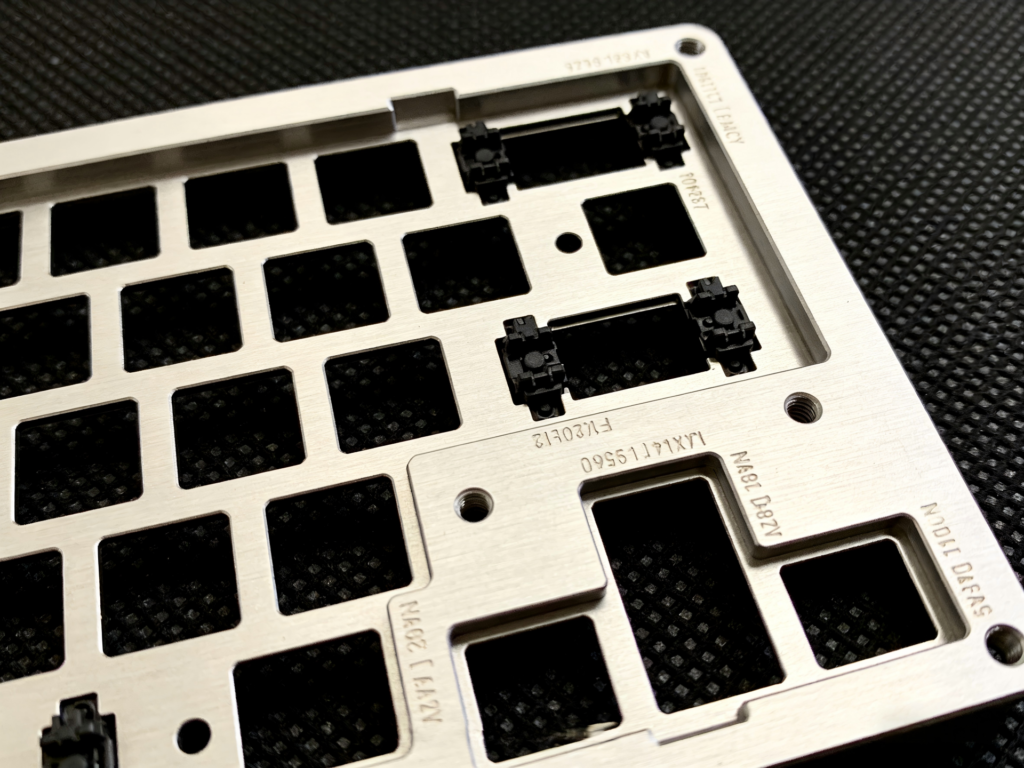 Understanding Machined Keyboard Plates: Definition and Principles
A keyboard plate is a thin sheet of material—typically between 1.5mm and 4.0mm thick—that sits above the PCB. Its primary function is to hold the switches securely in place, ensuring they remain perfectly aligned and vertical during heavy typing sessions. However, the “principle” of a plate goes far beyond mere structural support. In a machined keyboard plates context, the manufacturing process involves precision CNC (Computer Numerical Control) milling. This allows for tighter tolerances than traditional laser cutting or stamping. For instance, a CNC-milled plate from jucheng ensures that the switch cutouts are exactly 14mm x 14mm with zero variance, which eliminates “switch wobble” and enhances the overall stability of the build.
The physics of a keyboard plate involve energy dissipation. When you bottom out a switch, the kinetic energy is transferred into the plate. A stiff material like aluminum or brass will reflect that energy back, creating a higher-pitched sound and a firmer feel. Conversely, a softer material like a pp plate keyboard or a fr4 plate keyboard will absorb that energy, yielding a deeper sound and a cushioned impact. This interplay is why the choice of keyboard plate materials is the most debated topic on forums like Reddit’s r/MechanicalKeyboards and Geekhack.
Core Application Scenarios for High-Precision Plates
While the primary application is the enthusiast keyboard market, the demand for machined keyboard plates extends into several high-stakes industries where tactile feedback and reliability are non-negotiable.
- Professional Esport Hardware: Pro gamers often require specific “clack” feedback to confirm keystrokes. Alu plate keyboard configurations are favored here for their rigidity and instantaneous response times.
- Industrial Control Panels: In environments where machinery is operated via physical keys, a CNC-machined plate provides the durability needed to withstand millions of cycles without deforming.
- Medical and Laboratory Equipment: Precision is paramount. Custom plates machined from non-corrosive materials like stainless steel or high-grade polymers ensure that input devices remain sterile and functional under rigorous conditions.
- Bespoke Designer Builds: This is where jucheng excels. Small-batch production of unique plate designs—featuring complex flex cuts or integrated mounting points—allows designers to push the boundaries of what a keyboard can sound like.
The Material Debate: FR4 vs. Aluminum vs. PP vs. PC
Choosing the best keyboard plate material is a subjective journey, but it is grounded in objective material properties. Let us break down the most popular choices currently dominating the community discussions.
1. FR4 Plate Keyboard: The Versatile Middle Ground
The fr4 plate keyboard has gained massive popularity because it strikes a perfect balance. FR4 is a fiberglass-reinforced epoxy laminate—the same material used to make PCBs. It is naturally slightly flexible but retains enough structural integrity to feel premium. When comparing fr4 vs aluminum plate keyboard, users often note that FR4 “tames” the harshness of high-pitched switches, producing a more neutral, poppy sound that many find satisfying for daily typing.
2. Aluminum (Alu) Plate Keyboard: The Standard of Excellence
An alu plate keyboard is the gold standard for many “out-of-the-box” premium boards. Aluminum is lightweight, easy to anodize in various colors, and provides a very consistent typing feel. It is relatively stiff, which makes it excellent for linear switches where a solid bottom-out is desired. However, for those seeking the best keyboard plate for thock, aluminum can sometimes be too resonant, requiring additional dampening foam.
3. PP vs PC Plate Keyboard: The Softest Touch
In the battle of pp vs pc plate keyboard, we are looking at the softest end of the spectrum.
- PC (Polycarbonate): Highly popular for its deep, bassy sound. It is transparent, making it ideal for RGB lighting. It is flexible, providing a “bouncy” typing feel.
- PP (Polypropylene): This is the newcomer that has taken the “thock” world by storm. A pp plate keyboard is even softer and more flexible than PC. It absorbs almost all high-frequency vibrations, leaving only the deep, low-end frequencies. If your goal is a “muted” or “creamy” sound profile, PP is often cited as the best keyboard plate material.
Technical Comparison Table of Plate Materials
| Material Type | Flex Level | Acoustic Profile | Durability | Best For… |
|---|---|---|---|---|
| Aluminum (Alu) | Low | High-pitched/Clacky | Very High | Linear switches, Crisp feedback |
| FR4 (Fiberglass) | Medium | Neutral/Poppy | High | All-around versatility |
| Polycarbonate (PC) | High | Deep/Thocky | Medium | Tactile switches, RGB builds |
| Polypropylene (PP) | Very High | Ultra-Deep/Muted | Medium-Low | Maximum flex and thock |
| Brass | None | Musical/Vibrant | Very High | Heavy, premium feel |
Key Factors to Consider When Buying Machined Keyboard Plates
When you are sourcing machined keyboard plates, whether for a personal project or a commercial product line, several technical factors must be evaluated to ensure the final product meets the high standards of the mechanical keyboard community.
- Precision and Tolerances: A plate that is even 0.1mm off can cause switches to pop out or stabilizers to bind. jucheng utilizes advanced CNC milling to maintain tolerances within +/- 0.01mm, ensuring a perfect snap-fit for every switch.
- Mounting Style Compatibility: Does the plate support Gasket Mount, Top Mount, or Tray Mount? CNC machining allows for the creation of intricate “leaf springs” or “flex cuts” in the plate, which are essential for modern gasket-mounted keyboards to achieve that sought-after “bounce.”
- Surface Finish: For an alu plate keyboard, the finish (anodization, sandblasting, or E-coating) affects both aesthetics and feel. For non-metal plates like a pp plate keyboard, the edge quality is vital; laser-cutting can sometimes leave charred or melted edges, whereas CNC machining leaves a clean, burr-free profile.
- Plate Thickness: The industry standard is 1.5mm, but many custom builders are experimenting with 1.2mm plates for more flex or 5.0mm “half-plates” for a unique hybrid feel.
Installation and Maintenance Tips
Installing machined keyboard plates requires a delicate touch to avoid damaging the PCB or the switches. Here is a brief guide to ensuring a successful assembly:
First, ensure your stabilizers are properly lubed and installed on the PCB (for PCB-mount) or the plate (for plate-mount). When using a flexible pp plate keyboard, it may be easier to insert a few switches into the corners of the plate first to align it with the PCB before filling in the rest. This prevents the plate from sagging during the soldering or hot-swap process.
Maintenance is generally minimal. For metal plates like an alu plate keyboard, a simple wipe with an isopropyl alcohol cloth will remove any oils or dust. For fr4 plate keyboard options, be careful not to use excessive force when removing switches, as the edges of the fiberglass can eventually wear down if switches are swapped hundreds of times. If you notice a “metallic ping,” consider adding a thin layer of switch film or a plate foam between the plate and the PCB to further tune the acoustics.
Why Choose Jucheng for Your Machined Keyboard Plates?
In the competitive world of CNC machining, jucheng stands out as a leader in the production of high-end keyboard components. Our facility is equipped with state-of-the-art 3-axis and 5-axis CNC machines specifically calibrated for thin-walled components like machined keyboard plates. We understand that a keyboard plate isn’t just a piece of hardware; it’s a musical instrument component.
Our expertise allows us to work with a vast array of keyboard plate materials, from traditional aerospace-grade aluminum to specialty polymers like POM and PP. We provide comprehensive DFM (Design for Manufacturing) feedback, helping designers optimize their flex-cut patterns to ensure durability without sacrificing the “thock.” Furthermore, our commitment to quality is backed by ISO certifications, ensuring that every batch of plates—whether it’s a 1-unit prototype or a 1,000-unit production run—meets the exact specifications of the client. When you choose jucheng, you are choosing precision, reliability, and a deep understanding of the keyboard enthusiast’s soul.
Frequently Asked Questions (FAQ)
1. What is the best keyboard plate for thock?
While sound is subjective, the community generally agrees that non-metal materials are the best keyboard plate for thock. Specifically, a pp plate keyboard or a PC (Polycarbonate) plate combined with deep-sounding linear switches and a dampening case foam will yield the most bass-heavy “thock” sound. FR4 is also a strong contender for those who want a bit more “pop” with their thock.
2. Is an aluminum plate better than an FR4 plate?
Neither is objectively “better,” as it depends on your preference. An alu plate keyboard offers a stiffer, more consistent typing experience with a higher-pitched sound. An fr4 plate keyboard offers more flex and a “softer” acoustic profile. If you find metal plates too “harsh” on your fingers during long typing sessions, FR4 is an excellent alternative.
3. How does plate thickness affect the keyboard?
Thickness directly impacts sound and feel. A standard 1.5mm plate allows switches to “clip” in securely. A thicker plate (like a 4mm integrated plate) creates a very stiff, heavy feel with very little vibration. Conversely, thinner plates (1.2mm) are used to increase flex in “bouncy” gasket-mount designs.
4. Can I use a PP plate with any keyboard?
A pp plate keyboard usually requires a specific mounting style to work effectively. Because PP is very soft, it is best used in “Gasket Mount” or “Sandwich Mount” builds where the plate is supported by the case. In a “Tray Mount” build, a PP plate might sag too much in the center, leading to inconsistent key heights.
5. Why is CNC machining preferred over laser cutting for plates?
CNC machining provides a much cleaner edge and allows for variable thickness across the plate (such as pockets or recessed areas). For materials like aluminum, CNC is necessary for high-quality finishes. For plastics, CNC prevents the melting or “browning” of edges that can occur with laser cutting, ensuring the best keyboard plate material properties are preserved.
6. Does the plate material affect the RGB lighting?
Yes, significantly. A PC (Polycarbonate) plate is translucent and will diffuse the light across the entire board, creating a “glow” effect. An alu plate keyboard or a fr4 plate keyboard is opaque and will reflect the light upward, creating more distinct shadows between the keys.
7. Where can I get custom machined keyboard plates?
For custom designs, jucheng offers specialized CNC services. You can upload your CAD files (DXF or STEP), and we can machine your plates from a variety of materials, ensuring that your unique design is realized with professional-grade precision.