
Introduction: The Critical Role of Machined Aluminum Faceplates
In the world of precision engineering, the interface between a complex system and its user or environment is often defined by a single, critical component: the faceplate. These panels serve as the functional skin of countless devices, from aerospace avionics to medical diagnostic equipment. While various materials can be used, machined aluminum has emerged as the undisputed champion for high-performance applications. The process of aluminum faceplates machining is not merely about cutting metal; it is a sophisticated discipline that balances structural integrity, aesthetic appeal, and exacting tolerances. The role of these components is critical—they protect sensitive electronics, provide intuitive user controls, ensure electromagnetic shielding, and convey a product’s quality through their fit and finish. A failure in this single part can compromise an entire assembly, making the choice of material and manufacturing process a foundational decision in product design and engineering.
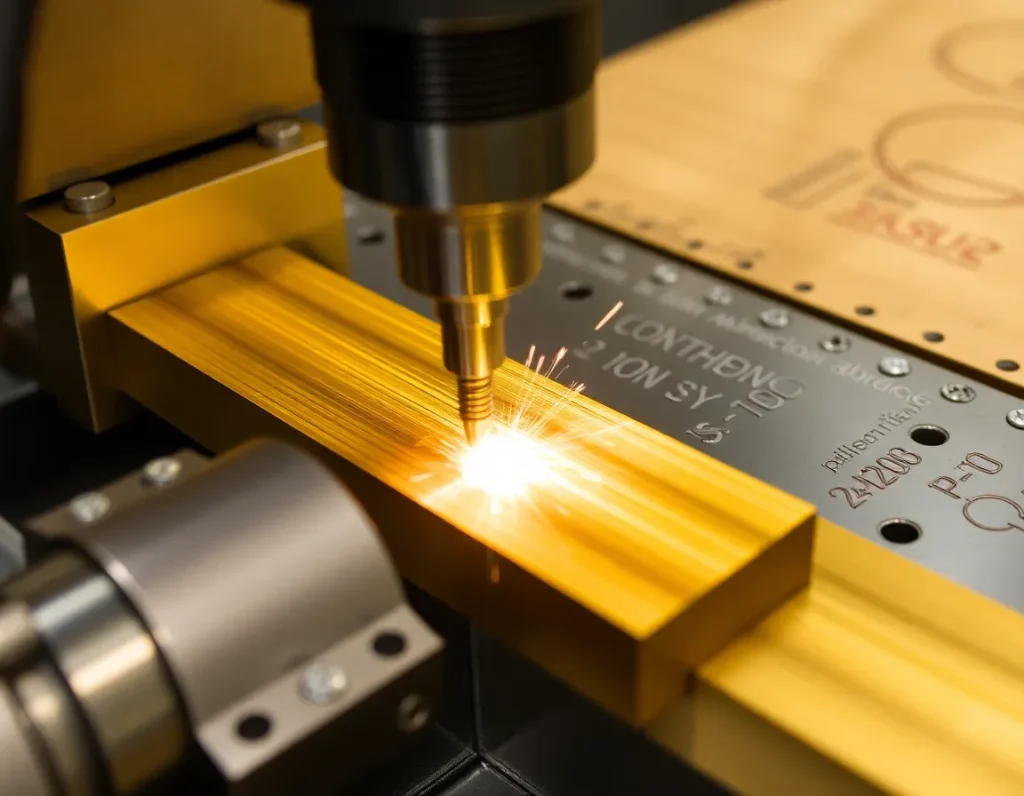 What Are Aluminum Faceplates? Defining Form, Function, and Applications
An aluminum faceplate is a precisely machined panel or front cover, typically fabricated from a plate or sheet of aluminum alloy. Its primary function is to serve as a structural and cosmetic interface on a piece of equipment. Far more than a simple cover, a faceplate is an integrated component designed with a host of features. These include cutouts for displays, switches, connectors, and indicators; mounting points for internal sub-assemblies; ventilation holes; and often embossed or engraved labeling.
The form of a faceplate is directly dictated by its function. In a rack-mounted server chassis, the faceplate is a sturdy, flat panel with ventilation grilles and LED windows, designed for repeated handling and cooling. In a handheld scientific instrument, it may be a complex, contoured part that ergonomically fits the user’s hand while providing a seal against dust and moisture. At its core, a faceplate must achieve several key objectives: provide secure mounting and alignment for internal components, allow user interaction through integrated controls, offer protection from environmental factors, and dissipate heat from enclosed electronics, a task for which aluminum is exceptionally well-suited.
Applications are virtually limitless across technology-driven industries. They are the front panel of a test and measurement device in a laboratory, the control interface on an industrial CNC machine, the bezel on an in-flight entertainment screen, and the front panel of a telecommunications router. Each application imposes unique demands on the faceplate’s dimensions, tolerances, strength, and finish, guiding the specific approach to its machining and fabrication.
The Advantages of Aluminum for Faceplate Machining: Why It’s the Preferred Material
The dominance of aluminum in faceplate manufacturing is no accident. It is the result of a unique combination of physical and practical properties that align perfectly with the demands of modern engineering.
High Strength-to-Weight Ratio
Aluminum alloys, particularly series like 6061 and 7075, offer remarkable strength while remaining exceptionally lightweight. This is paramount in aerospace, automotive, and portable electronics, where every gram counts but structural rigidity cannot be compromised. A faceplate must withstand mechanical loads, impacts, and vibration without adding burdensome weight to the overall system.
Excellent Machinability
Aluminum is among the most machinable of all metals. It can be cut, drilled, tapped, and milled at high speeds, allowing for complex geometries, sharp corners, and fine details with excellent surface finishes. This machinability translates directly to reduced production time, lower tool wear, and greater cost-effectiveness for both prototyping and high-volume production runs.
Superior Thermal and Electrical Conductivity
Electronic enclosures generate heat. Aluminum faceplates act as a passive heat sink, drawing thermal energy away from sensitive components and dissipating it into the surrounding air, thereby enhancing system reliability and longevity. Its electrical conductivity is also leveraged for grounding and electromagnetic interference (EMI) and radio frequency interference (RFI) shielding, especially when combined with appropriate surface treatments or conductive finishes.
Natural Corrosion Resistance
Aluminum forms a thin, protective oxide layer when exposed to air, which shields it from further corrosion. This inherent property makes it suitable for use in a wide range of environments without requiring heavy, protective coatings. For harsher conditions, this natural layer can be enhanced dramatically through anodizing.
Aesthetic Versatility
The metal provides an ideal substrate for a wide array of surface finishes. It can be polished to a mirror sheen, brushed for a satin look, bead-blasted for a uniform matte texture, or anodized in virtually any color. This allows designers to meet both functional branding and aesthetic requirements seamlessly.
Core Machining Processes for Aluminum Faceplates: From Blank to Finished Part
The transformation of a raw aluminum blank into a precision faceplate involves a sequence of carefully controlled subtractive manufacturing processes. Modern machine shops typically employ Computer Numerical Control (CNC) technology, which follows digital design files to execute operations with micron-level accuracy.
CNC Milling
This is the cornerstone process for aluminum faceplates machining. A CNC milling machine uses rotating cutting tools to remove material from a solid block or plate of aluminum. Multi-axis mills (3-axis, 4-axis, or 5-axis) can create complex three-dimensional contours, pockets, slots, and angled features in a single setup. This process defines the primary shape, creates recesses for displays, and machines the overall profile of the part.
CNC Turning
For faceplates that incorporate cylindrical features, such as rounded edges, knurled grips, or concentric grooves, CNC turning is used. The aluminum workpiece rotates while a stationary cutting tool shapes it. This is often employed for machining the outer diameter of circular faceplates or creating detailed radial patterns.
Drilling and Tapping
Precision holes are essential for mounting components, providing ventilation, and securing the faceplate to the main assembly. CNC machines drill these holes to exact diameters and depths. Tapping is the process of cutting internal threads into these holes, allowing screws to fasten other components directly to the faceplate.
Laser Cutting and Engraving
For thin-gauge aluminum or for adding fine details like serial numbers, logos, or intricate vent patterns, laser cutting is highly effective. It provides a clean, burr-free edge with extreme precision. Laser engraving can permanently mark the surface with text or graphics without affecting the material’s structural properties.
De-burring and Edge Breaking
After machining, parts undergo de-burring to remove any sharp, ragged edges (burrs) left by cutting tools. This is a critical safety and quality step. Edge breaking, or lightly rounding sharp corners, is also performed to improve the part’s feel, prevent injury, and prepare it for finishing processes.
Design for Manufacturing (DFM): Essential Guidelines for Optimal Faceplate Design
To ensure a faceplate is not only functional but also economical and reliable to produce, designers must adhere to DFM principles from the outset. Close collaboration between the design engineer and the machining partner is key to optimizing the design for the manufacturing process.
- Standardize Hole Sizes: Minimize the number of unique drill bit and tap sizes. Using the same size for as many holes as possible reduces tool changes and machining time.
- Specify Realistic Tolerances: Apply tight tolerances only where absolutely necessary for function. Over-specifying tolerances across the entire part dramatically increases cost and inspection time without adding value.
- Design for Tool Access: Ensure internal pockets and deep cavities are accessible with standard cutting tools. Avoid designing features that require long, thin tools which can deflect and reduce accuracy.
- Include Radii in Internal Corners: Cutting tools are round, so they cannot produce perfectly sharp internal corners. Designing with a radius slightly larger than the intended tool radius allows for efficient tool paths and stronger corners.
- Consider Material Thickness and Stability: Very thin walls or tall, unsupported features can vibrate or warp during machining. Design with adequate material thickness to ensure rigidity and prevent chatter.
- Simplify Geometry When Possible: While CNC machining can produce highly complex shapes, simplifying the design often reduces machining time and cost. Evaluate if a flat surface can serve instead of a complex contour.
Surface Finishing and Treatment Options for Aluminum Faceplates
The final surface treatment of an aluminum faceplate serves both protective and aesthetic purposes. The choice of finish depends on the intended environment, required durability, and desired appearance.
Mechanical Finishes
These finishes alter the surface texture through physical means. Bead blasting creates a uniform, matte surface that hides minor imperfections and provides an excellent base for painting or anodizing. Brushing produces linear satin grains, often used for a sleek, modern look. Polishing yields a mirror-like, reflective surface for high-end applications.
Anodizing
This electrochemical process is the most common and important treatment for aluminum. It thickens the natural oxide layer, creating an extremely hard, durable, and corrosion-resistant surface that is integral to the metal. Anodizing also provides excellent adhesion for dyes, allowing for a vast spectrum of permanent, UV-resistant colors. It enhances wear resistance and electrical insulation properties.
Powder Coating
For applications requiring a thick, robust, and colorful finish, powder coating is ideal. A dry powder is electrostatically applied and then cured under heat to form a hard polymer layer. It offers superior resistance to chipping, scratching, and chemicals compared to liquid paint and is available in a wide range of colors and textures (e.g., gloss, matte, textured).
Chemical Conversion Coating
Processes like chromate conversion (Alodine) create a thin, conductive coating that provides good corrosion resistance and serves as an excellent primer for paint. This finish is often used in aerospace and military applications where electrical conductivity for EMI shielding is required.
Bare Machined Finish
For some industrial or internal components, the faceplate may be used with only the as-machined finish, perhaps with a simple clear chemical film or passivation to prevent fingerprint staining and minor corrosion. This is the most cost-effective option.
Quality Control and Inspection: Ensuring Precision and Compliance
Following the application of a surface finish, a rigorous quality control (QC) and inspection protocol is the final, non-negotiable gatekeeper before a machined aluminum faceplate is shipped. This stage transforms a well-made part into a guaranteed component, ensuring it meets every dimensional, functional, and aesthetic specification. For industries where a faceplate is the critical interface between a user and sensitive equipment, or where it forms part of a larger assembly, this verification is paramount. A comprehensive QC program for aluminum faceplates machining integrates both traditional metrology and advanced digital tools at multiple checkpoints throughout the production process.
In-Process Inspection
Quality is built into the part, not just inspected at the end. In-process inspection involves periodic checks during machining to catch deviations early. Machinists use handheld tools like micrometers, calipers, and dial indicators to verify critical dimensions as features are cut. This real-time feedback allows for immediate toolpath adjustments or tool changes, preventing the production of a full batch of non-conforming parts. For instance, the depth of a recess for a display lens or the diameter of a mounting hole would be checked immediately after the operation is performed.
First Article Inspection (FAI)
Before full production begins, a First Article Inspection is a formal, documented verification of the first part off the line against all design specifications. This exhaustive review typically uses a Coordinate Measuring Machine (CMM) to create a detailed report comparing the as-machined part’s dimensions to the original CAD model. The FAI report confirms that the machining program, fixturing, and processes are correctly configured to produce a part that matches the engineering drawing in every respect, including geometric tolerances like flatness, perpendicularity, and true position.
Final Inspection and Advanced Metrology
Upon completion of machining and finishing, every faceplate undergoes a final inspection. For high-volume runs, this may involve statistical sampling, while for precision low-volume or custom parts, 100% inspection is common. Key tools and methods include:
- Coordinate Measuring Machines (CMM): The gold standard for dimensional accuracy. A CMM uses a tactile probe or laser scanner to collect precise data points from the part’s surface, creating a 3D map that is compared to the digital model with micron-level accuracy.
- Optical Comparators and Vision Systems: These project a magnified silhouette of the part onto a screen, overlaying it with the ideal profile from the drawing. They are excellent for quickly verifying complex 2D contours, hole patterns, and thread forms.
- Surface Roughness Testers: These instruments measure the Ra (average roughness) or Rz (mean peak-to-valley height) of machined surfaces, ensuring they meet specifications for sealing, appearance, or bearing functionality.
- Hardness Testing: For heat-treated aluminum alloys, a hardness test (e.g., Rockwell or Brinell) verifies that the material has achieved the specified temper and strength.
Documentation is a critical output of QC. A detailed inspection report, often including CMM data sheets and material certifications, accompanies the shipment, providing traceability and proof of compliance for the customer’s own quality records.
Industry Applications: Where Machined Aluminum Faceplates Are Used
The unique combination of light weight, strength, machinability, and aesthetic versatility makes machined aluminum faceplates indispensable across a staggering array of industries. They serve as the durable, reliable, and often elegant “face” of complex systems, from consumer gadgets to mission-critical aerospace hardware.
Aerospace and Defense
In this sector, reliability under extreme conditions is non-negotiable. Aluminum faceplates are used for cockpit instrument panels, avionics bay access covers, communication equipment housings, and military handheld device enclosures. They are prized for their high strength-to-weight ratio, which contributes to fuel efficiency, and their compatibility with finishes like chemical conversion coatings that provide corrosion resistance and EMI/RFI shielding. Precision is critical, as these components must fit perfectly within tightly toleranced assemblies.
Electronics and Telecommunications
This is one of the largest application areas. Aluminum faceplates form the front panels of server racks, network switches, test and measurement equipment, broadcast consoles, and high-end audio amplifiers. They provide structural rigidity for mounting heavy connectors and displays, act as a heat sink to dissipate thermal energy from internal components, and offer electromagnetic interference (EMI) protection. Anodized finishes in black or custom colors are ubiquitous for both durability and brand-consistent aesthetics.
Medical and Laboratory Equipment
Medical devices demand materials that are cleanable, corrosion-resistant, and non-reactive. Machined aluminum faceplates are used on diagnostic imaging machines, patient monitors, surgical robotics interfaces, and analytical instruments. Their smooth, non-porous surfaces (often with a hard anodized finish) can withstand repeated cleaning with harsh disinfectants. The precision machining allows for the seamless integration of touchscreens, membrane switches, and fluid control ports.
Industrial Automation and Robotics
On the factory floor, equipment must be tough. Faceplates for industrial control panels (PLCs/HMIs), robotic controller housings, and sensor enclosures are subject to vibration, dust, coolant, and physical impact. Aluminum provides the necessary durability, and its machinability allows for custom cutouts, mounting patterns, and engraved labeling that withstands abrasion. Powder coating is a popular finish here for its exceptional wear and chemical resistance.
Transportation and Automotive
Beyond aerospace, aluminum faceplates are found in marine instrumentation, railway control systems, and high-performance automotive interiors. In electric vehicles and modern dashboards, they may house digital clusters and infotainment systems, benefiting from aluminum’s ability to manage heat from electronics. The material’s malleability also allows for forming slightly curved panels that follow a vehicle’s interior contours.
Consumer Products and Architectural Hardware
Where design meets function, aluminum faceplates excel. They appear on high-end kitchen appliance control panels, professional photography and video gear, architectural door handle plates, and luxury audio-visual equipment. The ability to achieve a flawless, jewel-like finish through precision machining and brushing, followed by clear or colored anodizing, makes aluminum a favorite for products where tactile feel and visual appeal are key selling points.
Choosing a Machining Partner: Key Factors for a Successful Project
Selecting the right manufacturer for your aluminum faceplate project is perhaps the most critical decision after the design itself. The ideal partner acts as an extension of your engineering team, ensuring your vision is translated into a flawless, cost-effective, and reliably delivered component. Here are the key factors to evaluate when making your choice.
Technical Capability and Equipment
Assess the machine shop’s technological arsenal. Do they have modern, well-maintained CNC milling centers with the work envelope and precision (e.g., 3-axis, 4-axis, or 5-axis) needed for your part’s size and complexity? Inquire about their secondary capabilities—do they offer in-house finishing (anodizing, powder coating) or do they outsource it? A partner with broad in-house capabilities typically offers better control over quality, scheduling, and communication. Ask to see examples of similar faceplates they have produced.
Engineering and Design for Manufacturing (DFM) Support
A great machining partner doesn’t just follow instructions; they provide proactive feedback. Look for a team with experienced engineers who will review your drawings and 3D models to suggest optimizations for manufacturability, cost reduction, and performance. They should be able to identify potential issues with thin walls, deep pockets, sharp internal corners, or tolerance stacking that could cause problems during production. This collaborative DFM phase can prevent costly mistakes and lead to a superior final product.
Quality Systems and Certifications
Formal quality management systems are a strong indicator of a shop’s commitment to consistency. Certifications like ISO 9001:2015 demonstrate a documented process for quality control, calibration, and continuous improvement. Ask about their inspection equipment (CMM, optical comparators) and their standard inspection and documentation procedures. Will they provide First Article Inspection reports and material certifications? For regulated industries like medical or aerospace, specific certifications (AS9100, ISO 13485) may be mandatory.
Communication and Project Management
Clear, responsive communication is essential. Evaluate their process for quoting, providing updates, and handling design changes. Is there a dedicated project manager or point of contact? A reliable partner will keep you informed of progress and proactively flag any potential delays. Their ability to understand your requirements and explain technical details in an accessible way is invaluable.
Volume Flexibility and Lead Times
Align their production strengths with your needs. Some shops specialize in rapid prototyping and very low-volume batches, while others are optimized for high-volume production runs. Ensure they can comfortably handle your projected order quantity and provide realistic, reliable lead times. Ask about their capacity for scaling production if your needs grow in the future.
Ultimately, the goal is to build a partnership based on trust, technical excellence, and shared commitment to the project’s success. Request references, visit the facility if possible, and start with a smaller pilot project to evaluate the relationship before committing to a large order.
Summary of Key Points
Machined aluminum faceplates are fundamental components that blend engineering precision with functional and aesthetic demands across countless industries. Their success hinges on a deep understanding of the entire production ecosystem. The journey begins with selecting the right aluminum alloy—such as 6061 for general purpose or 7075 for high strength—to match the application’s mechanical and environmental requirements. The core of their creation lies in advanced CNC machining processes, including precision milling, turning, and drilling, which transform a raw blank into a complex part with tight tolerances.
Designing with manufacturability (DFM) in mind is not optional; it’s a critical phase that optimizes the part for cost, quality, and performance by considering factors like wall thickness, corner radii, and tolerance specifications. Once machined, a suitable surface finish—whether it’s the protective and decorative hardness of anodizing, the rugged durability of powder coating, or the conductive protection of chemical conversion—is applied to meet specific needs for corrosion resistance, wear, appearance, and functionality.
This quality is not assumed but verified through a rigorous inspection regimen using tools like CMMs and optical comparators, ensuring every faceplate meets exact specifications. This makes them ideal for demanding applications in aerospace, electronics, medical, industrial automation, and consumer products. Finally, the entire endeavor’s success is often determined by the choice of a machining partner, one evaluated on technical capability, engineering support, robust quality systems, and clear communication. From concept to final inspection, aluminum faceplates machining is a sophisticated discipline that delivers the durable, precise, and reliable interfaces modern technology depends on.
Frequently Asked Questions (FAQ)
What is the most cost-effective aluminum alloy for faceplates?
For the vast majority of applications, 6061-T6 aluminum is the most cost-effective and widely used choice. It offers an excellent balance of strength, machinability, corrosion resistance, and weldability at a reasonable price point. It is suitable for anodizing and other finishes. Only consider more expensive alloys like 7075 if the design requires the absolute highest strength-to-weight ratio for a structurally critical part.
How thin can the walls be on a machined aluminum faceplate?
While aluminum is stiff, very thin walls can be challenging to machine without distortion or vibration. A practical minimum wall thickness for most designs is around 0.040 inches (1 mm), though this depends heavily on the wall’s height (aspect ratio), the specific alloy, and the machining strategy. Isolated thin ribs or features can be even thinner. Always consult with your machining partner during the DFM stage to determine the feasible limits for your specific geometry.
What is the difference between Type II and Type III anodizing for a faceplate?
Type II (sulfuric acid) anodizing is the standard process, creating a coating typically 0.0002″ to 0.001″ thick. It provides good corrosion and wear resistance and is excellent for accepting dye for colored parts. Type III (hard coat) anodizing produces a much thicker (0.002″ and up), denser, and harder ceramic layer. It offers superior abrasion resistance and dielectric strength but is less suitable for vibrant colors (usually only shades of black, gray, or bronze). Choose Type II for aesthetics and general protection; choose Type III for parts subject to extreme wear or requiring high electrical insulation.
Can aluminum faceplates provide EMI/RFI shielding?
Yes, aluminum is inherently conductive and provides good shielding against electromagnetic and radio frequency interference. However, the shielding effectiveness can be compromised by seams, gaps, and fastener holes. For optimal shielding, designs should ensure continuous metal-to-metal contact across joints, often using conductive gaskets. Furthermore, certain anodizing processes (like standard anodic oxide) are non-conductive, so if shielding is required, specify a conductive finish like chromate conversion coating or ensure anodizing is masked from contact areas.
What file format should I provide for a machining quote?
The universal standard for manufacturing quotes and production is a 3D solid model file, typically in STEP (.stp or .step) or IGES format. These are “neutral” formats that preserve geometry without proprietary data. Always also provide a detailed 2D PDF drawing that includes all critical dimensions, geometric tolerances (GD&T), surface finish requirements, material spec, and any other notes. The drawing is the legal document that defines the part requirements, while the 3D model is used for programming the CNC machines.