
The strongest transition plan begins before tooling. It identifies which features belong in the die, which still need secondary machining or hardware, and which machined-prototype requirements should be rewritten for formed production. This article uses a freeze-and-transfer framework to prevent tooling a design that is still behaving like a billet part.
The Stamping-Candidate Test
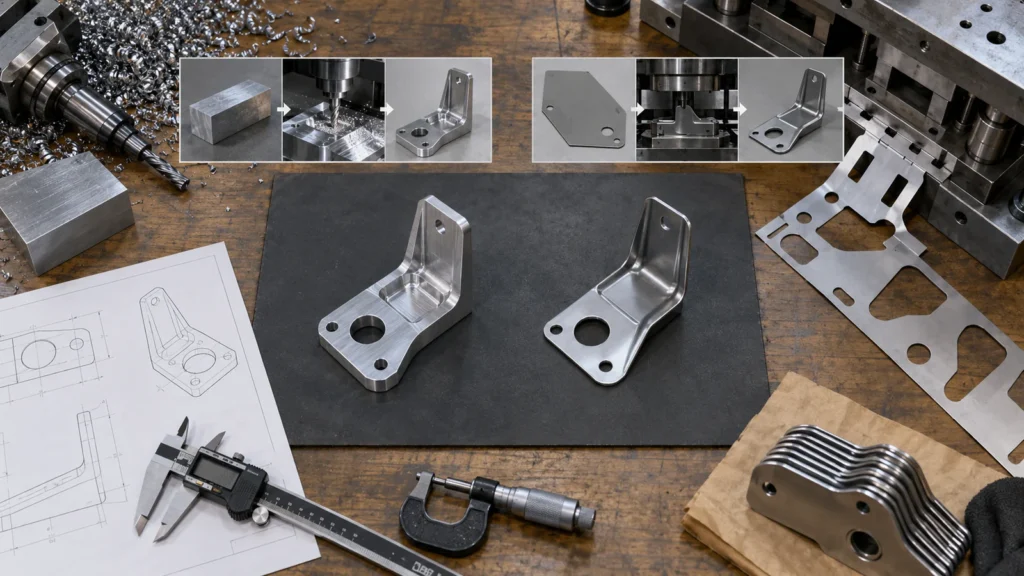 Start with the final shape, not annual quantity. Does the part maintain one basic sheet thickness? Can its geometry be reached from one or more forming directions? Can bends, flanges, ribs, embosses, holes, and drawn regions create the necessary stiffness and interfaces? Are heavy local bosses, deep three-dimensional pockets, precision bores, or substantial thickness changes essential?
If the design depends on solid volume, isolated thick features, complex internal surfaces, or precision relationships on many faces, CNC machining may remain more natural. If a machined plate or bracket mainly removes material to create a thin profile and a few bends could supply stiffness, the architecture may be a strong stamping candidate.
Material behavior matters. Formability, temper, thickness tolerance, grain direction, edge condition, and coating all influence feasibility. A stock grade selected for machining may not be the best coil or sheet grade for drawing and forming.
Start with the final shape, not annual quantity. Does the part maintain one basic sheet thickness? Can its geometry be reached from one or more forming directions? Can bends, flanges, ribs, embosses, holes, and drawn regions create the necessary stiffness and interfaces? Are heavy local bosses, deep three-dimensional pockets, precision bores, or substantial thickness changes essential?
If the design depends on solid volume, isolated thick features, complex internal surfaces, or precision relationships on many faces, CNC machining may remain more natural. If a machined plate or bracket mainly removes material to create a thin profile and a few bends could supply stiffness, the architecture may be a strong stamping candidate.
Material behavior matters. Formability, temper, thickness tolerance, grain direction, edge condition, and coating all influence feasibility. A stock grade selected for machining may not be the best coil or sheet grade for drawing and forming.
Freeze the Right Things Before the Die
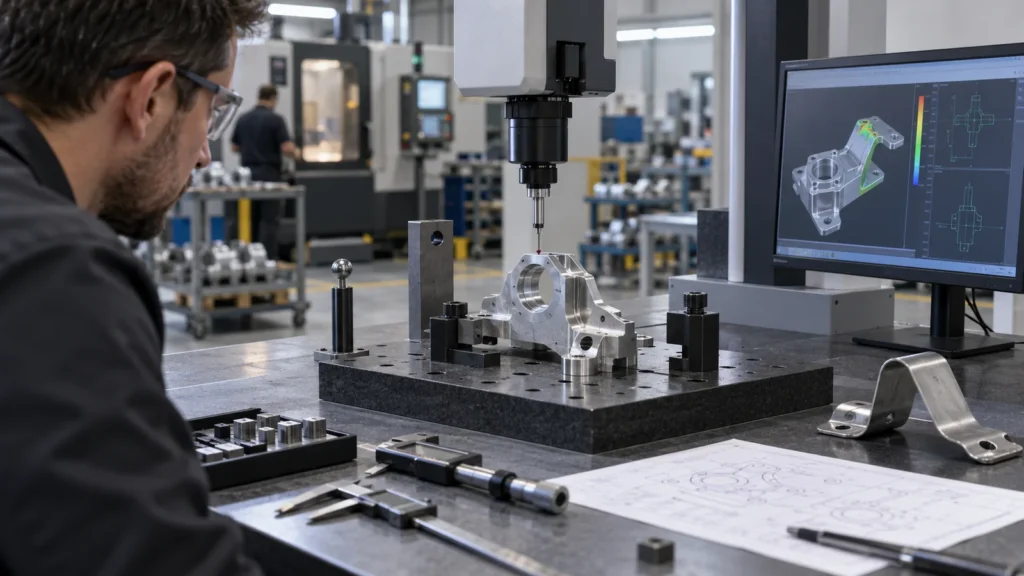 Tooling release requires more than a frozen outer profile. Freeze mating interfaces, locating strategy, material and thickness, functional bends, critical hole relationships, cosmetic faces, burr direction, coating, and assembly method. Decide which dimensions can follow normal process variation and which need die tuning or secondary operations.
Also freeze the commercial assumptions that shape the die: expected volumes, release rate, tool life, maintenance responsibility, press and feed strategy, inspection cadence, spare tooling, and engineering-change terms. A progressive die for continuous production represents a different commitment from simple blanking and secondary forming tools.
Changes are not impossible after release, but their cost and timing depend on where geometry lives in the tool. Treat unresolved interfaces as risk items rather than assuming every modification is a minor insert change.
Tooling release requires more than a frozen outer profile. Freeze mating interfaces, locating strategy, material and thickness, functional bends, critical hole relationships, cosmetic faces, burr direction, coating, and assembly method. Decide which dimensions can follow normal process variation and which need die tuning or secondary operations.
Also freeze the commercial assumptions that shape the die: expected volumes, release rate, tool life, maintenance responsibility, press and feed strategy, inspection cadence, spare tooling, and engineering-change terms. A progressive die for continuous production represents a different commitment from simple blanking and secondary forming tools.
Changes are not impossible after release, but their cost and timing depend on where geometry lives in the tool. Treat unresolved interfaces as risk items rather than assuming every modification is a minor insert change.
Compare Complete Process Chains
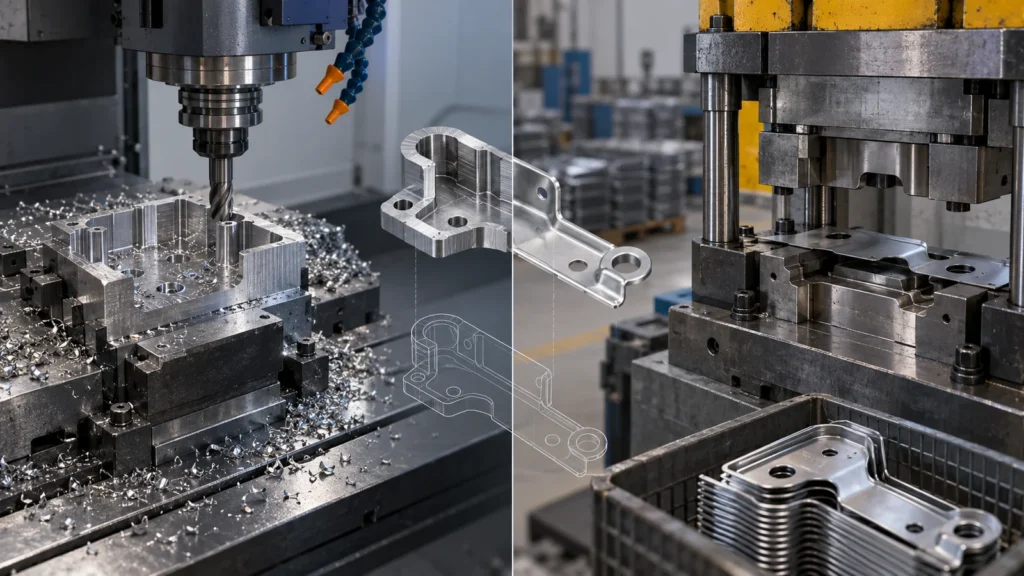
A stamped part may still need tapping, reaming, welding, inserted hardware, washing, plating, heat treatment, or sorting. A machined part may need multiple setups and extensive stock removal. Compare accepted, packed parts at the same quality level rather than primary-cycle prices.
Tolerance Changes When Metal Springs Back
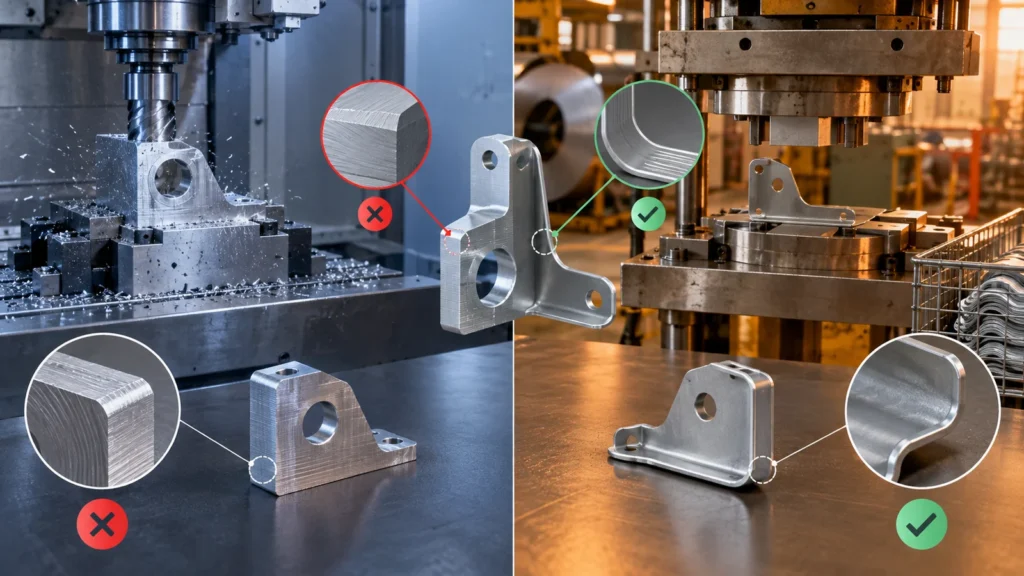
 Formed sheet responds to elastic recovery after the die opens. Springback varies with material, temper, thickness, bend geometry, rolling direction, lubrication, and tool condition. Deep drawing adds material flow, thinning, wrinkling, and tearing risks. The tool may intentionally over-form or coin regions to reach the final condition.
Do not transfer a machined drawing unchanged. Dimension functional features from meaningful datums and distinguish flat-pattern, in-process, and final conditions. Avoid long tolerance chains across bends. Identify burr direction, edge quality, and whether holes are pierced before or after forming.
Critical holes or contact faces may require secondary machining, but that decision needs locating features and a stable clamping plan. The principles in CNC tolerance control then apply to the selected final interfaces rather than the whole stamping.
Formed sheet responds to elastic recovery after the die opens. Springback varies with material, temper, thickness, bend geometry, rolling direction, lubrication, and tool condition. Deep drawing adds material flow, thinning, wrinkling, and tearing risks. The tool may intentionally over-form or coin regions to reach the final condition.
Do not transfer a machined drawing unchanged. Dimension functional features from meaningful datums and distinguish flat-pattern, in-process, and final conditions. Avoid long tolerance chains across bends. Identify burr direction, edge quality, and whether holes are pierced before or after forming.
Critical holes or contact faces may require secondary machining, but that decision needs locating features and a stable clamping plan. The principles in CNC tolerance control then apply to the selected final interfaces rather than the whole stamping.
Tooling Economics Without Magic Quantities
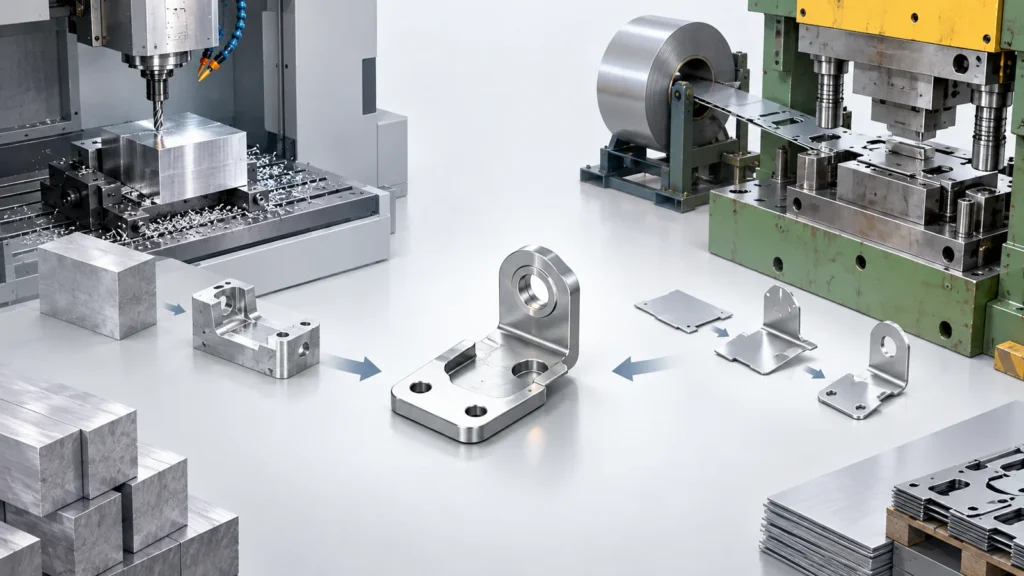 Tooling becomes attractive when repeat savings exceed die design, build, tryout, maintenance, downtime, inventory, and change exposure. The crossover depends on part size, number of stations, press rate, material utilization, secondary operations, quality requirements, and forecast confidence. A simple blank is not comparable to a deep-drawn part with multiple forming stages.
Material utilization must be evaluated through the strip layout, not the finished-part mass alone. Carrier webs, pitch, nesting, grain direction, and coil width influence scrap. A lighter stamped part can still use material inefficiently if the layout is poor, while redesigning tabs or orientation may improve both feed stability and yield.
Press availability and die-change behavior influence delivery. A high stroke rate does not help if production waits for a shared press, coil, maintenance window, or secondary operation. Ask for realistic lot cadence and contingency plans instead of extrapolating annual capacity from nominal cycles.
Model several demand scenarios: committed orders, conservative lifetime demand, and upside forecast. Include tool repair and replacement assumptions. If the design may change before the conservative case amortizes the tool, CNC or flexible fabrication can protect cash and schedule.
Inventory also matters. A fast stamping process can create parts more quickly than the business consumes them. Large economic lots may lower unit conversion cost while increasing cash tied up, storage, revision obsolescence, and surface-protection needs.
Tooling becomes attractive when repeat savings exceed die design, build, tryout, maintenance, downtime, inventory, and change exposure. The crossover depends on part size, number of stations, press rate, material utilization, secondary operations, quality requirements, and forecast confidence. A simple blank is not comparable to a deep-drawn part with multiple forming stages.
Material utilization must be evaluated through the strip layout, not the finished-part mass alone. Carrier webs, pitch, nesting, grain direction, and coil width influence scrap. A lighter stamped part can still use material inefficiently if the layout is poor, while redesigning tabs or orientation may improve both feed stability and yield.
Press availability and die-change behavior influence delivery. A high stroke rate does not help if production waits for a shared press, coil, maintenance window, or secondary operation. Ask for realistic lot cadence and contingency plans instead of extrapolating annual capacity from nominal cycles.
Model several demand scenarios: committed orders, conservative lifetime demand, and upside forecast. Include tool repair and replacement assumptions. If the design may change before the conservative case amortizes the tool, CNC or flexible fabrication can protect cash and schedule.
Inventory also matters. A fast stamping process can create parts more quickly than the business consumes them. Large economic lots may lower unit conversion cost while increasing cash tied up, storage, revision obsolescence, and surface-protection needs.
What a Machined Prototype Cannot Prove
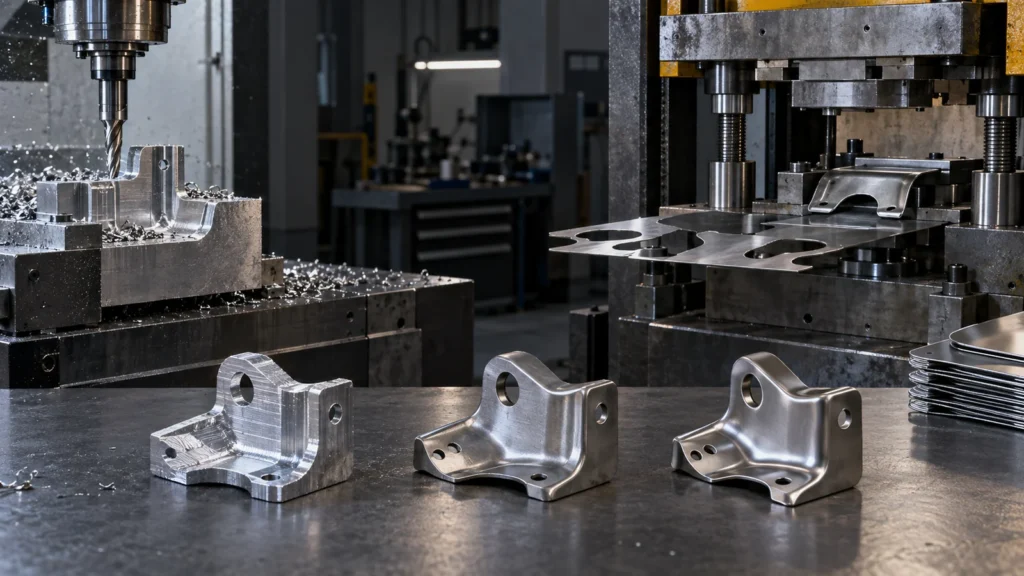 A machined prototype can validate envelope, assembly, hole locations, basic stiffness, and many interfaces. It does not reproduce work hardening, springback, thinning, draw marks, die radii, burr direction, residual stress, or variation from coil and tool wear. If those variables affect fatigue, fit, cosmetics, or downstream welding, stamped samples are required.
Conversely, early soft-tool or laser-cut-and-bent samples may not reproduce a mature progressive-die process. Record the route for every sample and state what it is intended to prove. Do not combine results from unlike sample conditions without qualification.
The transition should be managed within the CNC prototyping and production plan so revisions, test evidence, and temporary supply remain traceable.
A machined prototype can validate envelope, assembly, hole locations, basic stiffness, and many interfaces. It does not reproduce work hardening, springback, thinning, draw marks, die radii, burr direction, residual stress, or variation from coil and tool wear. If those variables affect fatigue, fit, cosmetics, or downstream welding, stamped samples are required.
Conversely, early soft-tool or laser-cut-and-bent samples may not reproduce a mature progressive-die process. Record the route for every sample and state what it is intended to prove. Do not combine results from unlike sample conditions without qualification.
The transition should be managed within the CNC prototyping and production plan so revisions, test evidence, and temporary supply remain traceable.
Hybrid and Staged Routes
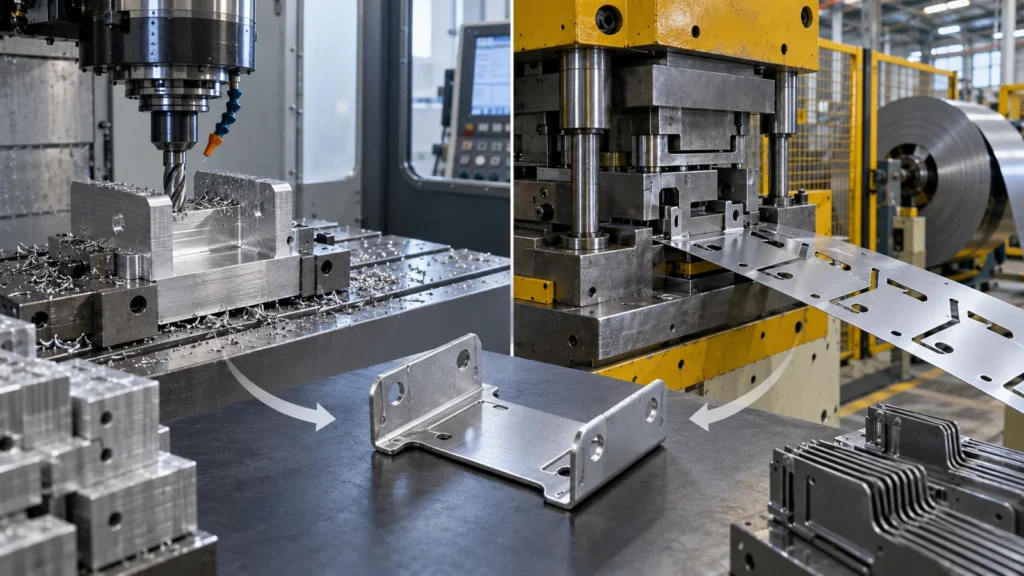 Low-volume parts may begin as CNC-machined blanks, laser-cut parts, or brake-formed components. Intermediate tooling can prove selected forming operations before a production die. At scale, stamping may create the primary geometry while CNC controls holes, datums, or surfaces that the die cannot hold economically.
Hybrid design can also split the assembly. A stamped shell may carry covers and shielding while machined inserts locate bearings, sensors, or connectors. The joining method—fasteners, clinch hardware, welding, adhesive, or staking—becomes part of the tolerance and service strategy.
Secondary machining needs deliberate location. A thin formed part can distort under clamps, and a pierced hole may not provide a stable datum after several bends. Add locating features, support the sheet near cutting loads, and specify whether the machining occurs before or after coating and assembly.
Tool wear should be visible in the control plan. Burr height, hole size, edge rollover, bend condition, and formed geometry can drift gradually rather than fail suddenly. Sampling frequency and maintenance triggers should reflect the features that affect downstream assembly.
Staging is useful only if the production intent stays visible. A prototype optimized exclusively for easy machining may hide forming problems; a stamped redesign optimized only for die speed may weaken assembly or serviceability. Maintain a feature transition table from prototype through final production.
Low-volume parts may begin as CNC-machined blanks, laser-cut parts, or brake-formed components. Intermediate tooling can prove selected forming operations before a production die. At scale, stamping may create the primary geometry while CNC controls holes, datums, or surfaces that the die cannot hold economically.
Hybrid design can also split the assembly. A stamped shell may carry covers and shielding while machined inserts locate bearings, sensors, or connectors. The joining method—fasteners, clinch hardware, welding, adhesive, or staking—becomes part of the tolerance and service strategy.
Secondary machining needs deliberate location. A thin formed part can distort under clamps, and a pierced hole may not provide a stable datum after several bends. Add locating features, support the sheet near cutting loads, and specify whether the machining occurs before or after coating and assembly.
Tool wear should be visible in the control plan. Burr height, hole size, edge rollover, bend condition, and formed geometry can drift gradually rather than fail suddenly. Sampling frequency and maintenance triggers should reflect the features that affect downstream assembly.
Staging is useful only if the production intent stays visible. A prototype optimized exclusively for easy machining may hide forming problems; a stamped redesign optimized only for die speed may weaken assembly or serviceability. Maintain a feature transition table from prototype through final production.
Production-Release Scorecard

Until these conditions are credible, machining may remain the lower-risk route even if its piece price is higher. This is a project-specific application of the advantages and disadvantages of CNC machining.
Stamping Transition FAQs
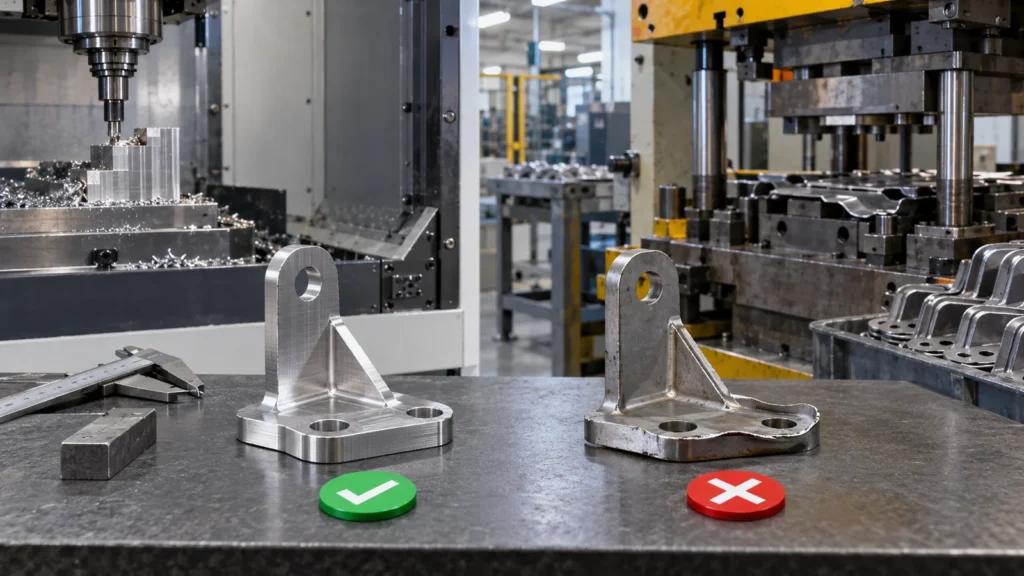
Sometimes, if folds, ribs, beads, or an assembly can provide the required stiffness and load path. It is usually a redesign, not a direct substitution, and should be verified under actual loads.
Are stamped holes accurate enough for locating?
They may be suitable depending on size, material, die strategy, and tolerance. Precision locating may require shaving, reaming, secondary machining, or a separate hardened insert. Define function before choosing the operation.
What is the biggest hidden stamping cost?
Secondary operations and engineering change are commonly underestimated. Hardware, washing, deburring, welding, finish, inspection, tool maintenance, and obsolete inventory can outweigh a favorable press-cycle estimate.
Can CNC bridge production while a die is built?
Yes, when temporary machined parts meet function and are clearly segregated by revision and process. The drawing or deviation record should state differences from final stamped production.