What is Wire EDM Machining?
In the realm of advanced manufacturing, where complexity meets precision, Wire Electrical Discharge Machining (Wire EDM) stands as a cornerstone technology. Also known as wire-cut EDM or spark eroding, it is a non-traditional, thermoelectric process that uses a thin, continuously traveling strand of brass or coated wire to cut intricate profiles and shapes into electrically conductive materials with exceptional accuracy. Unlike conventional machining that relies on physical force and cutting tools, Wire EDM removes material through a series of controlled electrical sparks, making it possible to machine extremely hard metals and create complex geometries that would be impossible, impractical, or prohibitively expensive with other methods. It is the go-to solution for producing precision parts in industries ranging from aerospace and medical to automotive and tool & die.
How Wire EDM Works: The Science of Spark Erosion
The fundamental principle behind Wire EDM is deceptively simple: use electrical energy to erode material. However, the execution of this principle involves a sophisticated symphony of electrical, mechanical, and software controls.
The Core Components
A Wire EDM machine consists of several key components: a power supply that generates the electrical pulses, a wire feed system that guides the wire from a spool, upper and lower diamond guides that position the wire with micron-level precision, a dielectric system (usually deionized water), and a CNC control that dictates the movement of the machine axes (typically X, Y, U, and V for tapered cuts).
The Step-by-Step Process
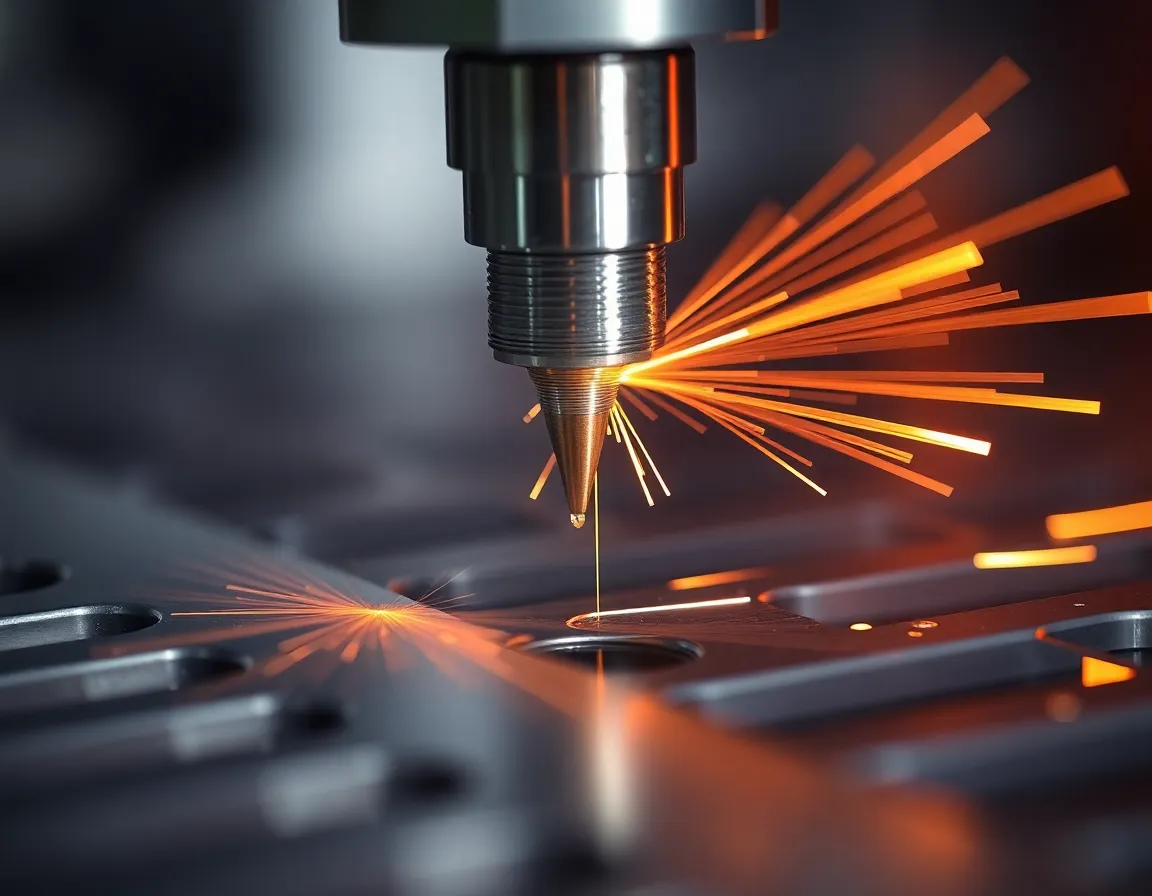
The process begins with submerging the workpiece and the wire electrode in a tank of dielectric fluid. The wire, which is typically between 0.004" and 0.013" (0.10mm and 0.33mm) in diameter, is fed continuously from a spool, passing through the workpiece. A voltage difference is applied between the wire (negative electrode) and the workpiece (positive electrode).
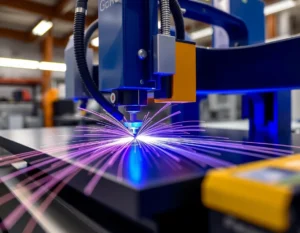
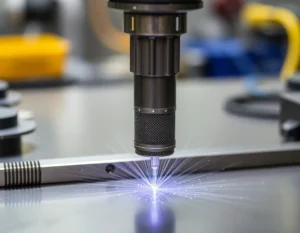
When the wire is brought close to the workpiece (maintaining a spark gap of about 0.0001" to 0.001"), the intense electric field ionizes the dielectric fluid, creating a conductive channel. This allows a controlled spark to jump across the gap. Each spark generates an intense, localized heat—exceeding 10,000°C—that instantly melts and vaporizes a microscopic particle of the workpiece material. The dielectric fluid then flushes away these tiny debris particles and cools the area, preventing the workpiece from overheating. This cycle of spark generation, material removal, and flushing happens hundreds of thousands of times per second, allowing the wire to slowly and precisely "cut" through the metal like a microscopic bandsaw, following a CNC-programmed path.
The Role of the Dielectric Fluid
The deionized water serves three critical functions:
- Insulator and Conductor: It acts as an insulator until the voltage reaches the threshold, then becomes a conductive channel for the spark.
- Coolant: It rapidly cools the vaporized material and the workpiece.
- Flushing Agent: It carries away the eroded particles (swarf) from the spark gap, ensuring a clean cut and preventing short circuits.
The Multifaceted Benefits of Wire EDM
The unique working principle of Wire EDM translates into a powerful set of advantages that solve numerous manufacturing challenges.
Unmatched Precision and Accuracy
Wire EDM is renowned for its ability to hold extremely tight tolerances, often within ±0.0001" (±0.0025mm). The process is non-contact, meaning there is no mechanical force exerted on the workpiece that could cause deflection, vibration, or tool wear, which are common sources of error in traditional machining.
Ability to Machine Exotic and Hardened Materials
Since material removal depends on electrical conductivity rather than hardness, Wire EDM can effortlessly cut through hardened tool steel, titanium, Inconel, carbide, and polycrystalline diamond (PCD) with the same ease as soft aluminum. This allows for machining after heat treatment, eliminating distortions that can occur if machining is done prior to hardening.
Complex Geometry and Fine Detail
The thin, continuously moving wire allows for the creation of intricate shapes, sharp inside corners, and delicate features. It can produce micro-sized components, intricate molds, and prototypes with complex profiles that would require multiple setups or be impossible with milling or turning.
Excellent Surface Finish and Minimal Recast Layer
Modern Wire EDM machines can achieve surface finishes as fine as 2-3 Ra microinches (0.05-0.08 µm) through multiple finishing passes. The controlled nature of the spark also results in a very thin and consistent recast layer (the re-solidified material on the cut surface), which is often easily removed if necessary.
Burr-Free Production
The erosion process leaves a clean, burr-free edge, eliminating the need for secondary deburring operations in most cases. This is a significant time and cost saver, especially for small, delicate parts.
Key Applications Across Industries
The benefits of Wire EDM make it indispensable in several high-tech and precision-driven sectors.
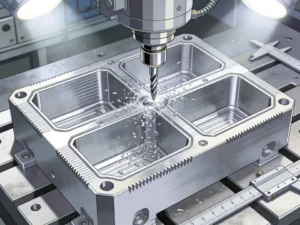
- Tool and Die Making: This is the classic application. Wire EDM is used to create stamping dies, extrusion dies, progressive dies, and intricate mold inserts for plastic injection molding and die casting with exceptional accuracy and longevity.
- Aerospace and Defense: For manufacturing turbine blades, engine components, structural parts from high-temperature alloys, and lightweighting components with complex internal structures.
- Medical Device Manufacturing: The production of surgical instruments, implants (like bone screws and plates), and components for diagnostic equipment demands the biocompatibility, precision, and burr-free edges that Wire EDM provides.
- Automotive: Used for prototyping, fuel injection components, transmission parts, and specialized gearing, especially in high-performance and electric vehicles.
- Electronics and Micromachining: Creating micro-components for connectors, sensors, and semiconductor lead frames. Fine wire capabilities allow for machining incredibly small parts.
Best Practices for Optimal Wire EDM Results
To fully leverage the capabilities of Wire EDM, adhering to established best practices is crucial.
Design for Manufacturability (DFM)
Consider the wire diameter and spark gap when designing parts. Inside corner radii will be limited by the wire radius plus the overburn (spark gap). Avoid designs with extremely narrow, unsupported ribs or tall, thin features that may be fragile after cutting.
Strategic Start Hole Placement
Since the wire must pass through the material, a start hole (often drilled or pre-machined) is required for internal cuts. Planning the location and size of this hole to minimize wire travel through scrap material can improve efficiency and accuracy.
Proper Workpiece Preparation and Mounting
Ensure the workpiece is clean, free of scale, and properly grounded. Secure, rigid fixturing is essential to prevent any movement during the machining process, which can take hours for complex parts.
Optimized Cutting Parameters and Wire Selection
Modern machines have sophisticated generators, but selecting the right wire type (standard brass, diffused, coated), diameter, and a parameter set (pulse on/off time, voltage, flushing pressure) for the specific material and desired finish is key. Using coated wires (like zinc-coated) can significantly increase cutting speed.
Meticulous Dielectric Maintenance
Maintaining the resistivity and cleanliness of the deionized water is non-negotiable. Poor dielectric quality leads to inconsistent sparks, poor surface finish, wire breaks, and reduced accuracy. Regular monitoring and filtration system maintenance are mandatory.
In conclusion, Precision Wire EDM is far more than just a cutting tool; it is an enabling technology that pushes the boundaries of design and manufacturing. By harnessing the power of controlled electrical sparks, it solves the most challenging problems of material hardness, geometric complexity, and micron-level precision. As materials advance and parts become more intricate, the role of Wire EDM as a critical pillar in advanced manufacturing will only continue to grow, transforming innovative designs into tangible, high-performance reality.