The Engine of Modern Manufacturing: Understanding Vertical CNC Milling
In the realm of precision manufacturing, few technologies are as fundamental and transformative as Vertical Computer Numerical Control (CNC) milling. This process forms the backbone of countless industries, enabling the creation of complex, high-tolerance parts with astonishing repeatability. Vertical CNC milling services provide businesses with the capability to translate digital designs into tangible, high-quality components, from simple brackets to intricate aerospace fittings. At its core, vertical milling involves a rotating cylindrical cutting tool (the spindle) oriented vertically, which moves along multiple axes to remove material from a stationary workpiece secured to a table. The "CNC" aspect means every movement, speed, and function is dictated by pre-programmed computer software, eliminating human error and unlocking unparalleled precision.
Deconstructing the Vertical Machining Center (VMC)
To master precision, one must first understand the machine. A Vertical Machining Center (VMC) is a sophisticated integration of mechanical engineering, software, and cutting-edge electronics. Its operation is a symphony of coordinated movements governed by G-code, the language of CNC machining.
Core Components and Their Roles
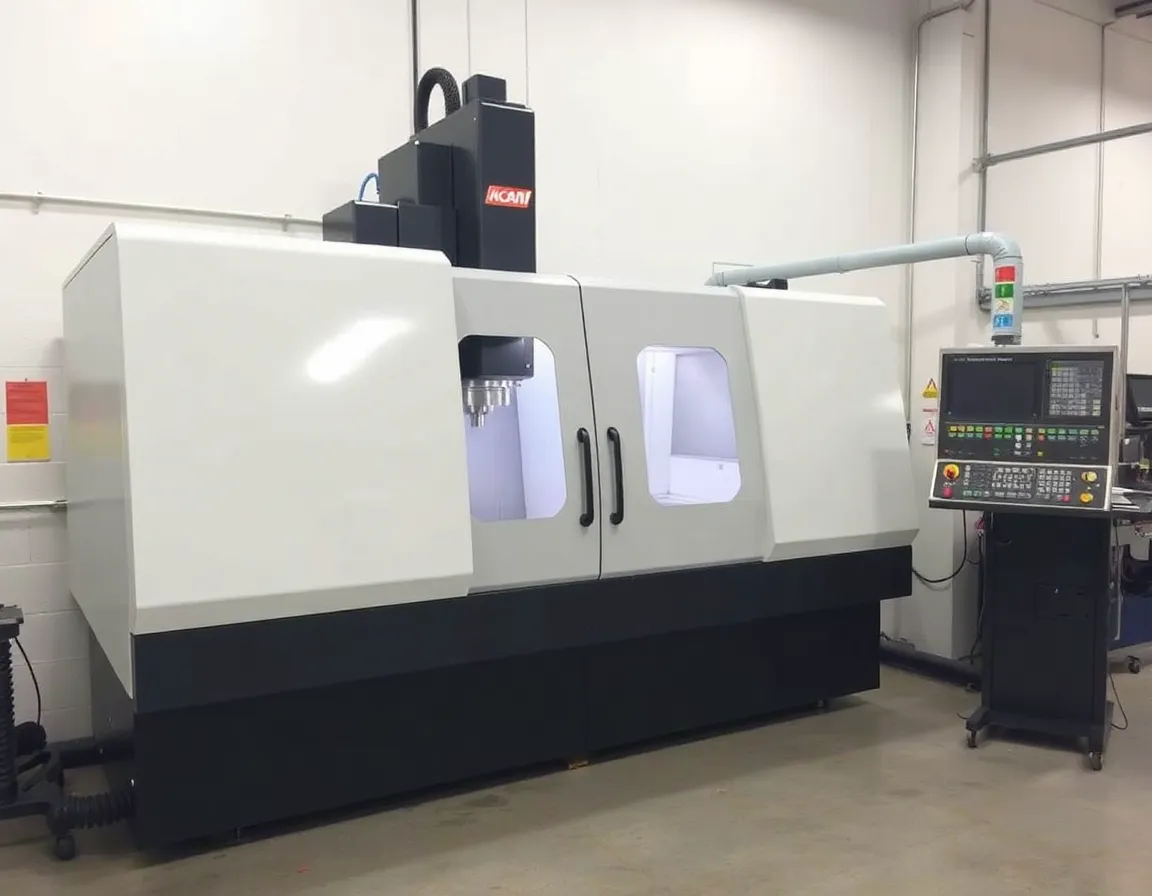
The primary components of a VMC work in concert to achieve precision. The bed is the robust, foundational base that supports all other elements. The table, often equipped with T-slots, holds the workpiece via vises, clamps, or fixtures. Thecolumnrises from the bed and houses the drive mechanism for thespindle head. This head travels along the Z-axis (vertical), bringing the cutting tool to the workpiece. The table itself typically moves in the X (left-right) and Y (front-back) axes. This configuration, with the spindle perpendicular to the table, defines the "vertical" milling process and offers excellent visibility of the cutting area.
The Axis of Precision: Movement and Control
The true power of a VMC lies in its multi-axis movement. While a basic machine operates in three linear axes (X, Y, Z), advanced vertical mills incorporate rotational axes for near-limitless capability.
- 3-Axis: The standard workhorse. Ideal for machining features on one face of a part, such as pockets, slots, holes, and contours.
- 4-Axis:Adds a rotary axis (usually the A-axis), allowing the workpiece to rotate. This enables machining on multiple sides without manual repositioning.
- 5-Axis:Incorporates two rotational axes (e.g., A and B). The tool can approach the workpiece from virtually any direction in a single setup, enabling the production of incredibly complex geometries common in aerospace, medical, and automotive sectors.
Why Choose Vertical CNC Milling Services? The Compelling Benefits
Outsourcing to a professional vertical CNC milling service is a strategic decision that confers significant competitive advantages. These benefits extend far beyond simple part production.
Unmatched Precision and Repeatability
CNC machining eliminates the variability of manual operation. Once a program is verified, it can produce ten or ten thousand identical parts, each meeting exacting specifications with tolerances often within thousandths of an inch (microns). This repeatability is non-negotiable for industries like medical device manufacturing and aerospace.
Enhanced Efficiency and Cost-Effectiveness
While setup and programming require initial investment, the per-part cost plummets in production runs. VMCs can operate unattended for hours or even days, with automatic tool changers swapping cutters as needed. This lights-out manufacturing capability maximizes machine uptime, reduces labor costs, and accelerates time-to-market.
Material and Design Versatility
Vertical CNC milling services work with an exhaustive range of materials. From plastics and aluminum to tough stainless steels, titanium, and exotic alloys, the right tooling and parameters can machine them all. Furthermore, CNC programming seamlessly handles complex designs—intricate contours, 3D surfaces, and fine details that are impractical or impossible with manual methods.
Reduced Waste and Improved Sustainability
CNC milling is a subtractive process, but modern software optimizes tool paths to minimize material removal. This not only saves on raw material costs but also reduces the volume of waste chips and swarf. Precise simulation software also prevents costly errors and material scrap by detecting collisions and issues in the virtual stage.
From Blueprint to Reality: Key Applications Across Industries
The versatility of vertical CNC milling makes it indispensable across a vast spectrum of sectors. Its applications are as diverse as modern technology itself.
- Aerospace & Defense: Manufacturing lightweight, high-strength structural components, engine parts, brackets, and housings from aluminum and titanium alloys, where precision and reliability are paramount.
- Medical & Dental:Producing sterile, biocompatible parts like surgical instruments, orthopedic implants, prosthetics, and dental components with flawless surface finishes and microscopic tolerances.
- Automotive:Creating prototypes, engine components, transmission parts, custom fittings, and molds for both high-performance racing and mass-market vehicles.
- Electronics & Semiconductors:Machining precise heat sinks, enclosures, connector housings, and wafer handling equipment that require non-conductive properties and exact dimensions.
- Industrial Machinery:Fabricating robust gears, shafts, molds, dies, and machine frames that form the backbone of other manufacturing processes.
Best Practices for Maximizing Your Milling Project's Success
To truly master precision with a vertical CNC milling service, collaboration and clear communication are key. Adhering to best practices ensures optimal results, cost efficiency, and timely delivery.
Design for Manufacturability (DFM)
Engage with your machining partner early in the design phase. A good service will provide DFM feedback, suggesting modifications like adding fillets to sharp internal corners, standardizing hole sizes, or adjusting wall thickness to improve machinability, reduce cost, and enhance part strength.
Material Selection Guidance
Choose your material based on functional requirements, not just cost. A professional service can advise on the best alloy or plastic for your application, considering factors like strength, weight, corrosion resistance, machinability, and final finish.
Provide Comprehensive and Clean Data
Supply your service provider with complete, accurate CAD files (e.g., STEP, IGES) rather than just 2D drawings. Clearly specify critical dimensions, tolerances, surface finish requirements, and any post-processing needs (anodizing, plating, painting). Ambiguity is the enemy of precision.
Understand Tolerances and Their Cost
Specify tolerances that are "as loose as functionally possible." Holding a tolerance of ±0.001" is exponentially more challenging and costly than ±0.005". Unnecessarily tight tolerances can increase machining time, require special inspection, and raise the project price without adding value.
Build a Partnership, Not Just a Transaction
The most successful outcomes arise from long-term partnerships with your milling service. A trusted partner gains deep understanding of your quality standards, industry requirements, and business goals, allowing them to proactively suggest improvements and become a true extension of your engineering and production team.
In conclusion, mastering precision with vertical CNC milling is not merely about operating a machine; it is about leveraging a comprehensive service that blends advanced technology, material science, and engineering expertise. By understanding the process, its profound benefits, and the collaborative best practices, businesses can unlock new levels of innovation, quality, and efficiency. Vertical CNC milling services remain an indispensable pillar of modern manufacturing, quietly shaping the world, one precise cut at a time.