The Unseen Foundation: Why Machining Defines Tripod Performance
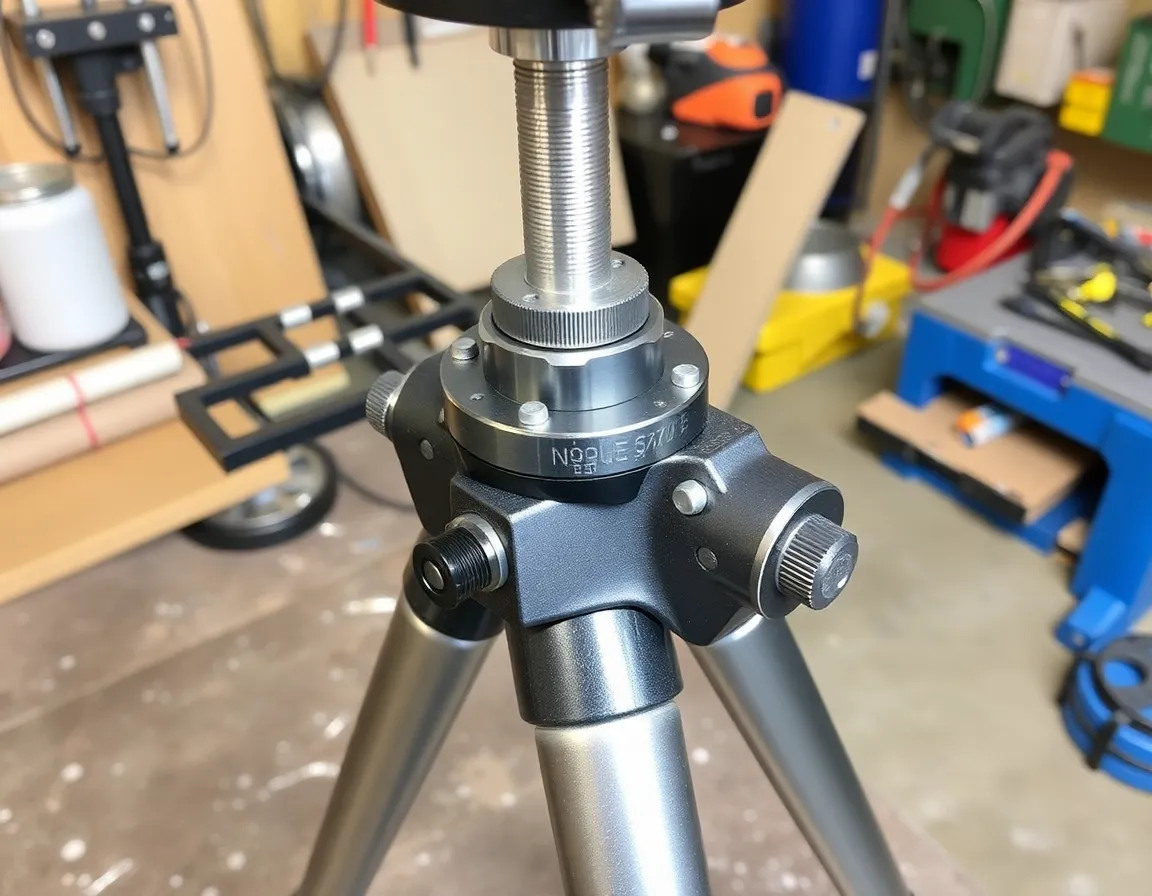
In the worlds of photography, videography, surveying, and astronomy, the tripod is the silent guardian of clarity. It is the non-negotiable foundation upon which precision rests. While features like carbon fiber legs, fluid heads, and quick-release plates often steal the spotlight, the true heart of a tripod's stability and longevity lies in its tripod mount machining. This is the precise manufacturing process that creates the critical interface points—the spider (or crown), leg sockets, center column components, and accessory mounts. The quality of this machining is what separates a wobbly liability from a rock-solid investment, transforming a collection of parts into a unified instrument of stability.
Deconstructing the Machining Process: From Raw Material to Precision Interface
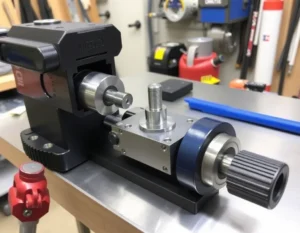
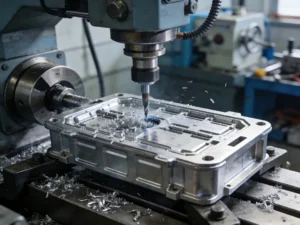
Tripod mount machining is a subtractive manufacturing process, typically using Computer Numerical Control (CNC) machines, where raw metal blocks or billets are sculpted into complex, load-bearing components. The journey from raw material to finished mount involves several critical stages, each contributing to the final performance.
Material Selection: The First Pillar of Strength
The process begins with choosing the right alloy. Common materials include:
- Aluminum Alloys (e.g., 6061-T6, 7075): The industry standard for high-quality tripods. 6061-T6 offers an excellent strength-to-weight ratio and good machinability. 7075 aerospace-grade aluminum is stronger and harder, used in premium models for maximum durability with minimal weight penalty.
- Magnesium Alloys: Even lighter than aluminum for a given strength, often used in high-end, portable tripods. It requires specialized machining and finishing processes.
- Stainless Steel: Used for specific high-stress components like bolts, locking pins, or specialty mounts where supreme strength and corrosion resistance are paramount, albeit with a weight increase.
CNC Machining: The Art of Digital Precision
CNC machining is the cornerstone. A computer-controlled machine follows a digital blueprint (CAD model) with tolerances often measured in thousandths of an inch or hundredths of a millimeter. Key operations include:
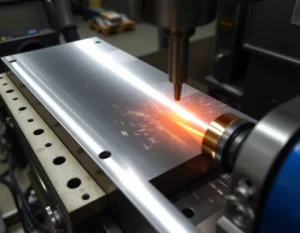
- Milling: Rotary cutting tools shape the exterior and interior features—creating the leg socket hemispheres, the platform for the head, and the channels for locking mechanisms.
- Drilling and Tapping: Creating perfectly perpendicular holes for leg locks, center column clamps, and accessory bolts. Precise threading (tapping) ensures smooth engagement and even clamping force without cross-threading.
- Boring: Enlarging holes to exact diameters, crucial for the center column tube to slide without play or binding.
This digital precision ensures that every component is geometrically perfect and identical across a production run, guaranteeing consistent performance.
Secondary Operations: Refining the Foundation
After machining, components undergo finishing processes:
- Deburring: Removing sharp edges and microscopic fragments (burrs) left from cutting. This prevents grinding, ensures smooth operation, and protects anodizing.
- Surface Finishing: Techniques like tumbling or bead blasting create a uniform surface texture, which is essential for the next step.
- Anodizing (for Aluminum): An electrochemical process that hardens the surface, increases corrosion resistance, and allows for color dying. A thick, hard-anodized layer is a hallmark of a professional-grade mount.
The Tangible Benefits: How Precision Machining Translates to Performance
Superior machining is not an abstract concept; it yields direct, tangible benefits for the end-user across every application.
Unmatched Stability and Vibration Damping
A precisely machined spider with perfectly mated leg sockets eliminates "play" or "wiggle" at the tripod's most critical junction. When legs lock into hemispherical sockets machined to thousandth-of-an-inch accuracy, they form a rigid, unitary structure. This minimizes microscopic flex, which is the enemy of long-exposure photography and telephoto lens use. The mass and rigidity of a well-machined metal mount also act as a superior vibration damper compared to plastic or poorly cast alternatives.
Durability and Long-Term Reliability
Precision machining ensures even stress distribution. Threads that are perfectly aligned won't strip under torque. Locking mechanisms engage smoothly without grinding down over time. High-quality anodizing protects against corrosion from saltwater, humidity, and abrasion from dirt. A professionally machined mount is often the sole reason a decades-old tripod remains fully functional while a cheaper contemporary fails.
Operational Smoothness and User Experience
The feel of a premium tripod is directly tied to its machining. A center column that rises and falls without hitch or wobble, leg locks that engage with a firm, precise click, and a head platform that sits perfectly flat—all are the result of exacting tolerances and fine finishing. This smooth operation allows for faster, more confident setup and fine adjustments in the field.
Weight Optimization Without Sacrifice
CNC machining allows designers to create complex, minimalist structures that put material only where it's needed for strength. This enables the creation of lightweight yet incredibly rigid mounts, a critical factor for wildlife photographers, hikers, and anyone who carries their gear for extended periods.
Applications Demanding the Highest Precision
While beneficial for any tripod, precision-machined mounts are non-negotiable in specific demanding fields:
- Astronomy and Astro-Photography: Telescope mounts require extreme stability to track celestial objects over long periods. Any flex or play results in blurred images and lost tracking accuracy.
- Long-Lens Wildlife and Sports Photography: Telephoto lenses magnify every vibration. A machined mount provides the foundational stability needed to achieve sharp images at 400mm, 600mm, or beyond.
- Cinematic Videography: Smooth pans, tilts, and static shots require a platform that is absolutely solid. Machined components prevent the subtle "creep" or shift that can ruin a professional video take.
- Surveying and Metrology: Laser scanners, theodolites, and total stations require a stable base that can be precisely leveled and will not settle or shift, as millimeter-level accuracy is crucial.
- High-Magnification Macro Photography: At 1:1 magnification or higher, even the slightest movement is catastrophic. Precision machining minimizes all potential sources of drift.
Best Practices in Design and Manufacturing
For brands and engineers, adhering to certain principles ensures the highest quality tripod mount:
Design for Manufacturability and Strength
Designs should avoid sharp internal corners that create stress concentrations and are difficult to machine. Using finite element analysis (FEA) software to simulate loads helps optimize material placement, leading to stronger, lighter designs that are efficient to machine.
Tolerancing and Quality Control
Establishing and holding tight tolerances—for hole diameters, thread engagement, flatness of mounting platforms, and sphericity of leg sockets—is paramount. Rigorous quality control using coordinate measuring machines (CMM) and go/no-go gauges verifies that every batch meets the exacting standard.
Integration with Other Components
A perfectly machined spider is let down by poorly cast leg clamps or a low-grade center column tube. The best tripods feature holistic precision, where all interfacing components are manufactured to the same high standard, ensuring seamless integration and performance.
In conclusion, tripod mount machining is the unsung engineering discipline that underpins every great image, stable video, and precise measurement. It is the critical difference between a simple three-legged stand and a true precision instrument. For the serious creator or professional, understanding and valuing this hidden aspect of construction is key to selecting a support system that doesn't just hold gear, but actively enhances its potential. When investing in a tripod, one is ultimately investing in the precision of its machined heart.