Beyond Taps and Dies: The Modern Art of Thread Milling
In the high-stakes world of precision manufacturing, the integrity of a thread can be the difference between a flawless assembly and a catastrophic failure. For decades, tapping was the undisputed champion for creating internal threads. However, as materials have evolved and tolerances have tightened, a superior, more versatile process has risen to prominence: thread milling. This advanced machining technique is not merely an alternative to tapping; it is a paradigm shift that offers unparalleled control, strength, and efficiency. This comprehensive guide delves into the world of professional thread milling services, exploring how they master this process to deliver superior, stronger threads for the most demanding applications.
What is Thread Milling? A Fundamental Shift in Process
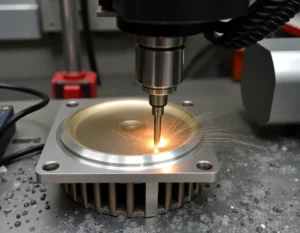
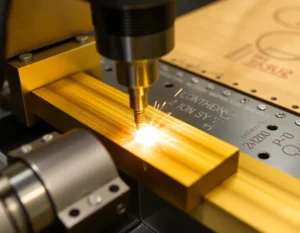
Thread milling is a CNC machining operation used to produce internal (female) or external (male) threads. Unlike tapping, which uses a solid tool that cuts threads in a single, linear, and often high-torque motion, thread milling employs a rotating helical-interpolation toolpath. The thread mill cutter, which is typically smaller in diameter than the thread hole, moves in a circular motion (helix) while simultaneously moving vertically along the axis of the hole. This controlled, multi-axis movement literally "mills" the thread profile into the workpiece.
This fundamental difference in mechanics unlocks a world of possibilities. Because the tool is not forming the thread in one pass like a tap, the cutting forces are significantly lower and distributed more evenly. This allows for the creation of threads in a single setup, left-hand or right-hand threads with the same tool, and exceptional precision in thread size and location.
Core Components of the Thread Milling System
Successful thread milling hinges on three key elements:
- The CNC Machine: Requires at least three-axis capability with helical interpolation functionality. Modern multi-axis machining centers excel at this.
- The Thread Mill Cutter: Available in solid carbide for small diameters and high-hardness materials, or as indexable insert styles for larger threads. The cutter geometry is precisely ground to match the desired thread form (e.g., UN, Metric, NPT).
- The CNC Program: The carefully calculated toolpath that dictates the cutter's helical motion, ensuring the correct pitch, major/minor diameter, and thread depth.
The Compelling Advantages: Why Choose Thread Milling Services?
Opting for a manufacturing partner skilled in thread milling services provides a suite of tangible benefits that directly impact part quality, cost, and design flexibility.
Unmatched Versatility and Flexibility
A single thread mill tool can produce a range of hole diameters for a given thread pitch, unlike a tap which is dedicated to one size. This drastically reduces tooling inventory. Furthermore, the same tool can create both blind and through holes, as well as threads close to the bottom of a cavity—a challenging feat for taps.
Superior Thread Quality and Strength
This is the paramount advantage. Thread milling produces cleaner, more accurate threads with excellent surface finish. The process generates short, manageable chips that are easily evacuated, preventing chip recutting and galling, especially in stringy materials like aluminum or stainless steel. The result is a stronger thread with better fatigue resistance and more consistent clamping force distribution.
Reduced Tooling Costs and Breakage Risk
Thread mills, particularly indexible insert types, have a much longer tool life than taps and only require insert replacement, not a whole new tool. More importantly, because cutting forces are radial and lower, the risk of catastrophic tool breakage inside a valuable part—a common and expensive nightmare with tapping—is virtually eliminated.
Efficiency in Exotic and Difficult Materials
Thread milling is the preferred method for hard materials (like Inconel, titanium, or hardened steels), as well as for asymmetric or non-standard thread forms. The process manages heat and stress more effectively, preserving both the tool and the workpiece material properties.
Critical Applications: Where Thread Milling Services Shine
The benefits of thread milling translate directly into real-world superiority for specific applications. Professional thread milling services are often sought for:
- Aerospace and Defense Components: Where high-strength, lightweight materials (titanium, composites) and absolute reliability are non-negotiable.
- Medical Implants and Devices: Demanding biocompatible materials (e.g., titanium alloys, cobalt-chrome) and pristine, clean threads for sterility and performance.
- Mold and Die Making: For large, wear-resistant threads in mold plates and fixtures, often in pre-hardened steels.
- Oil & Gas and Power Generation: For large-diameter, high-integrity threads on flanges, valves, and turbine components that withstand extreme pressures and temperatures.
- High-Mix, Low-Volume Production: Where flexibility to machine different thread sizes with minimal tool changes is a significant cost and time saver.
Best Practices and Expertise: The Hallmarks of a Quality Service
Not all machine shops are created equal. A top-tier thread milling service distinguishes itself through adherence to rigorous best practices and deep technical expertise.
Strategic Process Planning
Experts begin with the end in mind. They select the optimal tool material (solid carbide vs. indexable), coating (TiAlN, etc.), and toolpath strategy (climb vs. conventional milling) based on the workpiece material, thread specifications, and machine capabilities. Proper speeds, feeds, and coolant strategy are meticulously calculated.
Precision Programming and Simulation
Accurate CNC programming is the backbone of thread milling. Professionals use advanced CAM software to generate and simulate the helical toolpath, ensuring perfect thread form and avoiding collisions. They expertly manage the tool's entry and exit motions to prevent imperfections at the thread's start or end.
Rigorous Quality Assurance
Beyond the machine, quality is verified. Reputable services employ thread gauges (GO/NO-GO), optical comparators, or even coordinate measuring machines (CMMs) to inspect pitch diameter, lead, and thread form, guaranteeing compliance with the strictest standards like ASME or ISO.
Material and Application Knowledge
The true value of a specialist lies in their experience. They understand how different materials behave—from ductile aluminum to abrasive composites—and adjust their techniques accordingly to optimize tool life and thread integrity.
Conclusion: Investing in Thread Integrity
Thread milling represents the evolution of thread creation from a brute-force operation to a precise, controlled engineering art. For projects where strength, precision, material integrity, and cost-effectiveness are critical, partnering with a professional thread milling service is not just an option—it is a strategic decision. By leveraging their expertise, advanced equipment, and commitment to best practices, you gain access to a manufacturing solution that delivers consistently superior, stronger, and more reliable threads, elevating the quality and performance of your final product. In the meticulous world of precision components, the thread is a fundamental link; ensuring it is masterfully crafted is an investment in the integrity of the whole.