The Unseen Art: Where Engineering Meets Acoustics
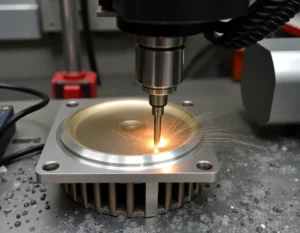
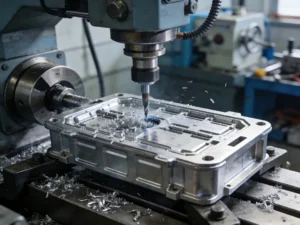
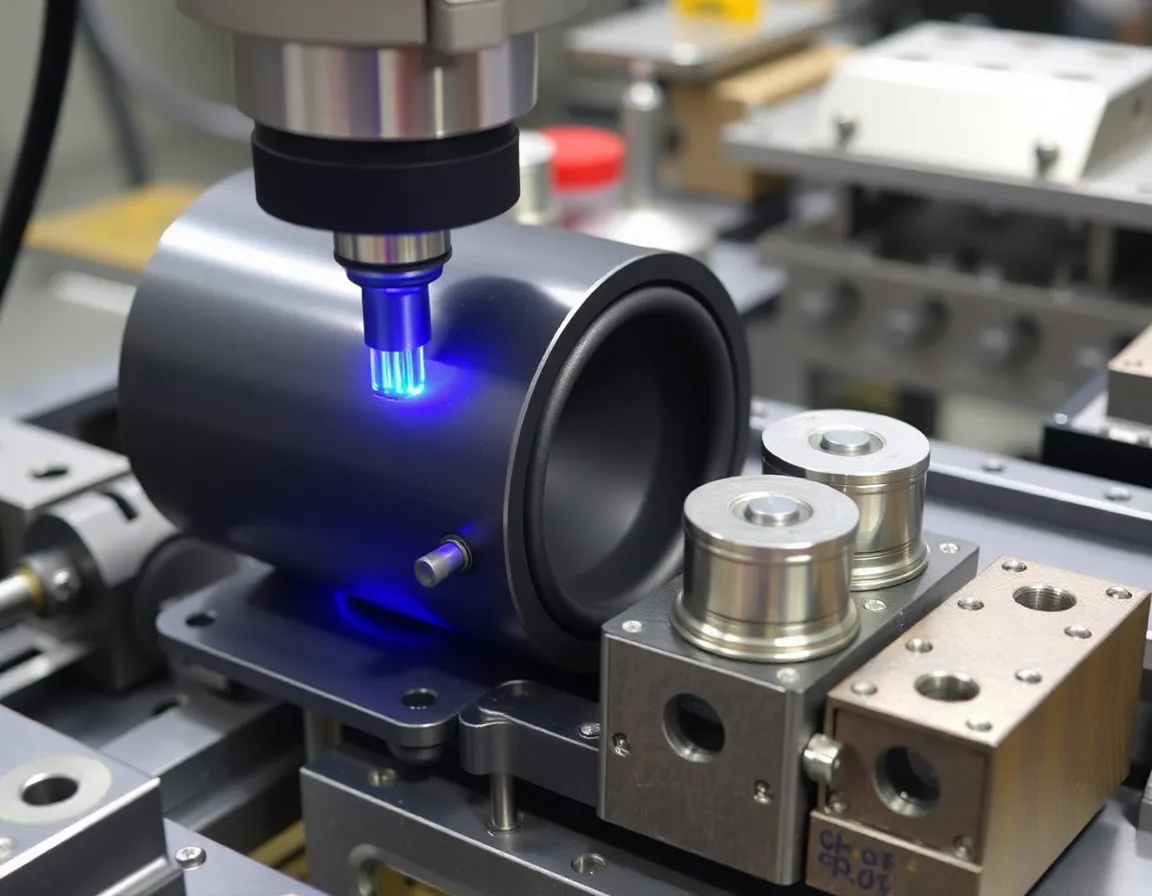
In the pursuit of perfect sound, audiophiles and engineers often debate the merits of amplifier topology, driver materials, and crossover design. Yet, beneath the grille cloth and behind the sleek exteriors of the world's finest loudspeakers lies a critical, often overlooked discipline: precision machining of speaker components. This is not mere metalworking; it is the foundational craft that transforms theoretical acoustic designs into tangible, high-fidelity reality. Precision machining refers to the subtractive manufacturing process where computer-controlled tools remove material from a solid block—metal, alloy, or advanced composite—to create parts with exceptionally tight tolerances, flawless finishes, and perfect geometric integrity. In speaker construction, this meticulous process is applied to the very bones of the transducer, ensuring that the energy from the amplifier is converted into sound waves with minimal distortion and maximum purity.
Critical Components Shaped by Precision
The performance of a loudspeaker driver—the unit that actually produces sound—is exquisitely sensitive to the physical properties of its components. Precision machining directly defines the character and capability of several key elements.
Motor Structures: The Heart of Control
At the core of every dynamic driver is its motor system, comprising the magnet, front plate, pole piece, and voice coil. The precision of these parts dictates magnetic field symmetry and, consequently, driver linearity.
- Pole Pieces and Front Plates: These are typically machined from soft iron or low-carbon steel. A perfectly concentric, smoothly finished pole piece ensures the voice coil moves within a uniform magnetic gap. Any imperfection, asymmetry, or surface irregularity can cause flux modulation, leading to harmonic distortion and a loss of detail.
- Voice Coil Formers: Often made from aluminum, Kapton, or fiberglass, the former must have impeccable cylindrical geometry and minimal mass. Precision machining (or winding on a machined former) guarantees the coil remains perfectly round and aligned, preventing rubbing against the magnet structure.
Baskets (Frames): The Structural Foundation
The basket or frame is the chassis that holds all driver components in rigid alignment. Stamped steel baskets are common in mass-market speakers, but high-end designs utilize machined aluminum or cast alloy baskets. A precision-machined basket offers unparalleled rigidity, eliminating resonant "flex" that colors sound. Its spokes are designed and machined to be acoustically inert and to minimize air turbulence behind the diaphragm, improving transient response and reducing distortion.
Waveguides and Horns: Directing Sound with Accuracy
In compression drivers and controlled-directivity designs, the waveguide or horn is critical for pattern control and efficiency. These complex shapes, often with exponential or conical profiles, must be machined to exacting specifications. A deviation of even a few tenths of a millimeter in the throat geometry or flare rate can alter the acoustic impedance and cause reflections, leading to harshness, "honk," or irregular dispersion. Precision CNC machining from solid aluminum or acrylic ensures the mathematical acoustic design is faithfully reproduced in three dimensions.
Enclosures: Beyond the Wood Shop
While many cabinets are wood, the front baffles of ultra-high-end speakers, and entire enclosures for some studio monitors, are machined from solid aluminum or dense composites. A machined baffle provides a perfectly flat, non-resonant mounting surface for drivers, ensuring their acoustic centers are precisely aligned. Threaded inserts for driver mounting can be machined directly into the material, allowing for perfect, repeatable torque application and seal.
The Tangible Benefits: Why Precision Equals Performance
The investment in precision machining yields audible and measurable improvements that define high-end audio.
- Reduced Distortion: By ensuring perfect magnetic field symmetry and voice coil alignment, odd-order harmonic distortion (which is particularly unpleasant to the ear) is dramatically lowered. The speaker reproduces the signal, not the artifacts of its construction.
- Improved Transient Response: A rigid, machined structure stores less energy. It starts and stops moving in near-perfect synchrony with the audio signal, resulting in tighter bass, more articulate percussion, and superior clarity in complex musical passages.
- Higher Power Handling and Reliability: Precision parts fit perfectly, dissipating heat more effectively from the voice coil and ensuring consistent performance even at high volumes. The risk of voice coil rubbing or mechanical failure is vastly reduced.
- Consistency and Repeatability: In professional audio and matched-pair home audio, consistency between units is paramount. CNC machining guarantees that the thousandth driver produced is acoustically identical to the first, ensuring a perfect stereo image.
- Lower Resonance and Coloration: Machined metal components have well-damped, high-frequency resonance modes, unlike stamped or plastic parts whose resonances often fall in the midrange, "coloring" the sound by emphasizing certain frequencies.
Applications: From Studio to Living Room
Precision-machined components are the hallmark of speakers where accuracy and performance are non-negotiable.
Professional Studio Monitoring
Recording and mastering engineers rely on monitors to make critical decisions that will be heard on millions of playback systems. Brands like ATC, PMC, and Genelec extensively use machined components in their drivers and enclosures to achieve the neutral, uncolored, and detailed sound required for professional work.
High-End Home Audio and Hi-Fi
From brands like Wilson Audio, Magico, and YG Acoustics, machined aluminum enclosures and driver assemblies are standard. These speakers are built to be reference instruments, revealing every nuance of a well-recorded masterpiece, and their construction reflects that pursuit.
High-Performance Car Audio
In the challenging acoustic environment of a vehicle, precision matters. Machined coaxial driver centers, waveguides for tweeters, and rigid midrange baskets help overcome cabin acoustics to create a accurate soundstage.
Tour-Grade Sound Reinforcement
While ruggedness is key, the best touring loudspeakers use precision-machined compression driver phases plugs and horn throats to achieve high output levels with low distortion, ensuring clarity even at the back of a large venue.
Best Practices in Machining for Acoustics
Not all machining is equal in the acoustic realm. Specific practices elevate the process from mere fabrication to acoustic art.
- Material Selection: Choosing the right alloy or composite is the first step. Aluminum for lightness and rigidity, specific brasses or bronzes for damping, or advanced ceramics for extreme stiffness.
- Tolerance Adherence: Acoustic tolerances are often more stringent than general mechanical ones. Critical dimensions, like magnetic gap width or horn throat diameter, may be held to within microns (thousandths of a millimeter).
- Surface Finish: A machined surface is not inherently smooth. Post-machining processes like tumbling, polishing, or anodizing (for aluminum) are crucial to achieve the final surface quality that minimizes air friction and reflections.
- Finite Element Analysis (FEA) Integration: Leading designers use FEA software to simulate stresses and resonances in a component before it is ever machined. The machining process is then tailored to produce the optimized shape revealed by the simulation.
- Acoustic Testing and Validation: The final step is always listening and measuring. Machined prototypes are tested in anechoic chambers and with laser interferometry to verify that their real-world performance matches the engineering predictions, leading to iterative refinements in the machining process.
Conclusion: The Silent Partner in Sonic Fidelity
Precision machining in speaker manufacturing is the silent, unseen partner in the quest for sonic perfection. It bridges the gap between the ideal world of acoustic theory and the physical reality of a speaker driver. While exotic magnets, innovative diaphragm materials, and complex crossover networks capture the imagination, it is the machined integrity of the motor structure, the basket, and the waveguide that allows these technologies to realize their full potential. In the end, a loudspeaker is a mechanical apparatus. The more precise its mechanics, the more effortlessly it disappears, leaving only the music—pure, detailed, and true. For those who seek not just to hear, but to experience sound, the investment in precision-machined components is not an extravagance; it is the very foundation of high fidelity.