The Unseen Foundation: Why Sensor Mounts Are Critical
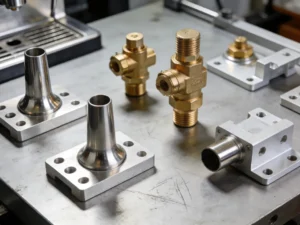
In the world of high-precision measurement, automation, and data acquisition, sensors are the eyes and ears of modern technology. From aerospace manufacturing to semiconductor fabrication, the data they provide drives quality, safety, and innovation. However, even the most advanced sensor is only as good as its installation. This is where the specialized field of sensor mount machining takes center stage. It is the discipline of designing and manufacturing the physical interface—the bracket, adapter, or housing—that positions and secures a sensor with uncompromising accuracy and stability. Far from being a simple metal bracket, a precision sensor mount is a critical engineered component that ensures the sensor's performance is not compromised by its environment.
The core challenge is simple to state but complex to solve: any vibration, thermal expansion, misalignment, or structural deflection in the mount translates directly into erroneous data. A displacement sensor measuring micron-level movements cannot tolerate a mount that flexes. A thermal imaging camera requires a mount with predictable thermal properties to avoid distortion. Precision machining is the key to overcoming these challenges, transforming digital designs into physical components that hold tolerances often measured in thousandths of a millimeter or less.
The Machining Process: From Blueprint to Precision Component
Creating a high-accuracy sensor mount is a multi-stage process that blends advanced engineering with state-of-the-art manufacturing techniques. It begins long before metal meets cutting tool.
Design and Material Selection
The process initiates with a comprehensive understanding of the sensor's requirements and the operating environment. Engineers must consider factors such as load, resonant frequency, thermal conditions, and exposure to chemicals or moisture. Material selection is paramount. Common choices include:
- Aluminum (e.g., 6061-T6, 7075): Widely used for its excellent strength-to-weight ratio, good machinability, and moderate cost. Often anodized for corrosion resistance.
- Stainless Steel (e.g., 304, 316): Chosen for high-stress applications, extreme durability, and superior corrosion resistance. Its higher density also aids in damping vibrations.
- Invar or Super Invar: A nickel-iron alloy with an exceptionally low coefficient of thermal expansion. Essential for mounts in environments with significant temperature fluctuations.
- Engineered Plastics (e.g., PEEK, Delrin): Used for electrical insulation, in corrosive environments, or where weight is a critical factor.
Precision Machining Techniques
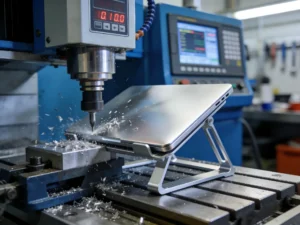
With the design finalized, manufacturing employs advanced CNC (Computer Numerical Control) machining. Modern multi-axis CNC mills and lathes provide the accuracy and repeatability required.
- 5-Axis CNC Machining: Allows for complex geometries to be machined in a single setup. This is crucial for creating integrated mounts with compound angles, deep pockets, and intricate features without repositioning the part, which can introduce error.
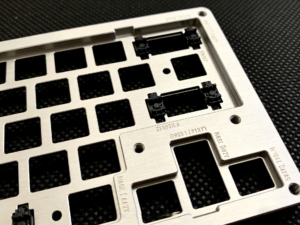
- High-Speed Machining (HSM): Enables finer surface finishes and the ability to machine thin-walled sections without inducing vibration or distortion, resulting in lighter, stiffer mounts.
- Micromachining: For ultra-miniature sensors or mounts requiring extremely small features, specialized micromachining equipment and processes are employed.
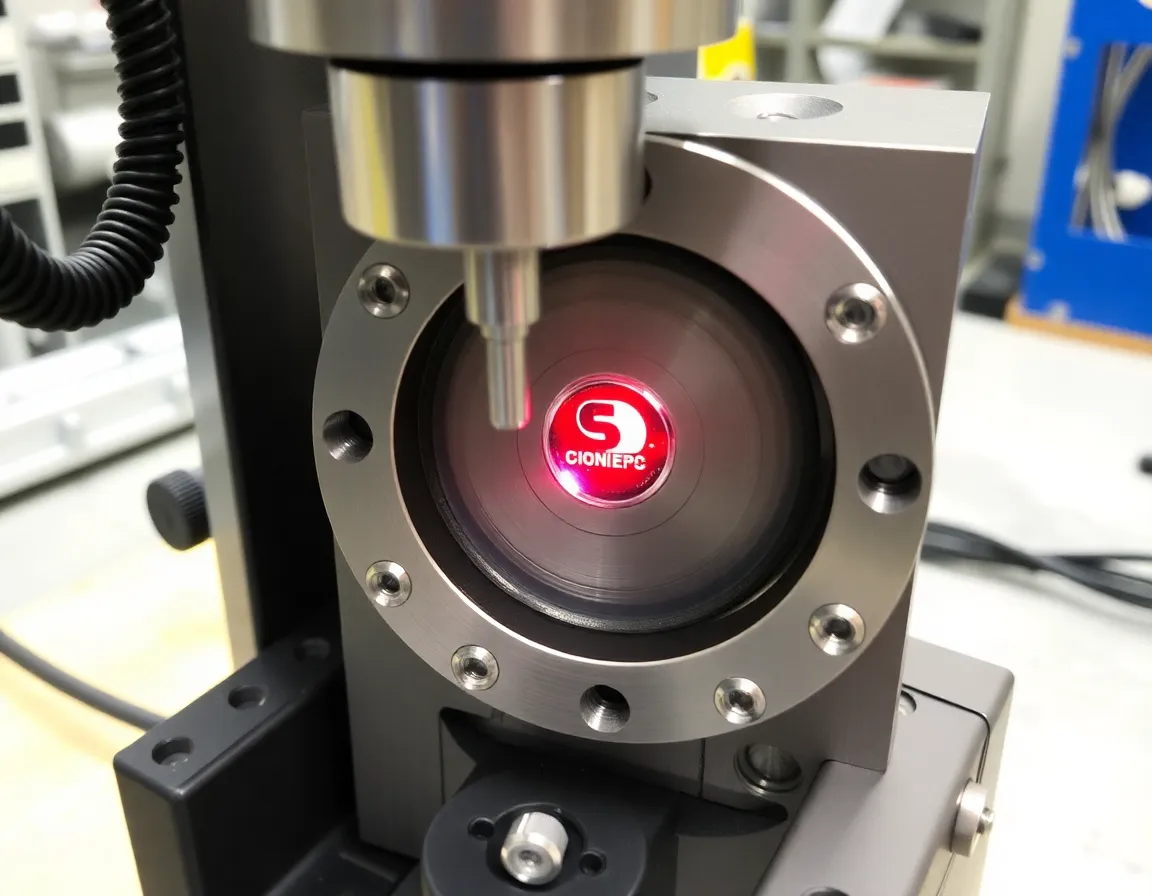
Throughout machining, rigorous in-process inspection using tools like Coordinate Measuring Machines (CMM), laser scanners, and optical comparators ensures every dimension meets the specified tight tolerances.
Post-Processing and Finishing
After machining, additional treatments enhance performance and longevity. These may include stress relieving (thermal or vibratory) to ensure dimensional stability, surface treatments like anodizing or passivation for protection, and the application of specialized coatings for wear resistance or thermal management.
Key Benefits and Applications Across Industries
The investment in precision-machined sensor mounts delivers tangible, often mission-critical, benefits across a vast spectrum of industries.
Tangible Benefits
- Maximized Data Fidelity: Eliminates "noise" and error introduced by mount deflection, vibration, or thermal drift, ensuring the sensor output reflects the true measured variable.
- Enhanced System Reliability: A robust, precisely fitted mount protects sensitive sensor elements from shock, loosening, and environmental damage, reducing downtime and maintenance.
- Repeatable Measurements: Enables consistent sensor positioning across multiple machines or setups, which is vital for quality control and comparative analysis.
- Optimized Performance: Allows sensors to operate at the very limits of their designed specifications, unlocking their full potential.
Critical Applications
Precision sensor mounts are indispensable in fields where accuracy is non-negotiable.
- Aerospace & Defense: Mounting inertial measurement units (IMUs), vibration sensors on jet engines, and targeting systems where extreme G-forces and temperature swings are common.
- Semiconductor Manufacturing: Positioning wafer inspection sensors, lithography alignment systems, and vibration monitors in cleanrooms, where nanometer-scale precision is required.
- Automated Metrology: Fixturing for laser scanners, touch probes, and vision systems on CMMs and robotic arms used for quality assurance.
- Scientific Research: In laboratories for particle physics, astronomy (telescope mirror actuators), and materials science, where experimental setups demand absolute stability.
- Industrial Automation: Securing proximity sensors, LIDAR, and cameras on robotic workcells and automated guided vehicles (AGVs) for reliable operation in dynamic environments.
Best Practices in Design and Manufacturing
Adhering to established engineering principles is what separates a functional mount from a precision instrument.
Design for Stability and Stiffness
The primary goal is to maximize the mount's natural frequency well above any excitation frequencies in the environment. This is achieved through intelligent geometry—using triangular gussets, closed-box sections, and strategic ribbing to increase stiffness without excessive mass. The principle of kinematic design is often employed, using precisely located contact points to constrain the sensor without inducing internal stress.
Mitigate Thermal Effects
Designs must account for thermal expansion. This can involve using low-CTE materials, designing symmetric structures that expand uniformly, or incorporating thermal isolation features to decouple the sensor from a heat source.
Ensure Repeatable Interface
The interface between the mount, sensor, and machine structure must be flawless. This involves specifying precise datum features, using high-quality ground locating pins and dowels, and ensuring mounting surfaces have the appropriate flatness and finish. Proper fastener selection and torque specifications are critical to maintain clamping force without distorting components.
Collaborate Early
The most successful outcomes arise from early collaboration between the sensor integrator, mount designer, and machining partner. Involving machinists in the design review can identify potential manufacturing challenges, suggest material alternatives, and optimize designs for both performance and cost-effective production.
Conclusion: The Integral Link in the Measurement Chain
In the pursuit of precision, every link in the measurement chain must be considered. The sensor mount is a fundamental, yet often overlooked, link that physically connects the sophisticated world of electronic sensing to the rigid reality of the mechanical world. Precision sensor mount machining is not merely a fabrication service; it is an engineering discipline that bridges the gap between theoretical sensor performance and real-world, reliable data. By investing in meticulously designed and machined mounts, engineers and technologists ensure that their systems see clearly, measure accurately, and perform reliably—forming the solid, unseen foundation upon which innovation is built.