The Unseen Art of Cutting with Electricity
In the high-stakes world of advanced manufacturing, where a micron can be the difference between success and failure, a quiet champion reigns supreme: Precision Wire Electrical Discharge Machining (Wire EDM). This sophisticated process transcends the limitations of traditional cutting tools, enabling the creation of intricate components with astonishing accuracy and surface finishes. It is the go-to technology for industries demanding perfection, from life-saving medical implants to components that propel spacecraft. Mastering tight tolerances with Wire EDM is not merely a function of pushing a button; it is a nuanced discipline that blends advanced physics, meticulous planning, and operational expertise.
Deconstructing the Spark: How Precision Wire EDM Works
At its core, Wire EDM is a thermoelectric process that removes material through a series of controlled, rapid electrical sparks. It operates on the principle of erosion, not mechanical force. A thin, precisely positioned wire electrode—typically brass, coated, or stratified—is fed continuously from a spool, traveling through the workpiece which is submerged in a bath of dielectric fluid (usually deionized water).
The Spark Gap and Material Removal
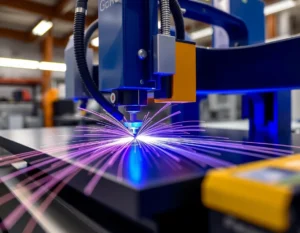
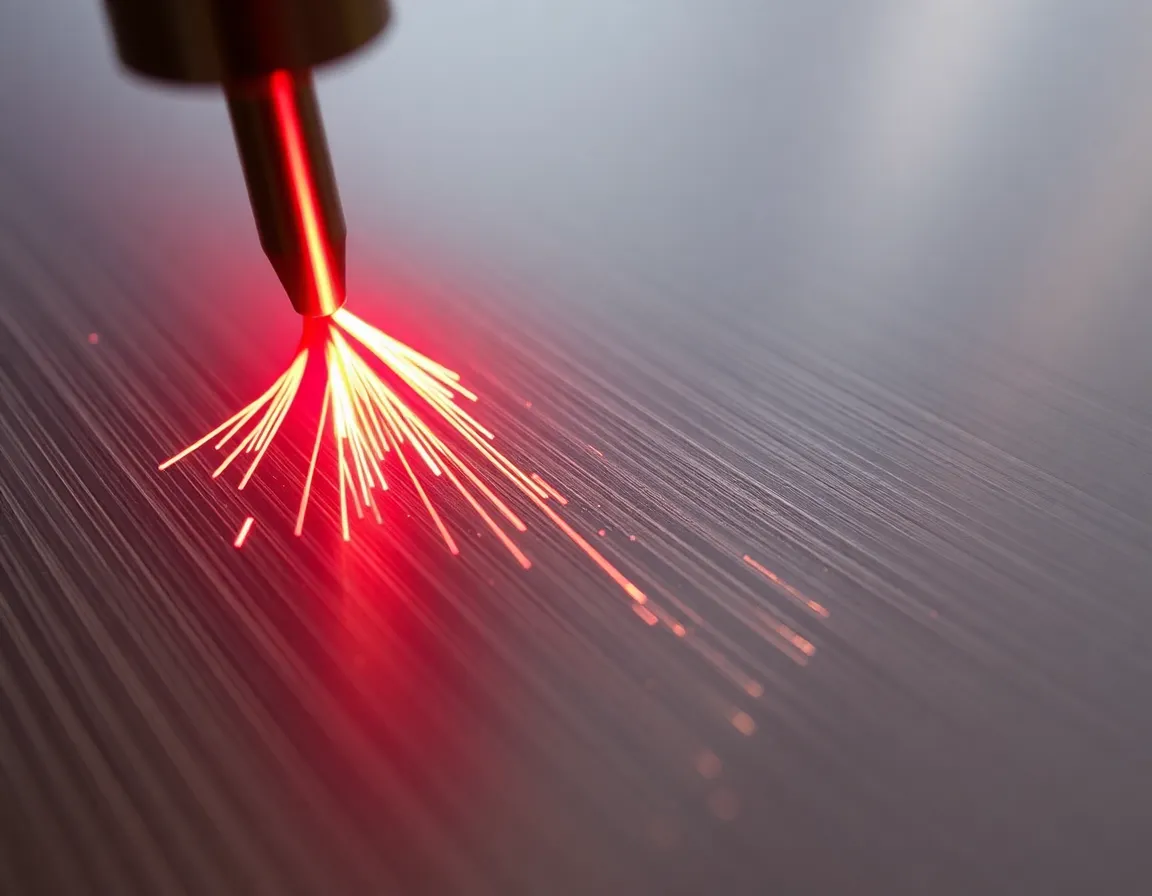
A powerful electrical potential is created between the wire (the tool) and the conductive workpiece. When the gap is small enough, the dielectric fluid ionizes, creating a conductive plasma channel. A controlled spark jumps across this gap, generating an intense, localized heat of approximately 8,000°C to 12,000°C. This micro-explosion vaporizes a tiny particle of the workpiece, which is then rapidly cooled and flushed away by the dielectric fluid. This cycle repeats hundreds of thousands of times per second, with the wire steadily traversing a programmed path, "slicing" through the metal with incredible precision.
The System Components for Precision
Achieving tight tolerances relies on the synergy of several critical machine components:
- The Wire Guidance System: Ultra-precise upper and lower diamond guides position the wire with micron-level accuracy. Advanced systems feature thermal stability and vibration damping to prevent deviation.
- The Dielectric System: The deionized water serves as an insulator, coolant, and flushing agent. Its resistivity is constantly monitored and controlled, as it directly impacts spark consistency and gap cleanliness.
- The CNC and Servo System: A high-resolution CNC controller dictates the wire path, while responsive servo motors constantly adjust the gap based on real-time spark monitoring, maintaining optimal cutting conditions.
- The Power Supply (Generator): Modern isopulse generators provide exquisite control over spark energy, duration, and frequency, allowing operators to fine-tune the cut for roughing, finishing, and super-finishing passes.
The Unmatched Benefits of Precision Wire EDM
Why choose Wire EDM for demanding applications? The benefits are compelling and often irreplaceable by other machining methods.
Geometric Freedom and Zero Tool Pressure
Since there is no physical contact between the wire and the workpiece, there is absolutely no cutting force. This allows for the machining of delicate, thin-walled, and fragile features without distortion. It can produce sharp inside corners, complex profiles, and micro-details that would be impossible with milling or grinding.
Exceptional Accuracy and Repeatability
Modern precision Wire EDMs consistently hold tolerances within ±0.0002" (±0.005 mm) and can achieve even tighter tolerances under optimal conditions. This repeatability ensures that every part, from the first to the thousandth, is identical—a cornerstone of high-volume precision manufacturing.
Superior Surface Finish
Through multiple cutting passes (roughing, finishing, and trim cuts), Wire EDM can produce surface finishes smoother than 0.1 µm Ra. This minimizes post-processing and is critical for parts subject to fatigue, friction, or optical requirements.
Material Versatility
Any electrically conductive material can be cut, regardless of its hardness. This makes Wire EDM ideal for machining hardened tool steels, exotic alloys like Inconel and titanium, carbides, and polycrystalline diamonds after they have been heat-treated, eliminating distortion issues associated with post-heat-treatment machining.
Real-World Applications: Where Precision is Paramount
The capabilities of Precision Wire EDM make it indispensable across a spectrum of advanced industries.
- Aerospace & Defense: Fuel system components, turbine blade cooling holes, structural components with complex contours, and guidance system parts where material integrity and exacting tolerances are non-negotiable.
- Medical Device Manufacturing: Surgical tools, orthopedic implants (knees, hips), micro-components for drug delivery systems, and electrodes. Biocompatibility and flawless surface finishes are essential.
- Tool & Die / Mold Making: Production of stamping dies, extrusion dies, and injection mold cores and cavities, especially for intricate textures and sharp corners. It is the standard for creating punch and die sets with near-zero clearance.
- Micro-Machining: Creating extremely small parts for electronics, sensors, and medical devices, often using wire as small as 0.02 mm in diameter.
- Automotive (High-Performance & EV): Prototyping of transmission components, manufacturing of fuel injector parts, and producing components for electric vehicle battery systems and motors.
Mastering the Craft: Best Practices for Tight Tolerances
Consistently achieving micron-level precision requires a systematic approach that addresses every variable in the process.
Pre-Process Planning and Setup
Success begins long before the first spark. This includes meticulous CAD/CAM programming with proper lead-in/out strategies, selecting the optimal wire type and diameter, and ensuring the workpiece is properly prepared (stress-relieved, squared, and securely mounted). The initial setup, including wire threading and alignment, must be flawless.
Environmental and Machine Stability
Precision Wire EDM is sensitive to its environment. Machines should be installed on stable foundations in temperature-controlled rooms (±1°C is ideal) to prevent thermal growth in the machine structure or workpiece. Regular maintenance of filters, guides, and dielectric systems is crucial.
Strategic Cutting Parameters and Pass Management
Using a multi-pass strategy is key. A robust roughing pass removes the bulk of material, followed by progressively lighter finishing passes that clean up the surface and correct for wire deflection. The final "skim" or "trim" pass, often with a reduced wire offset and very low power, achieves the final dimension and surface finish. Understanding and compensating for the wire offset (the gap between the wire centerline and the cut surface) is fundamental to hitting target dimensions.
In-Process Monitoring and Adaptive Control
Skilled operators and advanced machine software monitor spark frequency, gap voltage, and flushing conditions. Adaptive controls can adjust feed rates in real-time to maintain an ideal spark gap, especially in challenging geometries with poor flush conditions.
Metrology and Verification
You cannot master what you cannot measure. First-article inspection using high-precision tools like coordinate measuring machines (CMMs), optical comparators, and laser scanners is essential to verify that the process is in control and meeting specifications.
Precision Wire EDM represents the pinnacle of subtractive manufacturing for complex, high-accuracy components. It is a technology that empowers engineers to design without the constraints of conventional machining, pushing the boundaries of what is possible in metal. Mastering its tight tolerances is a blend of advanced technology, controlled environment, and deep process knowledge—a mastery that continues to drive innovation in the world's most technologically advanced industries. From the micro-scale to the robust, the spark of Wire EDM continues to cut a path toward ever-greater precision.