The Unseen Engine: Precision Milled Parts in Modern Manufacturing
In the world of manufacturing, where microns matter and reliability is non-negotiable, precision milled parts stand as the fundamental building blocks of innovation. These components, crafted from blocks of solid material through the controlled removal of layers using computer-guided cutting tools, are the silent heroes in everything from medical devices to aerospace vehicles. For engineers, procurement specialists, and business leaders, the central dilemma often revolves around a critical balance: the uncompromising quality of these parts versus the inevitable pressure of cost. This article delves into the intricate relationship between these two forces, exploring how to navigate the trade-offs without compromising the integrity of the final product.
Defining Precision: More Than Just Tight Tolerances
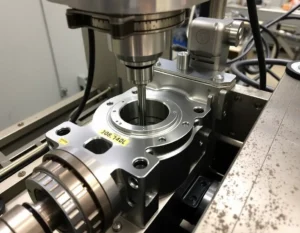
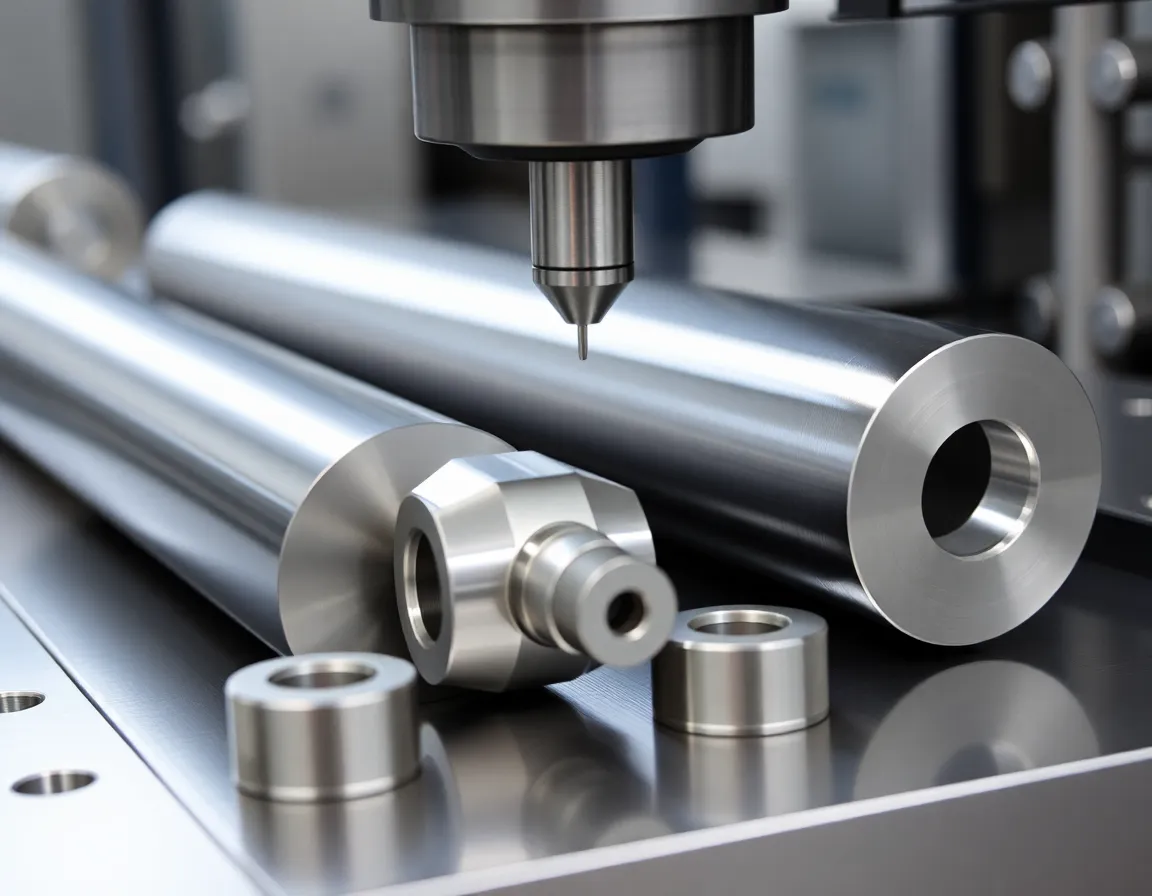
Precision milling, often performed on advanced Computer Numerical Control (CNC) machining centers, is a subtractive manufacturing process that transforms raw material—metals like aluminum, stainless steel, and titanium, or engineering plastics—into complex, high-accuracy components. "Precision" in this context is a multi-faceted concept encompassing dimensional accuracy, surface finish, geometric complexity, and material integrity.
The Pillars of Quality in Precision Milling
True quality in a precision-milled part is not a single attribute but a symphony of interconnected factors:
- Dimensional Accuracy and Tolerance: This is the most cited metric. It refers to the permissible limit of variation in a part's dimensions. Aerospace or medical implants may require tolerances within ±0.001 inches (0.0254 mm) or tighter. Holding these tolerances across a production run demands exceptional machine capability and process control.
- Surface Finish:The texture of the machined surface, measured in micro-inches or Ra values, affects part performance, fatigue resistance, and sealing capabilities. A smoother finish often requires additional machining steps (like polishing) or slower cutting speeds, impacting cost.
- Geometric Complexity:The ability to produce intricate contours, deep cavities, fine threads, and true perpendicularity is where advanced 5-axis CNC milling shines. Complexity directly influences programming time, tooling requirements, and cycle time.
- Material Properties and Integrity:Quality machining preserves the inherent properties of the material. This means avoiding excessive heat that alters metallurgy, preventing tool marks that become stress concentrators, and ensuring burr-free edges.
The Cost Equation: Beyond the Per-Piece Price
When evaluating cost, it is a profound mistake to look only at the unit price quoted by a machine shop. A holistic view of Total Cost of Ownership (TCO) is essential for making an informed decision that aligns with both budgetary and performance goals.
Visible vs. Hidden Costs
The visible costs are straightforward: material cost, machine time (shop rate), and labor. However, the hidden costs of choosing a lower-quality part can be catastrophic:
- Inspection and Rework Costs: Parts with inconsistent quality require 100% inspection, sorting, and potentially costly rework. High-precision parts from a qualified vendor often come with statistical process control and First Article Inspection Reports (FAIR), reducing incoming inspection burden.
- Assembly and Integration Issues:A part that is out of spec can halt an assembly line, cause fit-up problems, or lead to improper function. The downtime and labor cost to troubleshoot and rectify these issues far outweigh savings on the component itself.
- Warranty, Failure, and Liability Costs:This is the most significant risk. A failed precision component in a fielded product can lead to warranty claims, product recalls, brand reputation damage, and in extreme cases (medical, automotive, aerospace), legal liability.
- Lead Time and Opportunity Cost:A supplier offering a rock-bottom price may have longer lead times or unreliable delivery. Delays in receiving parts can delay entire projects, creating opportunity costs and potential lost market revenue.
Striking the Optimal Balance: Strategies for Value-Driven Sourcing
The goal is not to always choose the highest quality regardless of cost, nor to blindly pursue the cheapest option. The objective is to achieve the necessary and sufficientquality for the application at the most reasonable total cost. Here are best practices to navigate this balance.
1. Define Requirements with Rigor
Collaborate closely with design engineers to critically evaluate every tolerance callout. Ask: "Is this tolerance critical to function, or is it a default on the drawing?" Specifying a ±0.0005" tolerance where ±0.002" would suffice can triple machining costs unnecessarily. Apply Geometric Dimensioning and Tolerancing (GD&T) correctly to communicate design intent clearly, which helps the machine shop optimize their process.
2. Material and Process Selection
Choose the most appropriate material for the function. An over-specified superalloy will be needlessly expensive to machine. Conversely, an under-specified material may fail. Furthermore, consider if a part is a candidate for additive manufacturing (for extreme complexity) or casting/forging (for high volume) before milling, as a hybrid approach can be cost-effective.
3. Partner with the Right Supplier
View your precision machining vendor as a partner, not just a commodity provider. A capable partner will offer Design for Manufacturability (DFM) feedback to simplify parts and reduce cost without sacrificing performance. Evaluate their:
- Machine tool capability and technology.
- Quality management system (e.g., ISO 9001, AS9100).
- Metrology and inspection equipment.
- Communication and problem-solving approach.
4. Volume and Production Strategy
For prototypes and low volumes, the focus is on flexibility and speed; unit cost is secondary. For production runs, investing in optimized tooling, fixtures, and CNC programs can yield a higher upfront cost but a dramatically lower per-part cost and higher consistency over the long run.
Applications: Where the Balance is Non-Negotiable
The quality-cost calculus varies dramatically by industry, highlighting the context-dependent nature of the decision.
- Aerospace & Defense: Quality is paramount. Component failure can be catastrophic. Costs are high due to exotic materials, rigorous certifications (like NADCAP), and exhaustive documentation. The "cost" of failure justifies the investment in supreme quality.
- Medical & Surgical Devices:Similar to aerospace, human life is at stake. Biocompatibility, flawless surface finishes to prevent bacterial growth, and absolute reliability make quality the dominant factor. The cost of regulatory non-compliance is immense.
- Automotive (Performance & EV):A blend of high volume and high performance. While cost pressure is intense, precision in components like powertrain elements, battery enclosures, and sensor mounts is critical for efficiency, safety, and longevity. The balance leans toward robust processes that ensure quality at scale.
- Consumer Electronics & Robotics:Here, miniaturization and complex aesthetics meet cost sensitivity. The strategy often involves designing for manufacturability, using less expensive but machinable materials like specific aluminum alloys, and leveraging high-speed milling to achieve the required precision at a competitive rate.
Conclusion: An Investment, Not an Expense
Precision milled parts represent a foundational investment in the quality, reliability, and success of the final product. Framing the decision as a simplistic "quality vs. cost" battle is misleading. It is, in reality, a strategic evaluation of value versus risk. The true cost of a part is only revealed over its entire lifecycle—from procurement and assembly to its performance in the field. By meticulously defining requirements, understanding the total cost equation, and forging partnerships with capable manufacturing experts, businesses can secure precision components that deliver the optimal synthesis of performance and economy. In the precision machining world, the cheapest part off the machine is often the most expensive one installed in your product.