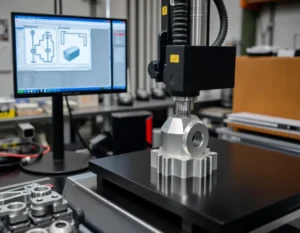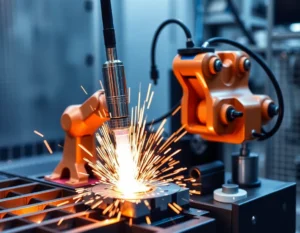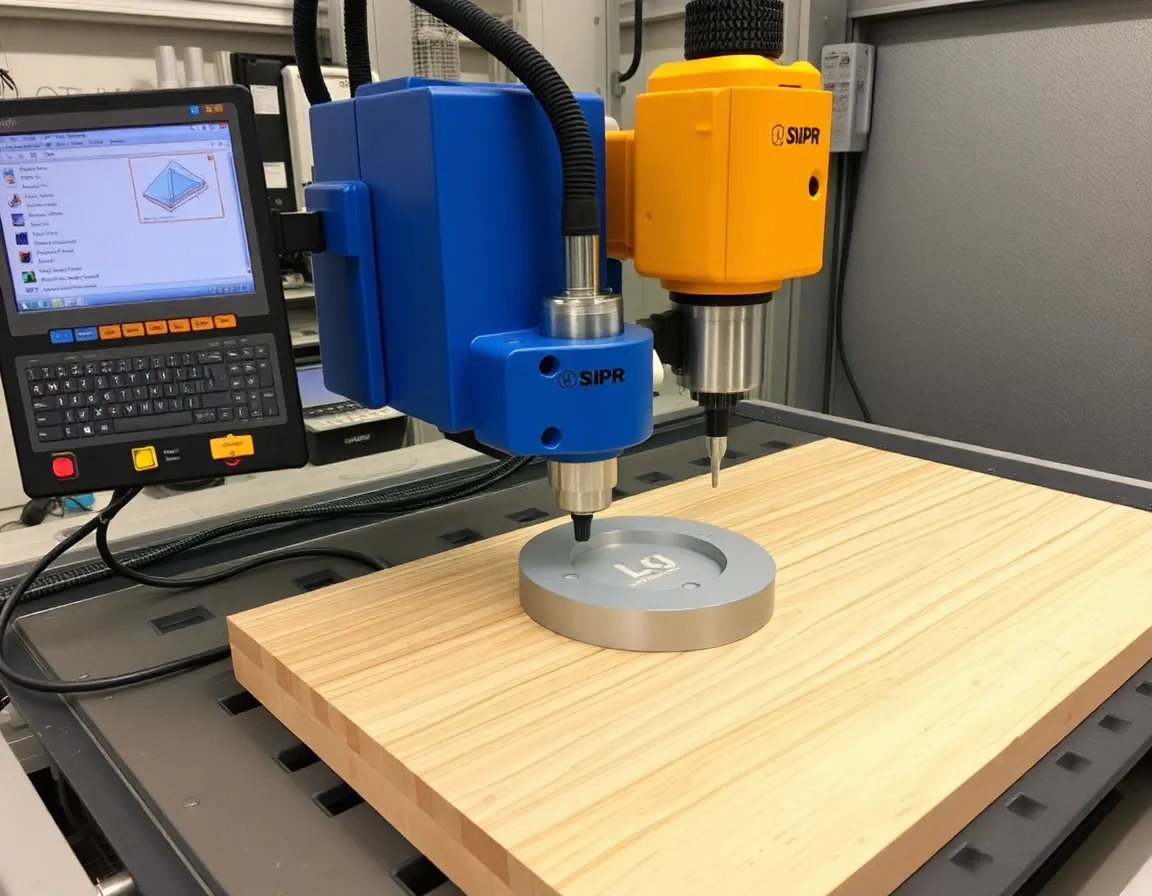
In the world of Computer Numerical Control (CNC) machining, the journey from a raw block of material to a finished, functional component doesn't end when the milling or turning machine stops. The final step, often where true precision and aesthetic value are unlocked, is CNC part finishing, also known as post-processing. This critical phase encompasses all the operations performed on a machined part after the primary material removal is complete. Mastering these techniques is what separates a good part from a great one, transforming a machined piece into a product ready for its end-use environment, whether that's a high-stress aerospace assembly or a consumer-facing electronic device.
What is CNC Part Finishing and Why is it Essential?
CNC part finishing refers to the collection of secondary processes applied to a machined component to improve its surface characteristics, dimensional accuracy, mechanical properties, and appearance. While CNC machines are incredibly accurate, they inherently leave behind tool marks, sharp edges, burrs, and surface textures that may not be suitable for the part's final application. Post-processing bridges this gap between the "as-machined" state and the final specification.
The benefits of a well-executed finishing strategy are profound. Functionally, it enhances wear resistance, reduces friction, improves corrosion protection, and facilitates better adhesion for paints or coatings. Aesthetically, it can provide a uniform, attractive surface finish, from a matte texture to a mirror-like polish. From a practical standpoint, deburring removes sharp, hazardous edges that could injure handlers or interfere with assembly. In essence, post-processing ensures the part not only looks professional but also performs reliably and safely throughout its intended lifespan.
A Comprehensive Guide to Common Finishing Techniques
The chosen finishing method depends on the base material (aluminum, steel, titanium, plastic, etc.), the desired outcome, dimensional tolerances, and cost considerations. These techniques can be broadly categorized into mechanical, chemical, and coating processes.
Mechanical Finishing Methods
These methods involve physical contact with the part's surface to alter its texture or geometry.
- Deburring: The essential first step. This removes the thin, ragged edges (burrs) left by cutting tools. Methods include manual filing, vibratory tumbling, thermal energy deburring, and cryogenic deflashing.
- Sanding and Polishing: Using progressively finer abrasives to smooth the surface. Manual polishing is labor-intensive but offers high control, while automated abrasive belt grinding is efficient for consistent results on flat or simple curved surfaces.
- Bead Blasting (Abrasive Blasting): Propelling fine media (glass beads, aluminum oxide, plastic) at high pressure to create a uniform, matte, satin-like finish. It's excellent for removing light tool marks and preparing surfaces for coating.
- Brushing: Using rotary brushes (often with abrasive filaments) to create a consistent directional grain or "brushed" finish, popular for decorative metal parts.
- Vibratory and Barrel Tumbling: Placing parts in a container with abrasive media and using vibration or rotation to deburr, radius edges, and produce a smooth, uniform finish on large batches of small parts.
Chemical and Electrochemical Finishing
These processes use chemical reactions to alter the surface layer of the material.
- Anodizing (for Aluminum): An electrochemical process that thickens the part's natural oxide layer, dramatically increasing corrosion and wear resistance. It also creates a porous surface that can be dyed in various colors before being sealed.
- Passivation (for Stainless Steel): A chemical bath that removes free iron particles from the surface, restoring and enhancing the chromium-rich oxide layer that gives stainless steel its corrosion resistance.
- Electropolishing: The reverse of electroplating. The part is immersed in an electrolyte and subjected to an electrical current, which selectively removes microscopic peaks from the surface. This results in a smooth, shiny, deburred, and micro-clean finish that also improves corrosion resistance.
- Chemical Etching: Using controlled chemical reactions to texture, matte, or selectively remove material for branding or decorative purposes.
Coating and Plating Processes
These methods apply a new layer of material onto the part's surface.
- Powder Coating: Applying a dry, electrostatically charged powder (polymer resin) to a grounded part, then curing it in an oven to form a hard, durable, and attractive layer that is thicker and more robust than conventional paint.
- Electroplating: Using electricity to deposit a thin layer of metal (such as nickel, chrome, zinc, or gold) onto the part. This is done for corrosion protection (zinc plating), increased hardness and wear resistance (nickel or chrome), or aesthetic appeal.
- Conversion Coatings: Chemical treatments like Chromate (on aluminum or zinc) or Phosphate (on steel) that create a non-metallic, adherent layer to improve paint adhesion and corrosion resistance.
Best Practices for Effective Post-Processing
To achieve optimal results and avoid costly mistakes, a strategic approach to finishing is required.
Design for Manufacturing (DFM) with Finishing in Mind
The part's design heavily influences the feasibility, quality, and cost of finishing. Always consider post-processing during the initial design phase. Avoid deep, narrow cavities that media or fluids cannot penetrate. Specify necessary edge breaks (radiusing) to make deburring effective. Ensure parts can be fixtured or racked for processes like anodizing or plating without creating witness marks on critical surfaces. Clearly communicate which surfaces are critical and which are not.
Sequencing and Process Control
The order of operations is crucial. A typical sequence might be: Primary CNC machining > Initial deburring > Stress relieving (if needed) > Precision machining to final dimensions > Final deburring > Surface smoothing (blasting, polishing) > Chemical treatment (passivation, etching) > Coating/Plating. Each step must be controlled. For instance, media type, pressure, and time are critical in blasting; chemical concentration, temperature, and immersion time are vital in baths. Documented procedures and qualified operators are key.
Quality Assurance and Validation
Finishing must be verified, not assumed. Use appropriate measurement tools. Surface roughness is quantified with profilometers (Ra, Rz values). Coating thickness is measured with magnetic or eddy-current gauges. Adhesion is tested via cross-hatch or bend tests. Corrosion resistance might be validated with salt spray testing. Establish clear, measurable acceptance criteria for the finish based on the part's functional requirements.
Applications: Matching the Finish to the Function
The application dictates the finishing choice. Here are industry-specific examples:
- Aerospace & Defense: Anodizing and hard-coat anodizing for aluminum components, passivation for stainless steel, and specialized high-performance coatings for wear and thermal resistance. Deburring is critical for safety and airflow.
- Medical Devices: Electropolishing is paramount for stainless steel surgical tools and implants, providing an ultra-smooth, cleanable, and corrosion-resistant surface that meets stringent biocompatibility and sterilization requirements.
- Automotive: A mix of functional and cosmetic finishes: powder coating on brackets, chrome plating on trim, zinc plating on fasteners for corrosion resistance, and bead blasting on engine components.
- Consumer Electronics: Aesthetic finishes are key. Brushed and anodized aluminum for enclosures, precision polishing for bezels, and PVD (Physical Vapor Deposition) coatings for durable, colored surfaces on buttons and trim.
- Industrial Machinery: Focus on wear resistance and corrosion protection. Hard chrome plating on hydraulic rods, powder coating on frames, and nitriding or other surface hardening treatments on gears and bearings.
Mastering CNC part finishing is an integral component of advanced manufacturing. It requires a deep understanding of materials, processes, and the end-use environment. By viewing post-processing not as an afterthought but as a critical, integrated phase of production, engineers and manufacturers can unlock the full potential of their CNC-machined components. The right finish elevates a part from merely functional to exceptionally reliable, safe, and visually compelling, ultimately defining the quality and longevity of the final product. Investing time in planning and executing a comprehensive finishing strategy is, therefore, one of the most valuable steps in the entire manufacturing workflow.