Introduction: The Pursuit of Optical Clarity in Polymer
In the world of precision optics, glass has long been the traditional material of choice. However, for a growing number of demanding applications, from biomedical devices to automotive lighting, a high-performance polymer is taking center stage: Polymethyl Methacrylate, better known as PMMA or acrylic. While PMMA sheets are common, achieving true optical-grade performance requires far more than simple cutting. This is the realm of precision PMMA optics machining, a specialized discipline that transforms a raw polymer blank into a component with exceptional clarity, exacting geometries, and superior surface quality. This article delves into the processes, challenges, and vast potential of machining PMMA for optical applications.
Understanding Optical PMMA: More Than Just Plastic
Before exploring the machining process, it's crucial to understand why PMMA is selected for optical components. Often referred to by trade names like Plexiglas or Acrylite, optical PMMA is an amorphous thermoplastic engineered for maximum transparency.
Key Material Properties
Optical-grade PMMA possesses a unique combination of properties that make it ideal for many optical applications:
- High Light Transmission: It transmits up to 92% of visible light, rivaling the clarity of glass.
- Low Birefringence: Properly processed, it exhibits minimal internal stress, preventing the distortion of polarized light.
- Excellent Weathering & UV Stability: It resists yellowing and degradation from sunlight far better than many other plastics.
- Lightweight: At about half the density of glass, it is ideal for weight-sensitive applications.
- Impact Resistance: It is significantly more shatter-resistant than glass, enhancing safety and durability.
- Ease of Fabrication: It can be machined, polished, and coated more readily than brittle glass materials.
The Machining Imperative
While PMMA can be injection molded, machining from cast or extruded stock is often preferred for prototypes, low-to-medium volume production, and components requiring ultra-precise dimensions or complex features that are difficult to mold. Machining allows for unparalleled flexibility and precision, but it introduces specific thermal and mechanical challenges that must be meticulously managed to preserve the material's inherent optical properties.
The Precision Machining Process: From Blank to Brilliance
Machining optical PMMA is a multi-stage process where each step builds upon the last to achieve the required clarity and form. The core principle is to manage heat and stress to prevent defects like clouding, cracking, or sub-surface damage.
1. CNC Milling and Turning
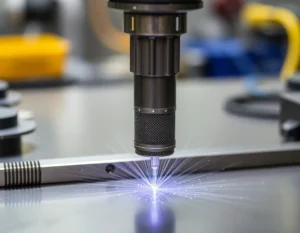
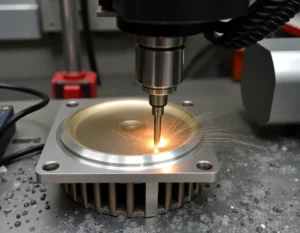
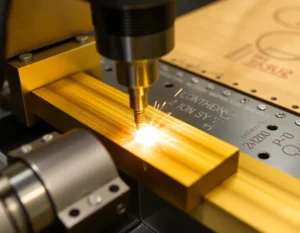
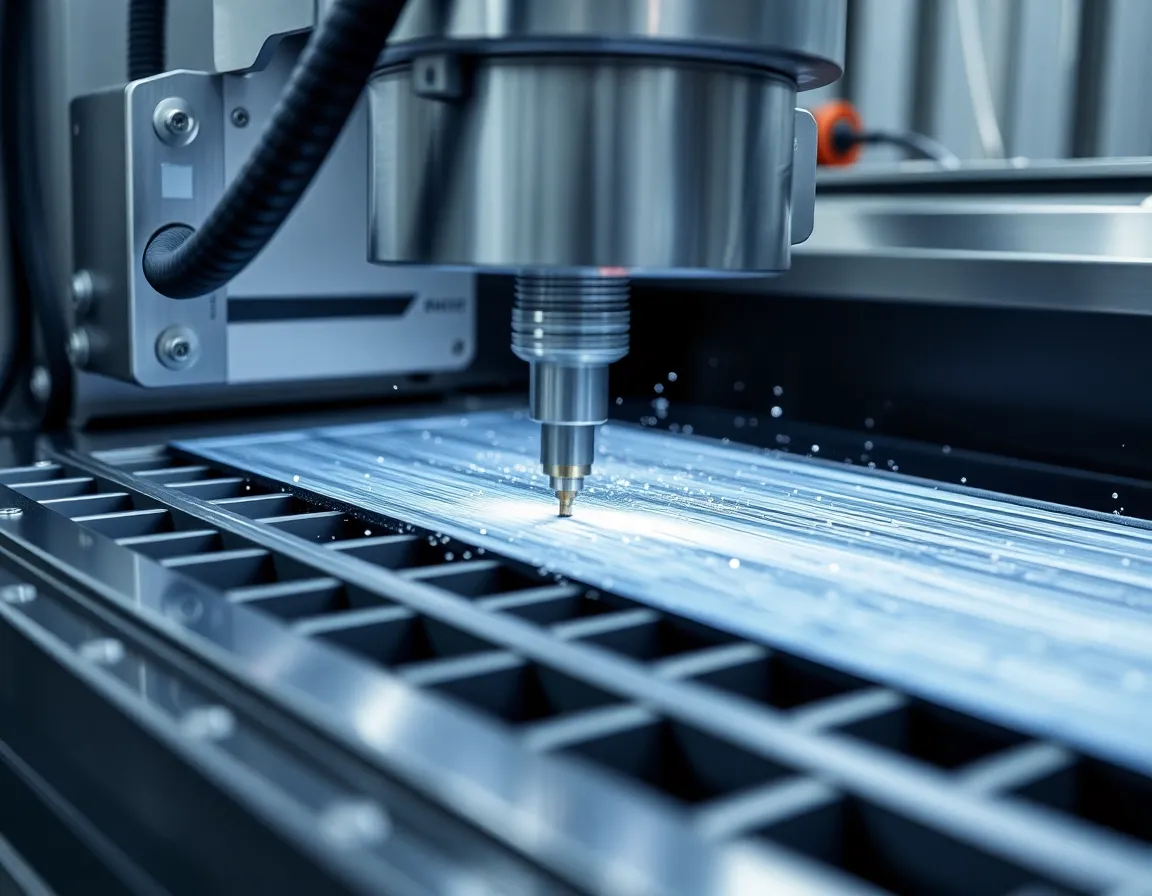
Computer Numerical Control (CNC) machining is the backbone of the process. High-speed spindles and specialized tooling are used to cut the PMMA blank into its basic shape.
- Tool Selection: Single or double-flute diamond-coated or polished carbide tools are standard. They provide sharp, clean cuts with minimal friction.
- Cutting Parameters: High spindle speeds with slow, consistent feed rates are critical. This combination shears the material cleanly rather than melting it.
- Coolant Strategy: Using a fine mist of coolant or even compressed air is essential to dissipate heat without causing thermal shock or leaving residues that could interfere with polishing.
2. Diamond Tool Machining (DTM) and Single-Point Diamond Turning (SPDT)
For the highest quality optical surfaces directly from the machine, diamond tooling is employed. A perfectly sharpened diamond tip, with a nano-scale edge, cuts the PMMA with extreme precision.
Single-Point Diamond Turning can produce optical surfaces (flat, spherical, or even aspheric) with surface finishes measured in nanometers, often eliminating the need for subsequent polishing for non-visible light applications (e.g., infrared). This process requires ultra-stable, vibration-free machines and exquisite environmental control.
3. Polishing and Finishing
For most visible-light applications, a polished surface is required to achieve total clarity and eliminate any light scatter. This is a delicate, iterative process.
- Initial Sanding: A progression of finer and finer abrasive papers (from ~600 grit to 2000+ grit) is used under lubricated conditions to remove machining marks.
- Polishing: A soft cloth wheel or pad is used with a specialized polishing compound (often cerium or aluminum oxide based). The goal is to create a flawless, scratch-free surface.
- Cleaning: Meticulous cleaning between stages and at completion is paramount, as any particulate contamination can scratch the soft surface or become embedded.
4. Coating and Post-Processing
To enhance performance, machined PMMA optics can be coated. Anti-reflective (AR) coatings boost light transmission, while hard coatings can improve scratch resistance. Other post-processing steps can include light-diffusing surface textures, decorative painting on non-optical surfaces, or assembly into housings.
Applications of Precision Machined PMMA Optics
The unique benefits of machined PMMA optics have led to their adoption across a diverse range of high-tech industries.
Medical and Life Sciences
Disposable and reusable components in diagnostic devices, endoscopes, and drug delivery systems benefit from PMMA's clarity, biocompatibility, and sterilizability. Machined lenses, cuvettes, and flow cells are common.
Automotive and Transportation
From complex inner lenses for LED headlights and taillights to dashboard instrument covers and heads-up display (HUD) waveguides, machined PMMA provides design freedom, weight savings, and excellent light management.
Consumer Electronics and Displays
Light guide plates (LGPs) for LCD televisions and monitors, diffuser elements, and lens arrays for sensors are often precision machined from PMMA to achieve exact optical patterns and ultra-smooth surfaces.
Industrial and Defense
Windows for sensors and displays, sight glasses for process equipment, lenses for laser systems, and protective covers for instrumentation all utilize the durability and optical performance of machined PMMA.
Best Practices and Critical Considerations
Success in optical PMMA machining hinges on adhering to a set of rigorous best practices.
Material Handling and Storage
Protective film should be kept on the raw stock for as long as possible. PMMA is hygroscopic (absorbs moisture), so controlled storage is recommended to prevent dimensional changes or bubbling during machining.
Stress Management
The cast or extruded blank must be stress-relieved before machining. Machining itself can introduce new stress. Techniques like climb milling and balanced tool paths help minimize this. Post-machining annealing may be required for the most critical applications.
Surface Integrity
The ultimate goal is a defect-free surface. This requires not just the right final polish but also ensuring each prior machining step is performed correctly. A scratch from a coarse mill will take exponentially more time to remove later.
Quality Control and Metrology
Every step must be verified. This includes dimensional checks with coordinate measuring machines (CMM), surface roughness measurements with profilometers, and optical inspection for clarity, bubbles, and inclusions using light tables and sometimes interferometers for wavefront accuracy.
Conclusion: Enabling Innovation with Polymer Precision
Precision PMMA optics machining is a sophisticated fusion of materials science, advanced manufacturing, and optical engineering. It unlocks the potential of a versatile polymer, transforming it into components that meet the stringent demands of modern technology. By mastering the delicate balance between material removal and surface preservation, manufacturers can produce optics that are not only clear and precise but also lightweight, durable, and cost-effective for their intended volume. As technologies in lighting, medical devices, and consumer electronics continue to advance, the role of precision machined PMMA optics as a critical enabler of innovation is only set to grow brighter.