Introduction: The Rise of a Biomaterial Powerhouse
In the relentless pursuit of improving patient outcomes, the medical device industry has witnessed a paradigm shift in material science. Moving beyond traditional metals, polymers have emerged as frontrunners for a new generation of implants. At the forefront of this revolution stands Polyetheretherketone, universally known as PEEK. This high-performance thermoplastic has redefined possibilities in spinal, orthopedic, and trauma applications. However, the remarkable intrinsic properties of medical-grade PEEK are only fully realized through one critical process: precision machining. This article delves into the intricate world of medical-grade PEEK machining, exploring its necessity, methodologies, stringent requirements, and the transformative impact it has on modern implantology.
Understanding Medical-Grade PEEK: More Than Just Plastic
To appreciate the machining process, one must first understand the material itself. Medical-grade PEEK is not a commodity polymer; it is an elite engineering material belonging to the polyaryletherketone (PAEK) family. What sets it apart for medical use are its exceptional properties, which must be preserved and enhanced through manufacturing.
Key Properties of Medical-Grade PEEK
- Biocompatibility: Certified to ISO 10993 standards, it is well-tolerated by the human body, causing minimal inflammatory response.
- Radiolucency: Unlike metals, PEEK is transparent under X-ray and CT scans, allowing for clear post-operative imaging of bone fusion and healing without artifact interference.
- Elastic Modulus Similar to Bone: PEEK's stiffness can be tailored to closely match that of cortical bone. This "isoelastic" property mitigates stress shielding—a phenomenon where a stiffer implant bears all the load, causing surrounding bone to weaken and resorb.
- Chemical and Hydrolytic Stability: It is inert and resistant to degradation in the harsh, saline environment of the human body.
- Excellent Mechanical Strength: It offers high strength-to-weight ratio, fatigue resistance, and durability under load.
Medical-grade variants are often reinforced with materials like carbon fiber (CFR-PEEK) for increased strength and stiffness or impregnated with bioactive compounds to foster bone integration. Machining this advanced material requires a specialized approach distinct from metals or standard plastics.
The Art and Science of Precision PEEK Machining
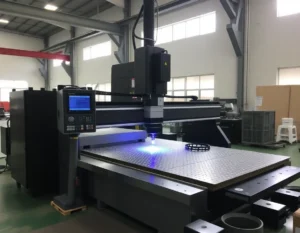
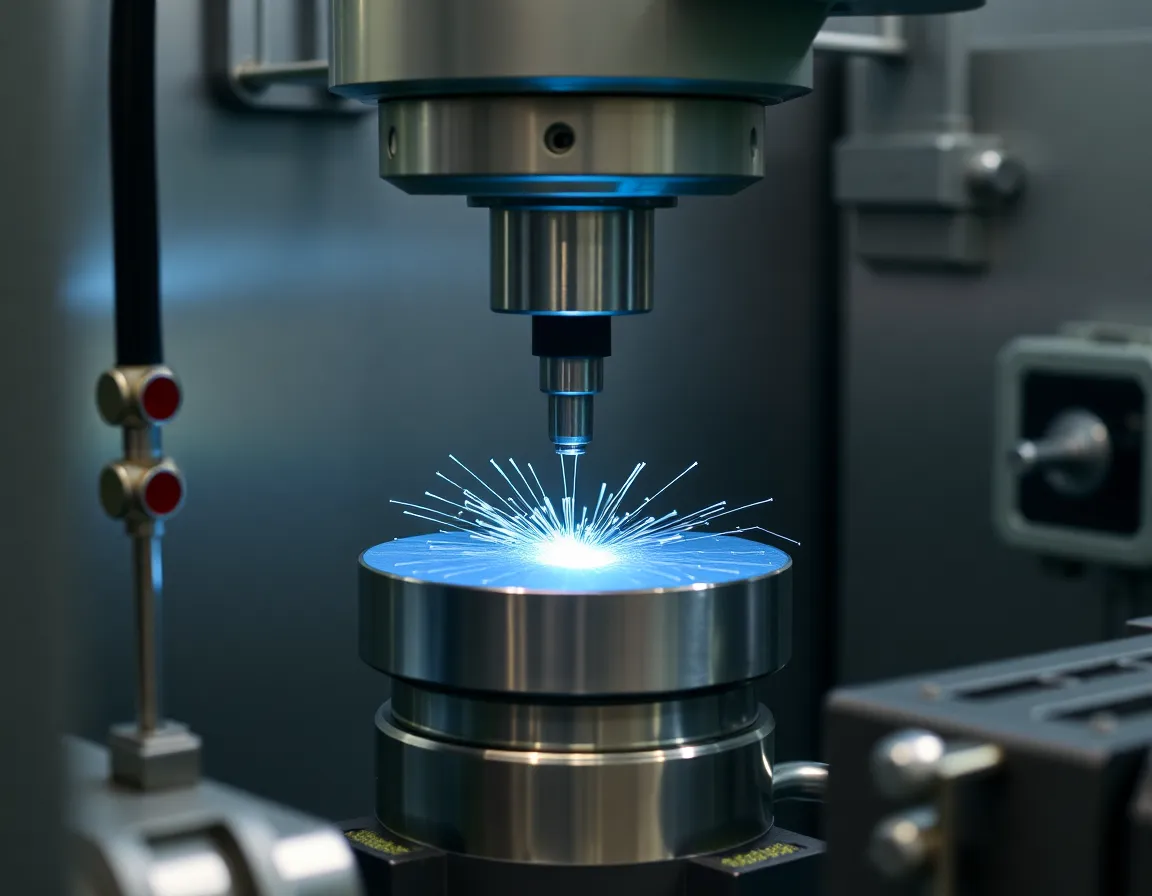
Precision machining transforms a raw PEEK polymer blank into a complex, patient-specific, or standard implant with tolerances often measured in microns. The process is a delicate balance between aggressive material removal and gentle handling to prevent compromising the material's structure.
Critical Machining Techniques and Considerations
- CNC Milling and Turning: Multi-axis Computer Numerical Control (CNC) machining is the cornerstone. It allows for the creation of intricate geometries, threads, undercuts, and porous surfaces that promote osseointegration. High spindle speeds with moderate feed rates are essential.
- Tooling Selection: Carbide or polycrystalline diamond (PCD) tools are mandatory. Sharp, polished cutting edges with positive rake angles ensure clean shearing of the material, preventing heat buildup and gumminess. Tool geometry is optimized for efficient chip evacuation.
- Thermal Management: PEEK has a high melting point (~343°C), but excessive localized heat can cause degradation, recast layers, or internal stresses. Effective cooling using a constant, high-volume flood of coolant (often deionized water or specific coolants) is critical. Cryogenic machining is an advanced technique used for ultra-high precision.
- Fixturing and Workholding: Given PEEK's lower modulus compared to metal, secure yet gentle fixturing is paramount to prevent distortion or vibration (chatter) during machining, which can lead to dimensional inaccuracies and poor surface finish.
- Post-Machining Processes: Machined parts often undergo meticulous cleaning (ultrasonic cleaning in validated processes), deburring, and surface treatment. Treatments can include plasma etching to increase surface energy for better cell adhesion or the application of porous coatings.
Why Precision Matters: Benefits of Expertly Machined PEEK Implants
The investment in high-precision machining translates directly into clinical and commercial advantages.
- Predictable Performance: Precisely machined implants ensure consistent mechanical performance, fit, and function. Threads engage smoothly, locking mechanisms secure accurately, and load-bearing surfaces distribute force as designed.
- Enhanced Biocompatibility: A superior surface finish, free of micro-fissures, polymer debris, or thermal damage, reduces the risk of particulate generation and inflammatory response.
- Facilitation of Complex Designs: Precision machining enables the production of patient-specific implants (PSI) from MRI or CT data, perfectly matching a patient's unique anatomy. It also allows for complex interbody fusion devices with integrated graft chambers and instrumentation.
- Improved Surgical Outcomes: Accurate implants reduce surgical time, improve fit, and minimize intraoperative adjustments. This leads to shorter procedures, less tissue trauma, and faster patient recovery.
- Regulatory Compliance: A controlled, validated machining process is a cornerstone of Quality Management Systems (QMS) like ISO 13485, providing the traceability and documentation required for regulatory submissions to bodies like the FDA and EMA.
Applications in Modern Medicine
Precision-machined PEEK has found a home in a wide array of demanding medical applications.
- Spinal Implants: This is the largest application area. It includes cervical and lumbar interbody fusion cages (TLIF, PLIF, ALIF), artificial discs, pedicle screw systems, and laminoplasty plates. The radiolucency is particularly valuable here.
- Orthopedic and Trauma: Machined PEEK is used in joint reconstruction (temporary spacers in knee revision surgery), bone fracture plates, and cranial plates for neurosurgical reconstruction.
- Dental Implantology: Abutments, healing caps, and temporary components benefit from PEEK's aesthetic tooth-like color and low plaque affinity.
- Cardiovascular and Other: Components in heart pumps, surgical instrument handles, and sterilization tray inserts also leverage PEEK's sterility and durability.
Best Practices and The Path to Excellence
Success in medical-grade PEEK machining is not accidental; it is built on a foundation of rigorous best practices.
Essential Best Practices
- Material Traceability: Every PEEK blank must have full traceability back to its resin lot, with certificates of conformance verifying its medical-grade status and filler content.
- Controlled Environment: Machining should occur in a cleanroom or controlled environment to prevent contamination from particulates, oils, or other foreign materials.
- Process Validation: Every machining parameter (speeds, feeds, tool paths, coolant flow) must be scientifically developed and validated to prove it consistently produces a part meeting all specifications.
- Comprehensive Inspection: A battery of inspections is required: Coordinate Measuring Machines (CMM) for dimensional accuracy, optical comparators, surface profilometers for finish analysis, and visual inspection under magnification. Lot sampling is insufficient; high-criticality implants often require 100% inspection.
- Documentation and Quality Systems: Adherence to ISO 13485 is non-negotiable. A complete Device History Record (DHR) for each batch, including all machine logs, inspection reports, and sterilization records, is mandatory.
The future points towards even greater integration of advanced manufacturing. While machining remains dominant for high-strength, final-form implants, it is increasingly combined with additive manufacturing (3D printing) for prototypes, surgical guides, and porous structures, creating a hybrid manufacturing ecosystem focused on patient-centric solutions.
Conclusion: The Confluence of Material and Craftsmanship
Precision PEEK machining for medical implants represents the sophisticated intersection of advanced material science and manufacturing mastery. Medical-grade PEEK provides the raw potential with its unparalleled suite of properties, but it is the precision machining process that unlocks this potential, transforming an inert polymer into a life-enhancing medical device. As surgical techniques advance and personalized medicine becomes the standard, the demand for impeccably machined, patient-specific PEEK implants will only intensify. For manufacturers and surgeons alike, understanding and investing in this critical discipline is not merely a technical choice—it is a commitment to delivering the highest standard of care, one precisely crafted implant at a time.