The Critical Role of Precision Machining in Modern Medicine
In the intricate world of modern medicine, where success is measured in microns and reliability is non-negotiable, the humble medical screw plays an outsize role. From stabilizing fractured bones to securing spinal implants and anchoring dental prosthetics, these small components are fundamental to surgical success. Their manufacture is not a matter of simple metalworking; it is an exercise in extreme precision, governed by the most stringent standards. This is the domain of precision machining, a sophisticated manufacturing process that transforms biocompatible materials into life-altering and life-saving devices. Precision machining for medical screws represents the confluence of advanced engineering, material science, and regulatory rigor, ensuring that every thread, head, and drive feature performs flawlessly within the human body.
What is Precision Machining for Medical Screws?
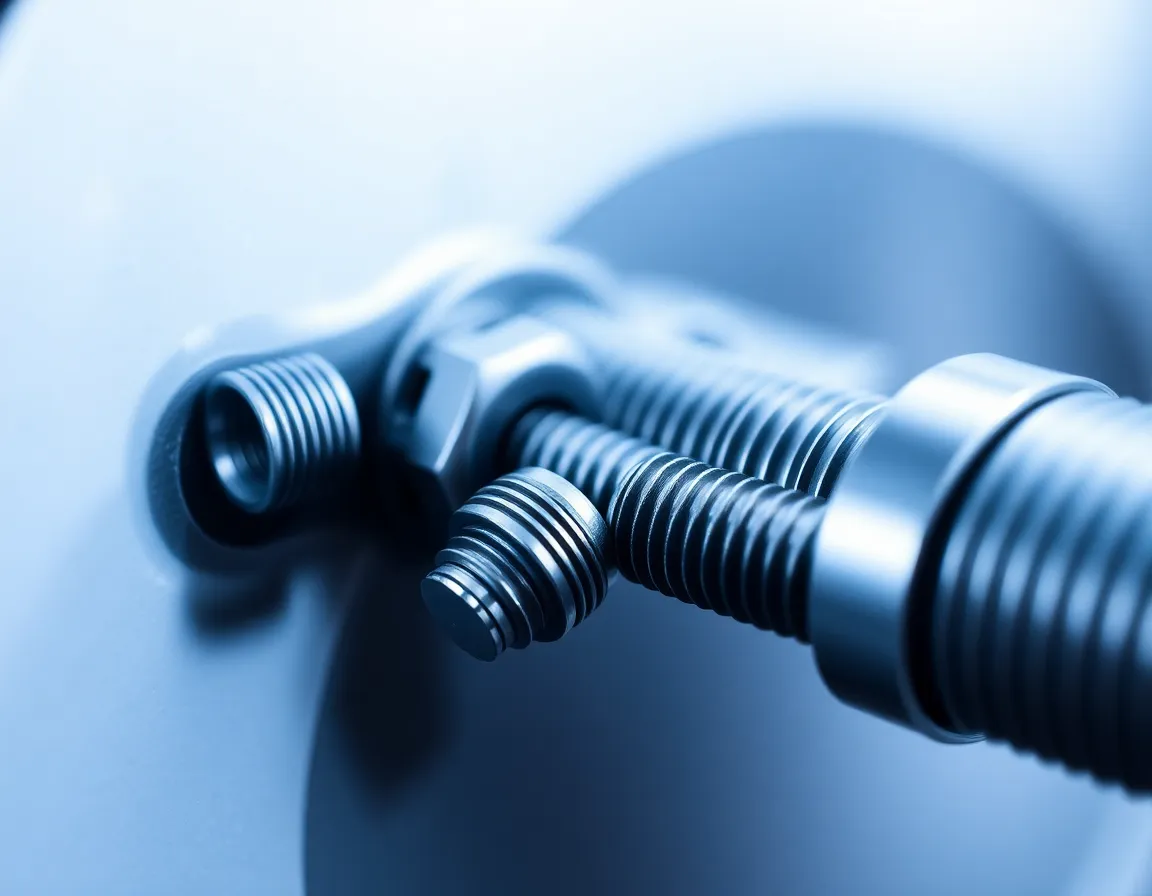
Precision machining is a subtractive manufacturing process where computer-controlled machine tools, such as CNC (Computer Numerical Control) Swiss-type lathes and milling centers, remove material from a solid block or bar stock to create a part with exacting dimensions and complex geometries. In the context of medical screws, this process is elevated to an art form. These are not standard hardware store fasteners; they are highly engineered implants designed for specific anatomical sites and surgical techniques.
Key Characteristics of Machined Medical Screws
Machined medical screws are defined by several critical attributes that distinguish them from conventionally made fasteners:
- Extreme Dimensional Accuracy: Tolerances are often within ±0.005 mm or less, ensuring perfect fit and engagement with bone or other implant components.
- Complex Geometries: Features like variable pitch threads, dual-lead threads, undercuts, and spherical heads are routinely machined to enhance pull-out strength, compression, and surgical outcomes.
- Superior Surface Finish: A flawless surface is vital to prevent bacterial adhesion, minimize tissue irritation, and facilitate osseointegration (bone bonding).
- Material Integrity: The machining process must not compromise the metallurgical properties of high-grade biocompatible materials.
The Precision Machining Process: From Blank to Biocompatible Implant
The journey of a medical screw from raw material to sterile-packaged implant is a meticulously controlled sequence. While specific steps vary, the core process follows a rigorous path.
1. Design & Programming
It begins with a 3D CAD model from biomedical engineers. This model is translated into machine instructions (G-code) via CAM software. The programmer must account for tool paths, cutting speeds, feed rates, and coolant application to optimize the machining of often challenging materials.
2. Material Selection & Preparation
The choice of material is paramount. Common choices include:
- Titanium Alloys (e.g., Ti-6Al-4V ELI): The gold standard for its excellent strength-to-weight ratio, corrosion resistance, and biocompatibility.
- Stainless Steel (e.g., 316L VM): Used for its high strength and cost-effectiveness in certain applications.
- Cobalt-Chromium Alloys: Employed for their exceptional wear resistance in joint applications.
- PEEK (Polyether Ether Ketone): A radiolucent polymer used in trauma and spinal surgery where imaging clarity is needed.
The material is sourced as certified bar stock, ensuring traceability and compliance with ASTM or ISO standards.
3. CNC Machining: Swiss-Turning & Milling
Swiss-type CNC lathes are the workhorses for medical screw production. Their guide bushing provides unparalleled support for long, slender bar stock, allowing for extreme precision and simultaneous multi-axis operations. A single setup can complete turning, threading, milling of drive features (hex, star, cruciform), and even cross-holes. Secondary operations on 5-axis CNC mills might add complex angular features or text.
4. Deburring & Surface Finishing
After machining, every screw undergoes meticulous deburring to remove any microscopic sharp edges. This is followed by a series of surface finishing processes:
- Vibratory Tumbling: To smooth surfaces and prepare for further treatment.
- Electropolishing: A critical electrochemical process that removes a thin layer of surface material, smoothing microscratches, passivating the surface (enhancing corrosion resistance), and creating a clean, bright finish.
- Grit-Blasting: Used to create a specific surface roughness to promote bone on-growth.
5. Cleaning, Inspection, and Sterilization
Parts are cleaned in validated processes to remove all contaminants. They then enter a rigorous inspection regime using coordinate measuring machines (CMM), optical comparators, and advanced vision systems to verify every dimension. Finally, the screws are packaged and sterilized (often via gamma irradiation or autoclave) before release.
Benefits and Advantages of Precision Machining
Why is precision machining the preferred method for high-end medical screws? The benefits are clear and critical to patient safety and surgical efficacy.
-
- Unmatched Design Freedom: CNC machining can produce virtually any geometry a surgeon or engineer can conceive, enabling patient-specific implants and highly specialized screw designs for niche applications.
- Machining from solid bar stock results in a continuous grain structure, offering better strength and fatigue resistance compared to screws made by metal injection molding (MIM) or casting.
- Exceptional Consistency and Quality: CNC automation ensures that the ten-thousandth screw is identical to the first, a necessity for regulatory approval and reliable surgical outcomes.
- Material Versatility: The process can handle the full spectrum of implant-grade metals and polymers with equal precision.
- Rapid Prototyping and Production: Once programmed, new designs can be machined quickly for testing, and the same process scales seamlessly from prototyping to full production.
Applications Across Medical Specialties
Precision-machined screws are ubiquitous in surgery. Their application dictates their specific design and machining requirements.
Orthopedics & Trauma
Cortical and cancellous bone screws for fracture fixation, locking screws for intramedullary nails and plates, and interference screws for ACL reconstruction. These require high shear strength and precise thread forms for optimal bone purchase.
Spinal Surgery
Pedicle screws, vertebral body screws, and facet screws. These are often larger, must withstand immense cyclical loads, and may feature complex tulip heads for rod fixation, demanding multi-axis milling precision.
Dental & Craniomaxillofacial
Dental implants and tiny screws for facial reconstruction. They demand the smallest diameters and highest surface finish quality to promote osseointegration in delicate bone structures.
Sports Medicine & Arthroscopy
Suture anchors and bioabsorbable screws for soft tissue reattachment. These may combine machined metal with polymer components or be entirely machined from PEEK or PLA materials.
Best Practices and Industry Standards
Producing medical screws is not merely a manufacturing activity; it is a compliance-driven discipline.
Adherence to Stringent Regulations
Manufacturers must operate under a Quality Management System (QMS) certified to ISO 13485:2016. In the U.S., compliance with FDA 21 CFR Part 820 (Quality System Regulation) is mandatory. Every step, from material receipt to shipping, must be documented and traceable.
Validation and Process Control
All machining processes must be validated (Installation Qualification, Operational Qualification, Performance Qualification) to prove they consistently produce parts meeting specifications. Statistical Process Control (SPC) is used to monitor production in real-time.
Investment in Advanced Technology
Leading manufacturers invest in state-of-the-art CNC machines with high-pressure coolant, laser tool setting, and in-process probing. They pair this with metrology equipment like 3D optical scanners and SEM (Scanning Electron Microscope) analysis for surface inspection.
Cleanroom Manufacturing
Increasingly, critical machining and handling operations are conducted in ISO Class 7 or 8 cleanrooms to prevent particulate contamination that could lead to inflammation or infection in the patient.
Conclusion: The Foundation of Surgical Innovation
Precision machining for medical screws is far more than a technical process; it is a foundational pillar of modern surgical advancement. The ability to reliably produce these microscopically perfect components enables the complex procedures that restore mobility, alleviate pain, and save lives. As medicine continues to advance towards personalized care and minimally invasive techniques, the demand for even more sophisticated, patient-specific screw designs will grow. The precision machining industry, with its relentless pursuit of accuracy, quality, and compliance, stands ready to meet this challenge, ensuring that the smallest implants continue to make the biggest impact on human health.