Introduction: The Critical Role of the Lidar Housing
In the rapidly advancing fields of autonomous vehicles, robotics, and advanced surveying, Light Detection and Ranging (LiDAR) technology stands as a cornerstone. While much attention is given to the lasers, scanners, and detectors at the heart of a LiDAR system, the unsung hero ensuring its reliability and accuracy is often the housing. Precision LiDAR housing machining is the specialized manufacturing process that creates the protective, structural, and thermally managed enclosure for these sensitive optoelectronic components. This guide delves into the intricacies of this critical process, exploring why it is fundamental to the performance and longevity of any LiDAR system.
What is Precision LiDAR Housing Machining?
Precision LiDAR housing machining refers to the use of advanced computer-controlled (CNC) machining techniques to fabricate the structural enclosure for a LiDAR sensor from solid blocks of material, typically aluminum alloys, but also including specialized plastics, titanium, or stainless steel. Unlike generic enclosures, a LiDAR housing is a highly engineered component designed to exacting specifications. It is not merely a box; it is an integral part of the optical path, a thermal management system, and a first line of defense against environmental hazards.
Core Objectives of the Machining Process
The machining process is driven by several non-negotiable objectives:
- Dimensional and Geometric Precision: Features like mounting bosses, optical windows, and connector ports must be machined to micron-level tolerances to ensure perfect alignment of internal components.
- Hermetic Sealing: The housing must protect sensitive electronics from moisture, dust, and other contaminants, often requiring the machining of flawless sealing surfaces for gaskets or O-rings.
- Thermal Management: The housing acts as a heat sink. Machining defines fin structures, thermal pads, and contact surfaces to efficiently dissipate heat generated by lasers and processors.
- Structural Integrity & Lightweighting: It must withstand vibration, shock, and sometimes extreme pressure while minimizing weight, especially in automotive and aerospace applications.
- Optical Clarity & Window Integration: The machining of the optical aperture and the interface for the protective window (or dome) is critical to prevent signal distortion or attenuation.
Key Materials and Machining Considerations
The choice of material is the first critical decision in LiDAR housing manufacturing, directly influencing the machining strategy, performance, and cost.
Common Materials
Aluminum Alloys (e.g., 6061-T6, 7075-T6): The most prevalent choice due to an excellent strength-to-weight ratio, good machinability, and superior thermal conductivity. Anodizing is often applied for corrosion resistance and surface hardening.
Stainless Steel (e.g., 304, 316): Used for applications requiring extreme durability, corrosion resistance (e.g., marine environments), or hermetic sealing via welding. It is heavier and more challenging to machine than aluminum.
Engineering Plastics (e.g., PEEK, Ultem): Chosen for their lightweight properties, inherent dielectric characteristics, and resistance to certain chemicals. Machining plastics requires specific tooling and techniques to avoid heat buildup and deformation.
Magnesium Alloys: Offer an even better strength-to-weight ratio than aluminum but are less common due to higher cost and specific machining and finishing requirements.
Machining Techniques and Tolerances
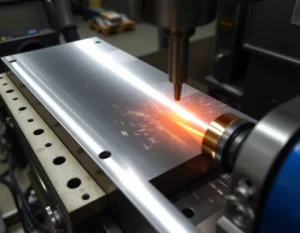
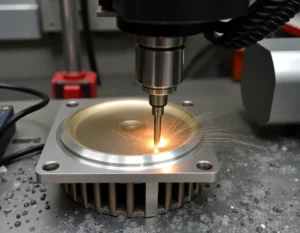
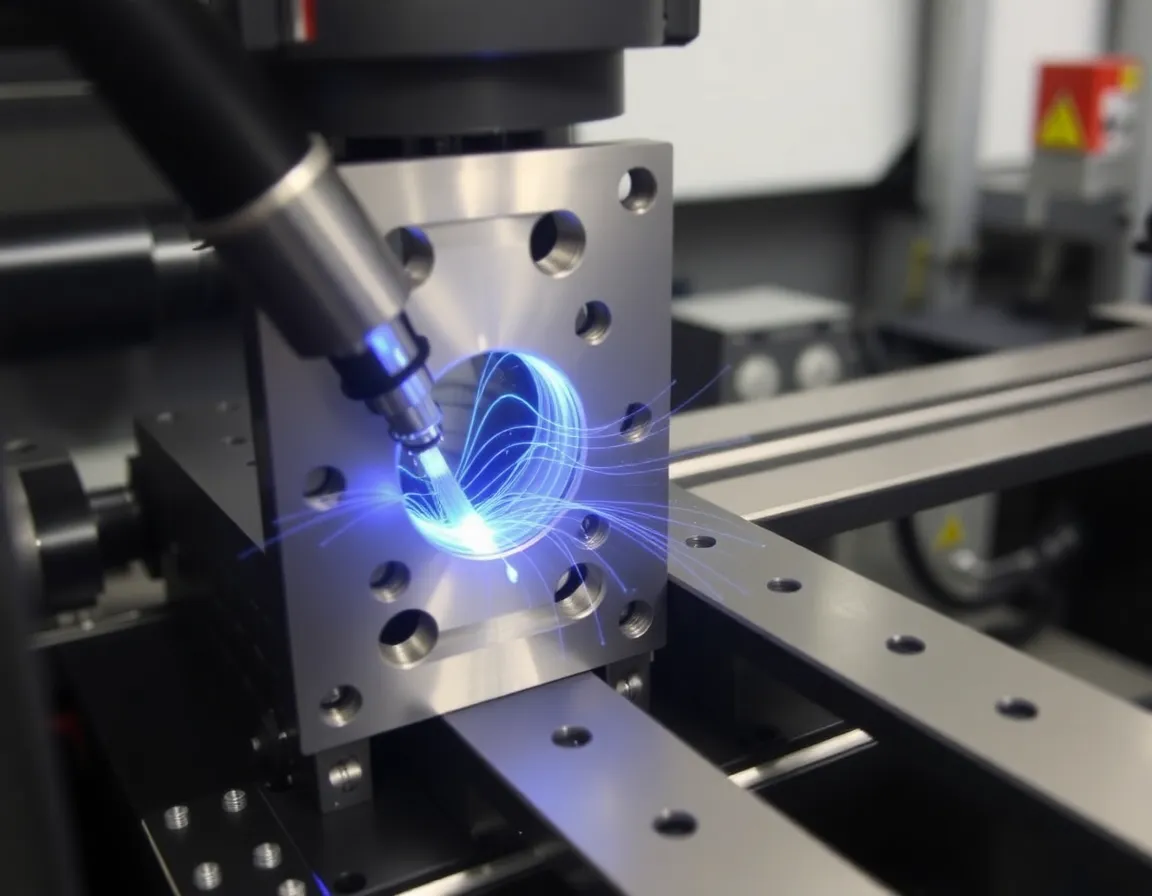
Precision machining for LiDAR housings employs multi-axis CNC milling and turning centers. 5-axis CNC machining is particularly valuable as it allows for the creation of complex, contoured shapes (like aerodynamic housings for vehicles) and the machining of precise angles and features from multiple orientations in a single setup. This reduces errors and improves efficiency. Tolerances are exceptionally tight, often in the range of ±0.025mm to ±0.05mm (±0.001" to ±0.002") for critical features, ensuring that the assembled LiDAR unit maintains its calibrated accuracy over its operational life.
Benefits of Precision Machining for LiDAR Housings
Investing in high-precision machining yields significant advantages over alternative manufacturing methods like casting or fabrication.
- Unmatched Accuracy and Repeatability: CNC machining delivers the extreme dimensional stability required for optical alignment, which is paramount for LiDAR data fidelity.
- Superior Surface Finish and Sealing: Machined surfaces can achieve the flawless flatness or specific roughness needed for reliable gasket and O-ring compression, ensuring an IP67 or higher ingress protection rating.
- Design Flexibility and Rapid Prototyping: Complex, integrated designs with internal channels for cooling or cable routing can be produced directly from CAD models. This accelerates prototyping and design iteration cycles.
- Material Integrity and Strength: Machining from a solid billet eliminates the porosity and potential structural weaknesses inherent in cast parts, resulting in a more robust and reliable housing.
- Scalability: While ideal for prototypes and low-to-medium volume production, the process can be scaled with automated tool changers and pallet systems for higher volumes.
Applications Across Industries
The demand for precision-machined LiDAR housings spans numerous high-tech sectors.
Automotive (Autonomous & ADAS)
Here, housings must be ruggedized to handle constant vibration, thermal cycling from -40°C to 85°C, and exposure to road chemicals, salt, and weather. They are often designed with aerodynamic properties to minimize drag and noise on vehicles. Precision is critical for the sensor fusion required for safe navigation.
Robotics and Drones (UAVs)
For mobile robots and drones, weight is a primary constraint. Housings are machined to be as light as possible while protecting the LiDAR from impacts and environmental exposure during indoor/outdoor operation. Thermal management remains crucial in compact form factors.
Industrial Mapping and Surveying
Terrestrial and airborne surveying LiDAR systems used in topography, forestry, and construction require housings that are durable for field use and often feature precise mounting interfaces for integration with GPS, IMUs, and other geospatial equipment.
Defense and Aerospace
Applications in this sector demand the highest levels of durability, often specifying materials like titanium or high-grade stainless steel. Housings must withstand extreme G-forces, wide temperature ranges, and potentially corrosive environments.
Best Practices in Precision Lidar Housing Machining
To ensure a successful outcome, collaboration between LiDAR designers and machining experts is essential. Adhering to best practices is non-negotiable.
Design for Manufacturability (DFM)
Engage with your machining partner early. They can advise on optimizing designs to reduce machining time and cost—suggesting appropriate radii for cutting tools, minimizing deep pockets, and standardizing fastener sizes without compromising function.
Comprehensive Post-Machining Processes
Machining is only part of the journey. A complete process includes:
- Deburring and Surface Finishing: Removing all sharp edges and achieving the specified surface texture for seals and aesthetics.
- Anodizing or Plating: Applying hard anodize (Type III) for wear and corrosion resistance, or conductive coatings if EM shielding is required.
- Laser Marking: For permanent serial numbers, logos, or calibration data.
- Cleaning and Inspection: Ultrasonic cleaning to remove all machining debris, followed by rigorous inspection using Coordinate Measuring Machines (CMM) and laser scanners to verify all critical dimensions.
Quality Assurance and Testing
A reputable manufacturer will have a robust QA system in place. This includes first-article inspection (FAI), in-process checks, and final validation. Testing might also involve helium leak testing for hermetic seals or thermal cycling tests to validate the housing's performance under simulated operating conditions.
Conclusion: The Foundation of Reliable LiDAR Performance
Precision LiDAR housing machining is far more than a simple metalworking task; it is a sophisticated engineering discipline that bridges mechanical design, optical science, and thermal dynamics. The housing is the foundational element that ensures the delicate internal components of a LiDAR sensor can perform accurately and reliably in the real world. As LiDAR technology continues to evolve, becoming more compact, powerful, and ubiquitous, the demands on housing design and manufacturing will only grow more stringent. Partnering with a machining specialist that understands these unique requirements is not just a procurement decision—it is a critical strategic step in bringing a robust, high-performance LiDAR product to market.