In the world of computer-controlled machining, the choice between horizontal and vertical milling is a fundamental decision that can significantly impact the efficiency, cost, and quality of your project. While both processes fall under the umbrella of CNC milling services, their operational mechanics and ideal applications differ substantially. For engineers, procurement specialists, and business owners, understanding this distinction is key to selecting the right partner for horizontal CNC milling services or their vertical counterpart. This comprehensive guide will delve into the intricacies of each method, helping you determine which is right for your specific manufacturing needs.
Understanding the Core Distinction: Spindle Orientation
The most fundamental difference lies in the orientation of the machine's spindle—the component that holds and rotates the cutting tool. This seemingly simple variation in design leads to profound differences in capability, workflow, and output.
Vertical Milling Machines (VMCs)
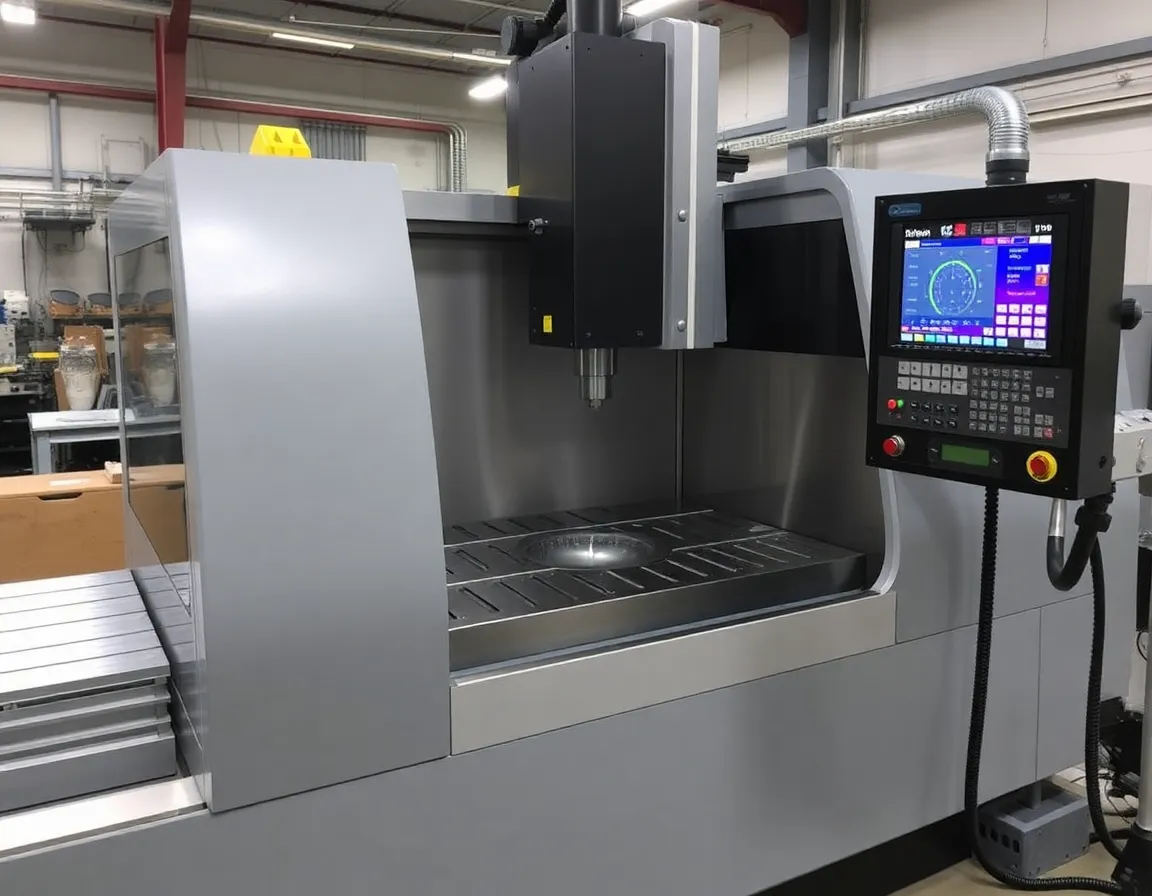
In a Vertical Machining Center (VMC), the spindle axis is oriented vertically, perpendicular to the machine table. The cutting tool points down from the spindle head onto the workpiece, which is secured on a table that typically moves in the X (left-right) and Y (front-back) axes. The spindle itself or the knee often provides the Z-axis (up-down) movement. This configuration is highly intuitive, similar to a drill press, making setup and tool changes relatively straightforward. Visibility of the cutting area is excellent, which aids in manual adjustments and monitoring.
Horizontal Milling Machines (HMCs)
In a Horizontal Machining Center (HMC), the spindle is oriented horizontally, parallel to the worktable. The cutting tool extends out sideways from the spindle, and material removal occurs across the side of the workpiece. The workpiece is mounted on a pallet, which is often part of an integrated indexing table or a pallet changer system. This horizontal orientation allows chips to fall away from the cutting area and the workpiece naturally, a critical advantage for deep cuts and heavy material removal. The use of multiple pallets enables continuous operation: one pallet is being machined while another is being set up for the next part, dramatically reducing idle time.
Deep Dive: The Advantages of Horizontal CNC Milling Services
While vertical mills are incredibly common and versatile, opting for specialized horizontal CNC milling servicesunlocks a set of powerful benefits for suitable applications. These advantages stem directly from the horizontal spindle design and the typical features of HMCs.
Superior Material Removal and Heavy-Duty Cutting
The horizontal configuration provides immense rigidity. The cutting forces are directed into the massive column of the machine, allowing for more aggressive cuts, higher feed rates, and the ability to handle harder materials. The arbor-mounted cutters and the support from the overarm (on some models) enable powerful side milling operations that would cause deflection in a vertical spindle.
Enhanced Chip Evacuation
This is one of the most significant operational benefits. Gravity works with the machine, pulling chips away from the tool and workpiece. This prevents chips from being recut—a common cause of tool wear, poor surface finish, and dimensional inaccuracy in deep cavities. Improved chip flow also leads to better coolant application to the cutting edge and reduces downtime for cleaning.
Multi-Sided Machining in a Single Setup
HMCs are almost always equipped with a rotary indexing table (often a 4th axis integrated into the pallet). This allows the machine to automatically rotate the workpiece to present different sides to the tool without requiring operator intervention for re-fixturing. This capability, known as 5-sided machining(access to five out of six sides of a cube), drastically reduces setup time, minimizes cumulative fixture errors, and improves positional accuracy between features on different faces.
Unmatched Productivity for Production Runs
The combination of pallet changers and multi-sided machining makes HMCs the undisputed champion for medium to high-volume production. While a VMC is idle during part loading/unloading and setup, an HMC can continue machining on one pallet while an operator sets up the next workpiece on another pallet offline. This near-continuous operation translates directly to lower cost per part for suitable production quantities.
Applications: Where Each Technology Excels
Choosing the right technology is about matching the machine's strengths to the part's requirements. Here’s a breakdown of typical applications.
Ideal Projects for Horizontal CNC Milling Services
Seek out a provider of horizontal CNC milling serviceswhen your project involves:
- Complex, Box-Shaped Parts: Components like gearboxes, pump housings, engine blocks, and valve bodies that require precise machining on multiple perpendicular faces.
- Heavy and Large Workpieces:The stable, low-profile fixturing on a horizontal pallet is ideal for massive parts that might be cumbersome to mount vertically.
- High-Volume Production:Any component needed in quantities where the reduced cycle time and automated pallet changing of an HMC justify the typically higher initial machine cost and setup complexity.
- Deep Pocketing and Grooving:Applications requiring deep cavities where chip evacuation is a primary concern, such as in mold bases or frame components.
- Parts Requiring Angled Features:The integrated rotary table simplifies the machining of angular surfaces, holes, and contours without special fixtures.
Ideal Projects for Vertical CNC Milling Services
A vertical machining center is often the better or more economical choice for:
- Prototyping and Low-Volume Work: Faster, simpler setups make VMCs ideal for one-offs, prototypes, and small batches.
- Die & Mold Making:Excellent visibility and easier 3D contouring on a single face (like a mold cavity) are key strengths.
- Plates and Flat Parts:Parts primarily machined on one top face, such as plate covers, brackets, and electronic enclosures.
- Operations with Frequent Tool Changes:Projects requiring many different tools for intricate detail work on a single setup.
- Entry-Level and General-Purpose Machining:Due to their lower cost, smaller footprint, and operational simplicity, VMCs are the workhorses of most general machine shops.
Making the Decision: Key Factors to Consider
To determine whether your project requires horizontal CNC milling services or can be efficiently handled on a VMC, systematically evaluate these factors.
Part Geometry and Complexity
Analyze the part's blueprint. Does it require precision machining on three or more orthogonal faces? If yes, an HMC's 4th-axis table offers a tremendous advantage. Is the part dominated by features on a single plane? A VMC is likely sufficient.
Production Volume and Budget
Volume is a critical driver. For high volumes, the per-part cost savings from an HMC's speed and automation will quickly offset its higher hourly rate. For low volumes, the lower operating cost and simpler programming of a VMC often make it more cost-effective. Consider both piece-part costandtotal project cost.
Material and Machining Requirements
Are you machining tough alloys like titanium or Inconel, or making heavy roughing cuts in steel? The superior rigidity and chip evacuation of an HMC can lead to better tool life and surface finish. For lighter materials or less aggressive cuts, a VMC may perform admirably.
Lead Time and Shop Workflow
Horizontal mills, with their pallet systems, excel at predictable, uninterrupted production runs, ensuring reliable delivery schedules. Vertical mills offer greater flexibility for quick-turn jobs and handling a constantly changing mix of parts.
Best Practices for Engaging with a Milling Service Provider
Once you've analyzed your needs, follow these best practices to ensure a successful partnership with a machine shop.
- Provide Complete and Clean CAD/CAM Data: A well-defined 3D model and detailed drawings prevent misunderstandings, especially critical for complex, multi-sided machining on an HMC.
- Discuss Volume and Timeline Upfront:Be transparent about your required quantities and delivery expectations. This allows the shop to recommend the most efficient process (HMC vs. VMC) and schedule accordingly.
- Ask About Their Capabilities:Don't just ask if they have horizontal mills. Inquire about pallet sizes, 4th-axis capabilities, tool magazine capacity, and their experience with parts similar to yours.
- Consider Design for Manufacturability (DFM):A good shop offeringhorizontal CNC milling servicescan provide DFM feedback to optimize your part for multi-sided machining, potentially simplifying fixturing and reducing costs.
- Request a Sample or Initial Run:For critical projects, a small initial production run can validate the process, ensure quality, and build confidence before committing to full volume.
In conclusion, the choice between horizontal and vertical milling is not about which technology is universally better, but about which is optimally suitedfor your specific component and production goals. Vertical machining centers offer versatility, accessibility, and efficiency for a vast range of simpler or lower-volume parts. Horizontal machining centers, through their robust construction, automated workflow, and multi-axis capability, deliver unparalleled productivity and precision for complex, boxy parts produced at scale. By carefully evaluating your part's geometry, material, volume, and budget against the strengths of each method, you can make an informed decision and select the CNC milling services that will deliver the highest quality part at the most competitive total cost.