Unlocking the Power of High-Speed Milling
In the relentless pursuit of manufacturing efficiency and precision, high-speed milling (HSM) has emerged as a transformative force. Far more than just running a spindle faster, HSM is a sophisticated machining strategy that leverages advanced toolpaths, specialized tooling, and rigid machine tools to achieve exceptional material removal rates, superior surface finishes, and extended tool life. For forward-thinking machine shops and manufacturing businesses, mastering high-speed milling isn't just a technical upgrade—it's a direct pathway to faster profits, enhanced competitiveness, and the ability to tackle complex, high-value components. This comprehensive guide delves into the principles, benefits, and best practices of HSM, providing a roadmap to harness its full potential.
What is High-Speed Milling? Beyond the Spindle Speed
At its core, high-speed milling is defined by a specific approach to cutting parameters. It involves using significantly higher spindle speeds and feed rates than conventional milling, but with a critical twist: reduced axial depth of cut and increased radial engagement . This paradigm shift moves from deep, slow cuts to shallow, fast, and light cuts. The defining characteristic is maintaining a constant and optimal chip load per tooth, which is the thickness of the material each cutting edge removes per revolution.
While spindle speeds can range from 10,000 to over 60,000 RPM (and beyond for specialized applications), the true essence of HSM lies in the synergy of several factors:
- High Spindle Speed: Enables the use of smaller diameter tools at effective cutting speeds.
- High Feed Rates:Compensates for light depths of cut to maintain high material removal rates.
- Advanced Toolpaths:Such as trochoidal, peel, or volumetric milling, which maintain smooth, constant tool engagement and direction.
- Dynamic Machine Response:Machines must have fast acceleration/deceleration and impeccable control to precisely follow the complex, high-speed toolpaths.
The Mechanics: How High-Speed Milling Works for You
The profitability of HSM is rooted in its physics. By taking lighter cuts, the cutting forces exerted on the tool, workpiece, and machine are dramatically reduced. This has a cascade of positive effects:
Reduced Heat Generation and Improved Chip Evacuation
In conventional milling, heat builds up in the cut zone and is primarily transferred into the workpiece and tool, leading to thermal distortion and rapid tool wear. HSM flips this script. The lighter, faster cuts create thinner chips that carry the majority of the heat away from the workpiece. This results in a cooler cut, preserving the metallurgical properties of the part and significantly extending tool life.
Constant Tool Engagement and Smoother Loads
Traditional toolpaths often involve the tool plunging into a corner or engaging a full width of cut, causing shock loads and vibration (chatter). HSM strategies use sophisticated algorithms to ensure the tool is always engaged in the material at a consistent, pre-defined percentage of its diameter. This eliminates sudden force spikes, minimizes vibration, and allows the machine to run smoothly at its limits, producing exceptional surface finishes often eliminating the need for secondary finishing operations.
The Profit-Driven Benefits of Mastering HSM
Transitioning to high-speed milling requires investment in knowledge, tooling, and often equipment. The return on this investment, however, is substantial and multi-faceted.
Dramatically Increased Productivity
By combining high feed rates with optimized material removal rates, HSM can complete parts in a fraction of the time required by conventional methods. This translates directly to more parts per shift, faster job turnaround for customers, and the ability to take on more work without adding machines or labor.
Superior Part Quality and Capability
HSM produces exceptionally fine surface finishes and outstanding dimensional accuracy. It is the premier technique for machining thin-walled structures, complex 3D contours, and delicate features common in aerospace, medical, and mold & die applications. This capability allows shops to bid on and win high-margin, technically challenging work that is inaccessible with slower methods.
Extended Tool Life and Reduced Costs
Despite the high speeds, the cooler cutting environment and reduced load per tooth lead to less abrasive and thermal wear. Tools last longer, reducing per-part tooling costs and machine downtime for tool changes. The consistency of the process also improves predictability in tool life management.
Reduced Machine Tool Wear and Tear
Lower cutting forces mean less stress on machine guideways, ballscrews, and spindle bearings. This results in better long-term machine accuracy, reduced maintenance costs, and a higher resale value for your capital equipment.
Key Applications: Where High-Speed Milling Shines
While beneficial across many materials, HSM is particularly transformative in specific sectors:
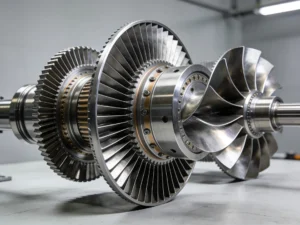
- Aerospace: Machining complex aluminum structural components, titanium alloys, and high-temperature superalloys with thin webs and pockets.
- Mold & Die:Producing injection molds, stamping dies, and forging dies with intricate details and mirror-like finishes, drastically reducing bench polishing time.
- Medical Device Manufacturing:Creating precise, complex implants, surgical instruments, and prosthetics from stainless steels, titanium, and cobalt-chrome.
- General Precision Machining:High-volume production of components where speed, finish, and tight tolerances are critical to profitability.
Best Practices for Implementing High-Speed Milling
Success with HSM requires a holistic approach. It's not a simple "speed and feed" adjustment.
Invest in the Right Machine Tool
A capable HSM machine must have a high-rpm, high-power spindle with balanced toolholders (like shrink-fit or hydraulic). It requires a rigid frame, fast and precise linear guides, and a CNC control with look-ahead functionalityto process complex toolpaths smoothly without pausing.
Master CAM Software and Toolpath Strategies
Your CAM software is the brain of HSM. You must utilize modern strategies like trochoidal milling for pockets, constant step-over for finishing, and corner radius compensation. The goal is to generate toolpaths that maintain a smooth, constant tool load and avoid sharp directional changes.
Optimize Tooling and Workholding
Use dedicated high-speed cutting tools—typically with a sharp, polished geometry and advanced coatings (like AlTiN). Balance is non-negotiable; even slightly unbalanced tools cause vibration at high RPMs. Workholding must be absolutely secure and rigid to prevent any movement; consider tombstone fixtures or vacuum chucks for complex parts.
Start with a Strategic Approach
Do not attempt to convert all jobs at once. Begin with a suitable material (like aluminum) and a well-understood part. Focus on optimizing one operation at a time. Partner with your tooling supplier and machine tool builder—they possess invaluable application knowledge and can help you develop proven parameters as a starting point.
Conclusion: Speed as a Strategic Asset
Mastering high-speed milling is a journey that moves a shop from a traditional machining mindset to a high-efficiency, high-precision manufacturing operation. The initial learning curve is outweighed by the profound and lasting benefits: faster cycle times, lower costs per part, entry into lucrative markets, and a stronger competitive moat. By understanding its principles, investing in the right technology, and implementing proven best practices, manufacturers can transform spindle speed into a powerful engine for profit growth. In today's fast-paced market, the ability to produce superior parts faster isn't just an advantage—it's the definition of modern machining success.