The Unyielding Challenge: Machining Hardened Steel
In the world of precision manufacturing, hardened steel stands as a material of immense value and equally immense challenge. Renowned for its exceptional strength, wear resistance, and durability, hardened steel (typically with a Rockwell C hardness of 45 and above) is the go-to choice for critical components like injection molds, die-casting dies, gear tools, and aerospace parts. However, its very virtues make it notoriously difficult to machine using conventional methods. Traditional milling and turning tools wear rapidly, struggle with accuracy, and can induce thermal stresses that compromise the integrity of the part. This is where Electrical Discharge Machining (EDM) emerges not just as an alternative, but as the master key to unlocking hardened steel's potential.
EDM, specifically the sinker (or ram) and wire variants, transcends the limitations of force-based cutting. It is a thermoelectric process that erodes material through a series of controlled electrical sparks, making the hardness of the material virtually irrelevant. Mastering EDM for hardened steel parts is therefore a critical discipline, blending art and science to achieve unparalleled precision in the most demanding materials.
The Science of Sparking Through Steel: How EDM Works on Hardened Material
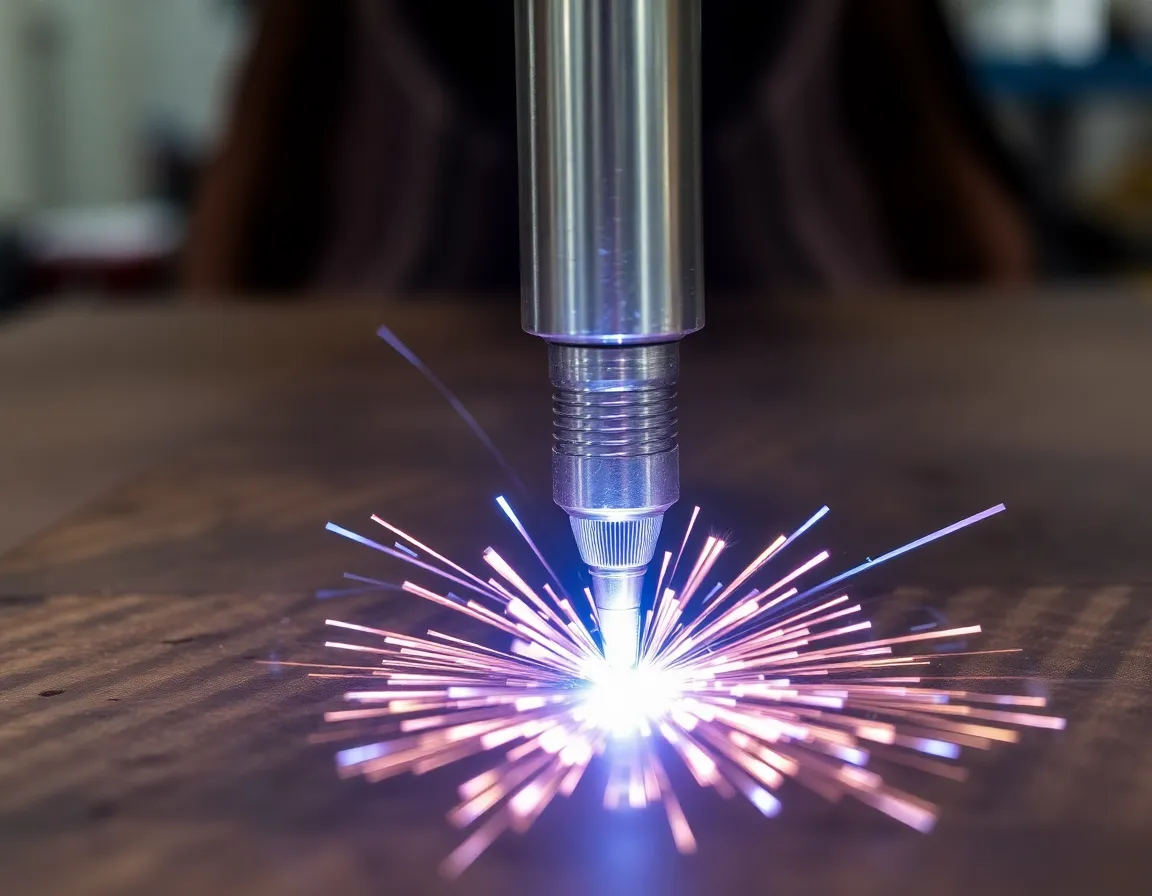
At its core, EDM is a non-contact machining process. It utilizes the erosive effect of rapid, recurring electrical discharges between two electrodes—the tool (brass or copper for sinker EDM, a traveling wire for wire EDM) and the workpiece (the hardened steel). These discharges occur in a dielectric fluid, typically deionized water for wire EDM and hydrocarbon oil for sinker EDM.
The EDM Cycle on Hardened Steel
The process for machining hardened steel follows this precise cycle:
- Ionization: A high voltage is applied across the small gap between the tool and the steel workpiece, ionizing the dielectric fluid and creating a conductive channel.
- Spark Discharge: A powerful, controlled spark (lasting microseconds) jumps across this channel. The intense local heat, reaching 8,000–12,000°C, instantly melts and vaporizes a microscopic crater in the hardened steel surface.
- Collapse and Flushing: The current is cut off, causing the plasma channel to collapse. The dielectric fluid rushes in, flushing away the molten and solidified debris (often called "chips") from the gap.
- Re-establishment: The dielectric fluid de-ionizes, and the cycle repeats hundreds of thousands of times per second, progressively eroding the steel into the desired shape.
The critical advantage here is that the electrical conductivity of the steel, not its hardness, is the primary factor. Whether the steel is at 30 HRC or 65 HRC, the sparks will erode it effectively, allowing for the machining of complex geometries, sharp internal corners, and deep ribs that are impossible with cutting tools.
Why EDM is the Champion for Hardened Steel: Key Benefits and Applications
The synergy between EDM and hardened steel unlocks a suite of benefits that define modern precision engineering.
Unmatched Benefits
- Hardness is Irrelevant: The single most significant benefit. Pre-hardened steel blocks can be machined directly, eliminating the distortion risks associated with heat-treating a pre-machined part.
- Exceptional Precision and Complexity: EDM can achieve tolerances within microns and produce intricate details, fine textures, and zero-radius internal corners with ease.
- No Mechanical Stress: As there is no physical contact between tool and workpiece, there is no chance of inducing mechanical stresses, chatter, or tool pressure deflection, preserving the metallurgical structure of the hardened steel.
- Superior Surface Finish: Through fine finishing passes, EDM can produce very fine surface finishes. The resulting recast layer, or "white layer," while often present, can be managed and minimized with proper settings.
- Machining Delicate Features: Thin walls and fragile features in hardened steel are safely machined by EDM, as no cutting forces are involved.
Critical Industrial Applications
These benefits make hardened steel EDM indispensable across industries:
- Tool and Die Making: The quintessential application. Creating injection mold cavities, stamping dies, and forging dies from hardened tool steels (like H13, D2, P20) with complex cores, ejector pin holes, and logos.
- Aerospace and Defense: Manufacturing fuel system components, hardened gears, turbine parts, and armor-piercing prototypes from ultra-high-strength steels.
- Medical Device Manufacturing: Producing precise, burr-free cutting tools, surgical instrument components, and implant fabrication tools from stainless steels hardened for durability.
- Automotive: Creating hardened gears, transmission components, and high-wear parts for performance and longevity.
- Fine Blanking and Precision Punches: Wire EDM is the standard for producing ultra-precise punches and dies for fine blanking operations from the hardest steels.
Mastering the Craft: Best Practices for EDM on Hardened Steel
To consistently achieve optimal results, specific strategies must be employed when EDMing hardened steel.
1. Material Knowledge and Preparation
Understand the specific grade of hardened steel. Alloying elements like chromium, vanadium, and tungsten affect conductivity and erosion rates. Ensure the workpiece is properly grounded to the machine table to maintain stable sparking. For wire EDM, proper start holes (often drilled before hardening or via small-hole EDM drilling) are crucial.
2. Strategic Machining Parameters
Parameter selection is the heart of EDM mastery. Modern machines with adaptive control systems are vital.
- Roughing: Use higher amperage and pulse-on time to remove material efficiently but balance this with adequate off-time and flushing to prevent arcing.
- Finishing: Employ a series of successive skim cuts with decreasing power settings. This gradually improves surface finish and accuracy while removing the damaged layer from the previous pass. Multiple skim passes are the secret to a superior, stress-free surface.
- Flushing is Paramount: Effective dielectric flushing is even more critical with hardened steel to evacuate debris from the cut zone and prevent secondary sparking (which causes pitting) and wire breakage in wire EDM. Use optimized nozzle positioning, increased pressure, and sometimes orbital or reciprocating motion in sinker EDM.
3. Managing the Recast (White) Layer
The rapid heating and quenching of the EDM process create a thin, hard, and often brittle recast layer on the steel surface. For many applications, this layer must be minimized or removed.
- Minimize it during EDM by using lower power finishing passes and excellent flushing.
- Remove it post-process via hand polishing, abrasive flow machining, or light grinding, especially on fatigue-critical or bearing surfaces.
4. Wire EDM Specifics
When using Wire EDM on thick, hardened steel blocks:
- Select the appropriate wire type (diffusion-annealed or coated wires like zinc-coated brass) for better speed and surface finish.
- Carefully manage wire tension and feed speed to prevent breakage.
- Use adaptive control technology that automatically adjusts parameters in real-time based on spark gap conditions.
5. Post-EDM Considerations
Always inspect for micro-cracks, particularly in highly stressed tools. Stress relieving via tempering after EDM may be recommended for critical applications. Finally, thorough cleaning to remove all dielectric fluid residue is essential before any subsequent coating or assembly.
Conclusion: The Indispensable Alliance
Mastering EDM for hardened steel parts is not merely about operating a machine; it is about understanding a fundamental manufacturing symbiosis. EDM provides the only practical method to shape, detail, and finish steels that have been fortified for extreme service. By respecting the material's properties, leveraging modern EDM technology, and adhering to disciplined best practices—from strategic parameter setting to meticulous flushing and post-processing—manufacturers can consistently transform blocks of unyielding hardened steel into components of extraordinary precision, complexity, and durability. In the relentless pursuit of performance and innovation, the alliance between hardened steel and Electrical Discharge Machining remains not just relevant, but utterly indispensable.