Introduction: The Critical Intersection of Precision and Purity
In the world of food and beverage production, pharmaceutical processing, and biotechnology, the materials and methods used to fabricate equipment are not merely a matter of engineering—they are a fundamental pillar of safety, quality, and compliance. At the heart of this lies the specialized field of food-grade stainless steel machining. This process goes beyond standard metal fabrication; it is a disciplined practice focused on creating components that meet the highest standards of hygiene, corrosion resistance, and durability. Precision machining for food-grade stainless steel is the art and science of shaping this noble alloy into the intricate parts that form conveyors, valves, mixers, tanks, and fittings, all while preserving the material's inherent sanitary properties. This article delves into the intricacies of this vital manufacturing discipline, exploring its standards, processes, benefits, and the stringent best practices that define it.
Understanding Food-Grade Stainless Steel
Not all stainless steel is created equal, especially when it comes to contact with consumables. Food-grade stainless steel is a specific classification designed to resist corrosion, prevent contamination, and withstand rigorous cleaning regimes.
Key Alloys and Their Properties
The most common grades used in food processing are part of the 300 series austenitic stainless steels, prized for their excellent formability and corrosion resistance.
- 304 Stainless Steel: Often referred to as 18/8 (18% chromium, 8% nickel), this is the workhorse of the food industry. It offers excellent resistance to a wide range of atmospheric, chemical, and food-related corrosives and is suitable for many applications like tanks, piping, and surfaces.
- 316 Stainless Steel: This grade includes the addition of 2-3% molybdenum, which significantly enhances its resistance to chlorides and acids, such as those found in salt, dairy products, and meat processing. It is the preferred choice for more aggressive environments and is often specified for marine and pharmaceutical applications as well.
- 316L Stainless Steel: The "L" denotes a low carbon content (0.03% max). This is crucial for welded components, as it minimizes the risk of chromium carbide precipitation at weld zones (sensitization), which can lead to corrosion. It is the gold standard for welded food processing equipment.
Defining "Food-Grade": Standards and Certifications
The term "food-grade" is governed by stringent international standards that dictate material composition, surface finish, and cleanability. Key standards include:
- FDA (U.S. Food and Drug Administration) Title 21 CFR: Governes materials in contact with food in the USA, stating they must be safe, non-absorbent, and corrosion-resistant under intended use.
- 3-A Sanitary Standards: A voluntary set of criteria developed by the 3-A SSI organization that defines hygienic design for dairy and food equipment. It provides detailed specifications for surface finishes, joint design, and cleanability.
- EHEDG (European Hygienic Engineering & Design Group): Provides guidelines and certification for hygienic design in Europe, focusing on preventing microbial contamination.
- USDA (U.S. Department of Agriculture): Provides approval for equipment used in meat, poultry, and egg processing plants.
The Precision Machining Process for Food-Grade Components
Machining food-grade stainless steel requires specialized techniques and a heightened awareness of how each operation affects the final product's sanitary integrity. The goal is to produce parts that are not only dimensionally accurate but also free of contamination traps.
Core Machining Operations
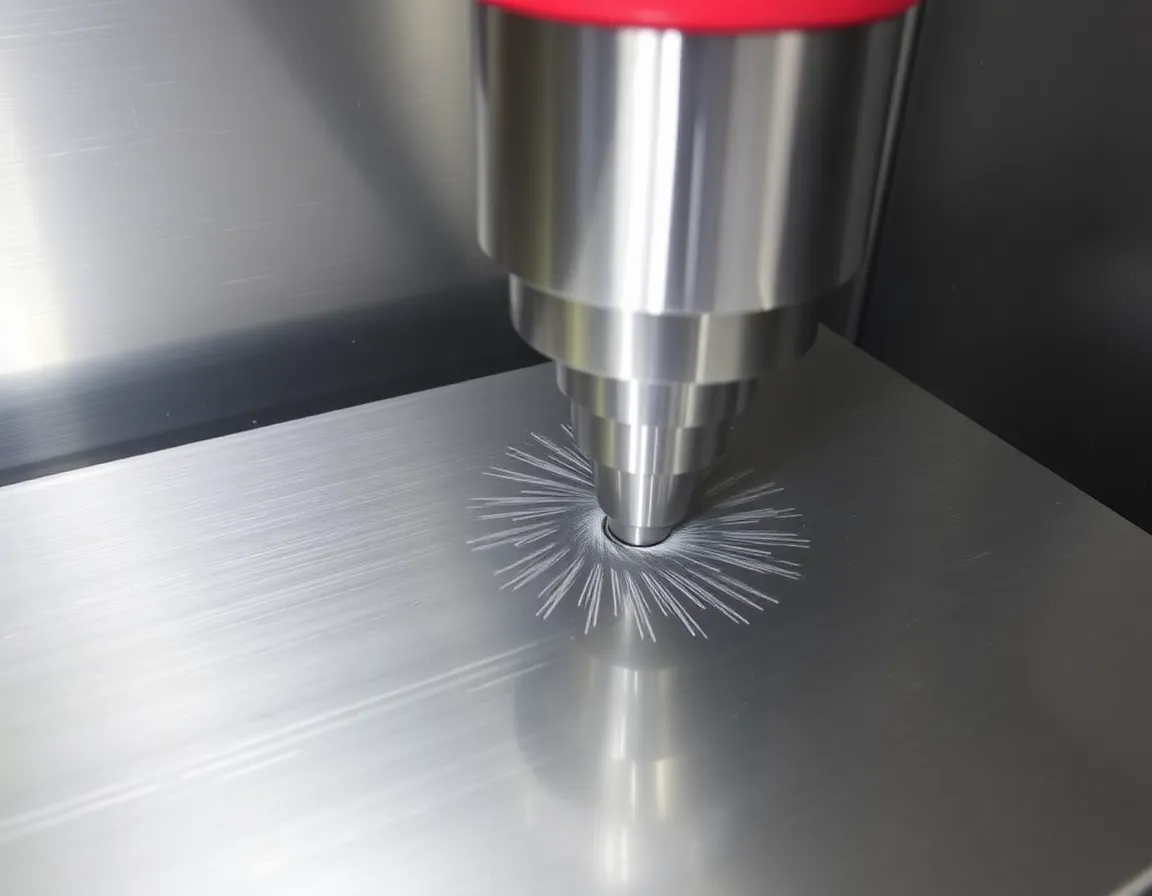
Modern machine shops employ advanced CNC (Computer Numerical Control) technology to achieve the required precision and repeatability.
- CNC Milling: Used to create complex shapes, slots, pockets, and mounting surfaces. For food-grade parts, special attention is paid to internal radii and corner transitions to ensure they are smooth and cleanable.
- CNC Turning: Ideal for producing rotational parts like shafts, fittings, valve bodies, and fasteners. The process must achieve a surface finish that meets sanitary specifications.
- Drilling and Tapping: Hole-making must be precise, with burrs completely eliminated. Threads for fasteners in food zones often require specific hygienic designs, such as thread-free shanks or sealed threads.
The Imperative of Surface Finish
This is arguably the most critical aspect of food-grade machining. A proper surface finish prevents bacterial adhesion (biofilm formation) and allows for effective cleaning and sterilization.
A rough surface provides microscopic niches where bacteria can hide and proliferate, surviving standard cleaning procedures. Therefore, machined surfaces in the product "zone of contact" must be smoothed to a specific Ra (Roughness Average) value, typically 0.8 microns (32 µin) or smoother. This is achieved through:
- Precision machining with sharp, dedicated tooling.
- Secondary processes like mechanical polishing (using progressively finer abrasives).
- Electropolishing, a electrochemical process that removes a thin layer of surface material, leveling micro-peaks and enhancing the passive chromium oxide layer for superior corrosion resistance and a supremely smooth, easy-clean surface.
Benefits and Applications of Precision Machined Food-Grade Components
The investment in precision-machined food-grade stainless steel yields significant returns across multiple dimensions of operation.
Key Benefits
- Enhanced Product Safety & Purity: Prevents metallic contamination and microbial growth, safeguarding consumer health.
- Superior Durability & Longevity: Withstands harsh cleaning chemicals (CIP/SIP systems), high temperatures, and physical wear, reducing replacement frequency.
- Compliance & Market Access: Ensures equipment meets regulatory standards, which is essential for business operation and exporting products.
- Optimized Cleanability & Efficiency: Smooth, crevice-free surfaces reduce cleaning time, water, and chemical usage, lowering operational costs and downtime.
- Corrosion Resistance: Maintains structural integrity and appearance even when exposed to acidic, salty, or moist food products.
Widespread Applications
Precision-machined food-grade stainless steel components are ubiquitous in modern processing lines:
- Valves & Pumps: Butterfly valves, diaphragm valves, and centrifugal pump housings with precisely machined seals and fluid pathways.
- Size Reduction & Mixing Equipment: Blades, shafts, and housings for grinders, emulsifiers, and industrial mixers.
- Conveying Systems: Custom brackets, guides, and rollers for sanitary conveyors.
- Process Vessels & Tanks: Manway covers, agitator shafts, spray balls, and specially designed fittings.
- Filling & Packaging Machinery: Nozzles, funnels, and forming tools that require extreme precision and smoothness.
Best Practices in Food-Grade Stainless Steel Machining
Adhering to a strict protocol is non-negotiable for shops specializing in this field. These best practices ensure the final component is truly food-grade.
Material Handling and Segregation
Food-grade stock must be clearly identified, stored separately from standard materials, and handled with clean gloves to prevent contamination from oils, dirt, or carbon steel particles (which can cause "rust seeding").
Dedicated Tooling and Coolants
Using tools reserved exclusively for stainless steel prevents cross-contamination. Coolants and lubricants must be food-safe (e.g., NSF H1 registered) if there is any chance of incidental contact with the product zone. Their management is critical to prevent bacterial growth in the machining environment itself.
Deburring and Passivation
Every sharp edge must be broken, and every burr removed. This is done through meticulous hand deburring, tumbling, or specialized machining techniques. Following machining and polishing, passivation is a mandatory chemical treatment. It removes free iron particles embedded on the surface and accelerates the formation of the protective, inert chromium oxide layer, restoring the material's full corrosion resistance.
Hygienic Design Principles
Machinists and engineers must design and fabricate with cleanability in mind. This includes:
- Avoiding dead legs, pockets, and crevices in designs.
- Using continuous welds instead of bolted joints where possible.
- Ensuring all internal angles have a generous radius.
- Designing for self-drainage where applicable.
Cleanroom Assembly and Packaging
Final assembly should occur in a controlled, clean environment. Components are then packaged using clean, non-shedding materials to protect the pristine surface finish during shipping, often with desiccants to control moisture.
Conclusion: A Foundation of Trust and Quality
Precision machining for food-grade stainless steel is a sophisticated discipline that blends advanced manufacturing with a deep commitment to public health and regulatory science. It transforms robust alloys into the flawless, hygienic components that form the backbone of safe food and beverage production. From the selection of the correct 316L alloy to the final passivation and cleanroom packaging, every step is governed by standards that prioritize purity and performance. For manufacturers in the food, pharma, and bio-tech sectors, partnering with a machining provider that masters this intricate craft is not just a procurement decision—it is an investment in product integrity, brand reputation, and ultimately, consumer trust. As technology and standards evolve, this field will continue to advance, ensuring that the machinery feeding and healing the world is built on a foundation of impeccable precision and uncompromising purity.