The Unseen Artisan: An Introduction to Fine Wire EDM
In the high-stakes world of precision manufacturing, where tolerances are measured in microns and component failure is not an option, a remarkable technology operates in near silence, cutting shapes of breathtaking complexity with unerring accuracy. This is the realm of Fine Wire Electrical Discharge Machining (EDM). Moving beyond the capabilities of conventional machining, fine wire EDM represents the pinnacle of precision cutting, enabling the creation of parts so intricate and delicate they often defy conventional imagination. It is the go-to process for industries where the margin for error is zero, and the design demands are limitless.
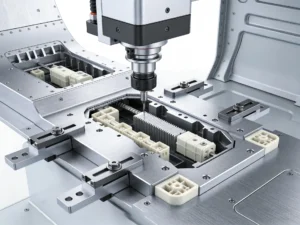
At its core, fine wire EDM is a non-contact, thermal machining process that uses a continuously traveling, thin electrically charged wire (typically brass or coated) to cut through conductive materials. The "fine" designation typically refers to wires with diameters ranging from 0.02mm (0.0008") to 0.10mm (0.004"). For perspective, a human hair averages about 0.07mm. By harnessing controlled electrical sparks (discharges) between the wire and the workpiece, material is eroded away with extraordinary precision, without any mechanical force. This allows for the machining of ultra-hard materials, the creation of sharp inside corners, and the production of components with astonishingly fine details that would be impossible with any cutting tool.
The Spark of Genius: How Fine Wire EDM Works
The magic of fine wire EDM lies not in brute force, but in controlled erosion. Understanding the fundamental process reveals why it is so uniquely capable.
The Core Principles of Electrical Discharge Machining
The process occurs submerged in a dielectric fluid, usually deionized water, which serves three critical functions: it acts as an insulator until a specific voltage is reached, it cools the vaporized material, and it flushes away the microscopic debris from the cut. The wire, held between upper and lower guides, is fed from a spool and travels continuously to present a fresh, unworn electrode to the workpiece. A controlled electrical potential is maintained between the wire (negative cathode) and the workpiece (positive anode).
When the wire approaches close enough to the workpiece—typically maintaining a gap of about 0.01mm to 0.05mm—the dielectric fluid ionizes, creating a conductive plasma channel. A rapid series of sparks, each lasting only a few microseconds, crosses this gap. Each spark generates an intense local heat of approximately 8,000°C to 12,000°C, instantly melting and vaporizing a microscopic amount of material from both the wire and the workpiece. This cycle repeats hundreds of thousands of times per second, progressively eroding the desired shape.
The "Fine Wire" Advantage
Using an exceptionally thin wire is what elevates this from standard wire EDM to a class of its own. The benefits are direct and profound:
- Minimal Kerf: The cutting width (kerf) is almost equal to the wire diameter plus the spark gap. A 0.02mm wire can produce a cut as narrow as ~0.035mm, drastically reducing material waste and allowing for incredibly delicate features.
- Tighter Inside Radii: The wire can navigate extremely small inside corners. The achievable radius is roughly the wire radius plus the spark overburn, enabling radii as small as 0.015mm.
- Reduced Material Stress: As a non-contact process with no cutting forces, it can machine fragile, thin, or hardened materials without inducing distortion or stress.
Why Choose Fine Wire EDM? The Compelling Benefits
The adoption of fine wire EDM is driven by a suite of unparalleled advantages that solve complex manufacturing challenges.
Unmatched Precision and Accuracy: Modern fine wire EDM machines, coupled with advanced CNC controls and temperature-stabilized environments, can consistently hold tolerances within ±0.0002" (0.005mm) or better. This level of repeatability is essential for gauges, medical implants, and aerospace components.
Ability to Machine Exotic and Hardened Materials: Since the process relies on electrical conductivity rather than material hardness, it cuts through hardened tool steel, titanium, carbide, Inconel, and polycrystalline diamond with the same ease as soft aluminum. This allows for machining after the final heat treatment, eliminating distortion risks from quenching.
Exceptional Surface Finish: Through multiple finishing passes (skim cuts) with adjusted power settings, fine wire EDM can achieve surface finishes smoother than 0.1µm Ra, often eliminating the need for secondary polishing, especially in delicate parts where manual polishing could cause damage.
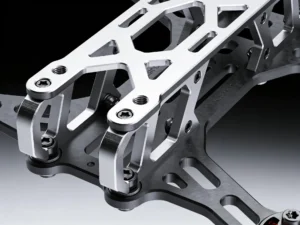
Complex Geometry and Micro-Machining: It is the definitive solution for parts with intricate profiles, micro-holes, fine slots, and complex 3D shapes produced through taper cutting (where the upper guide moves independently to create tapered walls). It is indispensable for producing micro-tools, nozzles, and components for the electronics and semiconductor industries.
Where Imagination Meets Reality: Key Applications
The capabilities of fine wire EDM make it a cornerstone technology across advanced industries. Its applications are as diverse as they are critical.
Aerospace and Gas Turbines
Used for machining turbine blade cooling holes, fuel injector nozzles, and lightweight structural components from high-temperature alloys. The ability to produce complex cooling channels in already-hardened single-crystal turbine blades is a task few other technologies can accomplish.
Medical and Life Sciences
Essential for manufacturing surgical tools, orthopedic implants (like knee and hip joints), stents, and micro-components for diagnostic devices. The biocompatibility of the fine finish and the ability to machine difficult materials like titanium and nitinol are vital.
Precision Tool and Die Making
The traditional and still dominant application. Fine wire EDM is used to produce punch and die sets for micro-stamping, extrusion dies, and intricate inserts for plastic injection molds with perfect sealing surfaces and minimal draft angles.
Electronics and Micro-Engineering
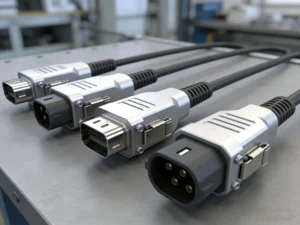
Critical for producing connectors, shielding components, and micro-electromechanical systems (MEMS). It machines parts for fiber-optic alignment, wafer handling, and creates extremely fine features on conductive substrates.
Mastering the Spark: Best Practices for Optimal Results
To consistently harness the full potential of fine wire EDM, adherence to established best practices is non-negotiable.
Design for Manufacturability (DFM)
Collaborate early with the EDM supplier. Consider the wire diameter when designing inside radii and slot widths. Avoid unnecessarily tight tolerances that increase cost and time. Design adequate relief for the wire to thread through starter holes.
Material Preparation and Workholding
Properly stress-relieve material before machining to prevent distortion. Use precise, stable, and clean workholding to ensure absolute rigidity. Any vibration or movement during the cut will reflect directly on the surface finish and accuracy.
Wire Selection and Management
Choose the correct wire type (standard brass, diffused-coated, zinc-coated) and diameter for the application. Coated wires offer higher cutting speeds and improved surface finish. Ensure the wire feed system is clean and the tension is correctly set and consistent; even slight variations can affect precision.
Dielectric Fluid Maintenance
Maintain impeccable dielectric fluid quality. Continuous filtration and deionization are crucial. Contaminated or poorly conditioned fluid leads to erratic sparking, poor surface finish, wire breaks, and reduced accuracy.
Machine Calibration and Environment
Regularly maintain and calibrate the machine, paying special attention to guide alignment. Operate the machine in a temperature-controlled environment, as thermal expansion of the machine or workpiece can introduce errors larger than the process's inherent capability.
Conclusion: The Future Cut with Fine Wire
Fine Wire EDM is more than just a manufacturing process; it is an enabler of innovation. It allows engineers and designers to push the boundaries of what is mechanically possible, transforming concepts of staggering complexity into tangible, high-performance reality. As industries continue to demand smaller, stronger, and more complex components—from next-generation medical implants to the heart of quantum computing devices—fine wire EDM will remain an essential, silent artisan. It operates at the frontier of precision, a testament to human ingenuity where each microscopic spark contributes to a masterpiece of engineering, truly achieving precision beyond imagination.