The Precision Frontier: Defining Deep Hole Drilling
In the realm of advanced manufacturing, where components for aerospace, energy, and medical devices push the boundaries of complexity, conventional drilling techniques quickly reach their limits. This is the domain of deep hole drilling (DHD), a specialized machining process engineered to produce holes with exceptional depth-to-diameter ratios, superior straightness, and excellent surface finish. While a standard drill might handle a hole depth of 5-10 times its diameter, deep hole drilling is defined by its ability to consistently and accurately machine holes with a depth 10 times the diameter and far beyond—reaching ratios of 100:1, 200:1, or even more in extreme applications.
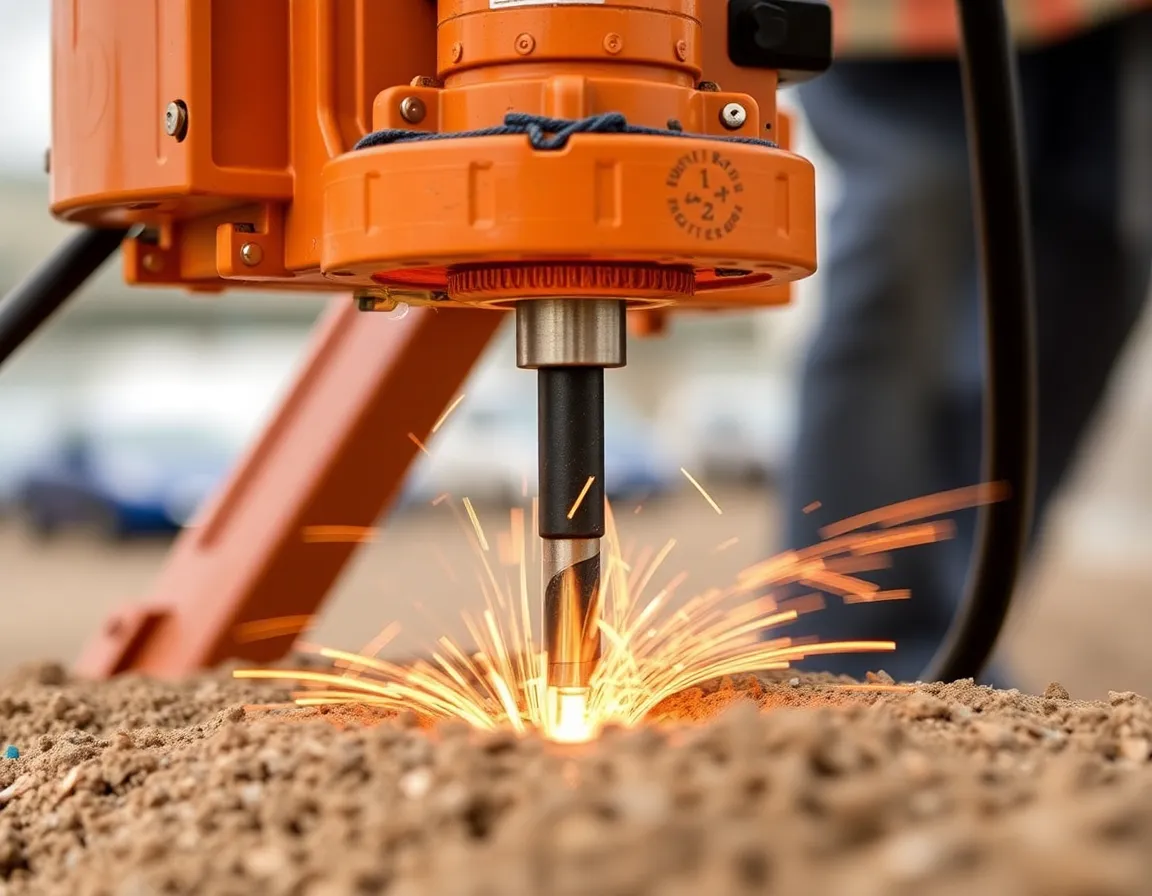
The process is not merely "drilling deeper." It is a fundamentally different approach that addresses the core challenges of deep-hole creation: efficient chip evacuation, managing heat generation, maintaining tool stability over long distances, and ensuring geometric accuracy. Unlike conventional drilling where the tool's tip does most of the work and chips must travel back along the flutes, deep hole drilling employs a system where the cutting fluid is delivered under high pressure directly to the cutting zone, flushing chips out through the tool. This critical difference transforms a problematic operation into a controlled, precise, and repeatable science.
Core Methodologies: How Deep Hole Drilling Works
The efficacy of deep hole drilling hinges on specialized equipment and methodologies. The two predominant systems, each with distinct advantages, are Gun Drilling and BTA (Boring and Trepanning Association) or STS (Single Tube System) Drilling.
Gun Drilling: The Single-Tube Solution
Gun drilling is the go-to method for smaller diameter holes and extremely high depth-to-diameter ratios. The tool is a long, slender, single-flute drill with a carbide tip. High-pressure coolant is pumped through an internal channel in the drill shaft, exiting at the cutting head to lubricate the cut and push chips back along the external V-shaped flute of the tool. This design makes it exceptionally effective for holes from about 1mm to 40mm in diameter. Its simplicity and ability to start on an uneven surface make it versatile for many applications.
BTA/STS Drilling: The Double-Wall Advantage
For larger diameter holes (typically above 16mm), BTA drilling often becomes more efficient. This system uses a hollow drill tube. High-pressure coolant is introduced between the workpiece and the outside of the drill tube, flowing to the cutting head. The chips are then evacuated back through the hollow center of the drill tube, aided by a specialized chipbox and sealing mechanism. This dual-wall flow provides superior coolant delivery and chip removal for heavier cuts, resulting in excellent surface finishes and higher productivity for medium to large bores.
The Critical Role of Tooling and Coolant
Regardless of the system, the supporting technology is paramount:
- Specialized Machines: Deep hole drilling machines are designed with high-pressure coolant systems (often exceeding 1000 psi), precise guide bushings to support the tool at entry, and controlled feed mechanisms to prevent deflection.
- Cutting Fluid: More than just a coolant, the fluid acts as a lubricant and chip-transport medium. It must be meticulously filtered and maintained to prevent recirculating chips that could damage the tool or workpiece.
- Tool Geometry & Materials: Inserts and tips are made from advanced carbides, ceramics, or CBN (Cubic Boron Nitride) to withstand the heat and pressure. The geometry is optimized to produce manageable chips and minimize cutting forces.
Unlocking Capabilities: Benefits and Applications
Mastering deep hole drilling unlocks a suite of benefits that are indispensable for manufacturing high-performance components.
Key Advantages
- Exceptional Straightness and Accuracy: Achieves straightness tolerances within fractions of a millimeter over meters of length, crucial for hydraulic cylinders and actuator barrels.
- Superior Surface Finish: Produces surface finishes that often eliminate the need for secondary honing or reaming, saving time and cost.
- Deep Capability in a Single Pass: Eliminates the need for pecking cycles, dramatically reducing cycle times and improving consistency.
- Versatility in Materials: Effectively machines a vast range of materials, from aluminum and stainless steel to Inconel, titanium, and hardened tool steels.
- Complex Geometries: Can be used to create cross-holes, stepped diameters, and tapered holes with specialized tooling and CNC path control.
Industry Applications
The technology is the backbone of numerous critical industries:
- Aerospace: Fuel and hydraulic lines, landing gear components, engine manifolds, and turbine shaft cooling holes.
- Oil & Gas: Drill collars, valve bodies, manifolds, and gun barrels for perforation.
- Medical: Surgical instruments, implants with internal channels, and cannulated tools for orthopedic surgery.
- Automotive & Racing: Fuel injection rails, hydraulic cylinders, turbocharger shafts, and lightweight structural components.
- Mold & Die: Conformal cooling channels in injection molds that follow the contour of the mold for optimal temperature control.
- Power Generation: Heat exchanger tubes, boiler components, and hydraulic systems for turbines.
Mastering the Craft: Best Practices for Success
Transitioning to or optimizing deep hole drilling requires a disciplined approach. Success is found in the meticulous attention to detail.
Pre-Process Planning and Setup
Foundation is everything. A perfectly sharpened tool will fail if the setup is flawed. The workpiece must be securely clamped, and the starting surface should be perpendicular to the intended hole axis. Using a precision guide bushing is non-negotiable; it aligns the tool and provides critical support at the entry point, preventing "walking" or deflection. Furthermore, ensuring the machine's coolant system is clean, with filters in good condition, is as important as the tool itself.
Optimizing Cutting Parameters
Finding the "sweet spot" for speed (SFM) and feed (IPR) is a balancing act. Too high a feed can break the tool or produce unmanageable chips, while too slow a feed can work-harden the material and cause premature wear. Parameters must be tailored to the specific material, hole diameter, and system used. Monitoring chip form—aiming for small, broken "C" or "6" shapes—is a reliable indicator of optimal performance.
Tool Maintenance and Monitoring
Deep hole drilling tools are precision instruments. Regular inspection and timely re-sharpening are far more cost-effective than running a tool to failure, which can scrap an expensive part. Implement a scheduled maintenance program for tools. During operation, use all available monitoring signals: listen for changes in sound, monitor coolant pressure spikes (indicating chip clogging), and watch for changes in the color and shape of exiting chips.
Problem-Solving Common Challenges
- Poor Surface Finish: Often caused by incorrect feed/speed, worn tool, or insufficient coolant pressure. Check parameters and tool condition first.
- Hole Deviation (Bending): Can result from improper guide bushing alignment, excessive feed rate, or inconsistent material hardness. Verify setup and reduce feed.
- Tool Breakage: Typically due to chip clogging, excessive feed, or an unstable setup. Ensure optimal chip formation and coolant flow.
- Tapered Hole: Usually a sign of tool wear or deflection. Inspect and replace the cutting head or insert.
Mastering deep hole drilling is a commitment to precision engineering. It moves beyond simple hole-making to become a value-adding process that enables the creation of lighter, stronger, and more efficient components. By understanding its principles, respecting its requirements, and meticulously applying best practices, manufacturers can unlock new levels of design freedom and production capability, turning complex part blueprints into flawless, high-performance realities.