The Unseen Engine: Why Copper is the Gold Standard for AI Cooling
As artificial intelligence models grow exponentially in size and complexity, they generate a corresponding surge in thermal output. The heart of this computational revolution—dense server racks packed with GPUs and TPUs—faces a critical bottleneck: heat. Effective thermal management is no longer a supporting act; it is the defining factor for performance, reliability, and energy efficiency. At the forefront of this battle against thermal throttling stands a classic material, reborn through precision engineering: copper. This guide delves into the art and science of copper machining for AI cooling, exploring why it's indispensable, how it's mastered, and what the future holds for this critical manufacturing discipline.
The Material Advantage: Why Copper Reigns Supreme
Before the first cut is made, the choice of material sets the stage. For high-performance AI cooling solutions, copper is selected for a powerful combination of intrinsic properties that alternatives struggle to match.
Unrivaled Thermal Conductivity
Copper's primary claim to fame is its exceptional thermal conductivity, approximately 401 W/m·K at room temperature. This is nearly double that of aluminum (about 237 W/m·K). In practical terms, this means heat generated by a high-wattage AI processor is transferred away from the source and into the cooling medium (liquid or air) with far greater speed and efficiency. This rapid heat translocation prevents localized hot spots, which are detrimental to silicon longevity and stable clock speeds.
Superior Machinability for Complex Geometries
While challenging compared to softer metals, copper is machinable to a high degree of precision. This allows engineers to design and fabricate cooling solutions with intricate features essential for modern AI hardware: ultra-thin fins for maximized surface area in air coolers, complex micro-channel pathways in cold plates for direct-to-chip liquid cooling, and perfectly flat bases that ensure microscopic contact with the processor's integrated heat spreader (IHS).
Strength and Long-Term Reliability
Copper offers excellent structural integrity, allowing for the creation of robust, durable heat sinks and cold plates that can withstand the physical stresses of installation and long-term operation. Its corrosion resistance, especially in closed-loop liquid systems with proper fluid chemistry, ensures consistent performance over the multi-year lifespan expected in data center infrastructure.
Precision in Practice: Key Machining Techniques for AI Cooling
Transforming a copper billet into a high-performance thermal device requires a symphony of advanced machining techniques. Each method is chosen based on the design's complexity, tolerance requirements, and production scale.
CNC Milling: The Workhorse for Complexity
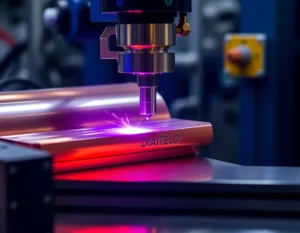
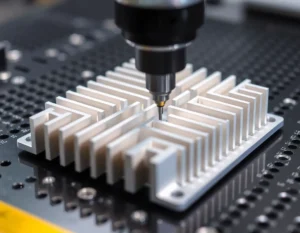
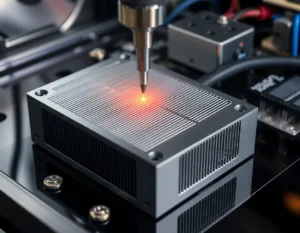
Computer Numerical Control (CNC) milling is the cornerstone of copper heat sink manufacturing. Multi-axis CNC machines carve intricate fin arrays, pedestals, and mounting features from solid copper blocks. For AI applications, the emphasis is on achieving fins with high aspect ratios—very tall and very thin—to pack maximum surface area into a limited footprint. This requires rigid machines, sharp tools, and precise control to prevent chatter and deflection. Using specialized tool paths and coolants is critical to manage copper's tendency to gum up cutting tools.
Skiving and Stamping: The Kings of High-Density Fins
For the most extreme air-cooling solutions, skiving is a dominant process. A sharp skiving tool peels thin, continuous fins from a solid copper baseplate, creating a monolithic structure with exceptional thermal continuity and incredibly tight fin spacing. Stamping is another high-volume technique used to form folded-fin arrays that are then bonded to a base, offering a cost-effective way to achieve high surface density for specific cooler designs.
Micro-Machining for Liquid Cold Plates
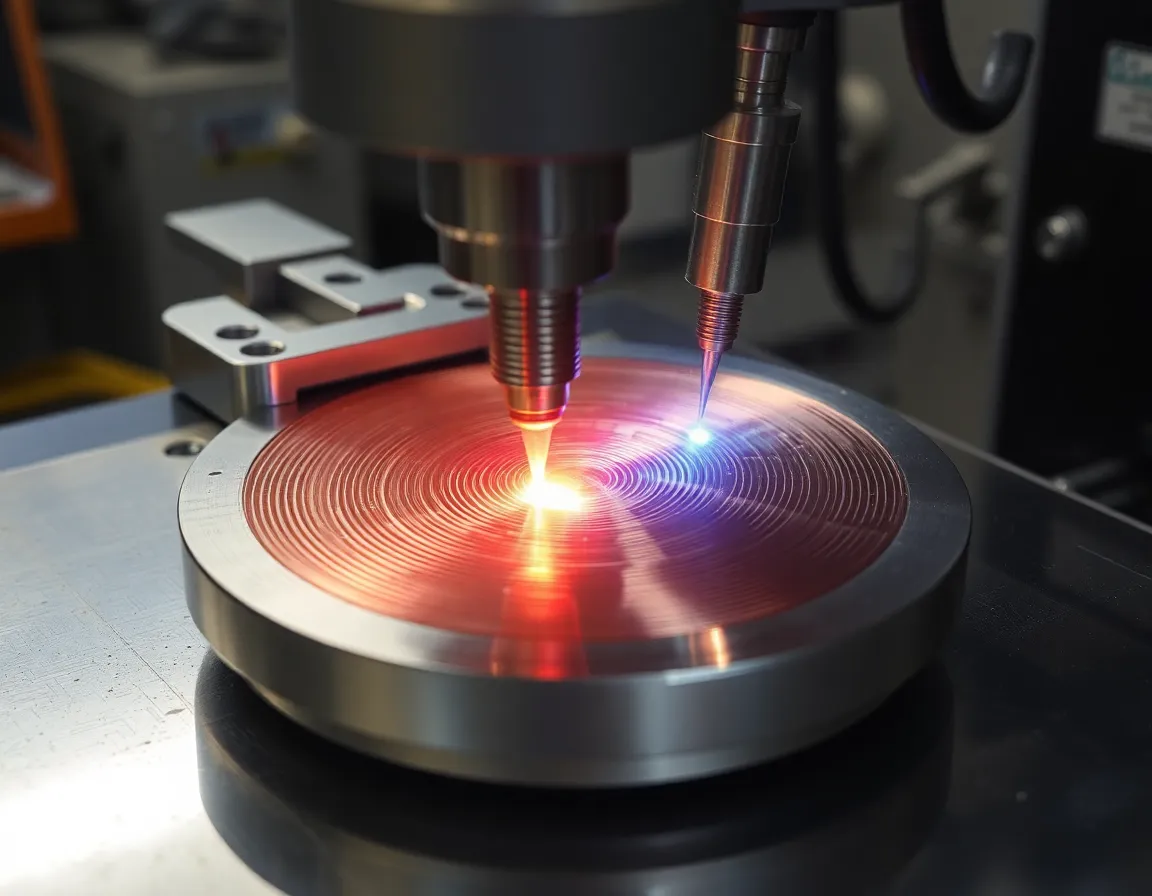
Direct-to-chip liquid cooling, essential for highest-tier AI accelerators, relies on machined cold plates. Here, micro-milling and drilling create the labyrinth of channels through which coolant flows. Tolerances are paramount; channel dimensions, wall thicknesses, and plenum designs must be exact to optimize fluid dynamics, ensure even heat absorption, and minimize pressure drop. The mating surface must also be machined to a mirror-like finish and exceptional flatness to minimize thermal interface resistance.
Post-Machining Perfection: Lapping and Coating
The machining process is only part of the story. Surface finish is a critical determinant of thermal performance. The base that contacts the CPU/GPU often undergoes lapping—a precision abrasive process—to achieve near-optical flatness. Furthermore, many copper heat sinks are nickel-plated. This thin layer prevents oxidation (which degrades thermal performance over time) and provides a harder, more scratch-resistant surface, while only marginally impacting overall thermal conductivity.
Design and Application: From Chip to Server Rack
Machined copper cooling components are deployed at every level of the AI hardware stack, each with unique design requirements.
- Direct-Die and IHS Coolers: Custom cold plates or massive heat sinks are machined to interface directly with AI accelerator chips. Designs must account for non-uniform heat flux, often concentrating cooling capacity over the hottest "hot spots" like compute dies.
- Server-Scale Integration: Within a server, machined copper components form liquid cooling manifolds, distribution blocks, and specialized heat sinks for voltage regulator modules (VRMs) and memory, which also contribute significantly to the system's thermal load.
- Advanced Topologies: Vapor Chambers and Heat Pipes: While not purely machined, these components rely on precision copper shells. Machining is used to create the wick structures and sealing surfaces for these two-phase systems, which are often embedded into larger heat sinks to spread heat rapidly from the source to the fins.
Best Practices and Future Frontiers
Mastering copper AI cooling is an ongoing pursuit of perfection. Adhering to best practices is non-negotiable for manufacturers aiming for the top tier.
Machining Best Practices
- Tool Selection and Management: Use sharp, specialized tools for non-ferrous metals. Implement strict tool life monitoring to maintain cut quality and prevent defects.
- Thermal Management During Machining: Employ effective coolant strategies to dissipate heat from the cutting zone, preventing workpiece thermal expansion that can ruin tolerances.
- Deburring and Cleaning: Meticulous post-processing to remove all micro-burrs and machining debris is essential. Any particulate left in liquid cooling channels can cause catastrophic blockages.
- Metrology and QA: Implement rigorous inspection using coordinate measuring machines (CMMs), surface profilometers, and optical comparators to verify dimensional accuracy, flatness, and surface finish on every critical feature.
The Evolving Landscape
The field is not static. Emerging trends are pushing the boundaries of what's possible with machined copper:
- Hybrid and Alloy Solutions: Combining copper with other materials, such as copper-tungsten alloys for matched coefficient of thermal expansion (CTE) or using copper bases with aluminum fins for cost-weight optimization, is gaining traction.
- Additive Manufacturing (3D Printing): While traditional machining dominates, metal additive manufacturing is beginning to allow for previously impossible internal channel geometries and topologically optimized structures that follow heat flow paths, promising next-level performance.
- Direct Bonded Copper (DBC) and Active Cooling: The integration of machined components with advanced substrates like DBC, which allows for direct electrical and thermal integration, and the move towards jet-impingement or micro-convective cooling within the cold plate itself.
Conclusion: The Indispensable Craft
In the high-stakes world of artificial intelligence, where every watt of cooling and every degree Celsius translates into petaflops of performance and millions in operational cost, precision copper machining remains an indispensable craft. It is the bridge between the theoretical limits of semiconductor design and their practical, reliable deployment. By understanding the material's virtues, mastering the complex machining techniques, and adhering to uncompromising standards of quality, engineers and manufacturers are not just shaping copper—they are actively shaping the future of AI itself. As thermal densities continue their inexorable climb, the innovation in how we machine and implement this ancient, yet utterly modern, material will determine the pace of the intelligence revolution.