The Spark of Innovation: Understanding EDM for Conductive Materials
In the high-stakes world of precision manufacturing, where components demand micron-level accuracy and materials defy conventional cutting tools, a unique process reigns supreme: Electrical Discharge Machining (EDM). Unlike milling or turning, EDM is a non-contact, thermal machining process that uses precisely controlled electrical sparks to erode material. Its singular, defining requirement is that the workpiece must be electrically conductive. This article delves into the art and science of mastering EDM for machining conductive materials, exploring its mechanisms, advantages, applications, and the best practices that separate good results from exceptional ones.
The Core Principle: How EDM Works
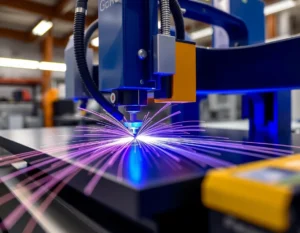
At its heart, EDM is a process of controlled erosion. It operates on the fundamental principle that when a voltage difference between two electrodes (the tool and the workpiece) becomes high enough, it ionizes the dielectric fluid separating them, creating a conductive plasma channel. A rapid series of these sparks, each lasting microseconds, generates intense local heat—thousands of degrees Celsius—melting and vaporizing microscopic particles of the workpiece. The dielectric fluid, typically oil or deionized water, then flushes away the debris and cools the area, ensuring the process remains stable.
Key Components of the EDM Process
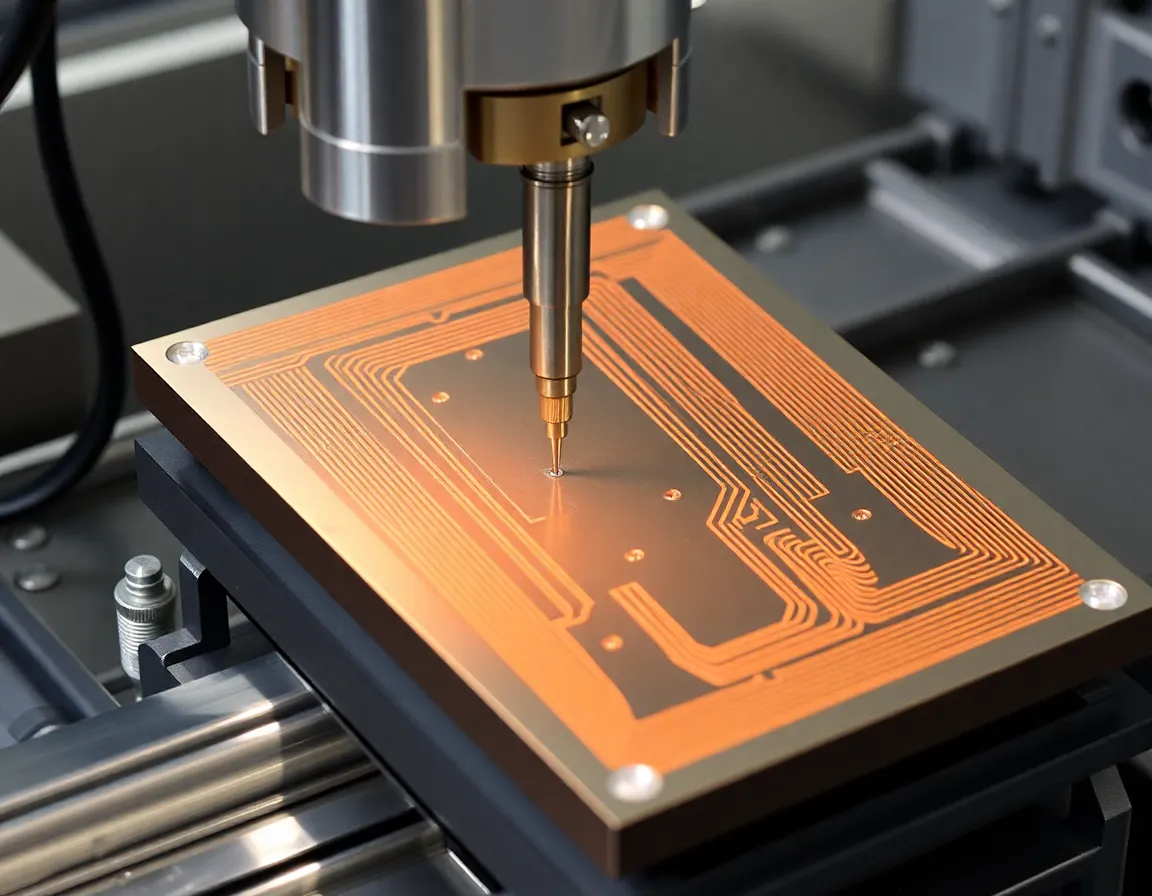
Electrode (Tool): Can be made of graphite, copper, copper-tungsten, or brass. It is the positive or negative pole (depending on the process) and is shaped inversely to the desired cavity or feature.
Workpiece: Must be electrically conductive. This includes metals like steel, titanium, aluminum, superalloys (Inconel, Hastelloy), and even conductive ceramics.
Dielectric Fluid: Serves as an insulator until the breakdown voltage is reached, then becomes a conductor for the spark. It also acts as a coolant and removes machining debris.
Power Supply & Control System: The "brain" of the operation. It meticulously controls spark frequency, duration, current, and gap voltage, dictating the machining speed, surface finish, and electrode wear.
Why EDM? The Unmatched Benefits for Conductive Materials
EDM is not a replacement for traditional machining but a powerful complement chosen for specific challenges. Its benefits are particularly pronounced when working with hard, tough, or complex conductive materials.
Machining "Unmachinable" Materials
EDM's thermal process is indifferent to the mechanical hardness of the workpiece. This makes it ideal for hardened tool steels, carbides, Inconel, and other exotic alloys that would quickly wear down or break conventional cutting tools. Hardness is no longer a barrier to precision.
Intricate Geometry and Fine Details
Since there is no physical contact force, extremely fragile and delicate features can be machined without risk of tool deflection or breakage. This allows for sharp internal corners, deep ribs, micro holes, and complex 3D cavities that are impossible with milling.
Exceptional Surface Finish and Accuracy
Modern EDM machines, especially in finishing passes, can achieve surface finishes smoother than Ra 0.1 µm and hold tolerances within a few microns. The process allows for a single setup, often eliminating secondary finishing operations.
No Mechanical Stresses
The absence of cutting forces means no burrs, minimal residual stress induced into the part, and the ability to machine thin walls and delicate sections without distortion.
Primary EDM Methods: Wire and Sinker
EDM is primarily implemented in two distinct forms, each suited to different applications.
Wire EDM (WEDM)
In Wire EDM, a thin, continuously traveling brass or coated wire (typically 0.02mm to 0.33mm in diameter) acts as the electrode. It is used primarily for through-hole machining, cutting intricate profiles and shapes from a conductive plate. The wire's path is computer-controlled, allowing for the creation of punches, dies, and complex 2D or tapered 3D shapes with exceptional accuracy.
- Best for: Prototyping, extrusion dies, stamping dies, and any application requiring a precise through-cut contour.
Sinker EDM (Ram EDM or Die-Sinking EDM)
Sinker EDM uses a pre-formed electrode, often machined from graphite or copper, which is a positive mirror image of the desired cavity. This electrode is fed vertically into the workpiece, eroding its shape. It is ideal for creating blind cavities, complex molds (for plastic injection or die-casting), and textured surfaces.
- Best for: Mold and die manufacturing, creating internal features like ribs and slots, and producing cavities with complex geometry.
Applications Across Industries
The unique capabilities of EDM make it indispensable in several high-tech and demanding sectors.
Aerospace & Gas Turbines: Machining cooling holes in turbine blades (using small-hole drilling EDM), producing lightweight components from titanium, and manufacturing fuel system parts from high-temperature alloys.
Medical Device Manufacturing: Creating intricate features on surgical tools (like bone saws and forceps), machining biocompatible implants from titanium and cobalt-chrome, and fabricating micro-components for diagnostic devices.
Automotive: Production of injection molds for interior components, forging dies for engine parts, and prototyping of transmission components.
Tool & Die: This is the traditional heartland of EDM. Manufacturing stamping dies, extrusion dies, plastic injection molds, and die-casting dies with long life and high precision.
Mastering the Craft: Best Practices for Optimal Results
Success in EDM is a blend of art, science, and meticulous attention to detail. Here are key best practices.
Material and Electrode Selection
Understanding the interaction between workpiece material and electrode is critical. Graphite electrodes offer excellent wear resistance and fast machining rates for roughing, while copper provides finer finishes. The grain size of graphite, for instance, directly impacts surface finish and wear.
Power Settings and Thermal Management
Optimizing the pulse on/off times, current, and voltage is paramount. Aggressive settings speed up machining but cause more electrode wear and a rougher surface. Finishing passes use low energy settings. Effective flushing of the dielectric is non-negotiable to prevent arcing from accumulated debris, which can ruin a workpiece.
Workpiece Preparation and Setup
The workpiece must be properly grounded to the machine table. Any residual magnetism in the material must be removed, as it can attract debris and cause poor machining. Precise alignment and secure fixturing are essential to maintain accuracy throughout the often lengthy process.
Leveraging Advanced Technology
Modern EDM machines offer features like adaptive control, which automatically adjusts parameters for optimal spark gap, and CNC capabilities for complex orbital tool paths. Using these technologies reduces operator dependency and ensures consistent, repeatable results.
Conclusion: The Indispensable Spark
Mastering EDM for conductive materials is about harnessing a powerful and precise force of nature—the electrical spark. It transcends the limitations of traditional machining, enabling the creation of parts that define the cutting edge of aerospace, medical, and industrial technology. While it requires deep knowledge of materials, electricity, and machine dynamics, the payoff is the ability to machine the unmachinable, shape the unshapable, and achieve levels of precision and complexity that continue to push the boundaries of modern manufacturing. For any engineer or machinist working with conductive materials, EDM is not just a tool in the workshop; it is a gateway to unparalleled manufacturing freedom.