In the intricate world of precision machining and mechanical assembly, the smallest components often bear the greatest responsibility for performance, longevity, and accuracy. Among these unsung heroes are CNC turned bushings, fundamental elements that guide, support, and reduce friction between moving parts. Selecting the right bushing is not a trivial task; it requires a deep understanding of materials, tolerances, and application demands. This comprehensive buyer's guide will equip you with the knowledge needed to make an informed decision when sourcing precision CNC bushings for your next project.
What Are CNC Turned Bushings?
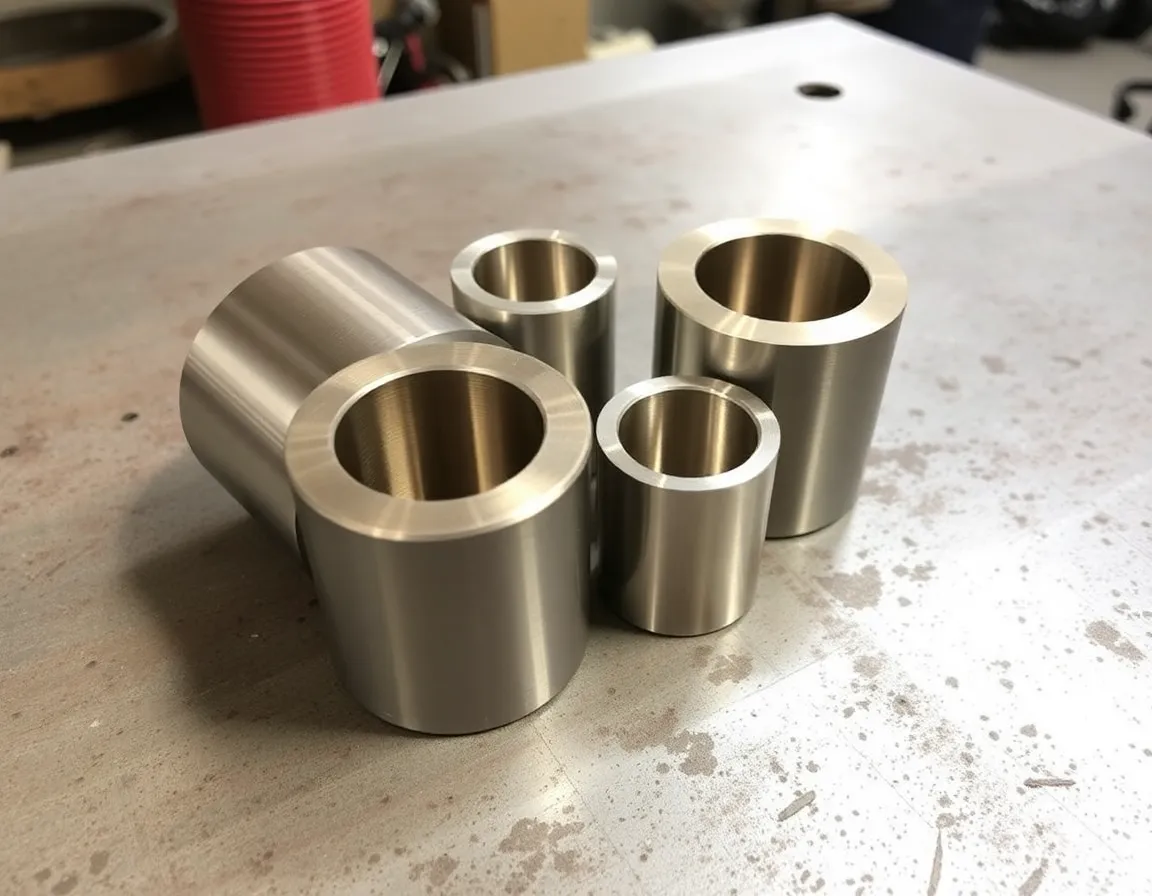
CNC turned bushings, often referred to as plain bearings or sleeve bearings, are cylindrical components designed to provide a precise, low-friction interface between a rotating shaft and its housing. The term "CNC turned" specifies the manufacturing process: Computer Numerical Control (CNC) lathes and Swiss-type lathes are used to machine these parts from bar stock with exceptional accuracy and repeatability. This process allows for the creation of complex geometries, tight tolerances, and superior surface finishes that are critical for high-performance applications. Unlike rolling-element bearings (e.g., ball or roller bearings), bushings operate on a sliding principle, where the shaft rotates or slides directly against the inner surface of the bushing.
Key Components and Terminology
Understanding bushing specifications is crucial. Key terms include:
- ID (Inner Diameter): The critical dimension that interfaces with the shaft.
- OD (Outer Diameter): The dimension that fits into the housing or mounting point.
- Wall Thickness: The difference between OD and ID, impacting strength and heat dissipation.
- Length: The bearing surface area, affecting load capacity and stability.
- Tolerance: The permissible limit of variation in a dimension, often specified in thousandths of an inch or microns.
- Concentricity: The accuracy with which the ID and OD share a common center axis.
Material Selection: The Foundation of Performance
The material of a CNC bushing dictates its wear characteristics, friction coefficient, load capacity, and environmental compatibility. Choosing incorrectly can lead to premature failure, seizing, or contamination.
Common Bushing Materials and Their Properties
Bronze (Oil-Impregnated/Sintered): A classic choice, sintered bronze bushings are porous and infused with lubricant. They offer excellent wear resistance and are self-lubricating for the life of the lubricant reservoir. Ideal for applications where re-lubrication is difficult.
Stainless Steel: Chosen for its exceptional corrosion resistance, high strength, and ability to withstand extreme temperatures. Often used in food processing, medical, marine, and chemical environments. Can be paired with a compatible lubricant or run dry in some cases.
Brass: Offers good machinability, corrosion resistance, and conductivity. It is softer than steel, making it a good choice for protecting more expensive shafts from wear. Common in low-load, low-speed applications and electrical components.
Aluminum: Lightweight with good thermal conductivity and corrosion resistance. Often used in aerospace and automotive applications where weight savings are critical. May require hard anodizing or coatings for improved wear resistance.
Engineering Plastics (e.g., POM/Acetal, PTFE, Nylon, PEEK): These materials provide inherent lubricity, excellent corrosion resistance, quiet operation, and are lightweight. They are electrically insulating and can run dry or with minimal lubrication. PTFE-based composites are particularly known for very low coefficients of friction.
Tool Steels & Carbide: For the most demanding applications involving extreme wear, high temperatures, or abrasive environments. Tungsten carbide bushings, for instance, offer unparalleled hardness and longevity but at a higher cost.
Critical Considerations for Buyers
Beyond material, several technical and commercial factors must be evaluated to ensure the bushing performs as intended in your specific assembly.
Precision and Tolerances
The hallmark of a quality CNC turned bushing is its precision. Tolerances for ID, OD, and concentricity are paramount. A bushing with poor concentricity will induce vibration and uneven wear. For precision machinery, medical devices, or aerospace applications, tolerances may need to be within ±0.0005" or tighter. Always communicate your tolerance requirements clearly with your manufacturer.
Surface Finish and Lubrication
The surface finish of the bushing's ID directly impacts friction, wear rate, and the ability to form an effective lubricant film. A smoother finish (measured in microinches or Ra) generally reduces friction and wear. The lubrication strategy is equally critical: Will the application use grease, oil, or be self-lubricating? Is the environment clean or contaminated? The answers will guide your choice between oil-impregnated, externally lubricated, or dry-running bushings.
Load, Speed, and PV Factor
Evaluate the operational demands:
- Load: Is it radial (perpendicular to the shaft) or axial (along the shaft axis)?
- Speed: What is the rotational or linear speed of the shaft?
- PV Value: This is the product of bearing pressure (P) and velocity (V). Every bushing material has a maximum PV rating, beyond which excessive heat and rapid wear will occur. Calculating your application's PV value is essential for selecting a material that can withstand the operating conditions.
Environmental and Operational Factors
Consider the operating environment: exposure to moisture, chemicals, extreme temperatures, dust, or debris. For example, a stainless steel or plastic bushing would be chosen for a wet environment, while a high-temperature alloy would be necessary for an engine component. Also, consider thermal expansion; different materials expand at different rates, which can affect clearances at operating temperature.
Applications and Industry-Specific Needs
CNC turned bushings are ubiquitous across industry. Their application often dictates the required specifications.
- Aerospace & Defense: Extreme reliability, lightweight materials (aluminum, titanium, PEEK), and tolerance to wide temperature swings.
- Medical & Dental: Ultra-high precision, biocompatible or sterilizable materials (certain stainless steels, PEEK, ceramics), and often clean, dry operation.
- Automotive: High-volume production, cost-effectiveness, and durability under hood temperatures and vibrations. Sintered bronze and engineered plastics are common.
- Industrial Machinery: High load capacity, wear resistance, and often the need for maintenance-free operation. Steel-backed bronze or composite bushings are typical.
- Semiconductor & Electronics: Ultra-clean, non-magnetic, and non-outgassing materials to prevent contamination. Aluminum and specific plastics are frequently used.
Best Practices for Sourcing and Collaboration
Partner with a Specialized Manufacturer: Seek out machine shops that explicitly list CNC turning and bushing manufacturing as a core competency. They will have the expertise and appropriate equipment (like multi-axis CNC lathes) to achieve the required precision.
Provide Complete and Clear Specifications: Don't just provide a drawing. Share the application context—load, speed, environment, and expected lifespan. This allows the manufacturer to suggest potential optimizations in material or design.
Consider Secondary Operations: Many bushings require more than just turning. Discuss if you need additional processes like grinding for ultra-fine tolerances, heat treating for added hardness, plating/coating for corrosion resistance, or knurling for improved grip in the housing.
Prototype and Test: For critical applications, investing in a prototype run for real-world testing can save significant cost and downtime later. It validates material choice, tolerances, and lubrication strategy.
Quality Assurance: Ensure your supplier has a robust QA process, including Statistical Process Control (SPC), first-article inspection reports, and proper certification for materials. Traceability is often crucial, especially in regulated industries.
In conclusion, precision CNC turned bushings are deceptively simple components that play a vital role in mechanical system performance. A successful purchase hinges on a systematic evaluation of material properties, operational parameters, environmental factors, and manufacturing capabilities. By treating the selection process as a critical engineering decision and collaborating closely with an experienced manufacturing partner, you can secure the ideal bushing that ensures reliability, efficiency, and longevity for your application. The right bushing isn't just a part—it's a pivot point for precision.