The Engine of Modern Manufacturing: What is Precision CNC Milling?
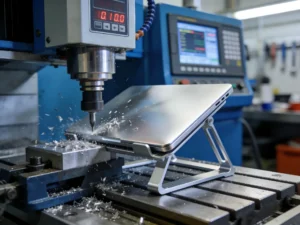
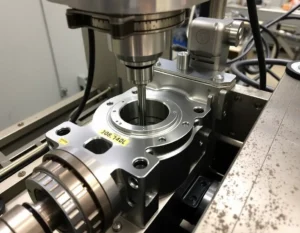
In a world where the margin for error shrinks by the day, the ability to produce complex, high-tolerance components consistently is not just an advantage—it's a necessity. This is where Computer Numerical Control (CNC) milling stands as a cornerstone of modern manufacturing. At its core, precision CNC milling is a subtractive manufacturing process where computer-controlled machine tools remove material from a solid block (the workpiece) with rotating multi-point cutting tools to produce a custom-designed part. The "precision" aspect refers to the exceptionally tight tolerances, often within microns, that these machines can reliably and repeatedly achieve.
The process begins long before metal meets cutter. It starts with a detailed 3D computer-aided design (CAD) model. This digital blueprint is then translated into a set of machine-readable instructions, known as G-code, through computer-aided manufacturing (CAM) software. This code dictates every movement of the milling machine—the spindle speed, feed rate, depth of cut, and the precise path of the cutting tool. Once initiated, the CNC machine executes these commands with unwavering accuracy, transforming raw materials like metals, plastics, or composites into finished, functional components with minimal human intervention.
Decoding the Time & Money Savings: The Core Benefits
The investment in precision CNC milling services pays substantial dividends in both efficiency and cost-effectiveness. The savings are realized not in a single area, but through a synergistic combination of factors that streamline the entire production lifecycle.
Unmatched Speed and Efficiency
CNC milling dramatically compresses production timelines. Once the CAD model and toolpaths are finalized, the actual machining process is remarkably fast. Complex parts that might take days for a skilled machinist to produce manually can be completed in hours. Furthermore, CNC machines can operate 24/7, unattended , with modern machines often featuring automatic tool changers and pallet systems that allow for continuous production. This "lights-out" manufacturing capability means parts are produced while your business sleeps, slashing lead times and accelerating time-to-market for your products.
Radical Reduction in Material Waste
Precision is inherently linked to economy. Traditional machining methods often require significant extra material "just in case," leading to high scrap rates. CNC milling, guided by optimized CAM software, uses material with surgical efficiency. The toolpaths are calculated to remove the absolute minimum amount of material necessary. This is especially crucial when working with expensive aerospace alloys, medical-grade titanium, or specialized engineering plastics. Less waste directly translates to lower material costs per part.
Eliminating Costly Human Error
Human fatigue, inconsistency, and simple error are variables that traditional machining cannot fully eliminate. These errors result in scrapped parts, rework, and project delays—all of which are expensive. A properly programmed CNC machine will produce the first part and the thousandth part with identical precision. This repeatability ensures consistent quality, reduces scrap, and virtually eliminates the costs associated with human errorin the machining process itself.
Consolidation and Design Freedom
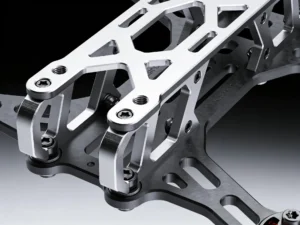
CNC milling allows engineers to design smarter. What was once an assembly of multiple welded or fastened pieces can often be redesigned as a single, complex milled component. This part consolidation reduces assembly time, inventory for multiple components, and potential points of failure. The 5-axis CNC milling technology, in particular, provides unparalleled design freedom, enabling the creation of intricate geometries, undercuts, and contours that are impossible with manual methods or even simpler machines. This freedom leads to more optimized, lighter, and stronger final products.
Where Precision Meets the Real World: Key Applications
The versatility of CNC milled parts ensures their presence across virtually every high-tech industry. The common thread is a demand for reliability, complexity, and performance.
- Aerospace & Defense: Engine components, landing gear parts, brackets, and UAV components where lightweight design and extreme tolerances are non-negotiable for safety and performance.
- Medical & Dental:Surgical instruments, orthopedic implants, diagnostic device housings, and custom prosthetics. Biocompatibility and flawless surface finishes are paramount.
- Automotive & Motorsport:From prototype engine blocks and cylinder heads to transmission components and custom suspension parts, CNC milling enables both high-performance and high-volume precision manufacturing.
- Electronics & Telecommunications:Heat sinks, waveguide components, enclosures, and connector housings that require precise dimensions for optimal thermal management and signal integrity.
- Industrial Machinery:Gears, housings, molds, and tooling that must withstand constant stress and wear while maintaining precise operational alignment.
Maximizing Your Investment: Best Practices for CNC Milling Projects
To fully harness the time and cost savings of precision CNC milling, a collaborative and informed approach from design to delivery is essential.
Design for Manufacturability (DFM)
Engage with your CNC machining partner during the design phase. A good machinist can advise on subtle tweaks—like adjusting internal corner radii to match standard tool sizes, adding slight drafts to vertical walls, or specifying tolerances only where truly critical—that can drastically reduce machining time and cost without compromising function. DFM is the single most effective practice for optimizing part cost.
Material Selection Strategy
Choose the material that meets your functional requirements without over-engineering. While aluminum 6061 machines quickly and is cost-effective, a part needing higher strength might warrant 7075. Understand the machinability ratings of different materials; a harder material may last longer in use but take significantly longer to machine, increasing cost. Your CNC provider can offer valuable guidance here.
Intelligent Tolerancing
Specifying unnecessarily tight tolerances across an entire part is a primary cost driver. Every decimal place added to a tolerance requirement increases machining time, inspection time, and potential for rejection. Apply standard tolerances for non-critical features and reserve tight tolerances only for interfaces and areas critical to the part's core function.
Partner with the Right Provider
Not all machine shops are equal. Look for a partner with:
- A range of modern equipment (3-axis, 5-axis) to match your part's complexity.
- Robust quality control systems, including in-process inspection and CMM (Coordinate Measuring Machine) verification.
- Expertise in your industry and material requirements.
- Transparent communication and a willingness to provide DFM feedback.
The Bottom Line: A Strategic Advantage
Precision CNC milling is far more than just a machining process; it is a comprehensive manufacturing strategy. The initial perception of cost is quickly overshadowed by the profound long-term savings: reduced waste, eliminated error, faster production cycles, and parts that perform reliably from the first installation. In today's competitive landscape, the ability to innovate quickly and bring robust, high-quality products to market is priceless. By leveraging the power of precision CNC milling and adhering to best practices, companies don't just save time and money—they invest in reliability, quality, and a formidable competitive edge that drives growth and innovation for years to come.