Introduction to C11000 Electrolytic Tough Pitch Copper
C11000, often referred to as Electrolytic Tough Pitch (ETP) copper, is the most widely used and recognized form of copper in the machining and manufacturing world. With a minimum copper content of 99.90%, it represents the benchmark for electrical and thermal conductivity. Its familiar reddish hue, excellent ductility, and superior corrosion resistance make it a staple across countless industries. However, for machinists and manufacturing engineers, C11000 presents a unique set of challenges that distinguish it from more common materials like steel or aluminum. Mastering its machining requires a deep understanding of its material properties and the implementation of specific techniques to achieve optimal results, maintain tool life, and ensure part quality.
At its core, C11000 is "tough pitch" because it contains a controlled amount of oxygen (typically 0.02% to 0.04%) in the form of cuprous oxide. This microstructure is responsible for its high conductivity but also contributes to its notorious characteristic of being "gummy" or "sticky" during machining. Unlike free-machining brass or leaded copper alloys, C11000 lacks built-in chip-breaking elements, leading to long, stringy chips that can wreak havoc on tools, workpieces, and operator safety if not managed correctly. This article serves as a comprehensive guide to navigating these challenges, offering practical tips and best practices to master the art and science of machining C11000 copper.
Key Material Properties and Machining Challenges
Before diving into machining parameters, it is crucial to understand what makes C11000 behave the way it does. Its properties are a double-edged sword, offering immense benefits while creating specific operational hurdles.
Beneficial Properties
Exceptional Conductivity: C11000 boasts approximately 100% IACS (International Annealed Copper Standard) electrical and thermal conductivity, making it indispensable for electrical components, busbars, and heat exchangers.
Ductility and Malleability: It can undergo significant cold working and deformation without fracturing, which is excellent for forming operations but a challenge for achieving a fine surface finish during machining.
Corrosion Resistance: It resists atmospheric, aqueous, and many chemical environments, leading to long-lasting components.
Joinability: It can be easily soldered, brazed, and welded.
Primary Machining Challenges
Built-Up Edge (BUE) and Galling: The soft, ductile nature of copper causes it to adhere to the cutting tool's edge, forming a built-up edge. This unstable mass eventually breaks off, taking fragments of the tool's coating or substrate with it, leading to rapid tool wear and poor surface finish.
Long, Stringy Chips: The lack of chip-breaking inclusions results in continuous, tough chips that can wrap around the tool, spindle, or workpiece. This poses a significant safety risk, can damage the part's surface, and often requires machining to be halted for chip clearing.
Work Hardening: C11000 is susceptible to work hardening if machining parameters are incorrect. Using a dull tool, too light a feed, or an improper rake angle can cold-work the surface, making subsequent passes even more difficult and accelerating tool wear.
High Thermal Conductivity: While generally a benefit, the material's ability to draw heat away from the cut means the heat concentrates in the cutting tool itself, demanding effective cooling and tool materials that can withstand the temperature.
Best Practices for Machining C11000 Copper
Overcoming the challenges of C11000 requires a holistic approach, encompassing tool selection, machine parameters, and coolant strategy. Adhering to these best practices will transform a difficult machining job into a productive and high-quality operation.
Tool Selection and Geometry
Tool Material: Carbide tools are the unequivocal choice for C11000. For optimal performance, use fine-grained or sub-micrograin carbide grades. Diamond-coated carbides or Polycrystalline Diamond (PCD) tools offer exceptional life and finish for high-volume production but come at a higher initial cost. High-speed steel (HSS) tools can be used but will wear rapidly.
Tool Geometry is Critical:
- High Positive Rake Angles: Use tools with high positive rake angles (both radial and axial). This shears the material cleanly rather than pushing and deforming it, reducing cutting forces, heat generation, and the tendency to form a built-up edge.
- Sharp Cutting Edges: Tools must be razor-sharp. Any micro-chipping or dullness will immediately exacerbate galling and work hardening.
- Polished Flutes and Faces: A highly polished surface finish on the tool reduces friction and chip adhesion, helping chips evacuate more freely.
- Generous Relief Angles: Ensure sufficient clearance to prevent the tool's flank from rubbing against the work-hardened surface of the workpiece.
Optimizing Cutting Parameters
The "sweet spot" for machining C11000 involves balancing speed, feed, and depth of cut to promote clean shearing and chip control.
- Speed (SFM): Run at moderate to high surface speeds. For carbide tools, a range of 300-600 SFM is typical. Running too slow allows the material to cold-weld to the tool, while excessive speed generates too much heat in the tool.
- Feed Rate: Use higher feed rates relative to those used for steel. A more aggressive feed helps get the cut started below any work-hardened surface and promotes thicker, more manageable chips. Do not "baby" the feed, as this promotes rubbing and work hardening.
- Depth of Cut: Take a depth of cut sufficient to ensure the cut is made in the material's softer core, beneath any previously work-hardened layer. A minimum depth of 0.005" to 0.015" is often recommended.
- Chipbreaker Tooling: Utilize inserts or end mills with specialized chipbreaker geometries designed for non-ferrous, gummy materials. These geometries curl and break the chip effectively.
Coolant and Lubrication Strategy
Effective cooling and lubrication are non-negotiable. The goal is to reduce heat at the cutting edge, minimize friction, and aid in chip evacuation.
- Flood Coolant: Use a copious amount of flood coolant. This helps wash away chips, prevents re-cutting of chips (which ruins finishes), and controls temperature.
- Oil-Based or Heavy-Duty Synthetic Coolants: For severe operations like tapping or threading, a high-lubricity, oil-based cutting fluid or a heavy-duty synthetic specifically formulated for non-ferrous metals can dramatically improve performance and tool life.
- Air Blast with Mist: In some cases, an air blast combined with a minimal quantity lubrication (MQL) system can be effective, especially for chip evacuation, though flood coolant is generally preferred for its superior cooling.
Workholding and Setup
Copper is soft and can be easily marred or deformed. Use soft jaws (aluminum or copper) or appropriate fixtures to securely hold the workpiece without crushing or distorting it. Ensure the setup is rigid to prevent chatter, which can lead to poor surface finish and accelerated tool wear.
Applications and Post-Machining Considerations
The effort invested in properly machining C11000 copper is justified by its critical role in high-performance applications. Components machined from C11000 are found in:
- Electrical Engineering: Busbars, switchgear components, electrical connectors, and terminals.
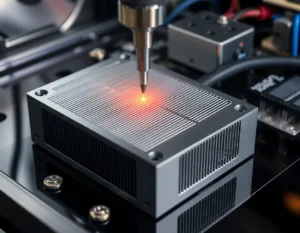
- Electronics: Heat sinks, waveguide components, and RF shielding.
- Renewable Energy: Wind turbine generators, solar power system components, and battery interconnects.
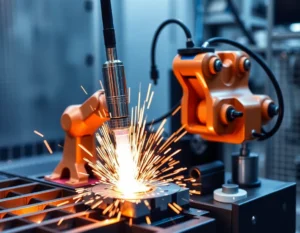
- Industrial Machinery: Welding nozzles, resistance welding electrodes, and various high-conductivity fixtures.
Deburring and Finishing
Due to its ductility, C11000 can form tenacious burrs. Mechanical deburring methods (brushing, filing) work but must be done carefully to avoid smearing the material. Non-mechanical methods like thermal energy deburring or cryogenic tumbling are highly effective for complex parts.
Stress Relieving
Intensive machining can induce residual stresses in the part. For critical applications where dimensional stability is paramount, a low-temperature stress relief anneal (around 400°F / 205°C) may be necessary before final finishing.
Conclusion
Mastering C11000 copper machining is a testament to a machinist's skill and understanding of material science. While its gummy nature and work-hardening tendency pose significant challenges, they are entirely surmountable. The key lies in respecting the material's properties: employing sharp, positive-geometry carbide tools, running at appropriately aggressive parameters with high feed rates, and utilizing ample coolant. By adhering to these best practices, manufacturers can reliably produce high-tolerance, burr-free components that leverage the unparalleled conductivity and corrosion resistance of C11000 copper. The result is not just a successfully machined part, but a critical component that will perform reliably in some of the most demanding electrical and thermal applications in the modern world.