Introduction: The Intersection of Precision and Aesthetics
In the world of precision manufacturing, creating functional components is only half the battle. Often, these parts must also exhibit superior corrosion resistance, enhanced durability, and a flawless, decorative finish. This is where the synergy between machining and anodizing becomes critical. Machining for anodized aluminum parts is a specialized discipline that demands foresight, specific techniques, and a deep understanding of both subtractive and additive surface processes. It involves creating the part's geometry through CNC machining, milling, or turning, with the explicit intent of subsequently applying an electrochemical anodizing treatment. Mastering this process is key to delivering components that meet the highest standards of both engineering and design for industries ranging from aerospace to consumer electronics.
Understanding the Anodizing Process
Before delving into machining specifics, it's essential to grasp what anodizing entails. Anodizing is an electrochemical process that thickens and toughens the natural oxide layer on the surface of aluminum parts. The part is immersed in an acid electrolyte bath and serves as the anode (hence "anodizing"). An electrical current is passed through the bath, causing oxygen ions to bond with the aluminum atoms at the surface, creating a robust, porous aluminum oxide layer.
Types of Anodizing Relevant to Machined Parts
Not all anodizing is the same, and the chosen type directly impacts machining considerations:
- Type II (Sulfuric Acid Anodizing): The most common type, producing coatings from 0.0002" to 0.001" thick. It is excellent for corrosion resistance, color dyeing (allowing for a vast array of colors), and general wear resistance.
- Type III (Hardcoat Anodizing): Produces a much thicker (0.002" and above), denser, and harder coating. It is engineered for extreme wear resistance, electrical insulation, and applications involving high friction. The significant growth in part dimensions must be accounted for during machining.
- Chromic Acid Anodizing (Type I): Produces a thinner coating and is often used for aerospace applications where fatigue strength is a paramount concern, as it is less likely to initiate cracks.
Best Practices in Machining for Anodizing
Machining a part destined for anodizing is fundamentally different from machining a part that will be used as-machined. Every cut, toolpath, and tool choice must be made with the final surface treatment in mind. Ignoring these practices can lead to poor aesthetics, functional defects, and rejected parts.
Material Selection and Preparation
The alloy choice is the first critical decision. Not all aluminum alloys anodize equally. Series 5xxx (aluminum-magnesium) and 6xxx (aluminum-magnesium-silicon) are generally excellent for anodizing, offering good machinability and consistent, attractive finishes. Series 2xxx (aluminum-copper) and 7xxx (aluminum-zinc) can be more challenging, often resulting in duller or yellowish finishes and requiring specialized anodizing processes. Always consult with your anodizer on alloy suitability for the desired result.
Tooling and Cutting Strategies
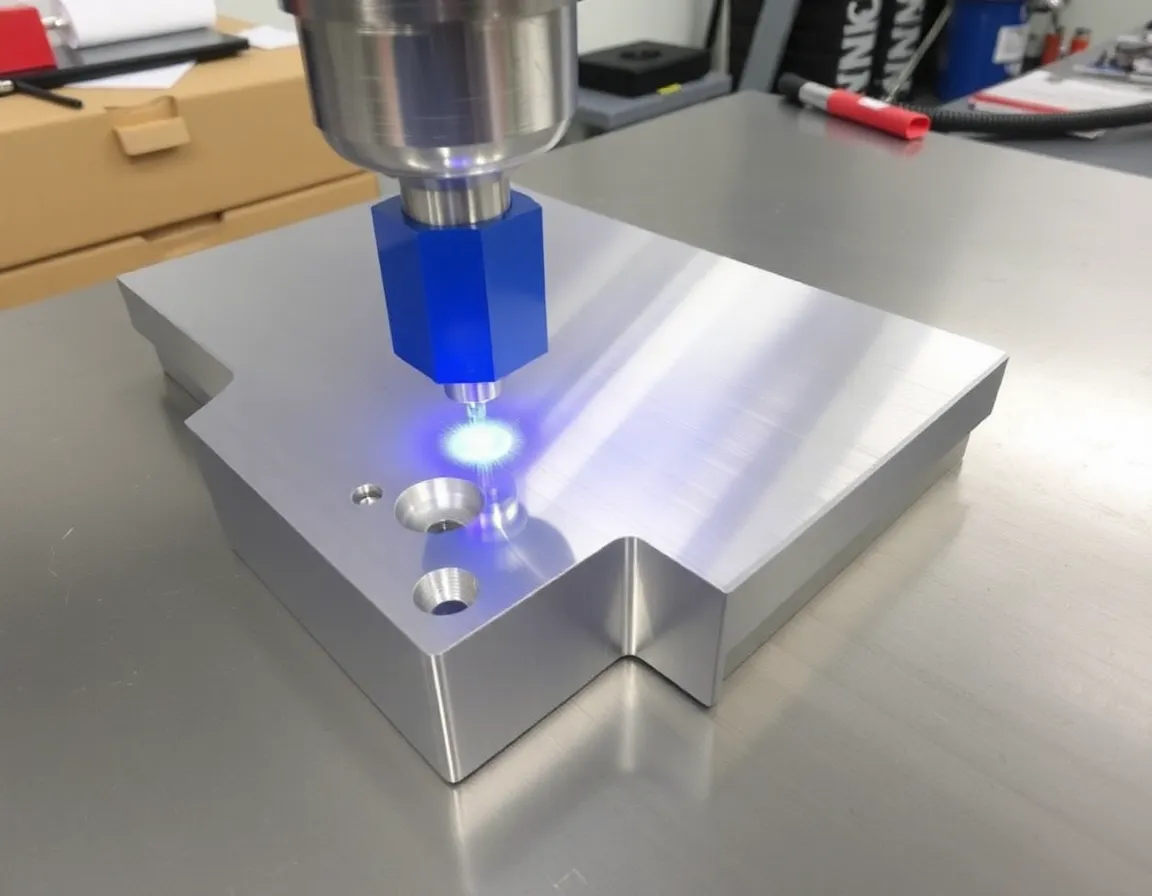
The goal is to leave a clean, uniform, and stress-free surface. The anodizing process will amplify any surface imperfection, including tool marks, tears, and burns.
- Use Sharp Tools: Always machine with new or freshly sharpened tools. Dull tools create excessive heat and smear the material, leading to a "blotchy" anodized appearance.
- Optimize Feeds and Speeds: Employ high speeds with moderate feed rates to achieve a clean shear cut. This minimizes built-up edge and work hardening, which can cause uneven dye absorption.
- Climb Milling: Where possible, use climb milling (down milling) to produce a cleaner surface finish by reducing chip re-cutting and heat generation.
- Minimize Heat: Use ample coolant or mist to keep the part cool. Heat can alter the metallurgical structure at the surface, causing inconsistent anodizing.
Surface Finish and Deburring
The final machined surface finish (Ra value) is a direct predictor of the final anodized appearance. A smoother machined finish yields a glossier, more uniform anodized layer. More importantly, deburring must be meticulous. Any remaining burrs will become prominent, sharp, and discolored after anodizing. Use proper deburring tools, vibratory or abrasive finishing, or even hand-deburring for critical edges. Avoid chemical deburring agents that can etch the surface and cause staining.
Accounting for Dimensional Growth
This is a non-negotiable consideration, especially for Type III hardcoat. The anodic layer grows both outward from and inward into the original aluminum surface. Typically, about 50% of the coating thickness grows outward, and 50% grows inward. For precision parts with tight tolerances, you must machine critical dimensions undersize to compensate for this inward growth. For example, a bore diameter will become smaller after hardcoating. Close collaboration with your anodizer to understand the expected coating thickness is essential for hitting final dimensions.
Post-Machining and Pre-Anodizing Handling
The work is not done once the part leaves the CNC machine. The period between machining and anodizing is crucial.
- Cleanliness is Paramount: Remove all cutting oils, coolants, and fingerprints. These contaminants can create stains and prevent uniform oxide layer formation. Use appropriate aluminum-safe degreasers.
- Prevent Oxidation and "Fingerprinting": Handle parts with clean gloves. The natural oils on skin can etch into the aluminum and leave permanent, visible fingerprints after anodizing.
- Proper Storage: Store machined parts in a clean, dry environment to prevent uncontrolled corrosion or surface contamination before they are anodized.
Benefits and Applications of Mastered Anodized Machining
When executed correctly, the combination of precision machining and anodizing yields components with exceptional value across countless industries.
Key Benefits
- Enhanced Durability: The anodic layer is significantly harder than raw aluminum, providing excellent resistance to wear and abrasion.
- Superior Corrosion Resistance: The inert aluminum oxide layer protects the base metal from environmental degradation.
- Aesthetic Versatility: The porous layer can be infused with dyes in virtually any color before sealing, enabling brand colors, part identification, and sleek designs.
- Improved Adhesion: The porous surface is ideal for paint and adhesive bonding, should further finishing be required.
- Electrical Insulation: The anodic coating is a good electrical insulator, a critical property in electronic enclosures and components.
Industry Applications
The applications are a testament to the process's versatility:
- Aerospace & Defense: Lightweight, strong, and corrosion-resistant components for aircraft interiors, drone frames, and optical mounts.
- Consumer Electronics: The iconic colored and textured housings for smartphones, laptops, and wearables rely on precisely machined and anodized aluminum.
- Medical Devices: Surgical instruments and device housings benefit from the biocompatible, easy-to-clean, and durable anodized surface.
- Automotive: Both interior trim pieces and under-hood components utilize anodizing for aesthetics and performance.
- Optics & Photography: Lens barrels and tripod components require precise, blackened (anodized) surfaces to prevent light reflection.
Conclusion: A Partnership for Perfection
Mastering machining for anodized aluminum parts is not merely a set of instructions; it is a philosophy of integrated manufacturing. It requires the machinist to think like a finisher and the designer to understand the implications of the anodizing tank. Success hinges on the seamless partnership between the machine shop and the anodizing facility, with clear communication about tolerances, alloys, and desired outcomes. By adhering to best practices in tooling, cutting strategy, deburring, dimensional planning, and handling, manufacturers can consistently produce parts that are not just mechanically perfect but also possess the durable, beautiful, and functional surface that makes anodized aluminum a material of choice for the most demanding applications. In the end, the goal is to create components where the precision of the machining and the resilience of the anodizing work in perfect harmony.