Introduction: The Critical Role of Machined Aluminum Faceplates
In the world of precision engineering and manufacturing, the humble faceplate is a foundational component, serving as the interface, the mounting surface, and often the aesthetic front for countless devices and systems. When crafted from aluminum and subjected to high-precision machining, these components transform from simple plates into sophisticated, high-performance parts. Precision machining for aluminum faceplates is the specialized process that ensures these panels meet exacting standards for flatness, dimensional accuracy, surface finish, and feature integrity. From aerospace control panels to advanced medical imaging devices, the quality of a machined aluminum faceplate directly impacts the functionality, reliability, and professional appearance of the final product.
The Fundamentals of Aluminum Faceplate Machining
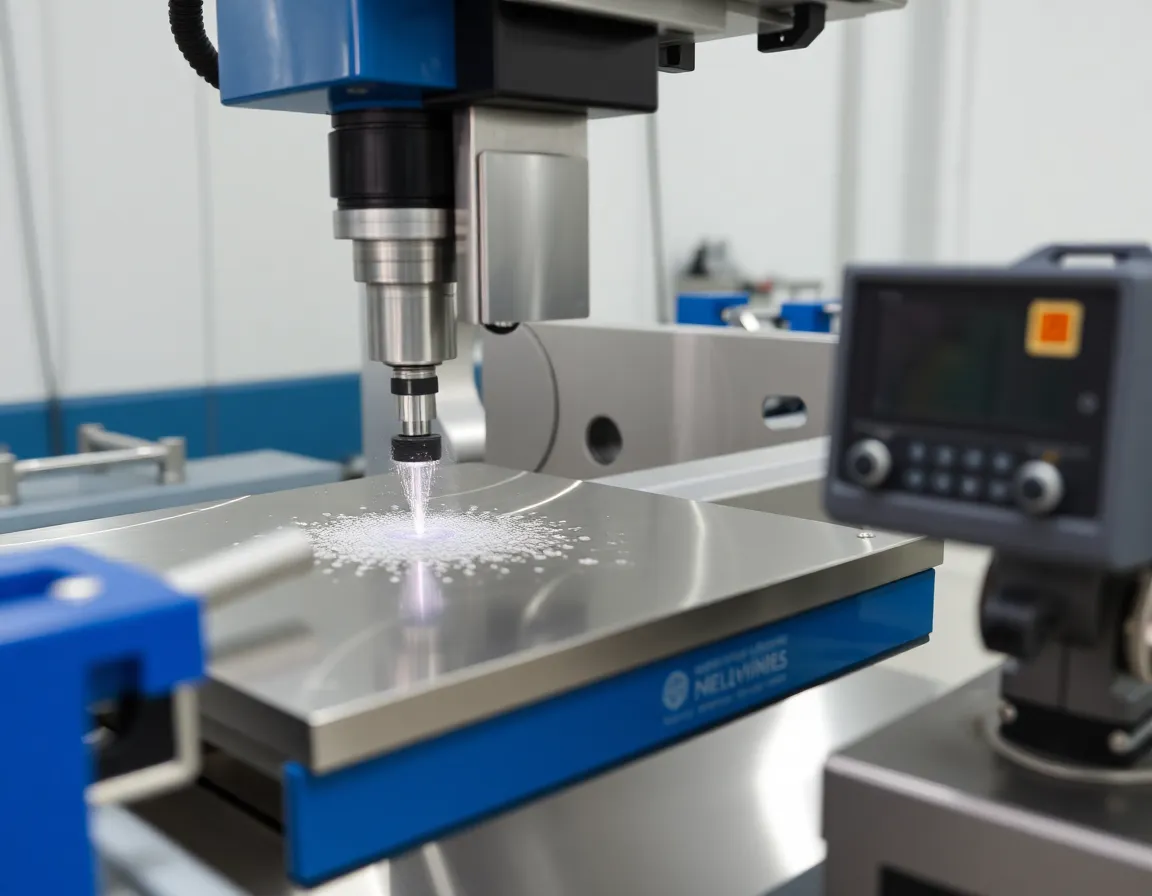
At its core, machining an aluminum faceplate involves the controlled removal of material from a blank sheet or billet of aluminum to create a part with specific dimensions, holes, cutouts, engravings, and surface characteristics. Unlike simple shearing or punching, precision machining utilizes advanced computer-controlled equipment to achieve tolerances within thousandths of an inch (or hundredths of a millimeter).
Key Machining Processes Involved
The creation of a precision aluminum faceplate typically involves a combination of several subtractive manufacturing processes:
- CNC Milling: The workhorse of faceplate machining. CNC milling machines use rotating cutting tools to remove material, capable of producing complex contours, pockets, slots, and precise hole patterns. Multi-axis CNC mills can machine multiple sides of a plate in a single setup, ensuring critical alignment.
- CNC Turning: Used primarily for machining the outer diameter or cylindrical features of a faceplate, if it is round. It can also be used for boring large, precise central holes.
- Drilling and Tapping: Creating clean, burr-free holes for fasteners, connectors, or indicators. Tapping cuts internal threads into these holes for screw assembly.
- Laser Cutting or Waterjet Cutting: Often used for the initial blanking of the faceplate from a larger sheet, especially for complex 2D outlines, before detailed CNC machining adds 3D features.
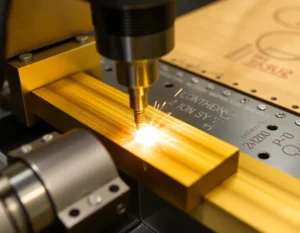
- Engraving and Marking: CNC machines or dedicated engravers add permanent labels, logos, serial numbers, and scale markings with exceptional clarity and durability.
Material Selection: Choosing the Right Aluminum Alloy
Not all aluminum is created equal. The choice of alloy is paramount and depends on the faceplate's end-use requirements:
- 6061-T6: The most common general-purpose alloy. It offers an excellent strength-to-weight ratio, good machinability, corrosion resistance, and is readily available. Ideal for instrument panels, chassis, and enclosures.
- 5052-H32: Known for its superior corrosion resistance, especially in marine or high-humidity environments. It has good formability and a smoother surface finish, often used for marine and consumer electronics faceplates.
- 7075-T6: A high-strength alloy used in aerospace and high-stress applications. It is significantly stronger than 6061 but can be more challenging to machine and is less corrosion-resistant without protective coatings.
- MIC-6 & Other Cast Tooling Plate: These are stress-relieved, aluminum plates with exceptional flatness and stability. They are perfect for faceplates requiring ultra-precise flatness, such as optical mounting plates or coordinate measuring machine (CMM) tables.
Benefits and Advantages of Precision Machining
Why go through the effort and investment of precision machining for an aluminum faceplate? The advantages are substantial and multifaceted.
Unmatched Accuracy and Repeatability
CNC machining guarantees that every hole for a switch, every cutout for a display, and every mounting boss is located with microscopic precision. This is non-negotiable in assemblies where components from different suppliers must fit together perfectly. Once the CNC program is proven, it can produce identical faceplates indefinitely.
Superior Strength and Structural Integrity
Machining from a solid billet or plate results in a monolithic part with continuous grain structure, unlike welded or fastened assemblies. This provides greater rigidity, vibration damping, and overall durability. Critical areas can be machined to specific thicknesses to provide reinforcement exactly where needed.
Enhanced Aesthetic and Functional Finishes
A precision-machined surface provides the perfect canvas for secondary finishing operations. The inherent accuracy ensures these finishes are applied uniformly. Common finishes include:
- Anodizing: Creates a hard, wear-resistant, and corrosion-resistant oxide layer. Available in many colors (clear, black, gold, etc.) for branding and aesthetic appeal.
- Powder Coating: Provides a thick, durable, and decorative paint layer in virtually any color or texture.
- Brushing or Polishing: Creates a distinctive metallic look, from a satin brush to a mirror polish.
- Chemical Film (Chromate Conversion): Provides good corrosion resistance and serves as an excellent primer for paint, often used in aerospace.
Design Flexibility and Complexity
Precision machining can create features that are impossible with other methods. This includes intricate 3D contours, undercuts, shallow engraved labels, counterbores for flush-mounted hardware, and fine-threaded inserts. Designers are freed from many manufacturing constraints.
Applications Across Industries
The versatility of machined aluminum faceplates makes them indispensable in a wide array of high-tech and demanding fields.
Aerospace and Defense: Cockpit instrument panels, avionics bay covers, communication equipment housings, and missile guidance system enclosures. Demands include extreme light weight, EMI/RFI shielding, and compliance with stringent military specifications.
Medical and Life Sciences: Front panels for diagnostic imaging machines (MRI, CT scanners), analytical instruments, surgical robotic interfaces, and patient monitoring systems. Requirements focus on cleanliness, chemical resistance, and the ability to incorporate sealed membranes or touchscreen interfaces.
Telecommunications and Networking: Rack-mounted server faceplates, router and switch panels, and satellite communication hardware. These require precise ventilation patterns, connector cutouts, and effective heat dissipation.
Test and Measurement Equipment: Oscilloscopes, signal generators, and spectrum analyzers. Faceplates here must provide precise layout for controls and displays, electromagnetic compatibility, and a professional, durable appearance for lab and field use.
High-End Audio/Video: Front panels for amplifiers, pre-amps, mixing consoles, and broadcast equipment. Machining provides the precise tolerances for knob shafts and connector holes, as well as the flawless finishes demanded by consumers.
Best Practices for Optimal Results
To ensure a successfully machined aluminum faceplate, collaboration between designer and machinist, guided by proven practices, is essential.
Design for Manufacturability (DFM)
Engage with your machining partner early. They can advise on optimizing designs to reduce cost and improve machinability. Key DFM considerations include:
- Internal Corner Radii: Specify radii slightly larger than the intended cutting tool to allow for efficient tool paths and avoid sharp, stress-concentrating corners.
- Wall Thickness: Maintain uniform and adequate wall thickness to prevent distortion during machining or from internal stresses.
- Hole Depth and Size: Avoid overly deep, small-diameter holes which require specialized tools and can break. Follow standard drill bit sizes where possible.
- Tolerances: Apply tight tolerances only where functionally critical. Specifying unnecessarily tight tolerances across the entire part dramatically increases cost.
Fixture and Workholding Strategy
A faceplate must be held immovably during machining. Precision vises, custom fixtures, or vacuum tables are used. The design should include temporary tabs, strategic mounting holes, or areas where fixture marks are permissible to ensure secure clamping without interfering with critical features.
Toolpath Optimization and Cutting Parameters
Experienced machinists program toolpaths that minimize vibration (chatter), reduce cycle time, and extend tool life. This involves selecting the correct spindle speeds, feed rates, depth of cut, and using techniques like high-speed machining (HSM) for optimal surface finish on aluminum.
Deburring and Post-Processing
Machining leaves microscopic burrs on edges. A comprehensive post-machining process includes meticulous deburring, either manually, tumbling, or with automated brushes. This is a critical safety and quality step, especially for faceplates that will be frequently handled.
Conclusion: The Synthesis of Material, Process, and Precision
Precision machining is the transformative process that elevates a raw aluminum plate into a critical, high-performance component. It merges the inherent benefits of aluminum—light weight, strength, and conductivity—with the absolute control of modern CNC technology. The result is a faceplate that is far more than a cover; it is a structurally integral, functionally precise, and aesthetically refined interface that defines the quality and capability of the system it serves. Whether for a satellite orbiting Earth or a medical device saving lives, the investment in precision-machined aluminum faceplates is an investment in performance, reliability, and excellence.