
+86-188-7042-1176
project@juchengjm.com
Mon-Fri: 8am-6pm (GMT+8)
EN
ISO 9001:2015 Certified
ABS
ABS (Acrylonitrile Butadiene Styrene) is the most popular thermoplastic for Rapid Prototyping and low-volume manufacturing due to its excellent impact resistance, ease of machining, and low cost. It bridges the gap between prototyping and mass production plastics. At Jucheng Precision, we treat ABS machining with the same precision as metals. Our high-speed CNC machining centers produce ABS parts with structural integrity superior to 3D printing. We excel at post-processing ABS; our skilled finishing team can sand, polish, paint, or chemically bond (using acetone) machined ABS parts to create "looks-like, works-like" prototypes for consumer electronics and automotive testing. With our ISO 9001 certification, we ensure dimensional accuracy even for simple plastic enclosures.
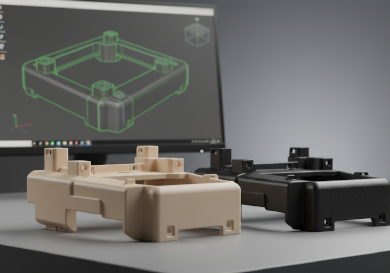
Available ABS Grades
| Grade | Common Name | Key Characteristics | Typical Applications |
|---|---|---|---|
| Standard ABS | General Purpose (GP) | Beige or Black color. Excellent impact strength, easy to machine, glue, and paint. Low cost. | Prototypes, consumer electronic casings, toys, automotive trim. |
| Flame Retardant ABS | ABS-FR (UL94 V-0) | Formulated to resist combustion. Essential for electronics requiring UL safety certification. | Electrical enclosures, power supply housings, switchgear. |
| Transparent ABS | MABS | Methacrylate-Acrylonitrile-Butadiene-Styrene. Offers transparency (though less clear than PC/Acrylic). | Medical devices, fluid containers, indicator lights. |
| PC-ABS Blend | Polycarbonate/ABS | Combines the strength/heat resistance of PC with the processability of ABS. Very tough. | Automotive dashboards, heavy-duty electronics, rugged handheld devices. |
ABS Machining Capabilities
| Capability | Technical Description | Jucheng Advantage |
|---|---|---|
| Surface Finishing | Sanding, priming, painting, and texture matching to simulate final production injection molded parts. | We provide “show-ready” prototypes that look exactly like the final product for marketing or investor pitches. |
| Chemical Bonding | Using solvents (like acetone) to fuse multiple machined ABS sections into a large, seamless assembly. | Allows us to create massive parts (larger than machine travel) that act as a single solid unit. |
| Rapid Prototyping | High-speed milling of complex housings with snap-fits and bosses directly from CAD data. | Our 24/7 operation capability ensures you get functional ABS parts in as little as 3 days. |
| Vapor Smoothing | Exposing ABS to acetone vapor to smooth out tool marks and create a glossy finish. | Improves aesthetics and seals the surface without labor-intensive hand sanding. |
Fabrication Guidelines for ABS
Heat Control:
ABS has a low melting point. If the cutter dwells or speeds are too high without feed, the plastic will melt and gum up the tool. Air blast or coolant is recommended to keep it cool.
Tooling:
Standard HSS or Carbide tools work well. We use tools with high positive rake angles to shear the plastic cleanly and evacuate chips to prevent re-melting.
Clamping:
ABS is relatively rigid but can crack under excessive point pressure. We use soft jaws or vacuum tables to hold flat parts like enclosure faces.
Post-Processing:
ABS is one of the easiest plastics to sand and paint. It also bonds extremely well, making it ideal for multi-part assemblies.
Primary Application Industries
Consumer Electronics
Key Parts: Remote control casings, modem housings, keyboard frames.
Why ABS: Low cost, good impact resistance, and excellent cosmetic finish options.
Automotive
Key Parts: Dashboard panels, center consoles, air vents.
Why ABS: PC-ABS blends offer the necessary toughness and heat resistance for interior cabin parts.
Product Development (Prototyping)
Key Parts: Form-and-fit models, functional test units.
Why ABS: It mimics the properties of final injection-molded production materials better than 3D printing.
Appliances
Key Parts: Vacuum cleaner components, blender bases, refrigerator liners.
Why ABS: Durable enough for daily household use and resists impact from drops.
Material Properties
| Density | 1.04 - 1.07 g/cm³ |
| Tensile Strength | 40 - 50 MPa |
| Impact Strength | 200 - 400 J/m |
| Heat Deflection Temp | 90 - 100 °C |
| Hardness | 100 - 110 Rockwell R |
| Continuous Service Temp | 70 - 80 °C |
| Water Absorption | 0.20 - 0.45 % |
| Dielectric Strength | 15 - 20 kV/mm |
| Melting Point | N/A (Amorphous) |
| Max. Part Size | 2000 mm (L) x 800 mm (W) x 600 mm (H) |