
+86-188-7042-1176
project@juchengjm.com
Mon-Fri: 8am-6pm (GMT+8)
EN
ISO 9001:2015 Certified
Titanium Grade 23 (Ti-6Al-4V ELI)
Titanium Grade 23 (Ti-6Al-4V ELI) is the higher purity version of Grade 5. ELI stands for "Extra Low Interstitial," meaning it has reduced limits on oxygen, nitrogen, and iron. This chemical adjustment grants Grade 23 superior fracture toughness and fatigue crack growth rate, making it the premier choice for medical and dental implants. While standard Grade 5 is strong, Grade 23 is safer for the human body and less likely to fracture under biological loads. Jucheng Precision, with full ISO 13485 certification, specializes in machining this biocompatible alloy into critical life-supporting devices, ensuring full material traceability and uncompromising quality.
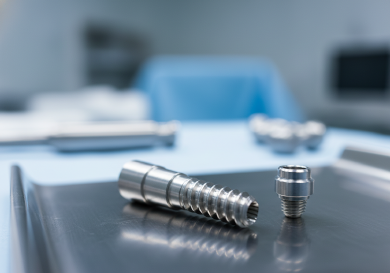
Titanium Grade 23 Machining Capabilities
| Capability | Technical Description | Jucheng Advantage |
|---|---|---|
| Medical Micro-Machining | Producing tiny, intricate features for dental and spinal implants using high-precision Swiss lathes. | Our Citizen/Star Swiss machines hold tolerances of +/- 0.005mm on parts smaller than 5mm in diameter. |
| Thread Whirling | A specialized process for cutting bone screw threads rapidly and without burrs. | Ensures perfect thread geometry for osseointegration and prevents metal flaking during surgery. |
| Contamination Control | Strict segregation of tooling and coolants to prevent ferrous contamination of the titanium surface. | We follow strict ISO 13485 hygiene protocols to ensure parts are biocompatible and ready for sterilization. |
| Surface Smoothing | Mass finishing (tumbling) and electropolishing to remove micro-burrs and improve fatigue life. | We deliver parts with Ra 0.2µm finishes, essential for reducing friction in joint replacements. |
Fabrication Guidelines for Ti-6Al-4V ELI
ELI Distinction:
“ELI” stands for Extra Low Interstitial (lower Oxygen, Nitrogen, Carbon). This makes Grade 23 tougher and more ductile than Grade 5. Tip: It machines similarly to Grade 5 but is slightly less prone to cracking during high-stress forming.
Burr Removal:
Titanium burrs are tenacious. In medical applications, a loose burr is unacceptable. Tip: Design chamfers on all edges and specify 100% deburring/polishing.
Surface Integrity:
Aggressive machining can create an “Alpha Case” (brittle surface layer). Tip: We use gentle finishing passes and chemical pickling to ensure the surface structure remains ductile and crack-resistant.
Primary Applications
Orthopedic Implants
Bone plates, intramedullary nails, and hip/knee joint components requiring high fatigue strength.
Spinal Fixation
Pedicle screws, rods, and cages used to stabilize the spine.
Dental Implants
Abutments and screws that anchor dental prosthetics into the jawbone.
Surgical Instruments
High-strength retractors, forceps, and needle drivers that must be lightweight and autoclave-resistant.
Properties
| Density | 4.43 g/cm³ |
| Tensile Strength | 860 MPa |
| Yield Strength | 795 MPa |
| Hardness | 30 - 34 HRC |
| Elongation at Break | > 10% |
| Fracture Toughness | Superior |
| Electrical Conductivity | 6.7 W/m-K |
| Machinability Rating | 22% |
| Weldability | Ultimate |
| Magnetic Permeability | Non-Magnetic |
| Max Part Size | 2000 x 800 x 600 mm |