
+86-188-7042-1176
project@juchengjm.com
Mon-Fri: 8am-6pm (GMT+8)
EN
ISO 9001:2015 Certified
Stainless Steel Duplex 2205
Duplex 2205 (S31803 / S32205) is a nitrogen-enhanced duplex stainless steel that consists of a microstructure of both austenite and ferrite (50/50 mix). This unique structure gives it twice the yield strength of 316L and significantly superior resistance to pitting and Stress Corrosion Cracking (SCC) in chloride environments. While it is a difficult material to machine due to its high strength and toughness, Jucheng Precision has the heavy-duty CNC equipment and technical expertise to process 2205 effectively. We are a trusted partner for the Oil & Gas and Desalination industries, delivering robust components that withstand the harshest marine and chemical conditions.
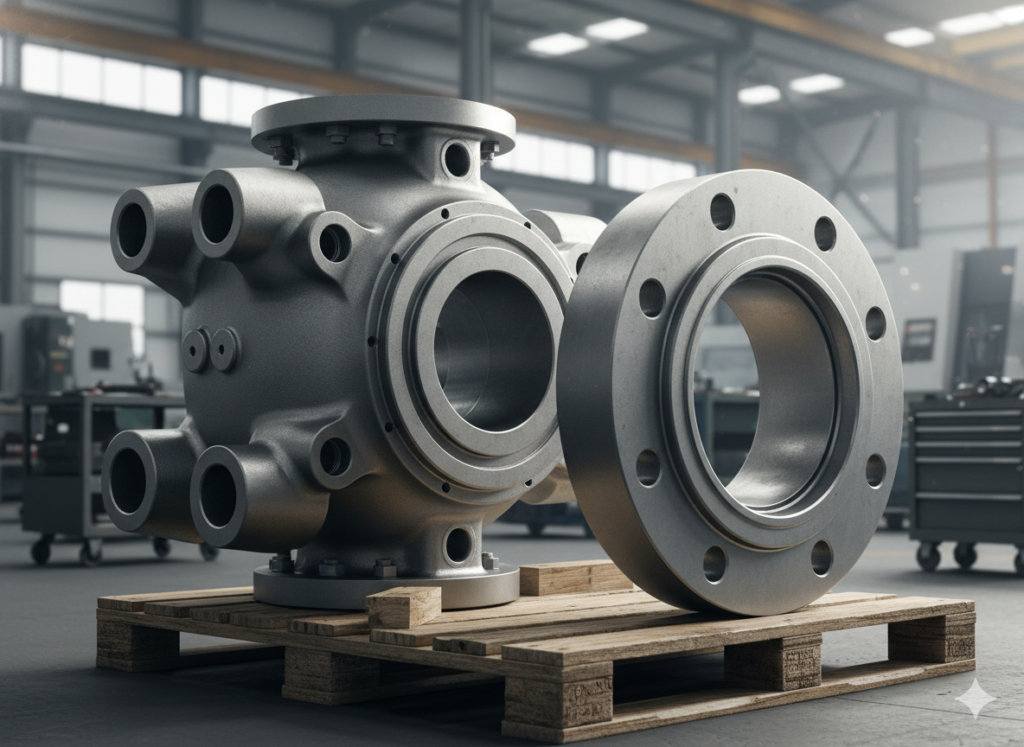
Duplex 2205 Machining Capabilities
| Capability | Technical Description | Jucheng Advantage |
|---|---|---|
| Heavy-Duty Turning | 2205 is twice as strong as 316 and extremely tough. We use high-rigidity lathes with geared spindles to handle the high cutting forces. | Our capability to machine large diameter flanges and valve bodies (up to 800mm) ensures stability and chatter-free finishes. |
| Chip Control Strategies | Duplex produces strong, stringy chips that are hard to break. We utilize high-pressure coolant (70 bar) and specialized chip-breaking inserts. | Prevents chip wrapping and tool damage, allowing for automated production of critical oil & gas components. |
| Deep Hole Drilling | Drilling manifolds in 2205 requires specialized carbide drills to penetrate the work-hardened surface without seizing. | We successfully machine high-pressure fluid channels with precise straightness and surface finish. |
| Thread Milling | Cutting large API or NPT threads in Duplex using thread mills to minimize tool pressure and risk of tap breakage. | Ensures perfect thread profiles for high-pressure sealing applications where a stripped thread means a scrapped expensive part. |
Fabrication Guidelines for Duplex 2205
Machinability Warning:
Duplex 2205 is significantly harder to machine than 316L. Cutting speeds must be reduced by ~20%, and tool life is shorter. Tip: Plan for higher machining costs due to increased cycle time and tooling consumption.
Work Hardening:
Like austenitic stainless, Duplex work-hardens, but more rapidly. Tip: Use aggressive feed rates and never let the tool dwell. “Babying” the cut will cause immediate surface hardening.
Stress Corrosion Resistance:
The primary reason to use 2205 is its resistance to Chloride Stress Corrosion Cracking (SCC), which causes 304/316 to fail in hot saltwater. Tip: Ideal for subsea or desalination equipment.
Primary Applications
Oil & Gas Industry
Subsea manifolds, Christmas tree valves, and downhole tools exposed to sour gas (H2S) and high pressure.
Desalination Plants
High-pressure pumps, reverse osmosis piping, and evaporators handling hot, concentrated brine.
Chemical Processing
Pressure vessels and heat exchangers handling aggressive chlorides and acids where 316L life is too short.
Pulp & Paper
Digesters and bleaching equipment requiring high strength and corrosion resistance.
Properties
| Density | 7.80 g/cm³ |
| Tensile Strength | 620 - 800 MPa |
| Yield Strength | 450 MPa |
| Hardness | 31 HRC (293 HB) |
| Elongation at Break | 25% |
| Thermal Conductivity | 19.0 W/m-K |
| PREN (Pitting Resistance) | 35+ |
| Machinability Rating | Low |
| Weldability | Good |
| SCC Resistance | Superior |
| Max Service Temp | 300 °C |
| Max Part Size | 2000 x 800 x 600 mm |