
+86-188-7042-1176
project@juchengjm.com
Mon-Fri: 8am-6pm (GMT+8)
EN
ISO 9001:2015 Certified
Stainless Steel 420
Stainless Steel 420 is a high-carbon martensitic stainless steel capable of being hardened to 50-52 HRC. It is known as "Cutlery Grade" because it can hold a sharp cutting edge, but it is equally famous in the manufacturing world as a premium Mold Steel. It offers a unique combination of high hardness, wear resistance, and moderate corrosion resistance (when polished). At Jucheng Precision, we extensively machine 420 for the Medical (surgical tools) and Tool & Die (mold inserts) industries. Its fine grain structure allows us to achieve exceptional mirror polishes, making it the material of choice for cosmetic plastic injection molds.
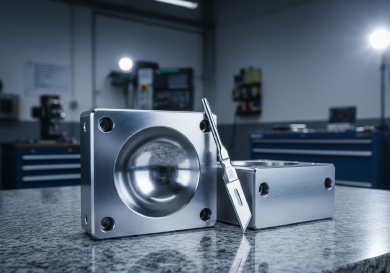
SS 420 Machining Capabilities
| Capability | Technical Description | Jucheng Advantage |
|---|---|---|
| Mold Cavity Machining | 420 is the standard for plastic injection molds requiring corrosion resistance (e.g., PVC molding). We mill complex 3D contours. | Our high-speed HSM centers can finish-machine hardened 420 mold cores, reducing the need for EDM and manual polishing. |
| Mirror Polishing | 420 stainless has a fine grain structure that allows it to be polished to an SPI A-1 mirror finish without pitting. | We provide optical-grade polishing services for 420 lens molds and cosmetic automotive lighting tools. |
| Hard Milling & Turning | Machining 420 in its hardened state (48-52 HRC) to hold final tolerances after heat treatment. | Eliminates heat-treat distortion. We use CBN and ceramic tools to cut the hardened steel efficiently. |
| Precision Grinding | Surface and cylindrical grinding of 420 shafts and blades to create sharp cutting edges and tight fits. | Essential for manufacturing industrial shear blades and surgical instruments that must stay sharp. |
Fabrication Guidelines for Stainless 420
Heat Treatment is Key:
In the annealed state, 420 is gummy and tough. It performs best when hardened (Quench & Temper) to 50-52 HRC. Tip: Machine rough features in annealed state, leave stock, heat treat, then hard-mill/grind to finish.
Corrosion Resistance:
420 has good corrosion resistance only in the hardened and polished condition. A rough or annealed surface will rust. Tip: Do not use for marine applications; use it for indoor or oiled environments.
Weldability:
Very Poor. Air hardening causes immediate cracking. Welding requires pre-heating to 200°C+ and post-weld annealing.
Primary Applications
Plastic Injection Molds
Mold cores and cavities (like Stavax type) for molding corrosive plastics or optically clear parts (polycarbonate lenses).
Surgical Instruments
Scalpels, scissors, and dental tools requiring a hard, sharp cutting edge and sterilization resistance.
Industrial Blades
Shear blades, needle valves, and cutlery requiring high wear resistance.
Shafts & Axles
Pump shafts and gear shafts that need higher strength and hardness than 304/316 can provide.
Properties
| Density | 7.75 g/cm³ |
| Tensile Strength | 1600 - 1900 MPa |
| Yield Strength | 1350 - 1480 MPa |
| Hardness | 48 - 52 HRC |
| Elongation at Break | 8 - 15% |
| Thermal Conductivity | 24.9 W/m-K |
| Electrical Conductivity | 2.5% IACS |
| Machinability Rating | 60% (Annealed) |
| Weldability | Poor |
| Corrosion Resistance | Fair |
| Magnetic | Yes |
| Max Part Size | 2000 x 800 x 600 mm |