
+86-188-7042-1176
project@juchengjm.com
Mon-Fri: 8am-6pm (GMT+8)
EN
ISO 9001:2015 Certified
Stainless Steel 316 / 316L
Stainless Steel 316 / 316L is the premium choice for harsh environments. It is an austenitic chromium-nickel stainless steel containing Molybdenum, which increases general corrosion resistance, improves resistance to pitting from chloride ion solutions (like seawater), and provides greater strength at elevated temperatures. 316L is the low-carbon version, immune to grain boundary carbide precipitation (sensitization) during welding. At Jucheng Precision, with our ISO 13485 certification, we specialize in machining 316L for the medical sector (implants/surgical tools) and the marine industry, delivering parts that survive where 304 would fail.
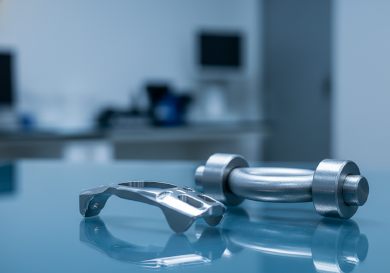
SS 316/316L Machining Capabilities
| Capability | Technical Description | Jucheng Advantage |
|---|---|---|
| Medical Grade Machining | Processing 316L under ISO 13485 protocols. We handle micro-machining of surgical tools and implants with strict traceability. | We ensure zero contamination (no ferrous tool transfer) and provide full material certification for FDA/CE compliance. |
| Hard Metal Strategy | 316 is tougher and work-hardens faster than 304. We use premium coated carbide inserts and high-pressure coolant. | Our rigid machine setups prevent chatter, ensuring consistent tolerances (+/- 0.005mm) even on tough 316L forgings. |
| Electropolishing Prep | Machining surfaces to a fine finish (< Ra 0.4µm) to prepare for electropolishing or passivation. | Crucial for medical and pharmaceutical parts where surface pits can harbor bacteria. |
| Complex Turn-Mill | Manufacturing complex marine valves and chemical fittings in a single setup. | Reduces handling time and improves concentricity for high-pressure fluid control components. |
Fabrication Guidelines for Stainless 316
The Molybdenum Difference:
316 contains 2-3% Molybdenum, which drastically improves resistance to chlorides (saltwater) and acids compared to 304. Tip: Always specify 316 for marine or chemical applications; 304 will pit and rust.
316 vs. 316L:
316L (Low Carbon) prevents intergranular corrosion after welding. Tip: For machined parts that will not be welded, standard 316 is slightly stronger. For welded assemblies, 316L is mandatory.
Machining Cost:
Expect slightly higher machining costs than 304 due to lower cutting speeds and faster tool wear. It is a tougher, more gummy material.
Primary Applications
Medical Devices (ISO 13485)
Orthopedic implants, bone screws, and surgical instrumentation requiring biocompatibility and corrosion resistance.
Marine Industry
Boat deck hardware, propeller shafts, and underwater sensor housings exposed to harsh saltwater environments.
Chemical Processing
Valves, pumps, and mixers handling aggressive acids, chlorides, or solvents.
Pharmaceutical
Vats, nozzles, and manifold blocks that require sanitary, easy-to-clean surfaces (electropolished).
Properties
| Density | 8.00 g/cm³ |
| Tensile Strength | 515 MPa |
| Yield Strength | 205 MPa |
| Hardness | 95 HRB |
| Elongation at Break | 40% |
| Thermal Conductivity | 16.3 W/m-K |
| Electrical Conductivity | 2.5% IACS |
| Machinability Rating | 35% |
| Weldability | Excellent |
| Corrosion Resistance | Superior |
| Bio-compatibility | Excellent |
| Max Part Size | 2000 x 800 x 600 mm |